
DeepAudit has successfully discovered and obtained 49 CVE IDs and 6 GHSA security advisories
Across 17 well-known open-source projects
OpenClaw vulnerability research results
The internal preview version of DeepAudit performed a deep security audit on the OpenClaw project and has so far discovered 6 security vulnerabilities, all of which were officially confirmed and published as security advisories (GHSA). The issues cover command injection, signature verification bypass, remote code execution, credential exposure, resource exhaustion, and information disclosure, including multiple high-severity findings. More vulnerabilities are still being researched.
The vulnerabilities above were discovered with DeepAudit by DeepAudit team members @lintsinghua and @ez-lbz.
If you discover vulnerabilities using DeepAudit, you are welcome to leave feedback in Issues. Your contributions will greatly enrich this vulnerability list.
Overview
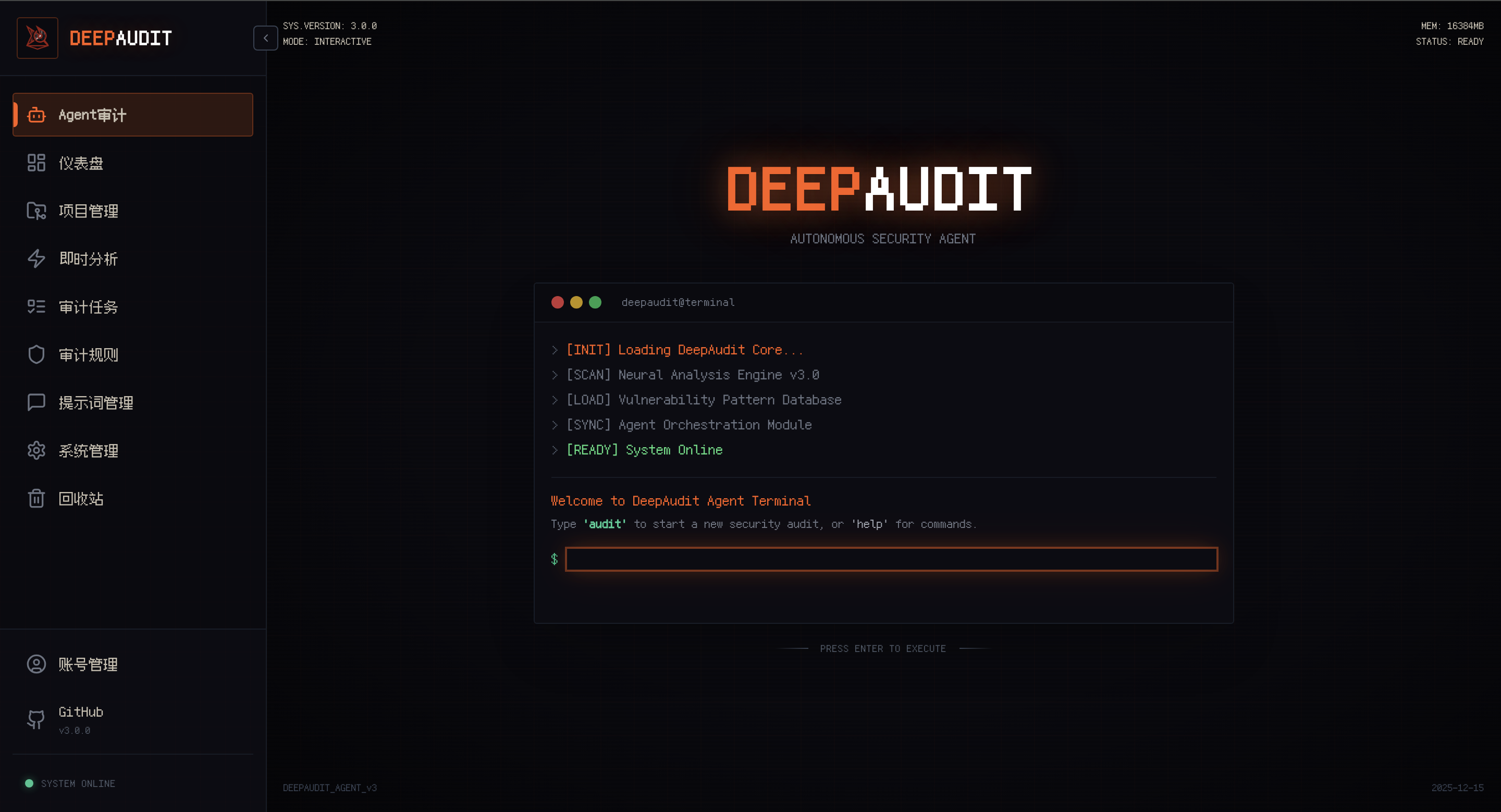
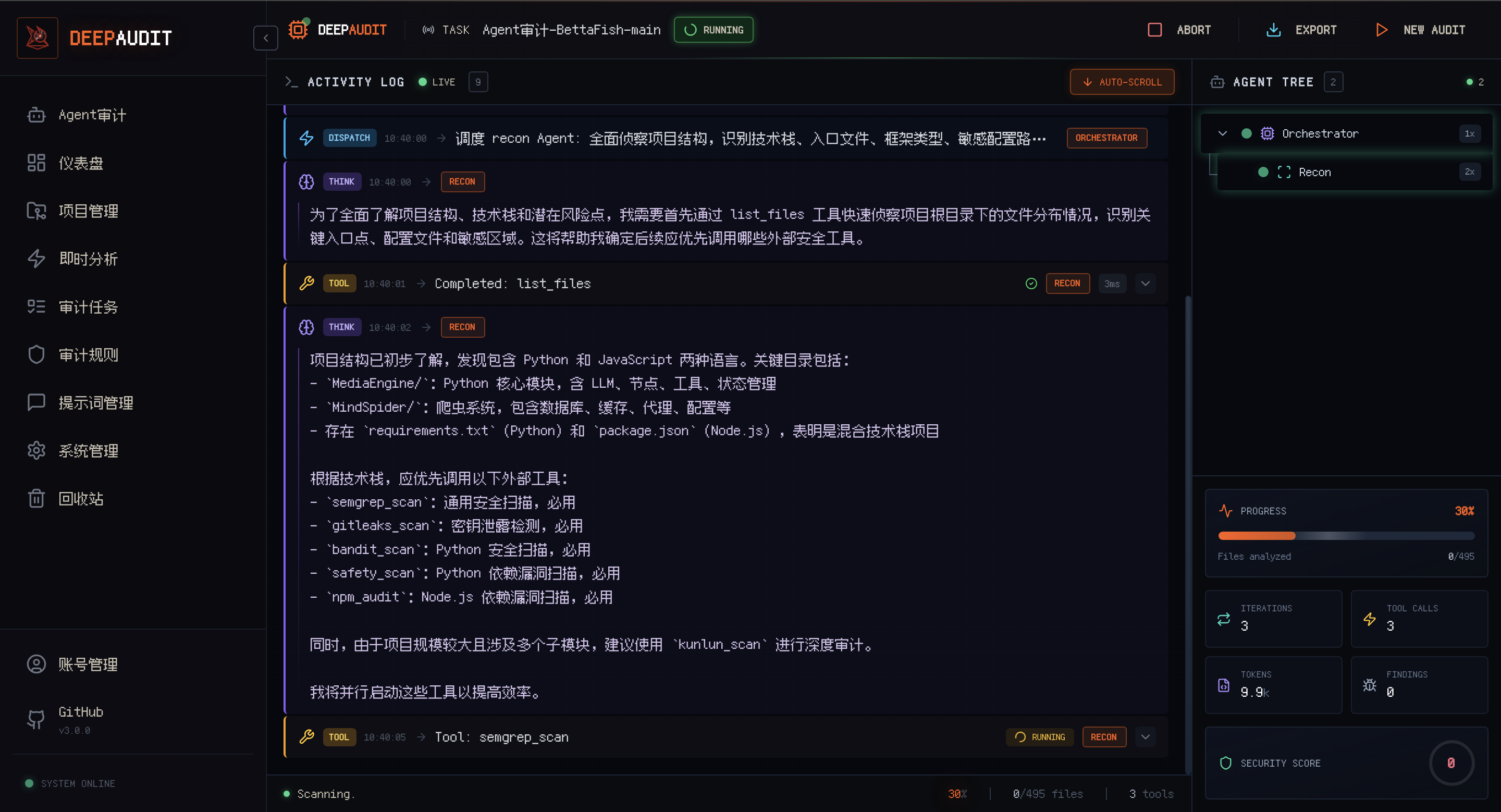
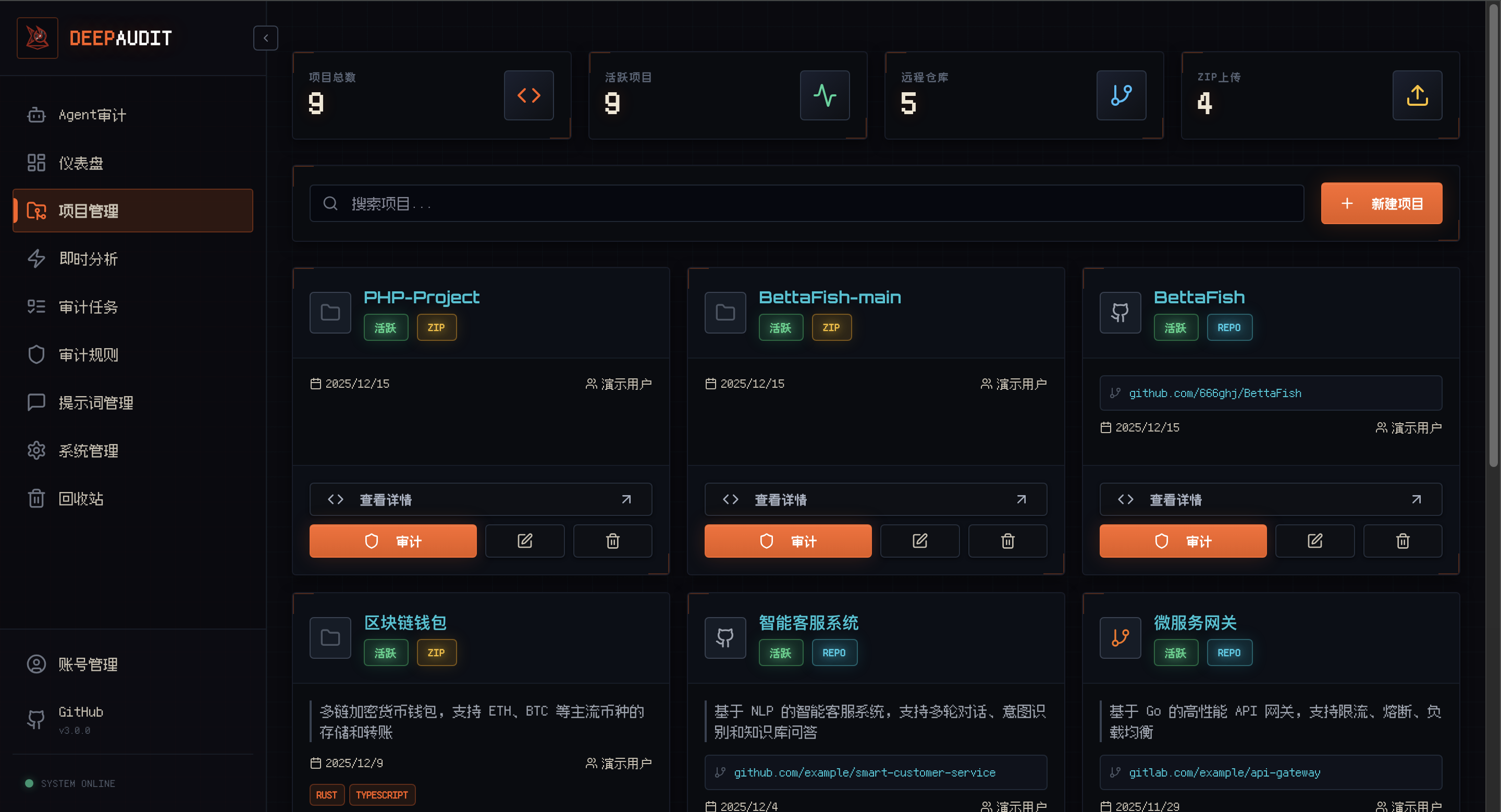
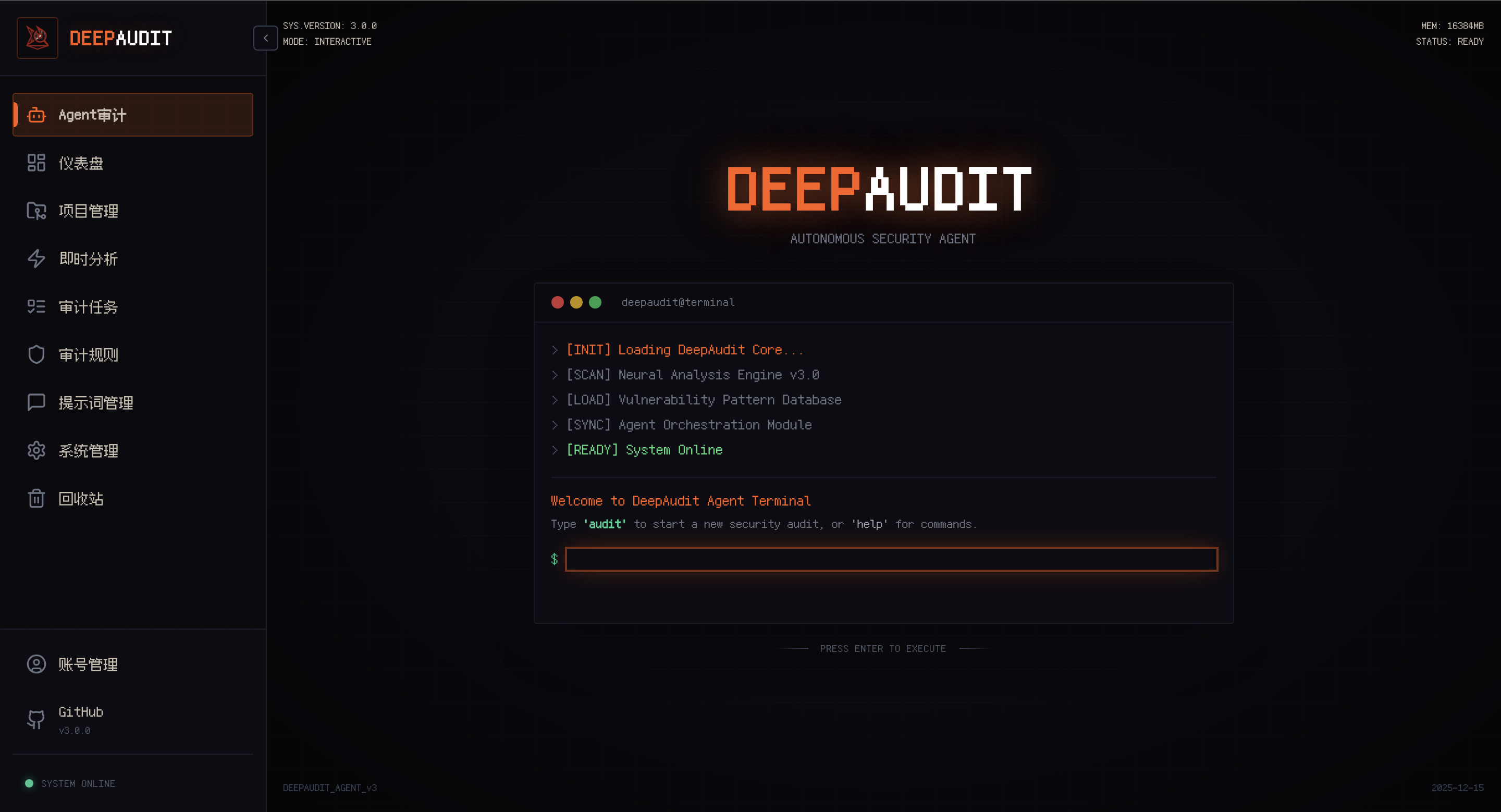
DeepAudit is a next-generation code security auditing platform built on a Multi-Agent collaborative architecture. It is not just a static scanner. Instead, it simulates the reasoning model of security experts through autonomous collaboration among multiple intelligent agents (Orchestrator, Recon, Analysis, Verification) to achieve deep code understanding, vulnerability discovery, and automated sandboxed PoC verification.
We are committed to solving three major pain points of traditional SAST tools:
High false-positive rates: lack of semantic understanding leads to large amounts of noisy findings and wasted review effort
Business-logic blind spots: inability to understand cross-file calls and complex logic flows
Lack of verification: no way to determine whether a vulnerability is actually exploitable
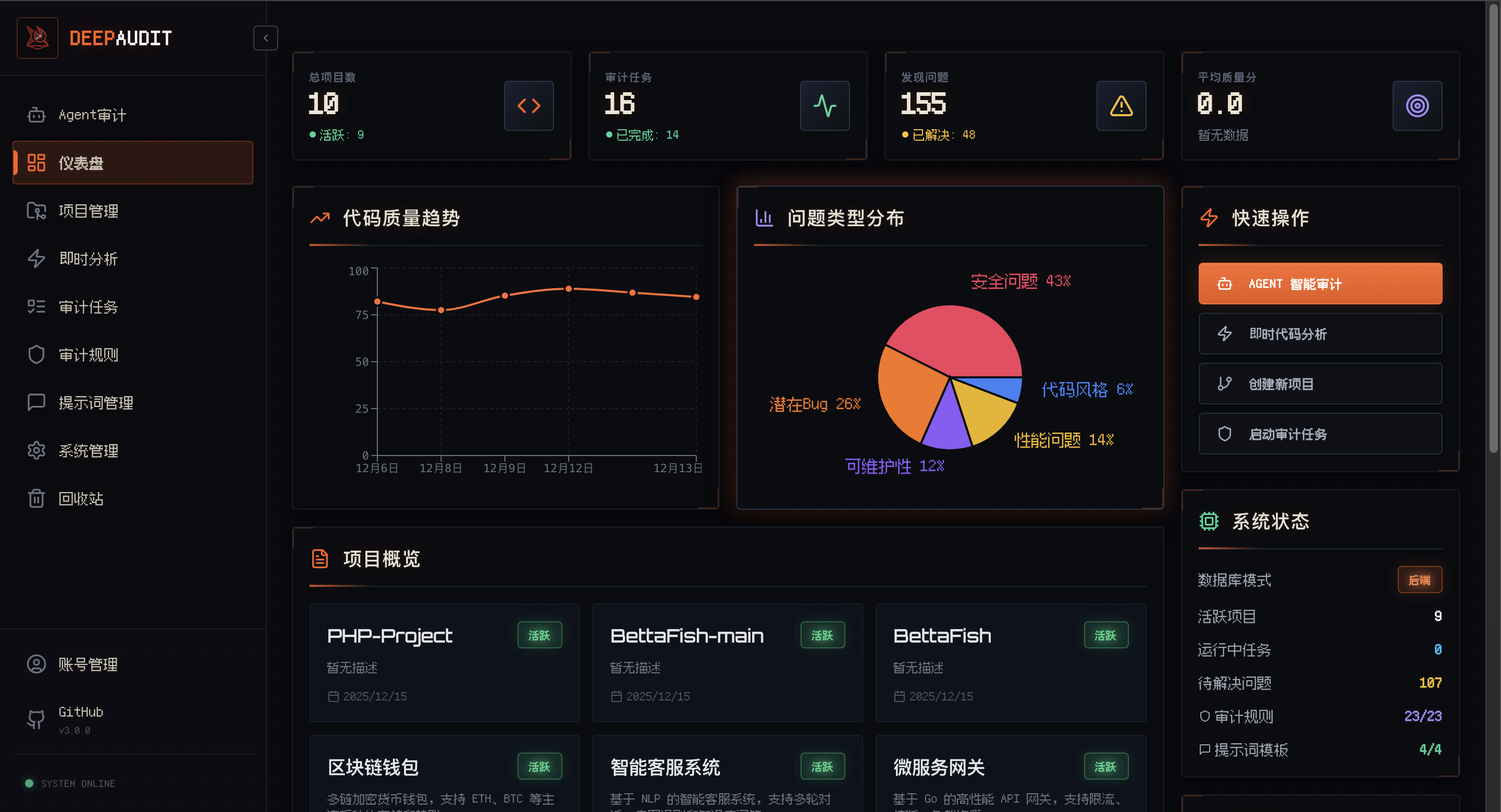
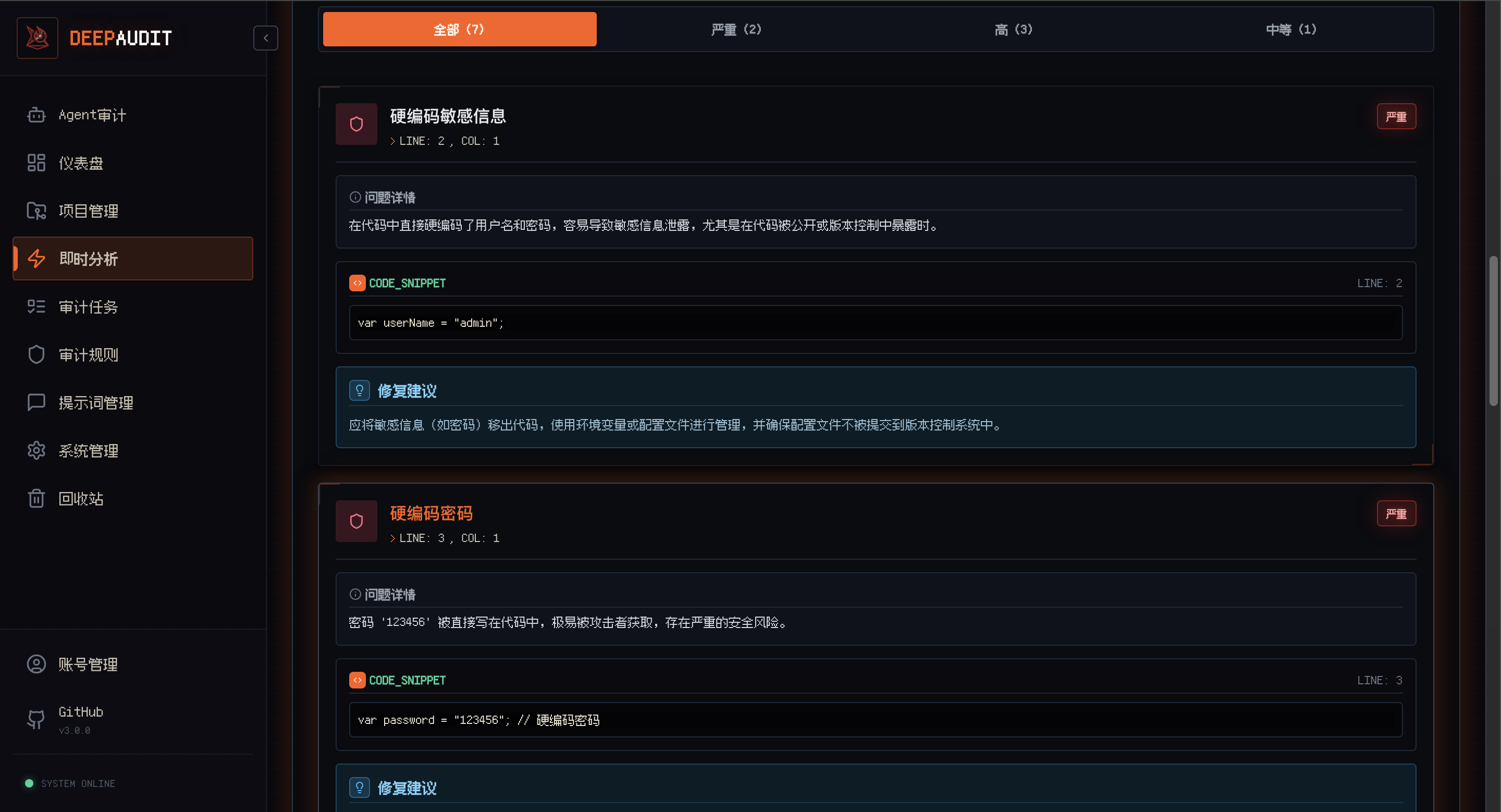
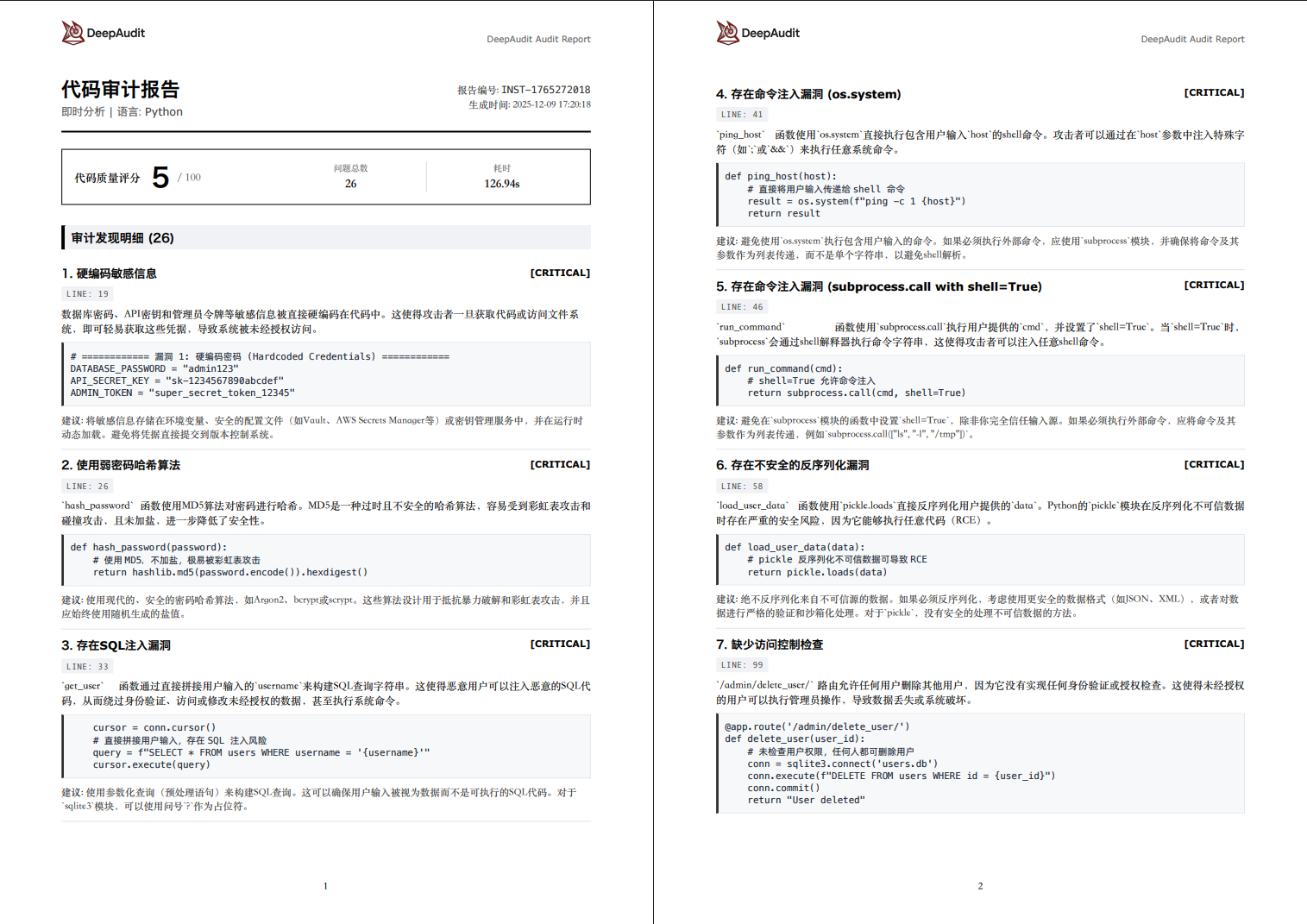
Users only need to import a project, and DeepAudit automatically starts the workflow: identify the technology stack, analyze potential risks, generate exploit scripts, verify them in a sandbox, and then produce a professional audit report.
Core philosophy: Let AI attack like a hacker and defend like an expert.
Why Choose DeepAudit?
Traditional Audit Pain Points
DeepAudit Solutions
Low manual audit efficiency Cannot keep up with CI/CD iteration speed and slows down releases
Multi-Agent autonomous auditing AI automatically orchestrates auditing strategies and runs them around the clock
Too many false positives Lack of semantic understanding means a lot of time is wasted cleaning noisy findings
RAG knowledge enhancement Combines code semantics with project context to significantly reduce false positives
Data privacy concerns Worried about core source code leaking to cloud AI services and failing compliance requirements
Ollama local deployment support Data stays inside your environment and supports local models such as Llama3 and DeepSeek
Cannot confirm real exploitability Too many findings in outsourced projects and no clear way to know which are real
Sandboxed PoC verification Automatically generates and runs attack scripts to confirm real impact
System Architecture
Architecture Diagram
DeepAudit uses a microservice architecture driven by a Multi-Agent engine at its core.
Audit Workflow
Step
Phase
Responsible Agent
Main Actions
1
Strategy Planning
Orchestrator
Receives the audit task, analyzes the project type, creates an audit plan, and dispatches tasks to sub-agents
2
Information Gathering
Recon Agent
Scans the project structure, identifies frameworks, libraries, and APIs, and extracts entry points
3
Vulnerability Discovery
Analysis Agent
Combines RAG knowledge and AST analysis to deeply inspect the code and find potential vulnerabilities
4
PoC Verification
Verification Agent
(Critical) Writes PoC scripts and executes them in a Docker sandbox, with self-correction and retries on failure
5
Report Generation
Orchestrator
Aggregates all findings, removes false positives disproven by verification, and generates the final report
Use the prebuilt Docker images. You do not need to clone the repository:
root@kitploit:~
curl -fsSL https://raw.githubusercontent.com/lintsinghua/DeepAudit/v3.0.0/docker-compose.prod.yml | docker compose -f - up -d
China-Accelerated Deployment
Use the Nanjing University mirror site to accelerate pulling Docker images by replacing ghcr.io with ghcr.nju.edu.cn:
root@kitploit:~
# China-accelerated version using the Nanjing University GHCR mirror
curl -fsSL https://raw.githubusercontent.com/lintsinghua/DeepAudit/v3.0.0/docker-compose.prod.cn.yml | docker compose -f - up -d
Suitable if you need custom configuration or want to develop on top of the project:
root@kitploit:~
# 1. Clone the project
git clone https://github.com/lintsinghua/DeepAudit.git && cd DeepAudit
# 2. Configure environment variables
cp backend/env.example backend/.env
# Edit backend/.env and fill in your LLM API key
# 3. Start everything
docker compose up -d
The first startup will automatically build the sandbox image and may take a few minutes.
Source Development Guide
Suitable for developers doing secondary development and debugging.
Requirements
Python 3.11+
Node.js 20+
PostgreSQL 15+
Docker (for the sandbox)
1. Start the database manually
root@kitploit:~
docker compose up -d redis db adminer
2. Start the backend
root@kitploit:~
cd backend
# Configure environment variables
cp env.example .env
# Use uv to manage the environment (recommended)
uv sync
source .venv/bin/activate
# Start the API service
uvicorn app.main:app --reload
3. Start the frontend
root@kitploit:~
cd frontend
# Configure environment variables
cp .env.example .env
pnpm install
pnpm dev
4. Sandbox environment
In development mode, you need to pull the sandbox image locally:
root@kitploit:~
# Standard pull
docker pull ghcr.io/lintsinghua/deepaudit-sandbox:latest
# China-accelerated pull (Nanjing University mirror)
docker pull ghcr.nju.edu.cn/lintsinghua/deepaudit-sandbox:latest
Precise issue location, root-cause explanation, and remediation suggestions
General
Audit rules
Built-in OWASP Top 10 with support for custom rule sets
General
Prompt templates
Visual management with bilingual support
General
Report export
One-click export to PDF / Markdown / JSON
General
Runtime configuration
Configure LLM settings in the browser without restarting services
General
Roadmap
We are continuing to evolve the platform with support for more languages and stronger agent capabilities.
Basic static analysis with Semgrep integration
RAG knowledge base and Docker security sandbox support
Multi-Agent collaborative architecture (current)
Support more realistic simulated service environments for more realistic vulnerability verification workflows
Upgrade the sandbox integration from function_call to a stable MCP service
Auto-Fix: allow agents to directly submit PRs to fix vulnerabilities
Incremental PR audit: continuously track PR changes, intelligently analyze vulnerabilities, and integrate with CI/CD pipelines
Optimize RAG: support custom knowledge bases
Contributing & Community
Contributing Guide
We warmly welcome contributions of all kinds, whether that means filing issues, opening PRs, or improving documentation.
Please refer to CONTRIBUTING.md for details.
Contact the Author
You are welcome to reach out for technical discussions, feature suggestions, or collaboration opportunities.
For platform customization, code auditing services, technical consulting, or business collaboration, please contact by email.
Any unauthorized vulnerability testing, penetration testing, or security assessment is strictly prohibited
This project is intended only for cybersecurity research, teaching, and learning
It is strictly prohibited to use this project for illegal purposes or for unauthorized security testing
Vulnerability Reporting Responsibility
If you discover any security vulnerability, please report it through legitimate channels in a timely manner
It is strictly prohibited to use discovered vulnerabilities for illegal activities
Comply with cybersecurity laws and regulations and help maintain a secure cyberspace
Usage Restrictions
Only use this project in authorized environments for education and research
Do not use it for security testing against unauthorized systems
Users are solely responsible for their own actions
Disclaimer
The author is not responsible for any direct or indirect losses caused by the use of this project. Users bear full legal responsibility for their own actions.
Detailed Security Policy
For detailed information about installation policies, disclaimers, code privacy, API usage security, and vulnerability reporting, please refer to DISCLAIMER.md and SECURITY.md.
Quick Reference
Code privacy warning: your code will be sent to the servers of the selected LLM provider
Sensitive code handling: use local models when processing sensitive code
Compliance requirements: follow data protection and privacy laws
Vulnerability reporting: report security issues through legitimate channels