 lindhunt/cve-2026-26211
Public disclosure and proof-of-concept for CVE-2026-26211, a stored XSS vulnerability in Ekushey Project Manager CRM v5.0, including technical details and impact analysis.


-orange?style=for-the-badge&logo=owasp)


Product: Ekushey Project Manager CRM
Version: 5.0
Vulnerability: Stored Cross-Site Scripting (XSS)
CWE: CWE-79
Researcher: LINDAN TRI SAPUTRA
Initial Report: August 1, 2026
A stored Cross-Site Scripting (XSS) vulnerability was identified in Ekushey Project Manager CRM version 5.0. The issue exists in the application settings, specifically within the Name field. User-controlled HTML input is stored without proper sanitization or output encoding, leading to arbitrary JavaScript execution when the page is rendered.
Settings → Name
The JavaScript executes when the stored value is rendered.
Because the payload is stored in the application, the issue affects all users not just the administrator who initially modified the setting. Depending on where the application name is rendered and which users can access those pages, the stored payload may execute in the browser of staff, clients, or other authenticated users.
A video demonstration of CVE-2026-26211 is available below:
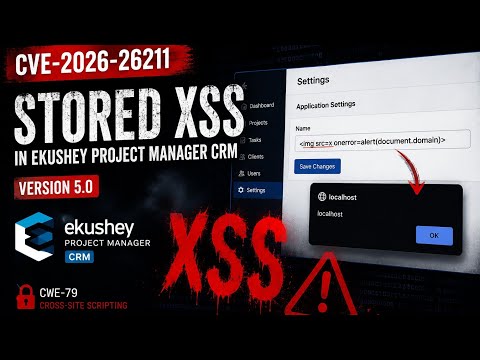
Click the image to watch the PoC on YouTube
Direct link: https://youtu.be/b8gRD9jpvak?si=otEalAgZexiENIfh
| Date | Event |
|---|---|
| August 1, 2026 | Vulnerability submitted to VulnCheck |
| August 2026 | VulnCheck validated the submission and confirmed it qualifies for CVE assignment |
| August 2026 | CVE-2026-26211 assigned |
| August 25, 2026 | Public technical disclosure published per VulnCheck's request |
LINDAN TRI SAPUTRA
Independent Security Researcher
GitHub: https://github.com/LindHunt
This report is provided for educational and security awareness purposes only. The identified vulnerability has been responsibly disclosed to the vendor or relevant coordinating authority (VulnCheck) prior to public release. Unauthorized exploitation of this vulnerability is illegal and unethical.
To remediate this vulnerability:
Stay secure, stay vigilant.
