 kemal-arslan/reposherlock
Analyze any GitHub repo (URL or local path) → architecture map, verified run commands, risks, and actionable issues - in minutes.

English | Türkçe
Drop a GitHub repo URL or local path and get architecture, run guidance, risks, and actionable issues.
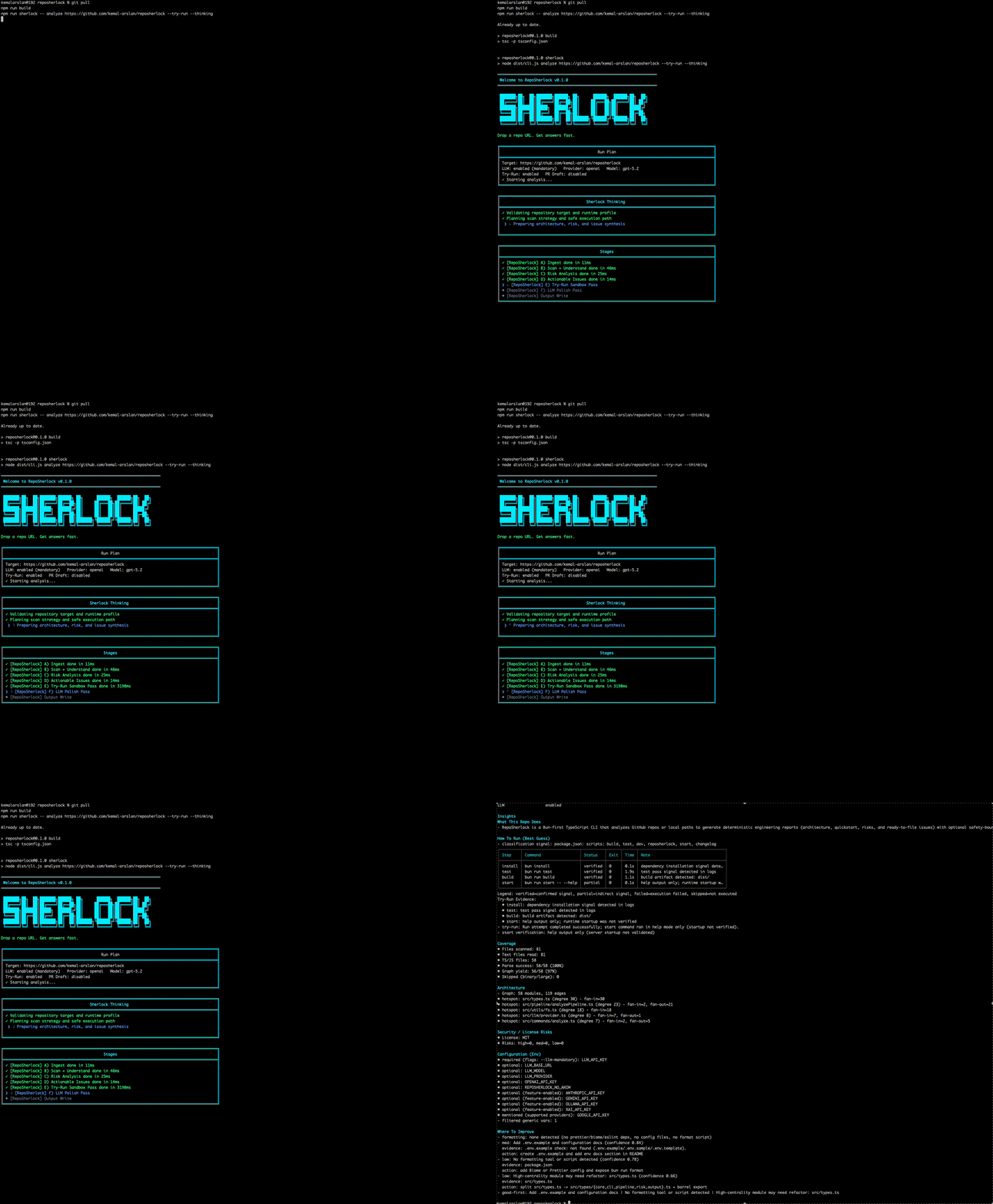
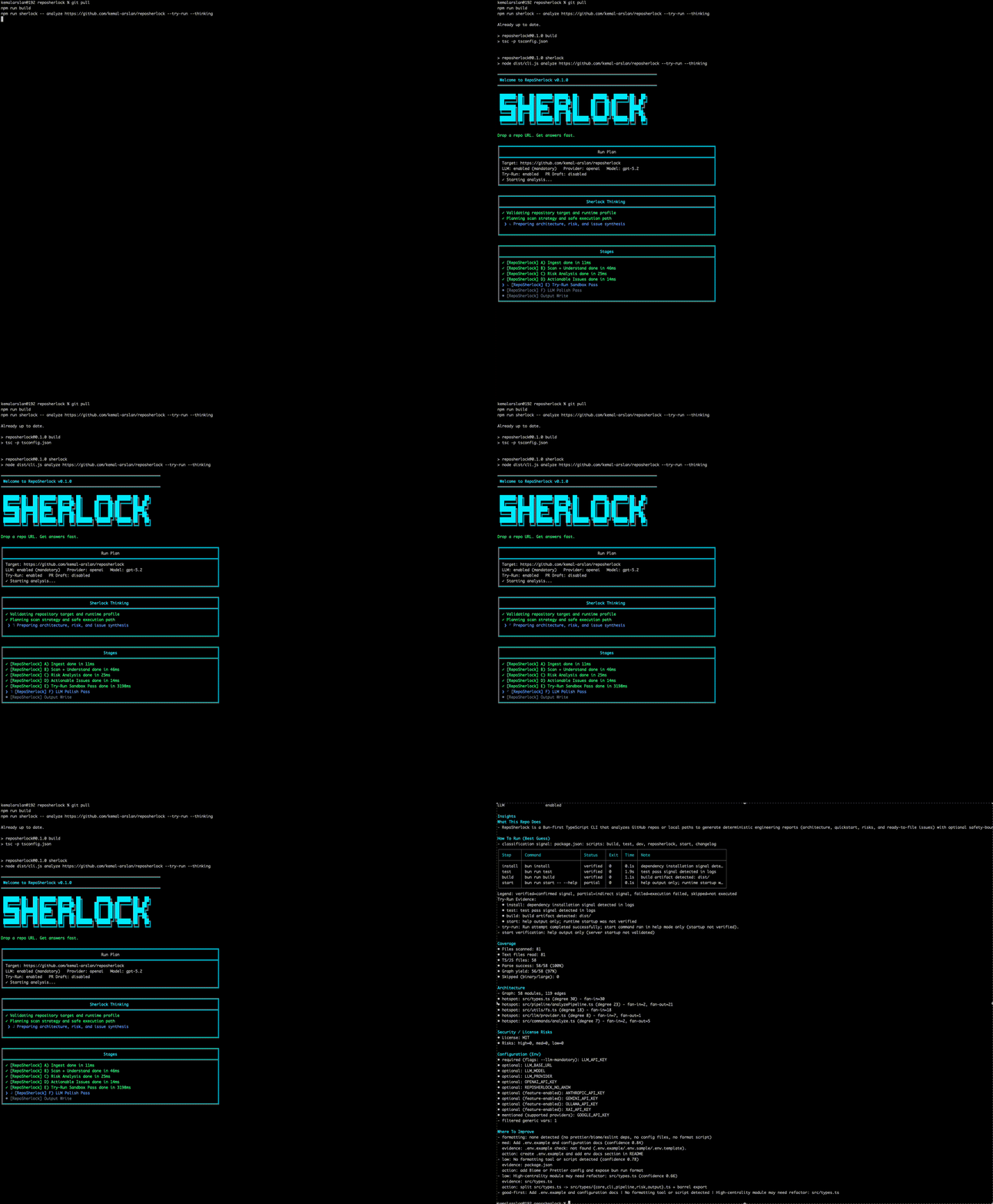
RepoSherlock does not only guess commands. With --try-run, it attempts install/test/build/start steps in a sandbox and records evidence (signals, timeouts, and notes) in the run report.
RepoSherlock analyzes a public GitHub repository or local project path and writes a report bundle under:
.reposherlock/output/<run-dir>/Default run directory is timestamp-based (for example: 20260208-103104).
Artifacts include:
report.md / report.jsonarchitecture.mmd / architecture.jsonrisks.md / risks.jsonissues.jsonissues.good-first.md / issues.good-first.jsonREADME_2.0.mdrun_attempt.md / run_attempt.json (only with --try-run)pr_draft.md (only with --pr-draft or wizard Full Sherlock profile)When LLM polish is enabled, additional variants are emitted:
README_2.0.deterministic.md / README_2.0.llm.mdissues.deterministic.json / issues.llm.jsonreport.deterministic.md / report.llm.mdRun Plan
Target: https://github.com/octocat/Hello-World
Try-Run: enabled
Sherlock Thinking
✓ Validating repository target and runtime profile
✓ Planning scan strategy and safe execution path
✓ Preparing architecture, risk, and issue synthesis
Summary
Repo type: web
Risks: high=0, med=1, low=0
Output: .reposherlock/output/20260208-103104
Bun (recommended):
bun install
bun run build
Node fallback:
npm install
npm run build
Minimum typing (interactive wizard):
bun run sherlock
Analyze a repo:
bun run sherlock -- analyze https://github.com/octocat/Hello-World --try-run
Analyze a local path:
bun run sherlock -- analyze . --no-network --try-run
Open summary for an existing run:
bun run sherlock -- report .reposherlock/output/<run-dir>
Check local toolchain:
bun run sherlock -- doctor
UI demo mode:
bun run sherlock -- ui-demo
Node fallback (if you do not use Bun):
npm run sherlock
RepoSherlock CLI workflow runs with LLM polish enabled in current release. Deterministic analysis is still produced and saved alongside LLM-polished outputs.
For providers that require credentials (OpenAI, Gemini, Anthropic, Grok, OpenAI-compatible), set:
export LLM_API_KEY="..."
Optional:
LLM_MODELLLM_BASE_URLYou can also set provider/model/key in the interactive wizard and store the key in:
~/.reposherlock/credentials.json (chmod 600)RepoSherlock scans repository structure and key files, builds a local module graph, extracts runtime/env/risk signals, optionally executes a sandbox try-run, then writes a report bundle. When LLM polish is enabled, it rewrites deterministic outputs for clarity without changing discovered commands and facts.
sherlock.--try-run) and executed with timeouts/output caps.bun test
# or
npm test
MIT
