
Skip to content
KitploitKITPLOIT
ToolsExploitsBlog
Log in
Submit
ToolsExploitsBlog
Submit

Hacking, PenTest, and Cybersecurity Tools for Your Security Arsenal!

Kitploit is a directory of hacking, cybersecurity, and pentesting tools. Discover the latest project updates to find vulnerabilities, analyze systems, automate testing, and strengthen your security.

FeedsContactPrivacy© 2026 Kitploit

Tool Directory

Categories

View all categories
Loading categories
Tools/GitHubGitHub/kaandemir993/python-shellcode-anydesk-apc-injection-remote-ip-address-analysis
Dynamic Analysis (Sandboxing)Encryption/Decryption ToolsPersistence MechanismsReverse EngineeringData ExfiltrationMalware AnalysisDigital ForensicsCommand and Control

Most Popular

View all →

Discover the most used tools by our community.

Explore all tools

Browse our collection of tools

View all tools →
Binary Analysis
Papers & Research
GitHubkaandemir993/python-shellcode-anydesk-apc-injection-remote-ip-address-analysis

Python-Shellcode-Anydesk-Apc-injection-Remote-IP-Address-Analysis

Reverse engineering write-up of Python shellcode that APC-injects into AnyDesk, exfiltrates to a C2 over HTTPS with AES/RSA, and persists via Registry GUID keys.

View Repository
121 day agoNot yet reviewed
Share

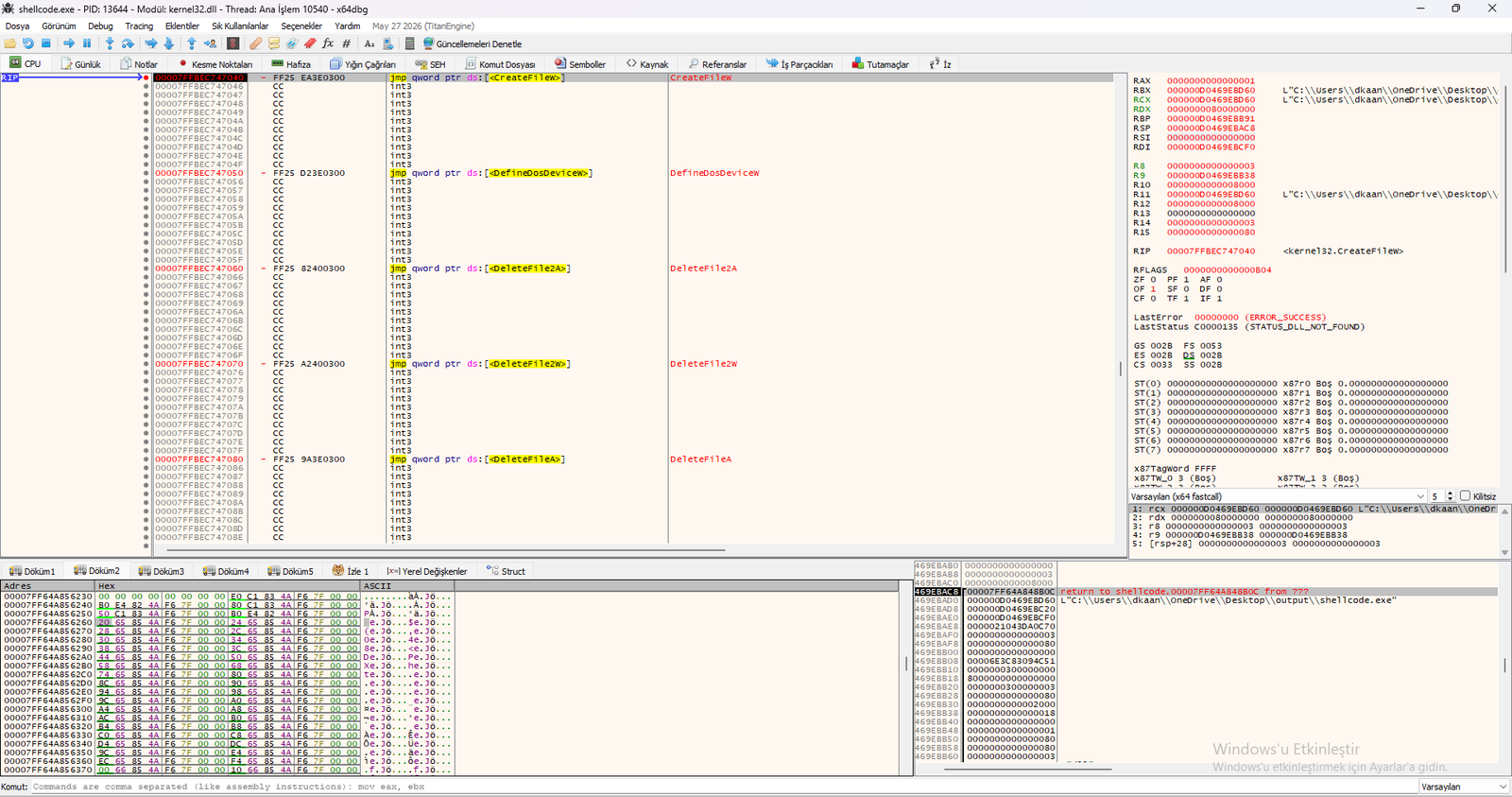
1.x64dbg – File Operations & JMP Trampolines

This x64dbg view reveals that the Python shellcode uses file operations (CreateFileW, DeleteFileA/W) and JMP trampolines to dynamically call Windows APIs.

Key Observations:

  • CreateFileW – Creates or opens a file (payload drop).
  • DeleteFileA / DeleteFileW – Deletes files (trace cleanup).
  • DefineDosDeviceW – Defines a DOS device (drive manipulation).
  • JMP Trampolines: jmp qword ptr ds:[<API>] – dynamically resolves API addresses.
  • INT3 (0xCC) – Anti-debug traps.
  • Shellcode Path: C:\Users\dkaan\OneDrive\Desktop\output\shellcode.exe.
Why This Matters:

  • File Dropping: The shellcode writes itself to disk.
  • Trace Cleanup: Deletes files to avoid detection.
  • Dynamic API Resolution: JMP trampolines resolve APIs at runtime.
  • Anti-Debug: INT3 traps disrupt debuggers.

Visual Reference:

Python Shellcode File Operations & JMP Trampolines x64dbg view showing CreateFileW, DeleteFileA/W, and JMP trampolines.

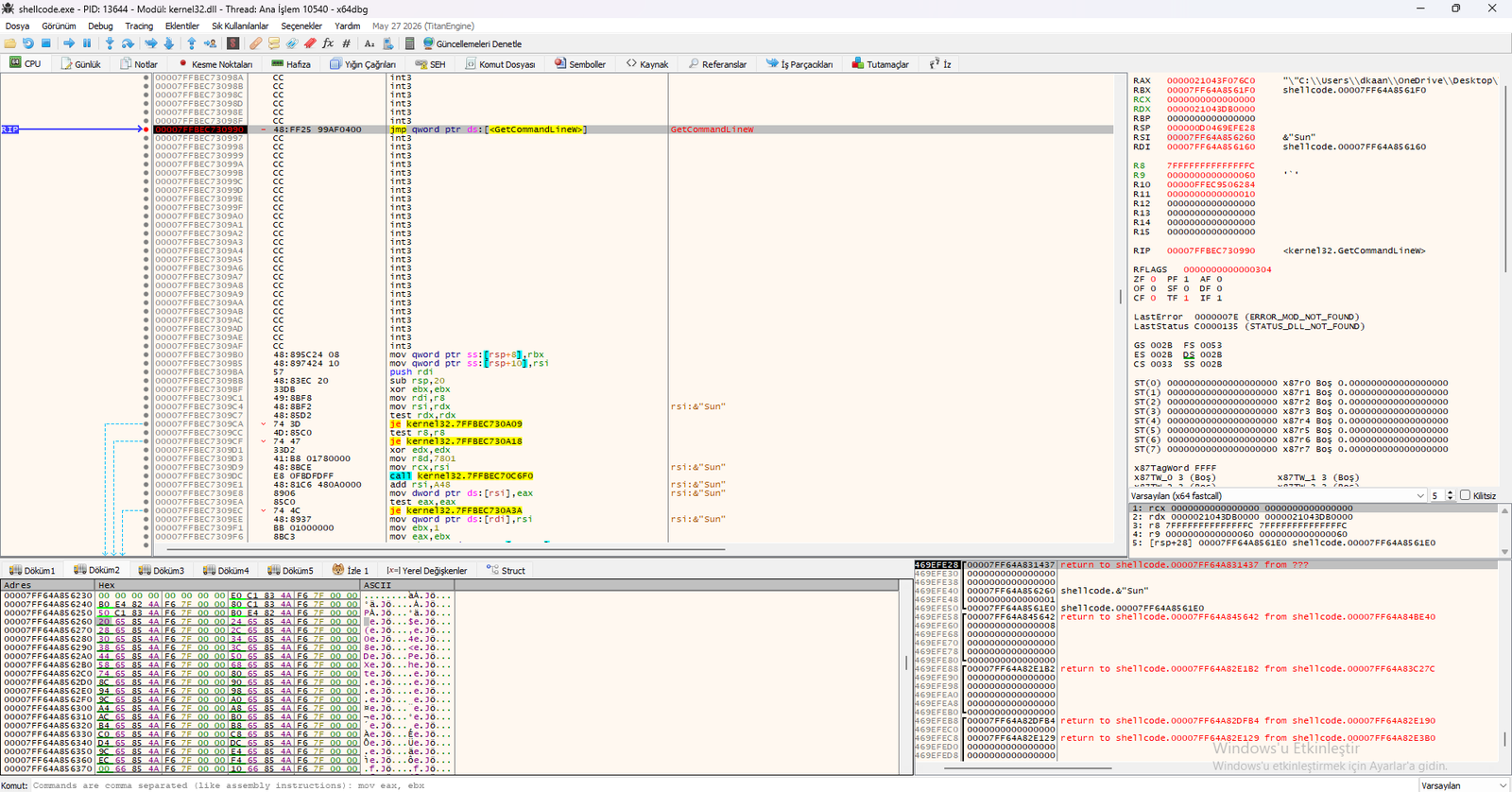
2. x64dbg – GetCommandLineW, INT3 Traps & Command-Line Parsing

This x64dbg view reveals that the Python shellcode calls GetCommandLineW to read command-line arguments, while using INT3 traps for anti-debugging.

Key Observations:

  • jmp qword ptr ds:[<GetCommandLineW>] – JMP trampoline to GetCommandLineW.
  • &"Sun" – A command-line argument string.
  • INT3 Traps (0xCC) – Fills the memory space between valid instructions, disrupting debuggers and disassemblers.
  • Function Prologue: mov [rsp+8], rbx, sub rsp, 0x20, xor ebx, ebx.
  • Conditional Branch: test rdx, rdx, je kernel32.7FFBEC730A9.
  • Parameter Preparation: mov rdx, rsi, mov r8, rdi.

Why This Matters:

  • Anti-Debugging: INT3 traps cause debuggers to break or crash.
  • Anti-Disassembly: Disassemblers show INT3 as invalid instructions.
  • Command-Line Parsing: The shellcode reads its command-line arguments.
  • Dynamic API Resolution: JMP trampolines resolve GetCommandLineW at runtime.

Visual Reference:

Python Shellcode GetCommandLineW & INT3 Traps x64dbg view showing GetCommandLineW, command-line parsing, and INT3 traps.

3. AnyDesk APC Injection & Cryptographic Operations

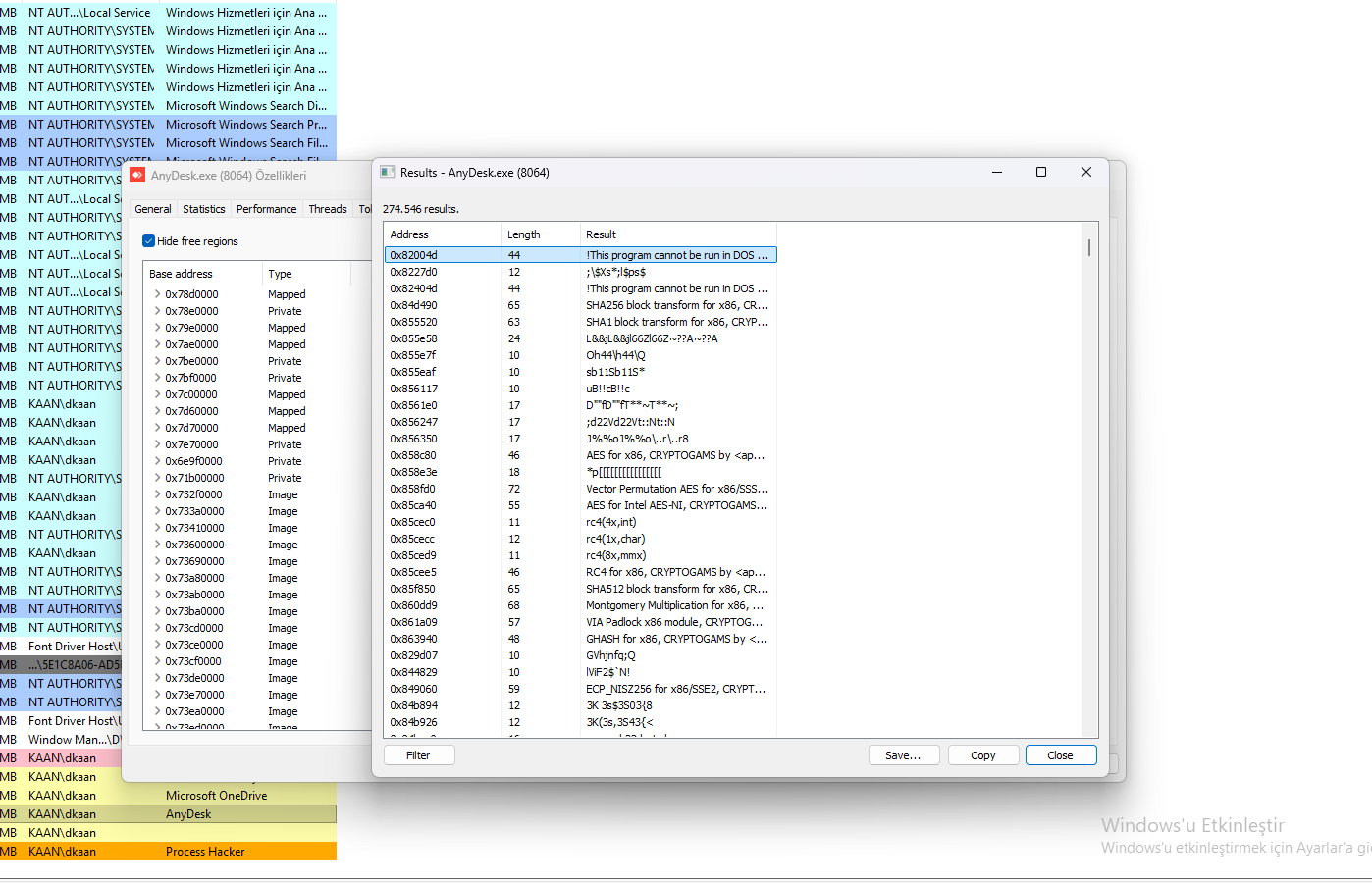
Process Hacker memory analysis reveals that the Python shellcode performs APC Injection into AnyDesk.exe and uses advanced cryptographic algorithms for data exfiltration.

APC Injection – Why AnyDesk?

  • Target Process: AnyDesk.exe (PID 8064) – a legitimate remote desktop tool.
  • Injection Method: APC (Asynchronous Procedure Call) injection – injects code into an existing thread without creating a new one.
  • Why AnyDesk?
    • It is a trusted, always-running process.
    • Its network traffic (remote desktop) blends with C2 communication.
    • Security tools rarely flag AnyDesk activity.

Cryptographic Algorithms:

  • AES for x86 / AES for Intel AES-NI – symmetric encryption.
  • RSA for x86 – asymmetric encryption.
  • SHA256 block transform – hashing.
  • RC4 for x86 – stream cipher.
  • Vector Permutation AES – SIMD-accelerated AES.
  • GHASH for x86 – GCM authentication.
  • Montgomery Multiplication – RSA acceleration.
  • ECP_NISTZ256 for x86 – elliptic curve cryptography.

Why This Matters:

  • APC Injection: Stealthier than CreateRemoteThread – no new thread is created.
  • LOLBin Abuse: AnyDesk is a legitimate tool, making detection harder.
  • Encrypted C2: The shellcode encrypts its communication with AES/RSA.
  • Data Integrity: SHA256 and GHASH ensure data is not tampered with.

Visual Reference:

Python Shellcode AnyDesk APC Injection & Crypto Process Hacker view showing AnyDesk injection and cryptographic algorithms (AES, RSA, SHA256, RC4).

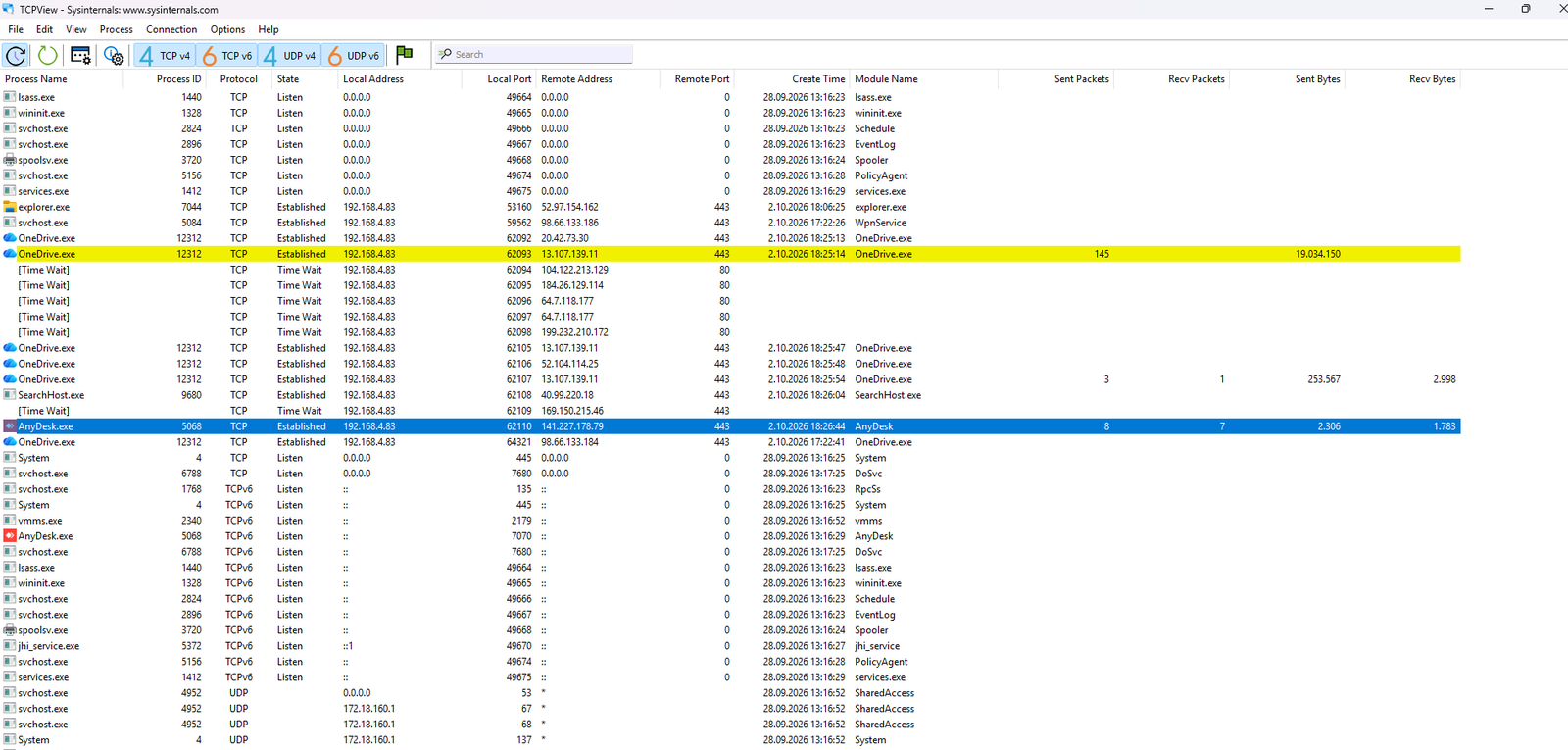
4. TCPView – AnyDesk Data Exfiltration

TCPView analysis reveals that the Python shellcode uses AnyDesk.exe to exfiltrate data to 141.227.178.79 over port 443 (HTTPS).

Key Observations:

  • Process: AnyDesk.exe (PID 5068) – legitimate remote desktop tool.
  • Remote IP: 141.227.178.79
  • Port: 443 (HTTPS – blends with legitimate traffic).
  • State: Established (active connection).
  • Sent Packets: 8 (2,306 bytes) – encrypted data exfiltration.
  • Recv Packets: 7 (1,703 bytes) – C2 commands.

Why This Matters:

  • LOLBin Abuse: AnyDesk is a legitimate tool, making detection harder.
  • Encrypted Exfiltration: Port 443 (HTTPS) hides the stolen data.
  • C2 Communication: The shellcode receives commands from the same IP.
  • Evasion: Security tools rarely flag AnyDesk traffic.

Visual Reference:

Python Shellcode AnyDesk Data Exfiltration TCPView view showing AnyDesk.exe connecting to 141.227.178.79 over port 443.

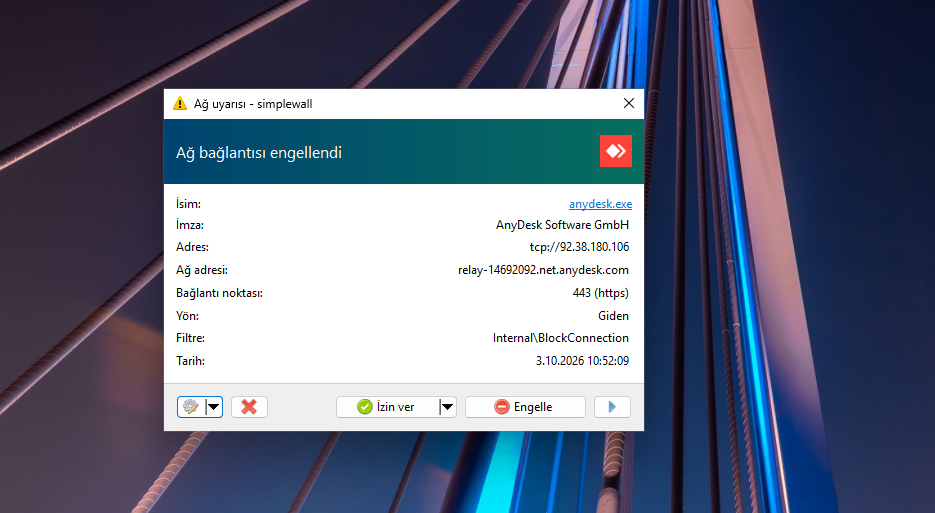
5.AnyDesk - Simplewall blocking remote IP addresses

Simplewall analysis reveals that although the Python shellcode attempts to exfiltrate data to 141.227.178.79 via port 443 (HTTPS) using AnyDesk.exe, it tries to establish a connection to another legitimate address (92.38.180.106) when blocked.

Key Observations:

  • Process: AnyDesk.exe (PID 5068) – legitimate remote desktop tool.
  • Remote IP: 92.38.180.106
  • Port: 443 (HTTPS – blends with legitimate traffic).
  • State: Blocked (blocked connection).
  • blocked address: (relay-14692092.net.anydesk.com).

Why This Matters:

  • LOLBin Abuse: AnyDesk is a legitimate tool, making detection harder.
  • Encrypted Exfiltration: Port 443 (HTTPS) hides the stolen data.
  • C2 Communication: The shellcode receives commands from the same IP.
  • Evasion: Security tools rarely flag AnyDesk traffic.

Visual Reference:

Python Shellcode AnyDesk Data Exfiltration Simplewall wiew showing Anydesk.exe blocked to 92.38.180.106 over port 443.

6. Registry Persistence – GUID-Based Keys

Registry analysis reveals that the Python shellcode creates GUID-based keys under HKLM\SYSTEM\CurrentControlSet\Control\ for persistence.

Key Observations:

  • GUID Keys: {bf1a281b-ad7b-4476-ac95-f47682990ce7} – randomly generated GUIDs.
  • Volume Shadow Copy Path: GLOBALROOT\Device\HarddiskVolumeShadowCopy5\WINDOWS\system32\config\components.
  • StoreArchitecture: 09 00 00 00 – architecture identifier.
  • StoreFormatVersion: 30 00 2e 00 30 00 2e 00 2e 00 36 00 – "0.0.0.6" in Unicode.

Why This Matters:

  • Persistence: GUID keys ensure the shellcode runs on system startup.
  • Stealth: Volume Shadow Copy paths are rarely monitored.
  • Evasion: Random GUIDs make detection harder.

Visual Reference:

Download Tool