 kaandemir993/dropper-gcleaner-c2-infrastructure-kernel-driver-powershell-conhost-payload-analysis
Reverse engineering analysis of Dropper GCleaner, a malware that uses a resilient C2 infrastructure, kernel driver loading, PowerShell/Conhost execution, and .rdata payload extraction. Includes 30+ C2 domains, NtLoadDriver, and full API list."

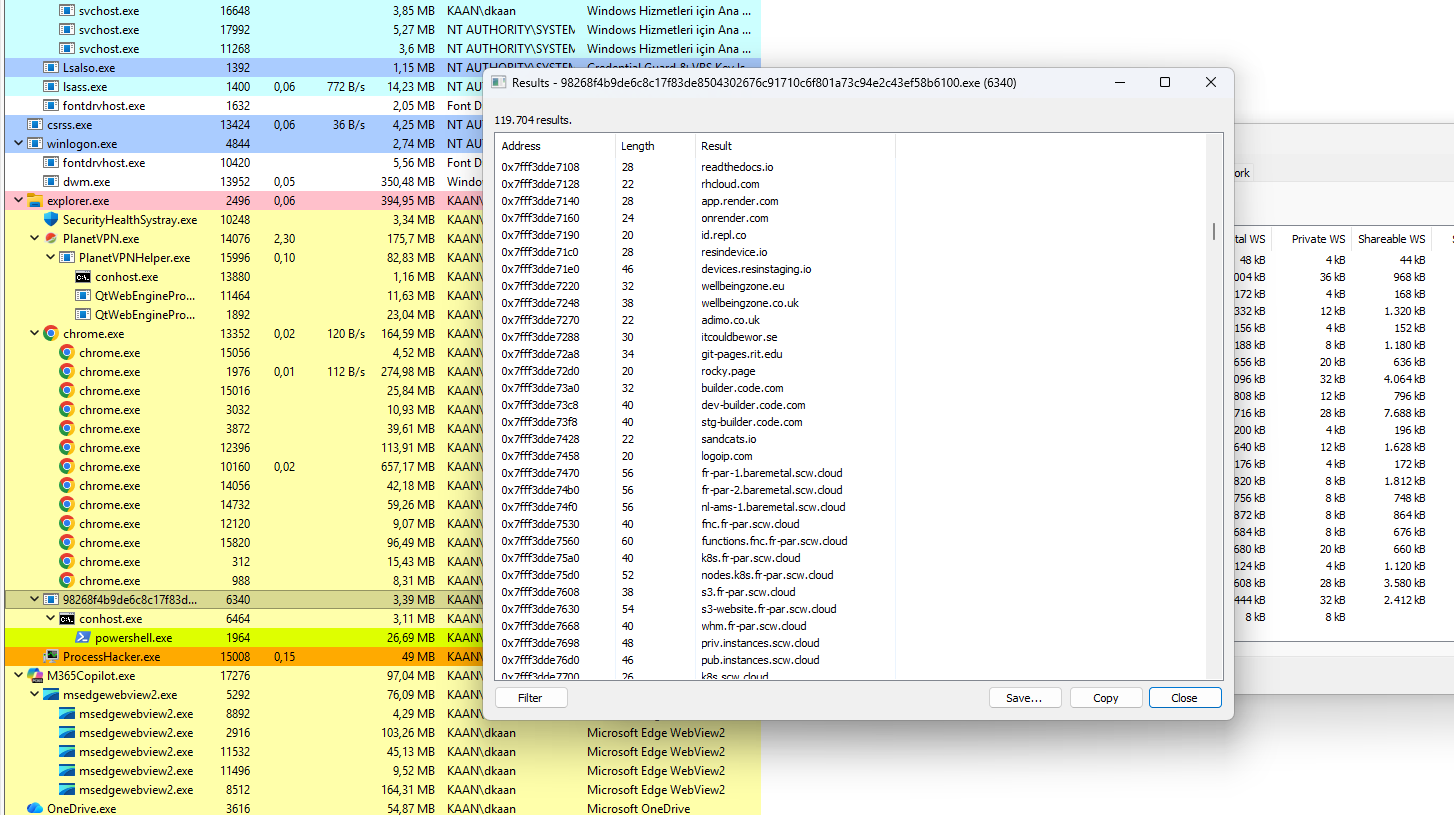
Process Hacker memory analysis reveals a comprehensive list of domains used by Dropper GCleaner for C2 communication. These domains are hosted on various platforms (Scaleway, Render, Replit, etc.), indicating a robust and redundant infrastructure.
readthedocs.io, rhcloud.com, app.render.com, id.repl.co, resindevice.io, etc.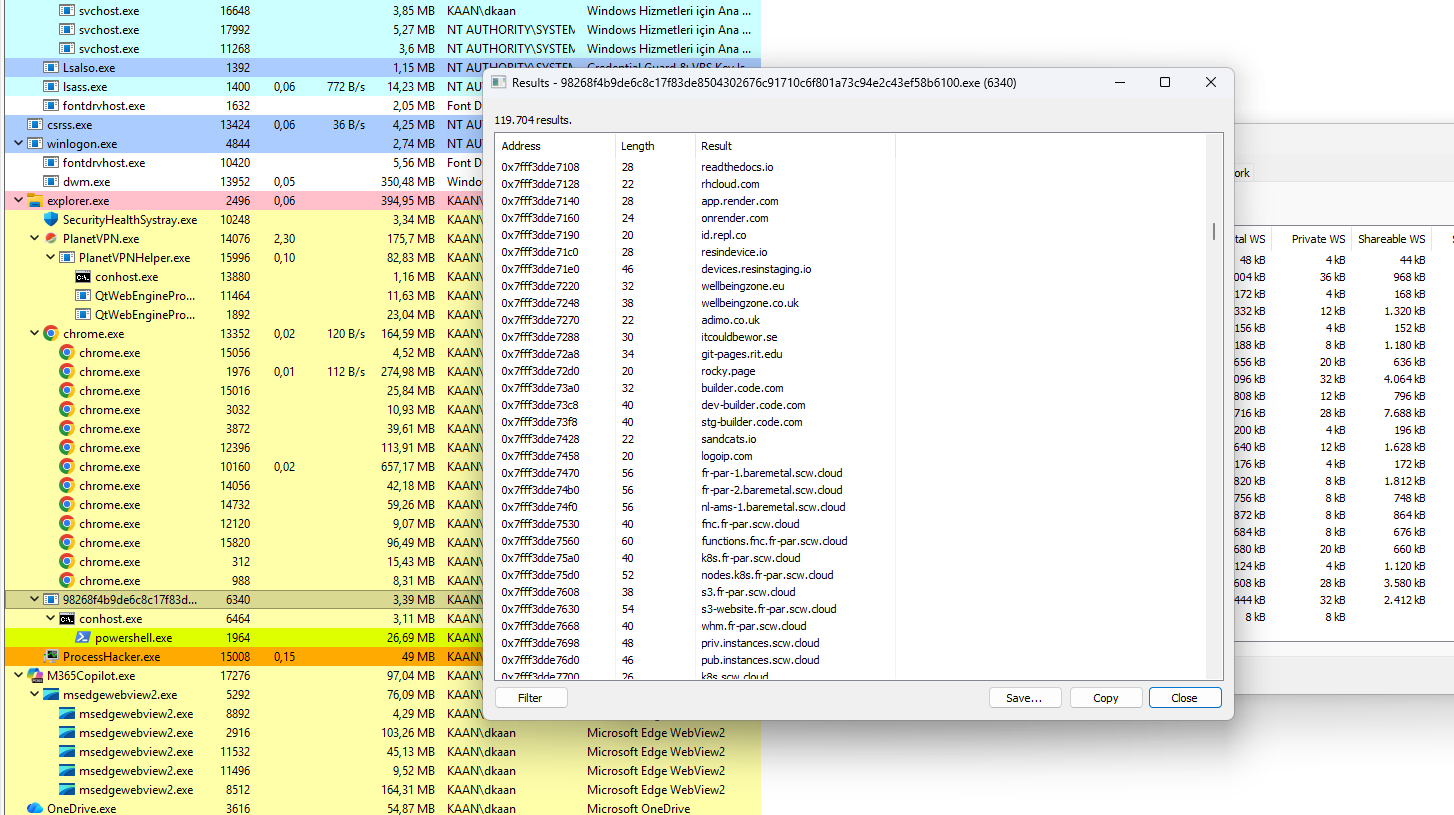 Process Hacker view showing the extensive list of C2 domains used by Dropper GCleaner.
Process Hacker memory analysis of the PowerShell process reveals that Dropper GCleaner uses conhost.exe and powershell.exe for execution. The strings show critical Windows API calls used for clipboard manipulation and window management.
NtUserGetClipboardData – Reads data from the clipboard.SetClipboardData – Writes data to the clipboard.NtUserRegisterHotKey – Registers global hotkeys.NtUserSwitchDesktop – Switches the desktop (potential evasion).NtUserSetWindowLongPtr – Modifies window properties.NtReadVirtualMemory – Reads memory from other processes.NtCreateFile – Creates or opens files.NtUserSwitchDesktop can be used to hide malicious windows.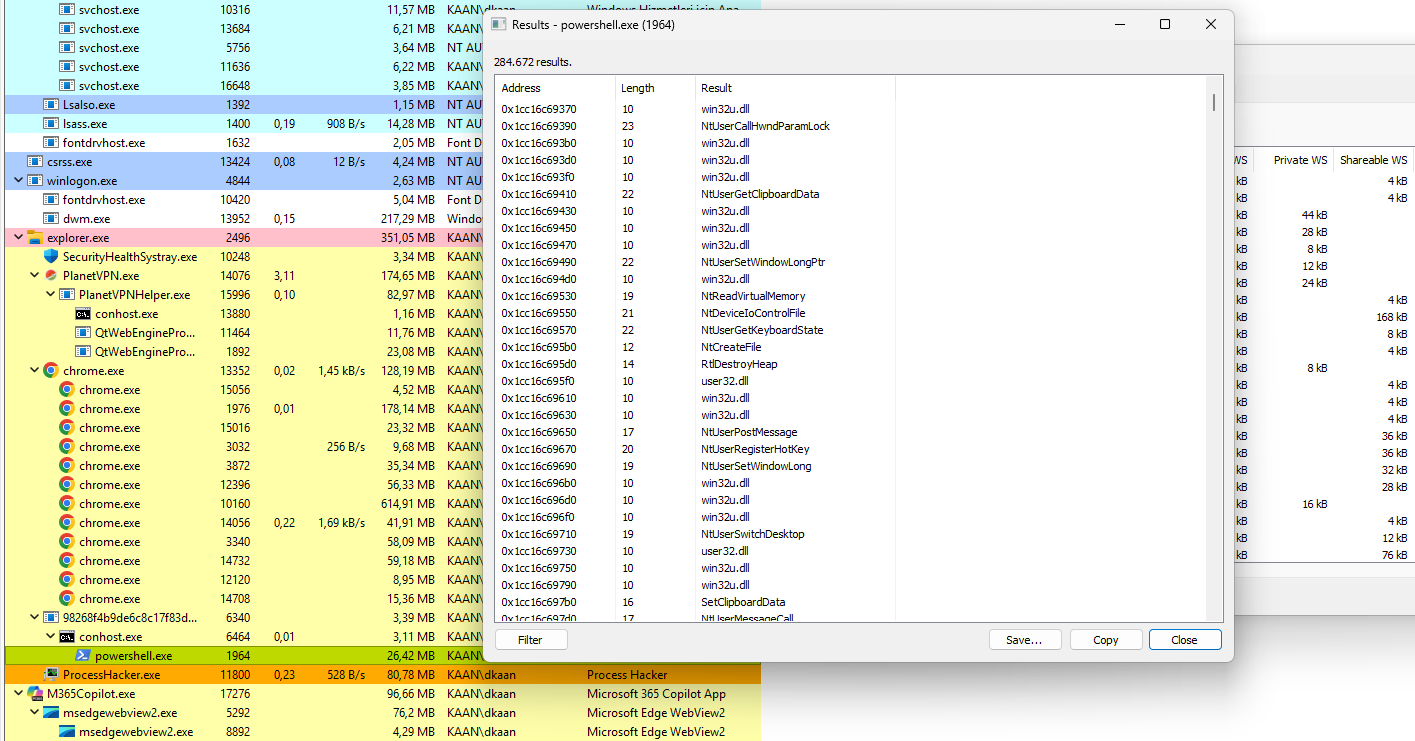 Process Hacker view showing PowerShell process strings with
 NtUserGetClipboardData, SetClipboardData, and other APIs.
Further analysis of PowerShell process strings reveals that Dropper GCleaner has advanced system-level capabilities, including kernel driver loading and privilege escalation.
NtLoadDriver – Loads a kernel driver.NtAdjustPrivilegesToken – Adjusts token privileges for escalation.NtSetSystemInformation – Modifies system information (potential evasion).NtTerminateProcess – Terminates processes (e.g., security tools).CoCreateInstance – Creates COM objects for system interaction.RegOpenKeyExW – Opens registry keys for persistence.NtLoadDriver allows the malware to load drivers, giving it deep system access.NtAdjustPrivilegesToken enables the malware to gain higher privileges.NtSetSystemInformation can be used to hide from security tools.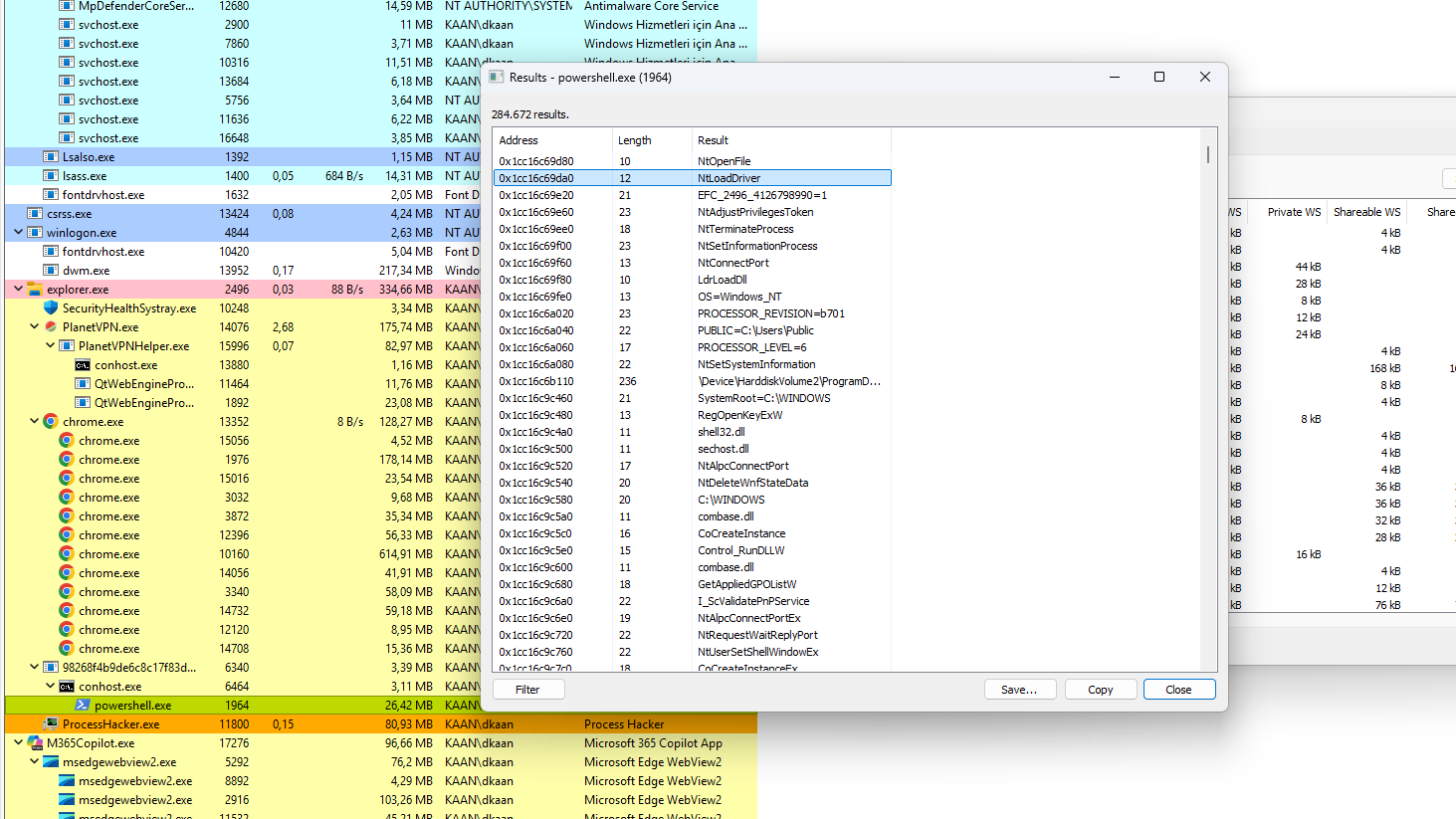 Process Hacker view showing PowerShell strings with
 NtLoadDriver, NtAdjustPrivilegesToken, and NtSetSystemInformation.
Analysis of conhost process strings reveals that Dropper GCleaner has advanced kernel-level capabilities, including driver loading, system shutdown, and debug control.
NtLoadDriver – Loads a kernel driver.NtShutdownSystem – Shuts down or reboots the system.NtSystemDebugControl – Performs system debug operations.NtCreateThread – Creates threads in other processes.NtTerminateProcess – Terminates processes (e.g., security tools).NtSetSystemInformation – Modifies system information.NtCreateSection – Creates memory sections (for code injection).NtShutdownSystem allows the malware to disrupt the system.NtLoadDriver and NtSystemDebugControl give deep system access.NtCreateSection and NtCreateThread are used for code injection.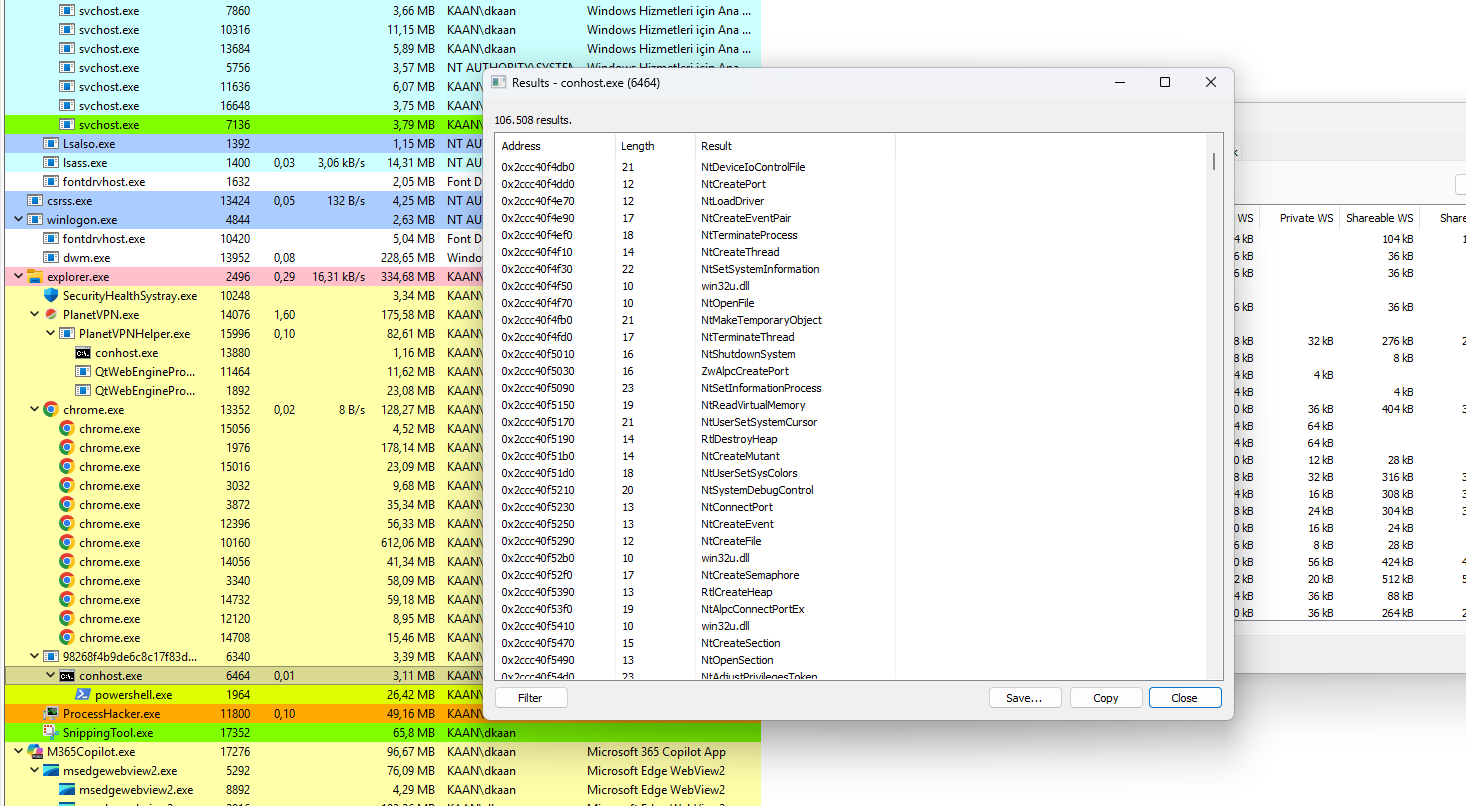 Process Hacker view showing conhost strings with
 NtLoadDriver, NtShutdownSystem, and NtSystemDebugControl.
Binary Ninja analysis of the .rdata section reveals the complete payload of Dropper GCleaner . The API list confirms its capabilities as a full-featured info-stealer and system manipulator.
GetTokenInformation, AdjustTokenPrivileges, OpenProcessTokenRegOpenKeyExA, RegSetValueExA, RegDeleteValueA, RegCreateKeyExACreateFileA, DeleteFileA, FindFirstFileA, SetFileAttributesACreateThread, TerminateThread, GetCurrentProcessGlobalAlloc, LocalAlloc, LoadLibraryA, FreeLibraryCreateEvent, SetEvent, WaitForSingleObject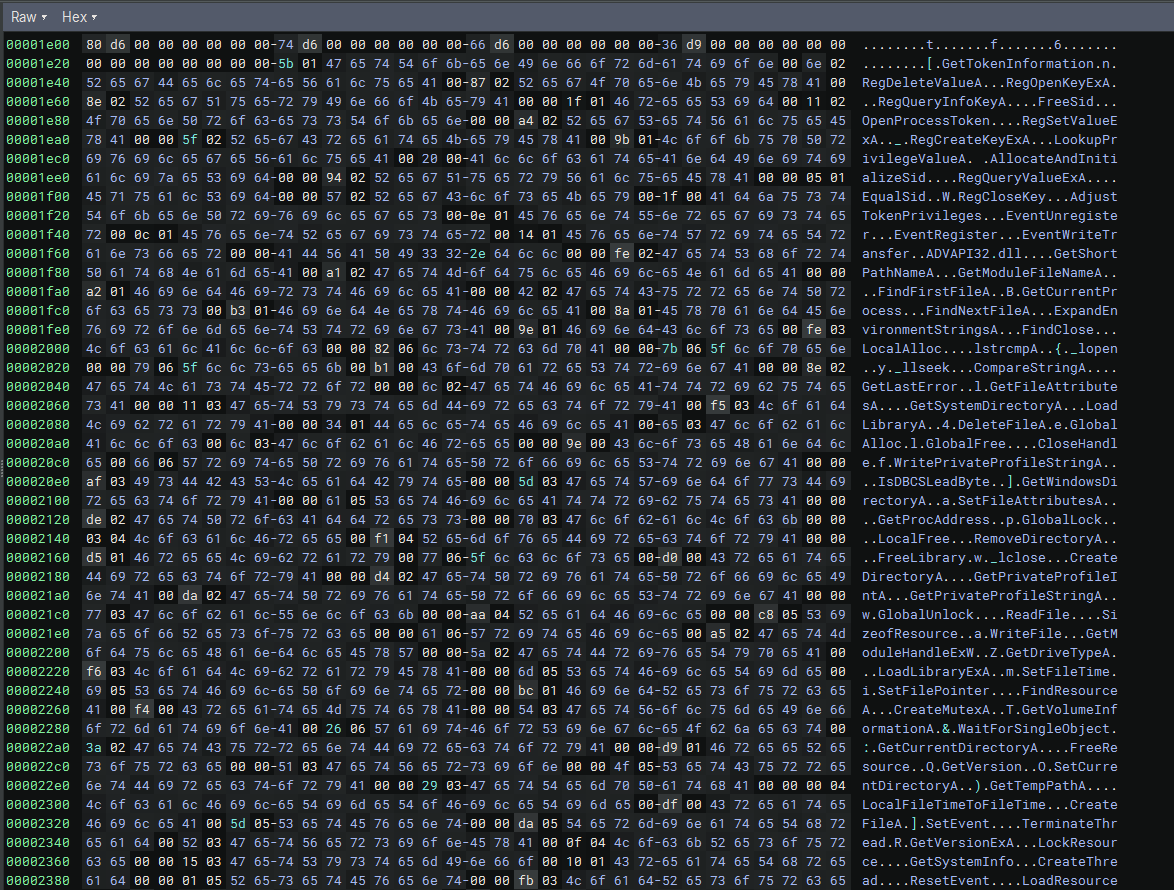 Binary Ninja view showing the full list of Windows APIs from the
 .rdata section.
This analysis uncovered **Dropper GCleaner **, a sophisticated malware that combines a resilient C2 infrastructure, kernel driver loading, PowerShell/Conhost execution, and a rich .rdata payload.
NtLoadDriver for deep system access.powershell.exe and conhost.exe for stealth..rdata section (token manipulation, registry ops, file management).NtAdjustPrivilegesToken, NtSetSystemInformation, and NtSystemDebugControl.NtLoadDriver and NtAdjustPrivilegesToken calls..rdata sections for large API lists.The analyzed Dropper GCleaner sample is available on MalwareBazaar for those who wish to conduct their own analysis:
🔗 Dropper GCleaner Sample on MalwareBazaar
Tools Used: Process Hacker, Binary Ninja, x64dbg
