 jrexploit/blackash-cve-2025-61884
Provides a detailed summary and detection guidance for CVE-2025-61884, an unauthenticated data disclosure vulnerability in Oracle E-Business Suite Configurator, including scanning templates and mitigation steps.

| Field | Details |
|---|---|
| Identifier | CVE-2025-61884 |
| Product | Oracle E-Business Suite — Oracle Configurator (Runtime UI) |
| Affected versions | 12.2.3 → 12.2.14 |
| Attack vector | Network (HTTP) — unauthenticated access |
| Impact | Confidentiality (unauthorized data disclosure) |
| CVSSv3.1 Base Score | 7.5 (High) — AV:N/AC:L/PR:N/UI:N/C:H/I:N/A:N |
| Exploit complexity | Low / easily exploitable (no authentication required) |
| Vendor status | Security alert published; vendor patches/updates available |
| Public exploit status | Detection templates and scanning rules published; widely accessible weaponized exploit code not broadly confirmed (but risk is high due to no-auth nature) |
An unauthenticated remote attacker who can reach the Oracle Configurator Runtime UI over HTTP can craft requests that cause the UI to return configuration and business data that should be protected. No user credentials are required to trigger the disclosure, so any network-accessible instance of the vulnerable component could be probed and potentially exfiltrated.
Note: public descriptions classify the primary impact as confidentiality/data disclosure. There are no confirmed public reports of remote code execution (RCE) or data modification tied specifically to this CVE at the time of this summary, but the data exposure alone is serious.
| Type | What to look for |
|---|---|
| Network | Unexpected unauthenticated HTTP requests to Configurator Runtime UI endpoints from external IPs |
| Server logs | Requests returning configuration pages or large dumps of configuration data without prior authentication tokens |
| Scanning evidence | Repeated probing patterns typical of automated scanners (sequential requests for UI pages, identical user agents, rapid scanning) |
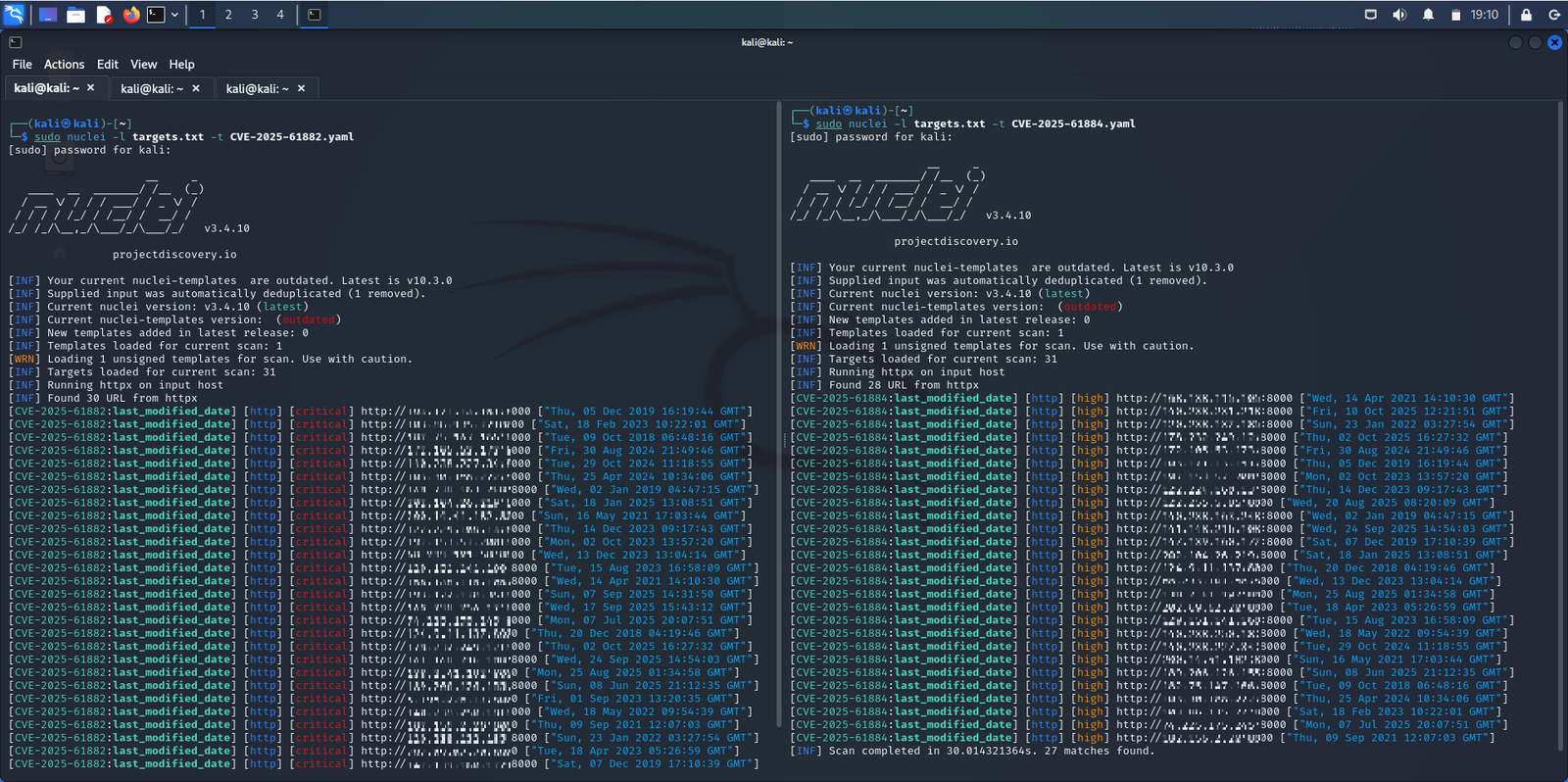
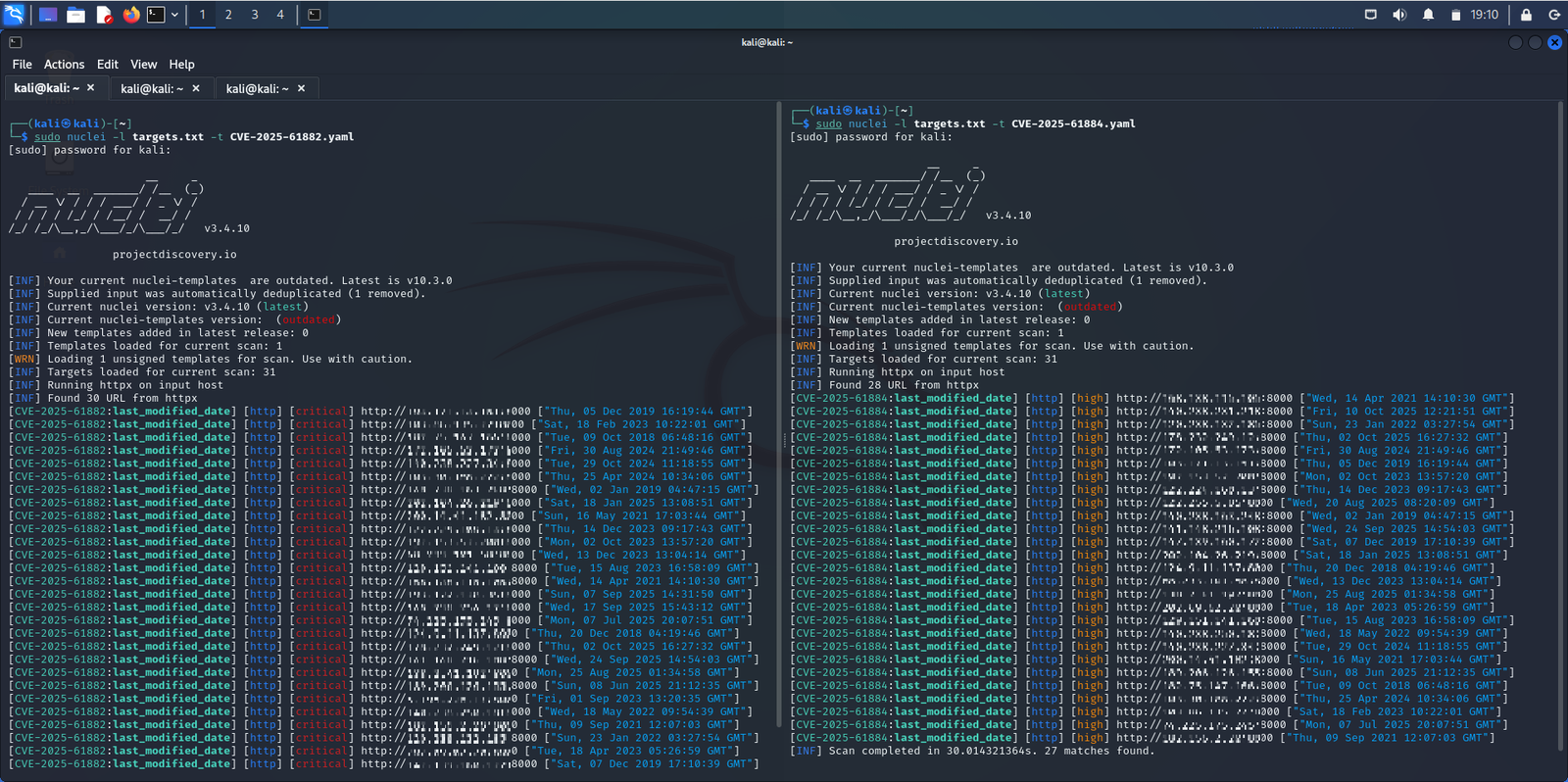
| Scanner output | Nuclei / other detection tool results that flag the presence of EBS Configurator UI responses |
Immediate (highest priority)
If you cannot patch immediately 2. Block network access to the Oracle Configurator Runtime UI from untrusted networks — use firewalls, ACLs, or network segmentation to restrict access to trusted admin IPs or VPN-only. 3. Put the endpoint behind a WAF and add rules to drop or challenge suspicious unauthenticated requests to Configurator UI paths. 4. Disable the Runtime UI if it is not required in your environment, or remove/uninstall the Configurator component where feasible.
Monitoring & validation 5. Scan your perimeter and DMZ with updated detection templates to identify exposed endpoints. 6. Increase logging & alerting on EBS web endpoints; hunt for past unauthenticated accesses and large data responses. 7. Re-scan after patching to validate remediation and review logs for activity in the vulnerable window.
Post-incident precautions 8. Rotate any credentials or secrets that may have been stored in exposed configuration items as an abundance of caution. 9. Document findings and follow your incident response playbook if any data exposure is confirmed.
Which would you like? ✨
