 joelatplay/cve-2025-66850
Proof-of-concept and technical analysis for a reflected XSS vulnerability (CVE-2025-66850) in LibreNMS routing module, affecting versions 22.9.0 through 24.9.1.

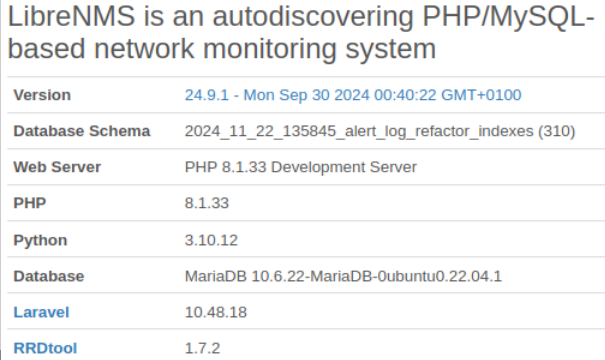
Within the ‘LibreNMS’ application, we discovered a reflected Cross-Site Scripting vulnerability; this vulnerability exists in the routing module’s protocol parameter, allowing an attacker to render malicious JavaScript in a victim’s browser. This vulnerability affects all versions from 22.9.0 (September 2022) through 24.9.1 (September 2024). This vulnerability was silently patched in version 24.10.0 (November 2024) without a subsequent CVE or public disclosure. This undocumented fix means many organisations may be unaware of their exposure and are yet to apply necessary updates. You can see the current setup used to test this vulnerability in the figure below:
A reflected Cross-Site Scripting vulnerability allows remote attackers to inject arbitrary JavaScript code in the browsers of authenticated LibreNMS users through specially crafted URLs – potentially allowing them to harvest session cookies, create an admin backdoor, or redirect users to attacker-controlled domains. Proof of XSS can be seen in the image below:
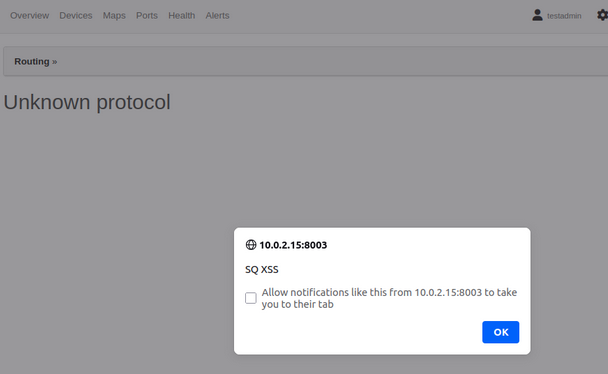
The security flaw results from insufficient input validation in the ‘/routing’ endpoint’s ‘protocol’ parameter. The application applies basic sanitisation through the ‘basename()’ attribute, preventing directory traversal but fails to perform HTML entity encoding before reflecting the input on the page – allowing attackers to bypass basic security controls and inject malicious code.
Product: LibreNMS
Affected Versions: <= 24.9.1
Fixed Version: 24.10.0 (November 5, 2024)
Vulnerability Type: CWE-79 (Improper Neutralization of Input During Web Page Generation)
Module: Routing
Endpoint: /routing
Parameter: protocol
File: includes/html/pages/routing.inc.php
Setup LibreNMS 24.9.1
Navigate to the ‘/routing/protocol=’ endpoint
Inject the payload from the PoC in the section below
http://[librenms-instance]/routing/protocol=<script>alert(‘SecQuest XSS’)<!-->
Discovered by: Joel Olivier, Leo Cook
Organisation: SecQuest
Date of Discovery: November 18, 2025
