 jmonge12/home-network-vulnerability-assessment
Auditoría de seguridad y análisis de vulnerabilidades (CVE-2014-3566 y CVE-2010-2333) en la infraestructura de red local y router residencial.

Security audit and vulnerability analysis (CVE-2014-3566 and CVE-2010-2333) on the local network infrastructure and residential router.
This project documents a perimeter security audit performed autonomously on a residential local network. The objective was to identify open ports on the router gateway, map active services through version detection, and assess the presence of critical vulnerabilities using the Nmap Scripting Engine (NSE).
192.168.100.1).A quick scan with version detection was executed to map the exposed entry points of the device:
nmap -sV -F 192.168.100.1
Through this command, active services were detected on ports 53/tcp (domain), 80/tcp (http), and a Cisco-Linksys UPnP pairing service on port 49152/tcp.
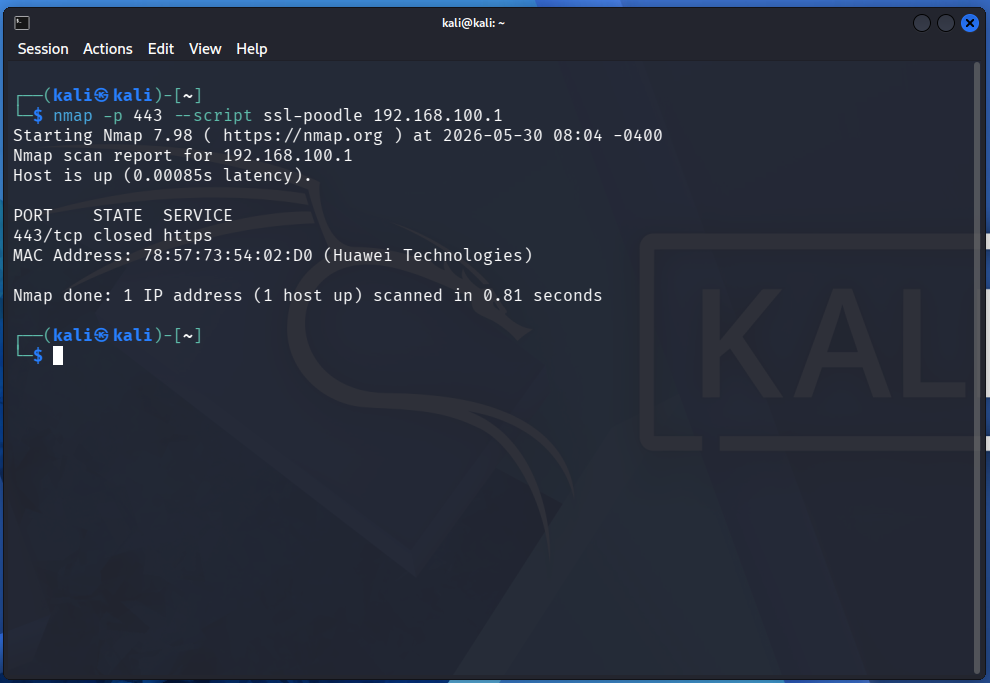
To audit the security of encrypted connections on the router's web administration ports, the specialized script in the SSL cryptographic suite was launched:
nmap -p 443 --script ssl-poodle 192.168.100.1
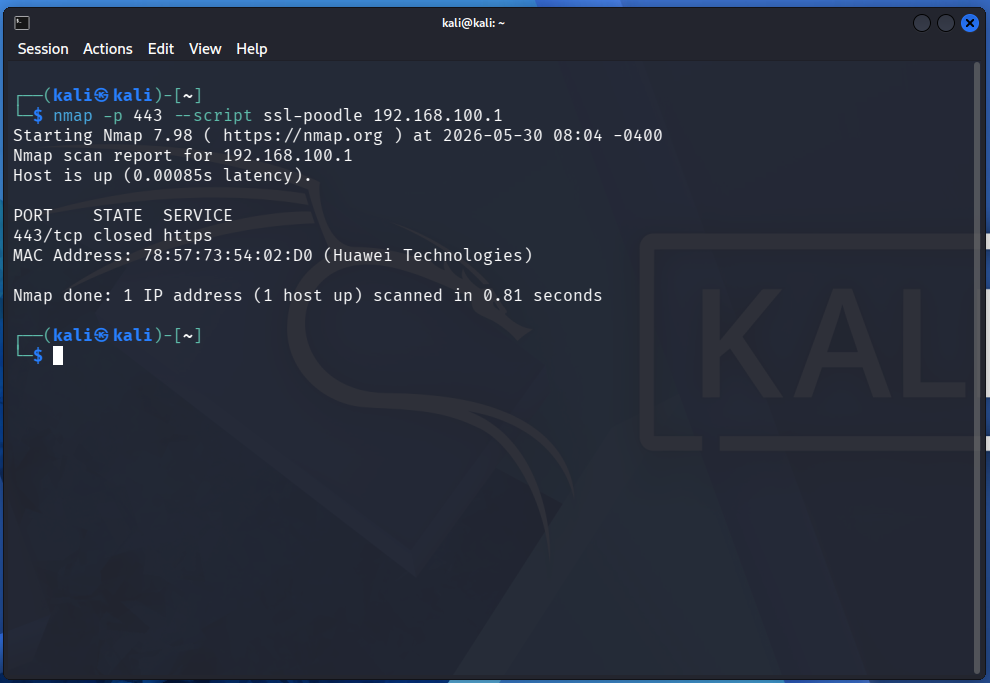
The Nmap Scripting Engine (NSE) determined that the device's web server is VULNERABLE to protocol downgrade attacks under identifier CVE-2014-3566 (POODLE). This flaw occurs because the router's firmware accepts connections using the obsolete SSLv3 protocol configured with block cipher in CBC mode (Cipher Block Chaining).
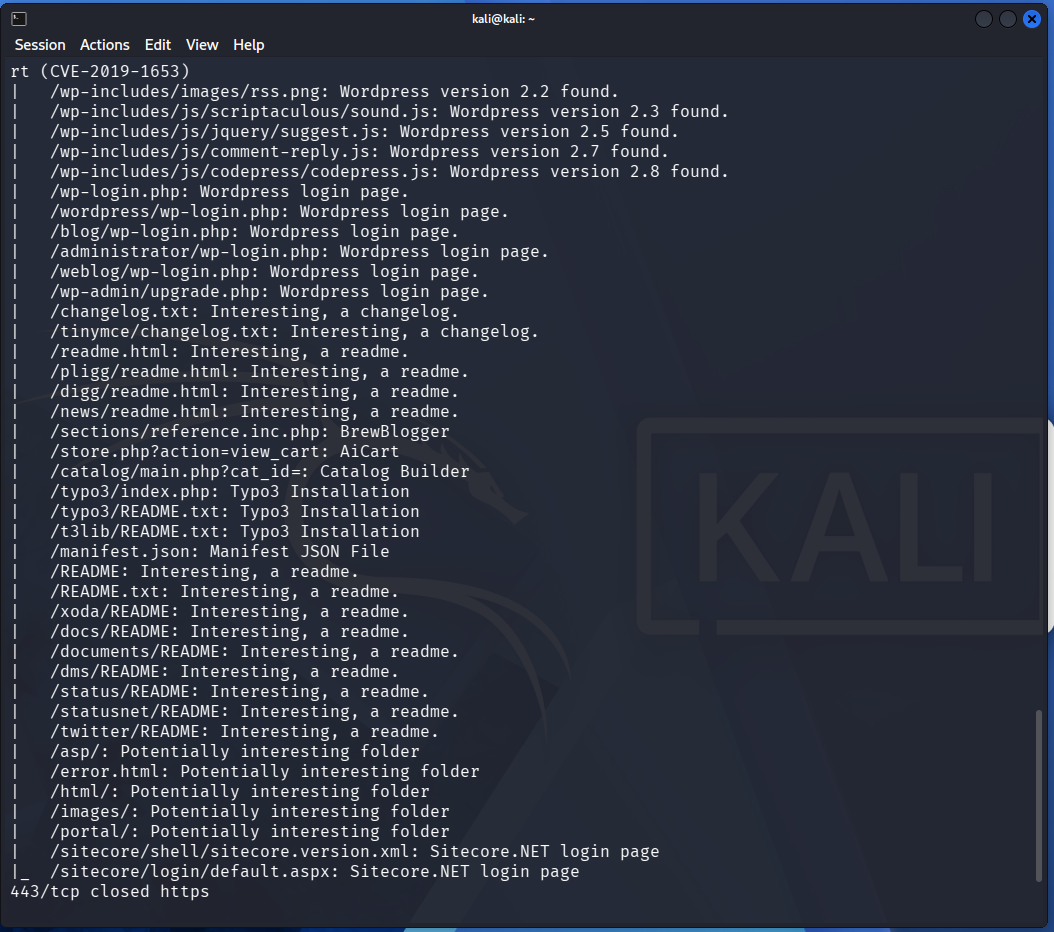
Deep inspection using the --script vuln category continued evaluating the router's HTTP interface, exposing a massive listing of paths prone to information leakage, directory traversal vulnerabilities, and exposed authentication panels.
The Nmap NSE engine confirmed that the device is LIKELY VULNERABLE to the POODLE side-channel attack (CVE-2014-3566) due to the acceptance of connections under the obsolete SSLv3 protocol with CBC encryption.
