
Skip to content
KitploitKITPLOIT
ToolsBlog
Submit
ToolsBlog
Submit

Hacking, PenTest, and Cybersecurity Tools for Your Security Arsenal!

Kitploit is a directory of hacking, cybersecurity, and pentesting tools. Discover the latest project updates to find vulnerabilities, analyze systems, automate testing, and strengthen your security.

··Feeds·Contact·Privacy·© 2026 Kitploit

Tool Directory

Categories

View all categories
Loading categories
Tools/GitHubGitHub/honestcorrupt/meesho-android-improper-encryption-cve-2026-5682
Android SecurityVulnerability AnalysisWeb Application ExploitationCryptographyPenetration TestingMobile Security
GitHubhonestcorrupt/meesho-android-improper-encryption-cve-2026-5682

meesho-android-improper-encryption-cve-2026-5682

Proof of concept demonstrating insecure AES-CBC encryption with MD5 key derivation in the Meesho Android app, enabling ciphertext tampering and potential padding oracle attacks.

Most Popular

View all →

Discover the most used tools by our community.

Explore all tools

Browse our collection of tools

View all tools →
Share
View Repository
85 months agoNot yet reviewed

🔐 Proof of Concept: Meesho Android App – Insecure Cryptographic Implementation (AES-CBC without Integrity + Weak Key Derivation)

Author: Soyam Arya (aka honest_corrupt) Date of Discovery: March 2026 Affected App: Meesho Android App (com.meesho.supply) Status: Under Verification Category: Insufficient Cryptography / Data Integrity Failure


🎯 Summary

This report documents a cryptographic vulnerability in the Meesho Android application where sensitive data is encrypted using AES/CBC/PKCS5Padding without integrity protection, and the encryption key is derived using the insecure MD5 hashing algorithm.

The application constructs encrypted payloads in the format:

root@kitploit:~
Base64(IV) . Base64(ciphertext)

However, due to the absence of authentication (e.g., HMAC or AEAD mode like AES-GCM), the implementation is vulnerable to:

  • Ciphertext tampering
  • Potential padding oracle attacks
  • Weak key derivation attacks

This violates multiple OWASP Mobile Top 10 and MASVS cryptographic guidelines.


📉 Vulnerability Classification

CategoryDescription
M5: Insufficient CryptographyUse of weak cryptographic primitives (MD5, AES-CBC without integrity)
CWE-327Use of broken or risky cryptographic algorithm
CWE-649Reliance on encryption without integrity checking
OWASP MASVSMSTG-CRYPTO-3, MSTG-CRYPTO-4

🛠️ Technical Details

🔍 Encryption Implementation

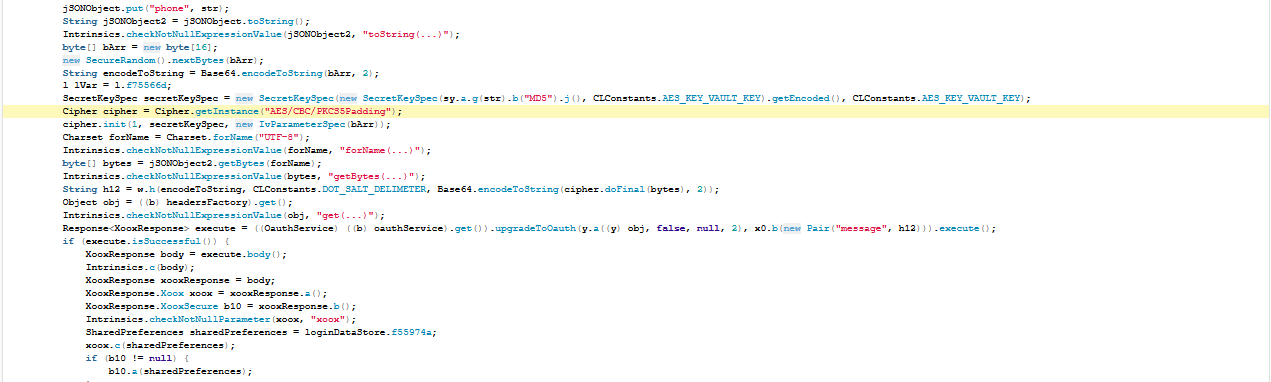
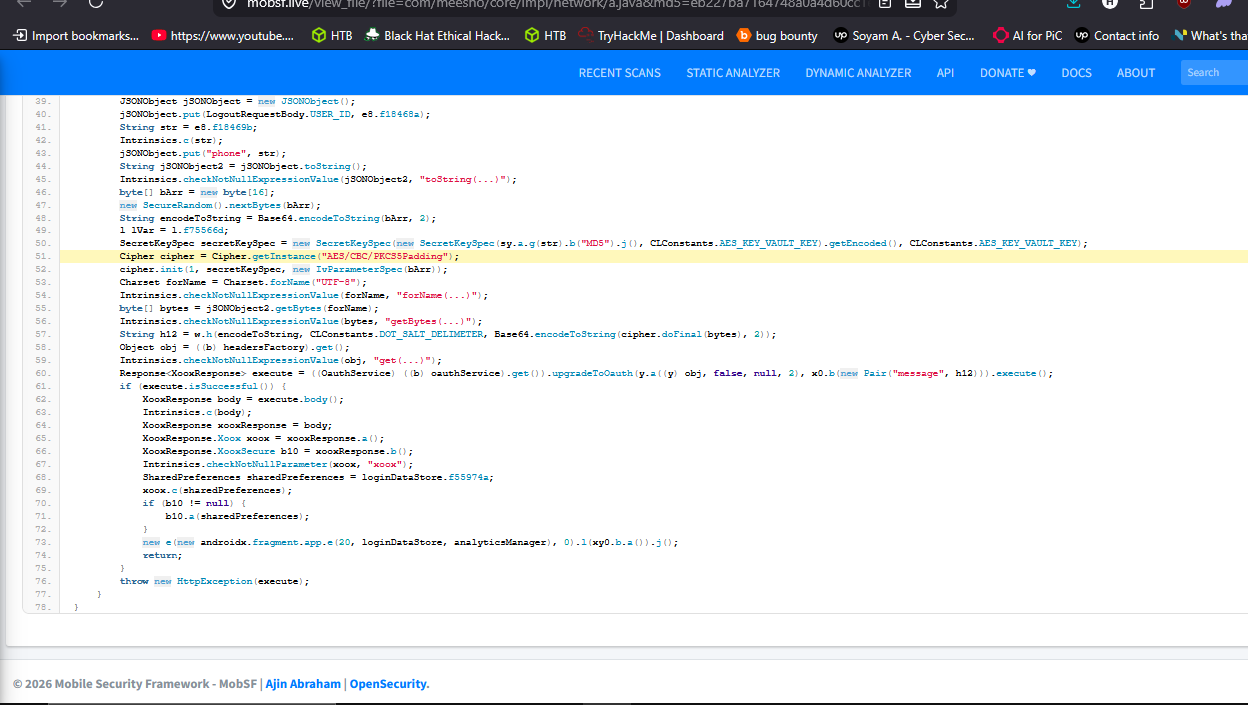
Reverse engineering revealed the following logic:

root@kitploit:~
Cipher cipher = Cipher.getInstance("AES/CBC/PKCS5Padding");

byte[] iv = new byte[16];
new SecureRandom().nextBytes(iv);

SecretKeySpec key = new SecretKeySpec(
    MD5(str), "AES"
);

cipher.init(ENCRYPT_MODE, key, new IvParameterSpec(iv));

String message = Base64(iv) + "." + Base64(ciphertext);

❌ Identified Issues

1. Weak Key Derivation (MD5)

  • MD5 is deprecated and insecure
  • No salt or iteration used
  • Predictable key generation possible

2. Missing Integrity Protection

  • No HMAC or signature applied
  • Ciphertext can be modified without detection

3. Use of AES-CBC Mode

  • CBC mode does not provide authenticity
  • Vulnerable to padding oracle attacks if error responses differ

🎥 Proof-of-Concept (Conceptual)

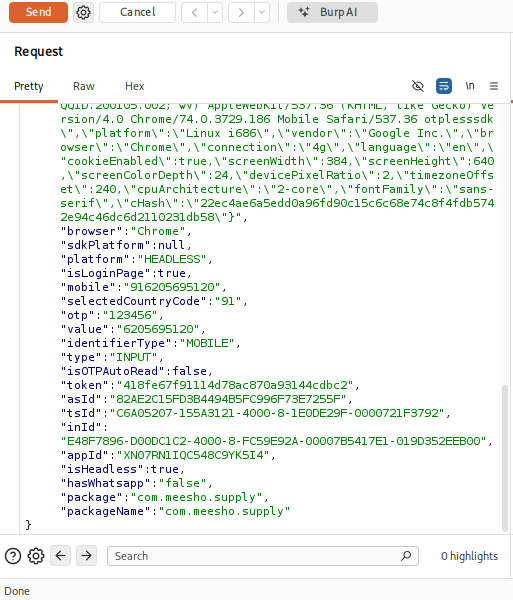
The encrypted payload is transmitted in API requests as:

http POST /api/endpoint

message=Base64(IV).Base64(ciphertext) meesho bug ss 2
meesho bug meesho bug 3

🧪 Tampering Test

Step 1: Intercept Request

Capture request via Burp Suite:

` message=AbCdEfGhIj...xyz.KLMNOPQRST... ``

Step 2: Modify Ciphertext

Alter a single byte in ciphertext:

`` Original: ...KLMNOPQRST...

Modified: ...KLMNOPQRSU... ``

--

Step 3: Replay Request

Send modified request to server.


🔥 Observed Behavior (To be filled by tester)

  • Server accepts modified ciphertext
  • Response differs (possible padding oracle)
  • Error message leakage
  • Data manipulation observed

⚠️ Potential Impact

  • Data Integrity Violation: Attackers can alter encrypted payloads
  • Unauthorized Actions: Manipulation of API parameters
  • Sensitive Data Exposure: Possible decryption via oracle attack
  • Replay Attacks: No request authentication or nonce validation

🧪 Reproduction Steps

  1. Install Meesho Android App
  2. Configure Burp Suite proxy
  3. Intercept API request containing message parameter
  4. Modify ciphertext portion
  5. Replay request and observe response

🔐 Suggested Fixes

  • Replace AES-CBC with AES-GCM or ChaCha20-Poly1305
  • Replace MD5 with PBKDF2 / Argon2 / bcrypt
  • Implement HMAC (Encrypt-then-MAC)
  • Validate integrity before decryption

🧾 Disclosure Timeline

DateEvent
March 2026Vulnerability discovered
March 2026Reverse engineering completed
PendingVendor notification
PendingCVE request

🙋‍♂️ About the Researcher

Soyam Arya (aka honest_corrupt) CVE IDs: CVE-2025-5154, CVE-2025-6748 Mobile & Web Application Penetration Tester

  • 🌐 Blog: https://soyamaryawork.blogspot.com
  • 💻 GitHub: https://github.com/honestcorrupt
  • 🔗 LinkedIn: https://www.linkedin.com/in/soyam-arya-a90356312


Download Tool