Hacking, PenTest, and Cybersecurity Tools for Your Security Arsenal!
Bypass_AV — Evades AV and sandboxes on Windows using anti-sandbox checks, ntdll unhooking, dynamic API resolution, and multi-layer shellcode obfuscation (XOR/RC4/Base64/MAC). | Kitploit
Evades AV and sandboxes on Windows using anti-sandbox checks, ntdll unhooking, dynamic API resolution, and multi-layer shellcode obfuscation (XOR/RC4/Base64/MAC).
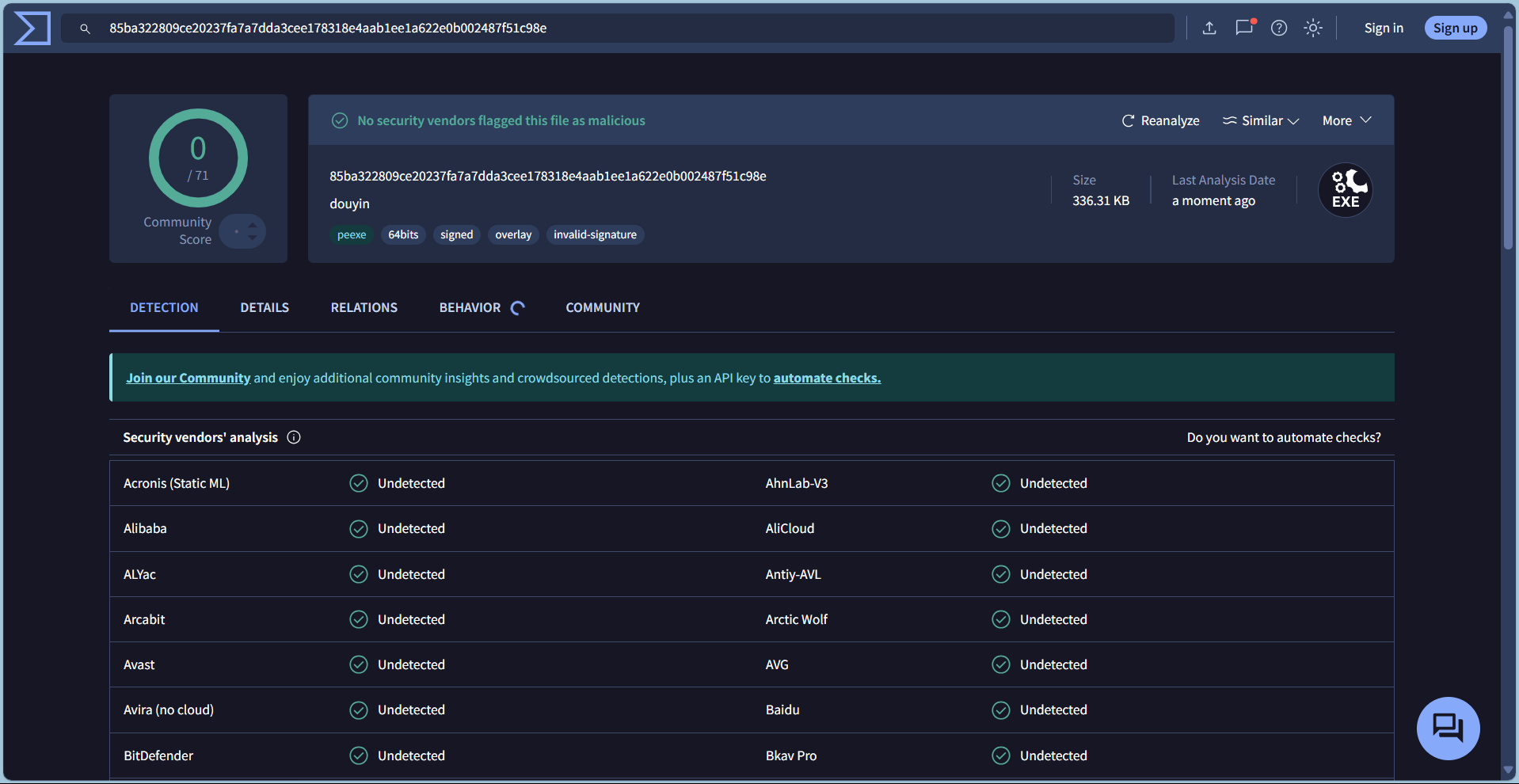
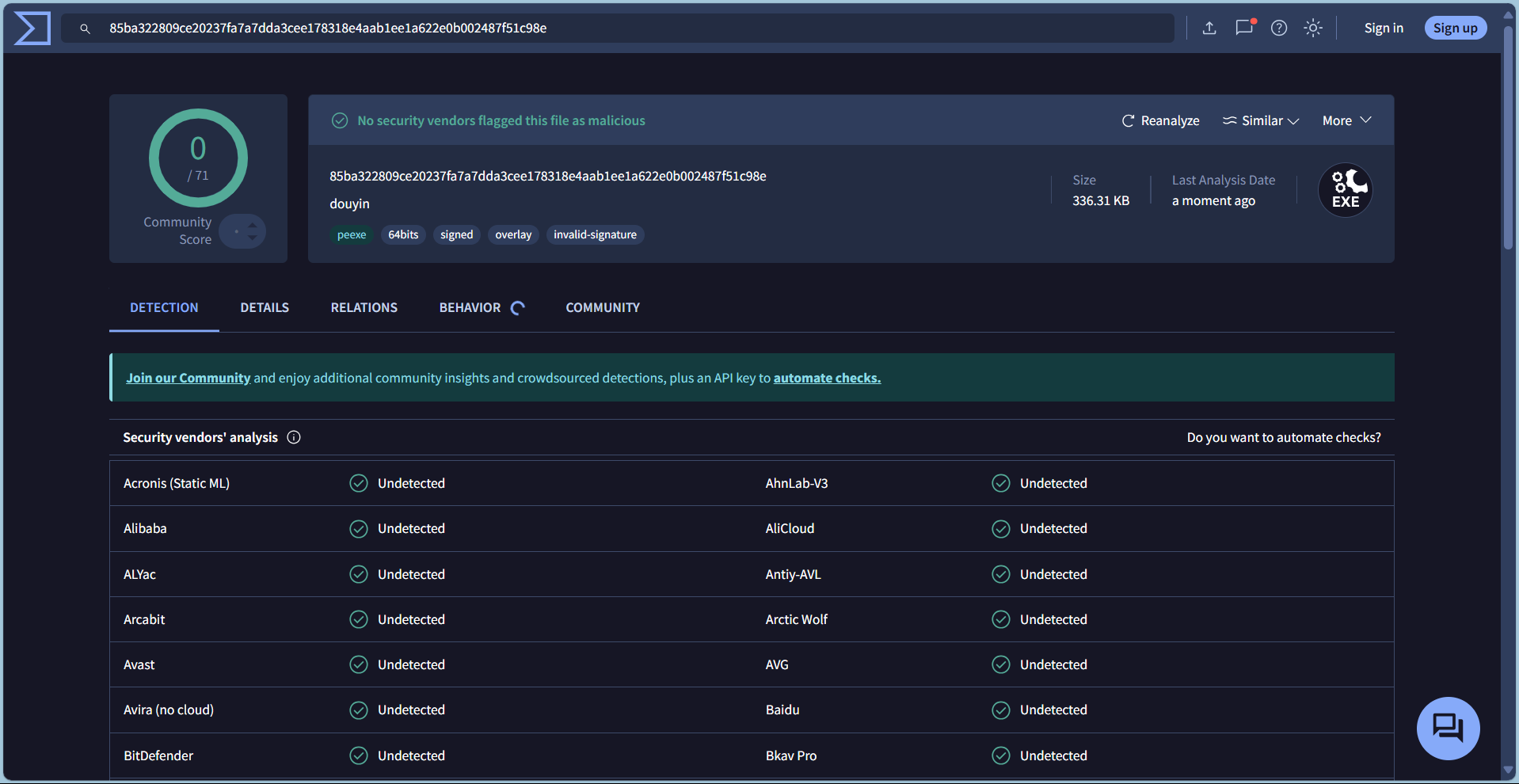
This is a Trojan sample that can bypass the vast majority of antivirus software and sandboxes
Below, I will explain the technologies involved in the Trojan, focusing on both the shellcode and the loader.
Loader Section
1. Anti-sandbox
As everyone knows, the conventional anti-sandbox detection is to target the host's CPU, memory, hard disk, etc. However, I personally think this is not appropriate, because some antivirus software or cloud sandboxes will detect the anti-sandbox feature and monitor some sensitive APIs, thus getting caught. So my idea is to detect desktop shortcuts, such as QQ, WeChat, DingTalk and other commonly used software, to evade cloud sandboxes.
2. Overloading of ntdll and Dynamic Invocation of APIs
The detection mechanism of general antivirus software is to hook some sensitive APIs. By using ntdll overloading and dynamic API invocation, we can bypass the hooks and achieve the functionality. The ntdll overloading part loads the original ntdll.dll from the system directory and replaces the hooked ntdll code section (.text section) in the current process with the original code. Dynamic API invocation traverses the export table of the target DLL, uses hash to match function names, obtains the address of the target function, and executes it via a pointer.
3. Separation of Shellcode and Loader
Besides encoding to bypass antivirus software, shellcode can also be separated from the loader. That is, if the shellcode is not in the exe, it is quite difficult for antivirus software to detect problems.
Shellcode Section
The shellcode part mainly uses multi-layer obfuscation processing, using XOR+RC4+base64+mac multi-layer processing. The final form is stored as MAC address format, because Windows has a certain tolerance for MAC format strings.
Usage Method
First use encode.cpp to encrypt the shellcode. If you write the shellcode into the exe, please put it in the mac_shellcode array in Unseparation_shellcode.cpp. If you want to achieve parameter separation, you can run my compiled exe + shellcode directly.
Thank you for reading
English version
This is a Trojan sample that can bypass the vast majority of antivirus software and sandboxes. Below, I will explain the technologies involved in the Trojan, focusing on both the shellcode and the loader.
Loader Section
1. Anti-sandbox
It is well-known that the conventional detection of anti-sandbox functions is based on operations on the host's CPU, memory, hard disk, etc. However, I personally think this approach is not ideal because some antivirus software or cloud sandboxes will monitor anti-sandbox functions and keep an eye on sensitive APIs, which may lead to detection. Therefore, my idea is to detect desktop shortcuts, such as those for commonly used software like QQ, WeChat, and DingTalk, to evade cloud sandboxes.
2. Overloading of ntdll and Dynamic Invocation of APIs
The detection mechanism of general anti-virus software is to hook some sensitive APIs. Therefore, we can bypass the hooks and achieve the function by using the ntdll overloading and dynamic API calling techniques. The ntdll overloading part involves loading the original ntdll.dll from the system directory and replacing the hooked ntdll code segment (.text segment) in the current process with the original code. The dynamic API calling is to traverse the export table of the target dll, match the function name using hash, obtain the address of the target function, and execute it using a pointer.
3. Separation of Shellcode and Loader
Besides encoding to bypass antivirus software, shellcode can also be separated from the loader. If the shellcode is not included in the exe file, it becomes quite difficult for antivirus software to detect any issues.
The shellcode section mainly undergoes multi-layer obfuscation processing, which involves XOR, RC4, base64, and MAC. The final output is in MAC address format, taking advantage of Windows' tolerance for MAC format strings.
Usage Method
First, use encode.cpp to encrypt the shellcode. If you write the shellcode into an exe file, please place it in the mac_shellcode array in Unseparation_shellcode.cpp. If you want to achieve parameter separation, you can run the compiled exe + shellcode directly.
 hkl1x/bypass_av