
Skip to content
KitploitKITPLOIT
ToolsBlog
Submit
ToolsBlog
Submit

Hacking, PenTest, and Cybersecurity Tools for Your Security Arsenal!

Kitploit is a directory of hacking, cybersecurity, and pentesting tools. Discover the latest project updates to find vulnerabilities, analyze systems, automate testing, and strengthen your security.

··Feeds·Contact·Privacy·© 2026 Kitploit

Tool Directory

Categories

View all categories
Loading categories
POC-CVE-2023-32681 — POC for the CVE-2023-32681 | Kitploit
Tools/GitHubGitHub/hardikmodha/poc-cve-2023-32681
Vulnerability AnalysisExploitationWeb SecurityLearning & EducationLabs & PracticeArchived
GitHubhardikmodha/poc-cve-2023-32681

POC-CVE-2023-32681

POC for the CVE-2023-32681

View Repository
413 years agoNot yet reviewed

Most Popular

View all →

Discover the most used tools by our community.

Explore all tools

Browse our collection of tools

View all tools →
Share

POC for CVE-2023-32681

This is a Python 3 implementation of CVE-2023-32681, affecting clients using the requests version <= 2.30.0.

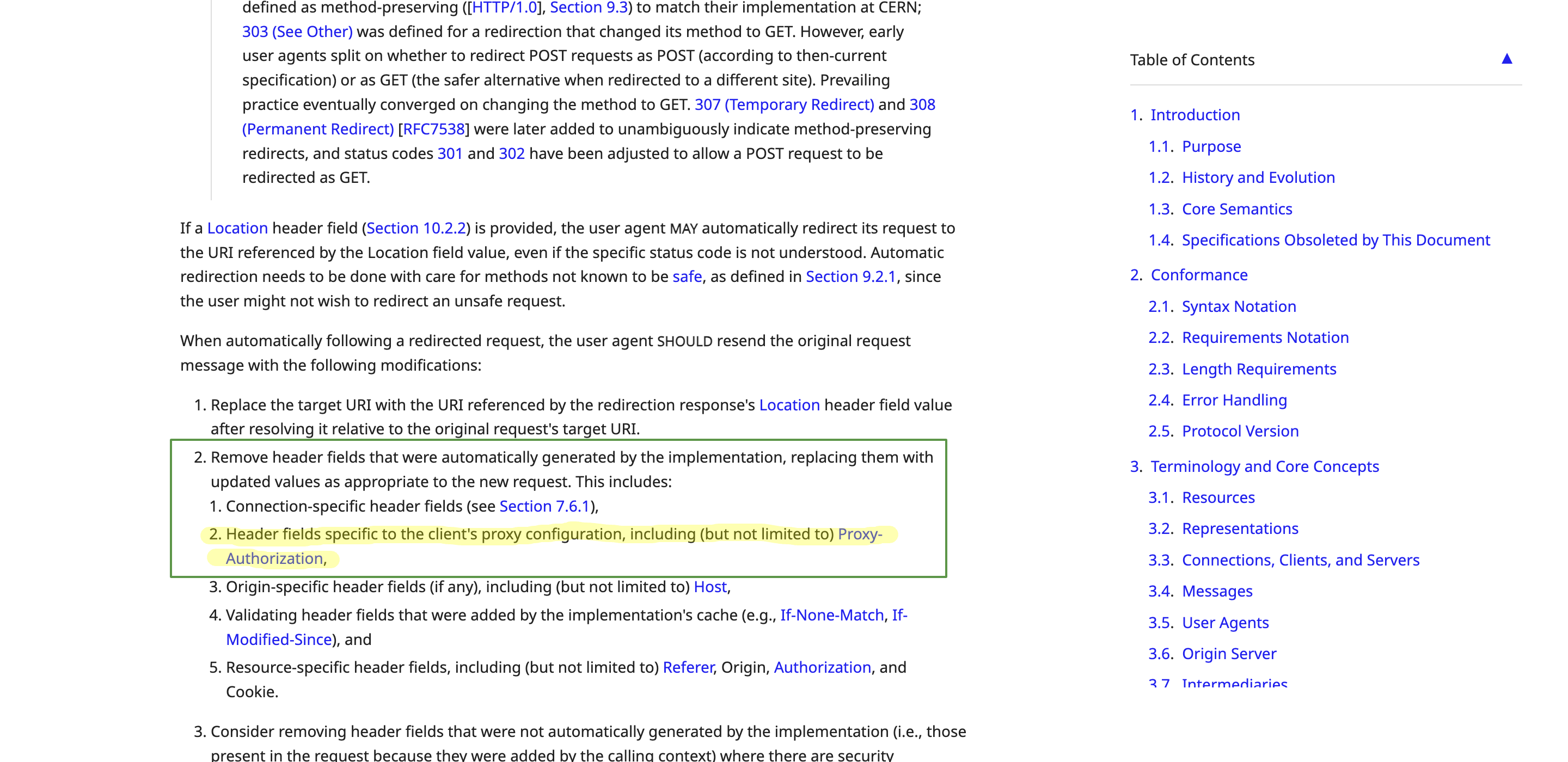
As per https://www.rfc-editor.org/rfc/rfc9110.html#section-15.4 whenever redirection 3xx is issued by the server then user-agent should modify the request to remove certain headers and fields from the request.

Details of those fields can be found at https://www.rfc-editor.org/rfc/rfc9110.html#section-15.4-5. Specific to this CVE I've highlighted the relevant part here.
image

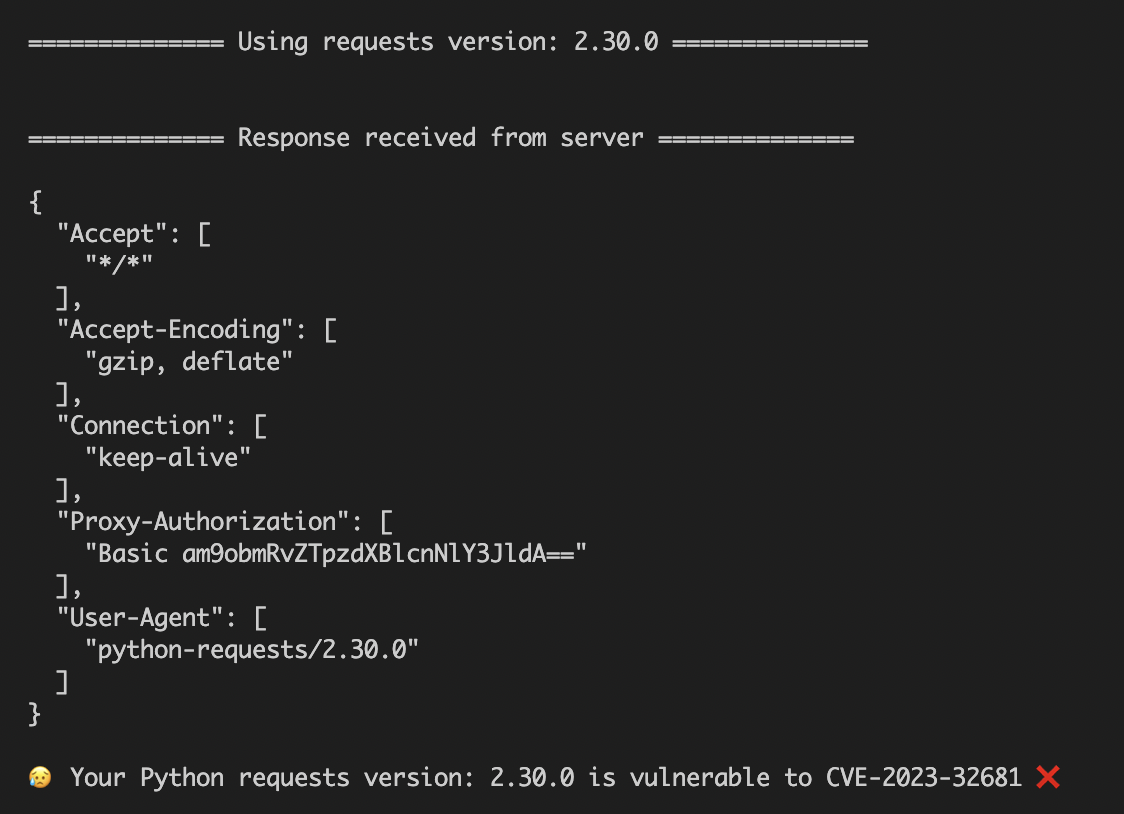
requests version <= 2.30.0 didn't remove the "Proxy-Authorization" headers while handling the redirection to "https" and thus leaking the proxy credentials to the redirected server.

More details for the same can be found at

  • https://www.cve.org/CVERecord?id=CVE-2023-32681
  • https://security.snyk.io/vuln/SNYK-PYTHON-REQUESTS-5595532

Pre-requisites

  • Valid set of certificate for the HTTP(S) server. You can use mkcert to generate the certificates locally.
  • Go v1.19
  • Python 3.x
  • virtualenv (Optional)

Overview

  1. Proxy server implementation in Go. It starts a proxy server on Port 8080 and requires a basic authentication. For the POC purpose, it has the hardcoded username and password defined in the same file.
  2. HTTP(S) server implementation in Go. It starts 2 servers.
    • Redirection server listening on Port 443 and another echo server listening on Port 4431.
    • Redirection server defines a route /redirect that redirects the traffic to second server running on 4431.
    • Echo server defines a route /echoHeaders. This route returns the headers it received in the request to the client.
  3. POC Python script. It issues a proxied request to redirection server running on port 443 and prints the response that server returns.
  4. If the response contains the Proxy-Authorization headers then the requests version is said to be vulnerable to "CVE-2023-32681".

Steps

  1. Clone this repository.
  2. Update the certFile and keyFile variables in server/main.go.
  3. Start the HTTP(S) servers by running command go run server/main.go. This will start two servers listening on port 443 and 4431.
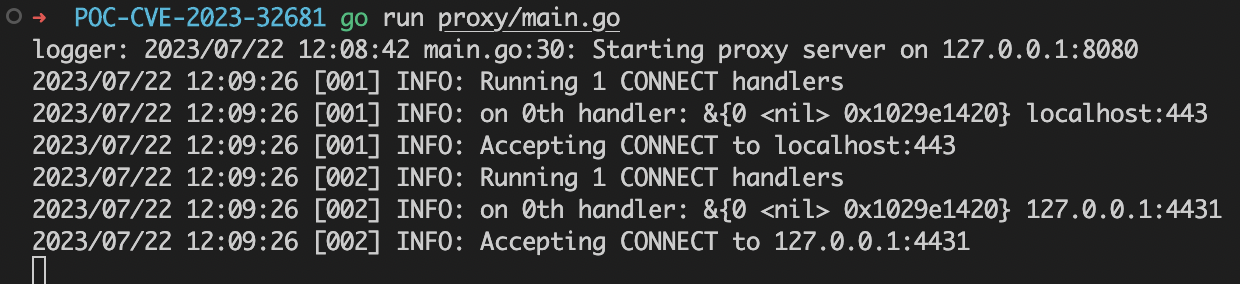
  4. Start the Proxy server by running command go run proxy/main.go. This will start the proxy server on port 8080.
  5. Install dependencies to run the Python script pip3 install -r script/requirements_request_2_30_0.txt
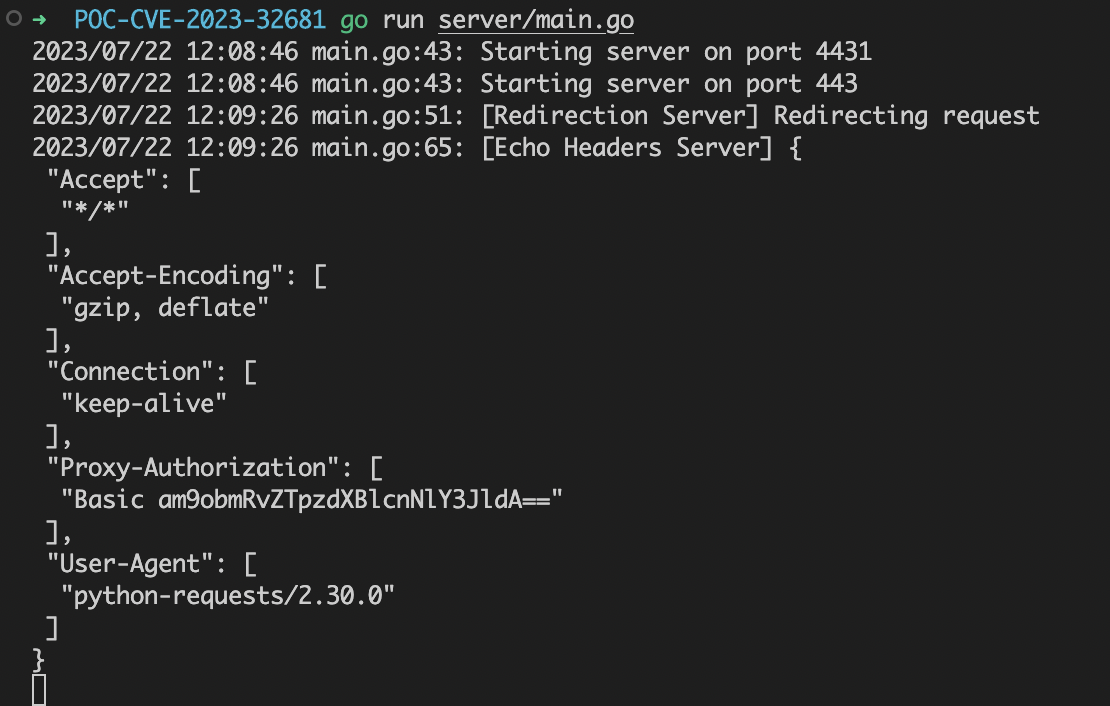
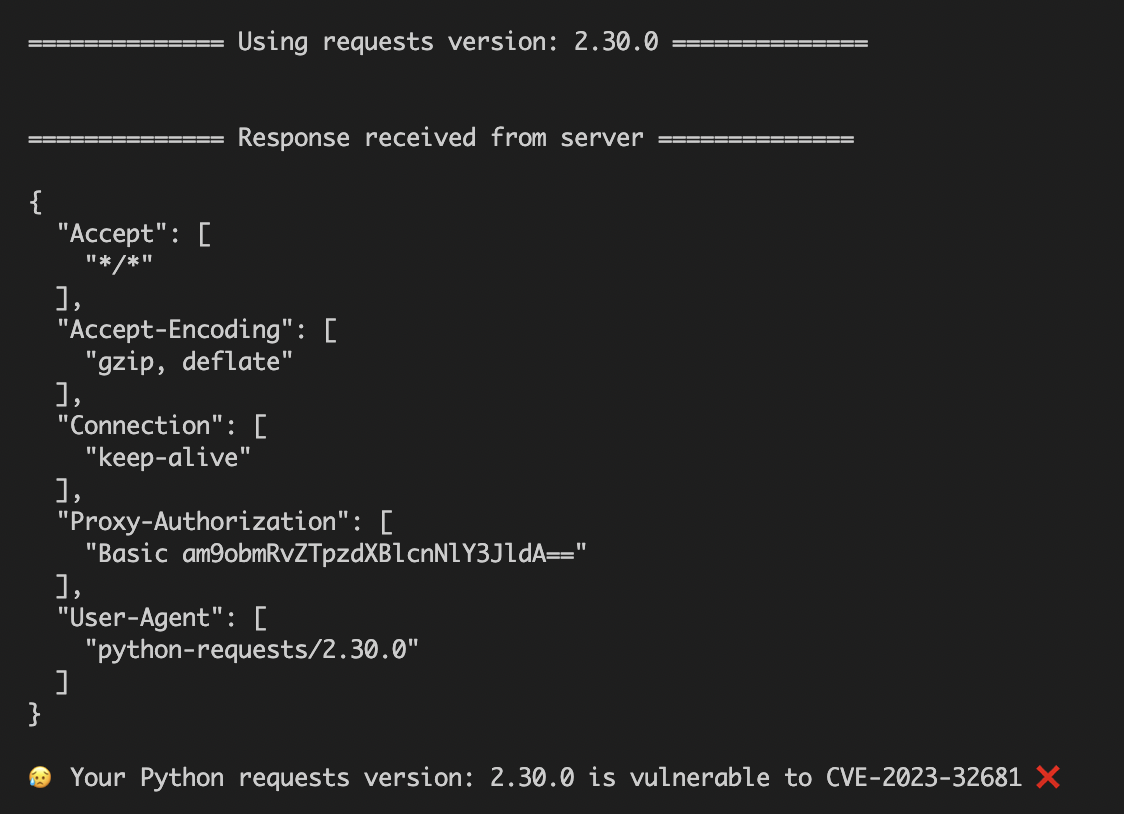
  6. Execute the POC script by running python3 script/poc.py and observe the output. You can see that "Proxy-Authorization" header is returned by the server in the response. Server also prints the received headers in the logs.
  7. Now, upgrade the requests version to >= 2.31.0 or do pip3 install -r script/requirements_request_2_31_0.txt
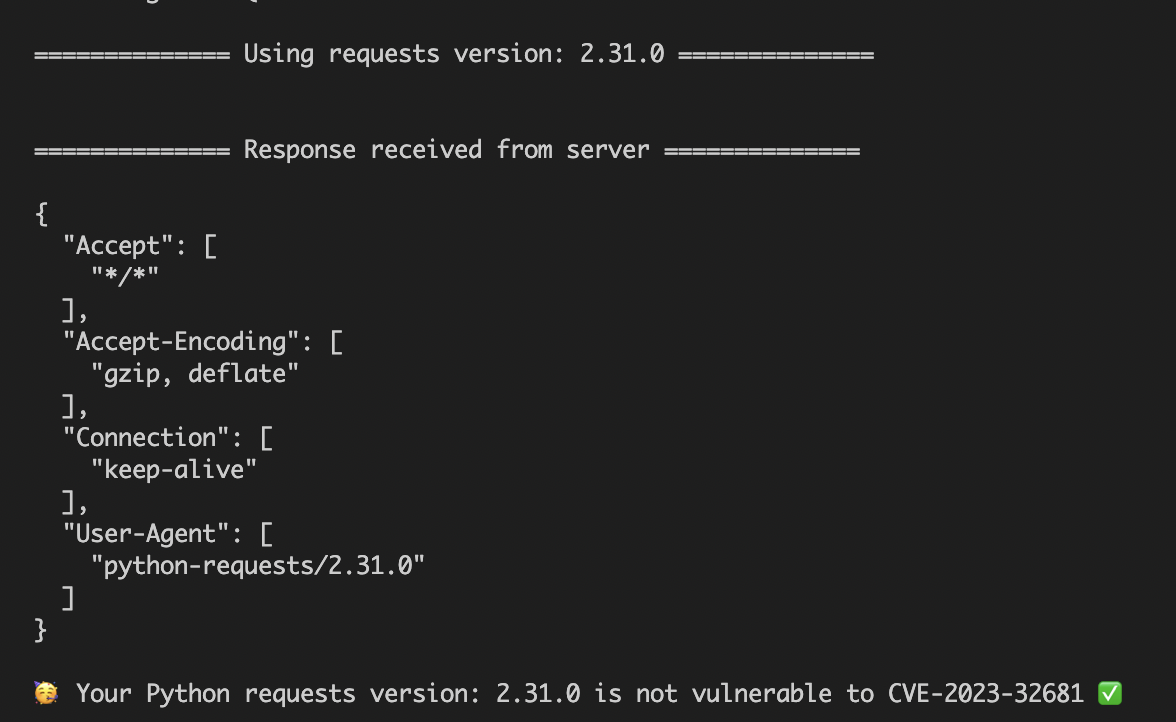
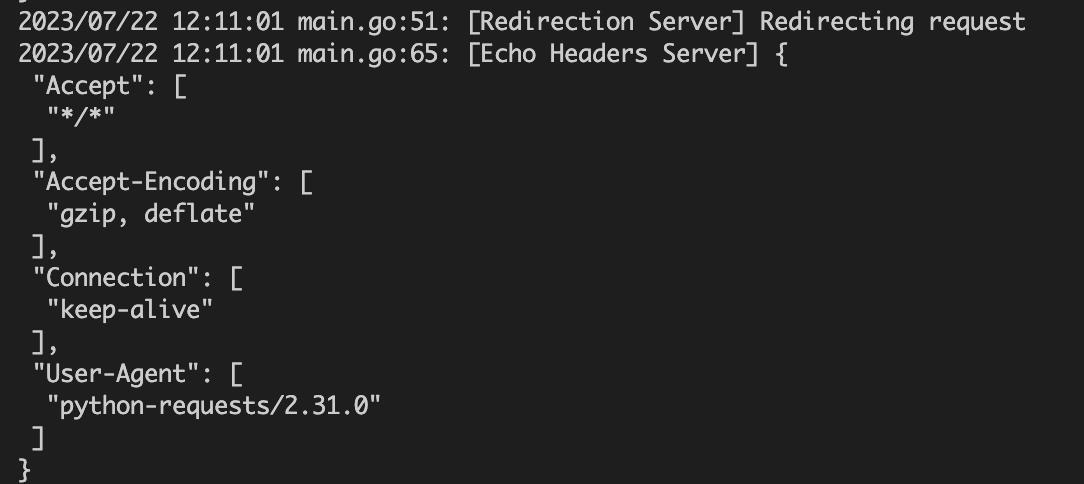
  8. Again execute the POC script by running python3 script/poc.py and observe the output. You can see that "Proxy-Authorization" header is now not present in the server response. Same can also be verified in the server logs.
Screenshots

Proxy server

proxy_server_logs

requests==2.30.0

requests_2_30_0_script_output requests_2_30_0_server_output

requests==2.31.0

requests_2_31_0_script_output requests_2_31_0_server_output
Download Tool