 grahamhelton/usp
Establishes persistence on a Linux system by creating a udev rule that triggers the execution of a specified payload (binary or script)

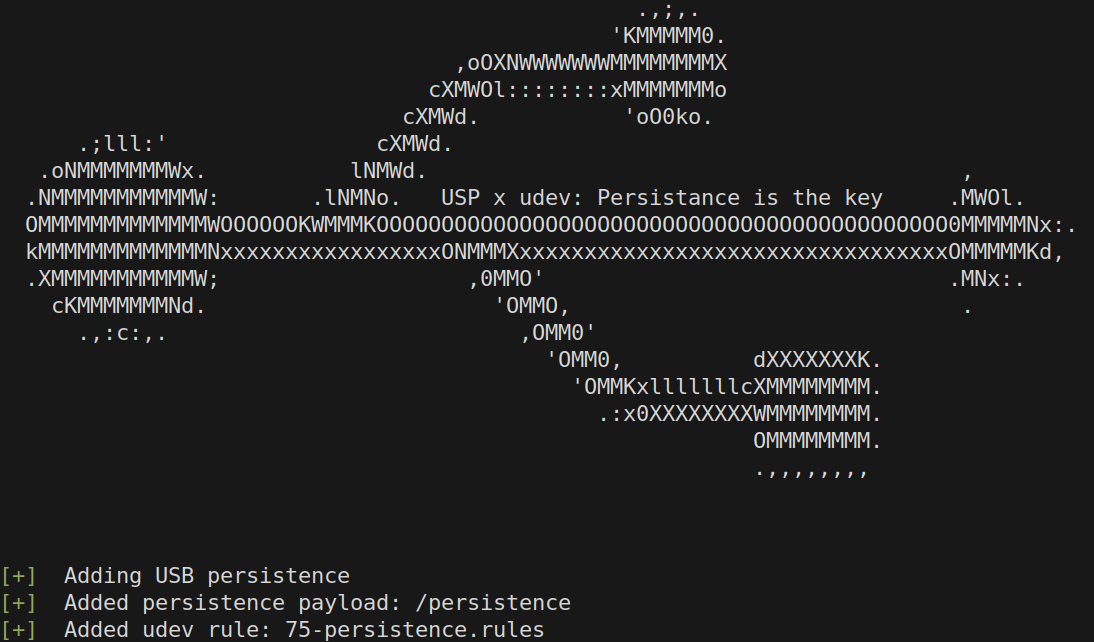
This Go program establishes persistence on a Linux system by creating a udev rule that triggers the execution of a specified payload (binary or script). It offers two trigger options:
/dev/random device.Additionally, it provides a cleanup option to remove the established persistence.
Compile the Go script: go build -o usp
Run the script with root privileges (sudo): sudo ./usp
You can customize the behavior using the following flags:
-f <filename>: Specify the path where the payload will be written (default: /usr/local/bin/persistence).-p <payload>: Specify the path to the payload file (binary or script) that will be executed. This is a required flag.-r <rulesname>: Specify the name of the udev rules file (default: 75-persistence.rules).-usb: Enable USB persistence.-random: Enable boot persistence using /dev/random.-c: Cleanup persistence, removing the payload file and udev rule.example.sh everytime a USB device is connected.sudo ./usp -p ./example.sh
my_backdoor_binary everytime /dev/random is loaded (such as at boot). It is installed at /bin/ripgrep. (Masquerading as the ripgrep binary). Additionally, the rules file is created in /etc/udev/rules.d/123-notsektchy.rulessudo ./usp -random -f /bin/ripgrep -p my_backdoor_binary -r 123-notsketchy.rules
