 gokul-krishnan-v-r/cve-2025-29927
Next.js and the corrupt middleware...TRY TO HACK IT..!

This is a sample Next.js project bootstrapped with [create-next-app] for practically explaining how cve-2025-29927 works. (https://nextjs.org/docs/app/api-reference/cli/create-next-app).
First, run the development server:
npm run dev
# or
yarn dev
# or
pnpm dev
# or
bun dev
Open http://localhost:3000 with your browser to see the result.
NOW You Can Use Burp or Other Browser extensions to modify the Headers and exploit the Middleware using the payload.
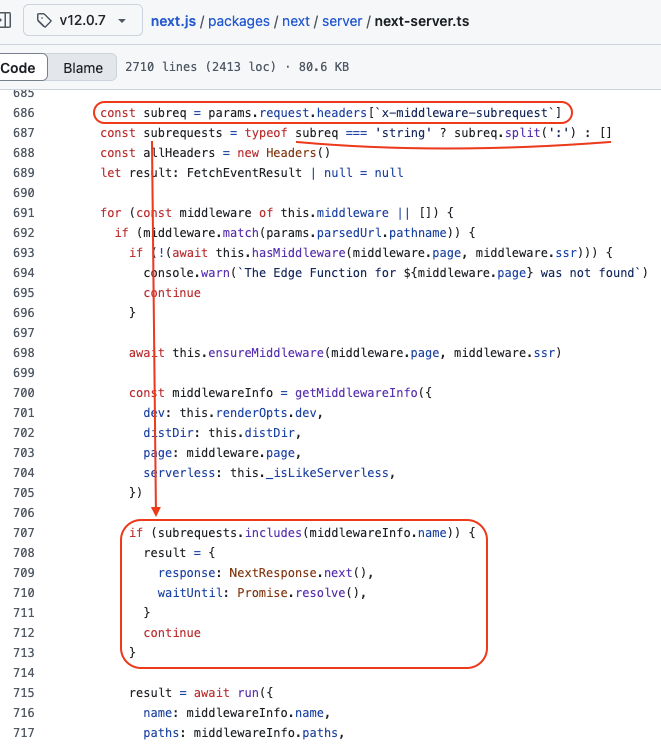
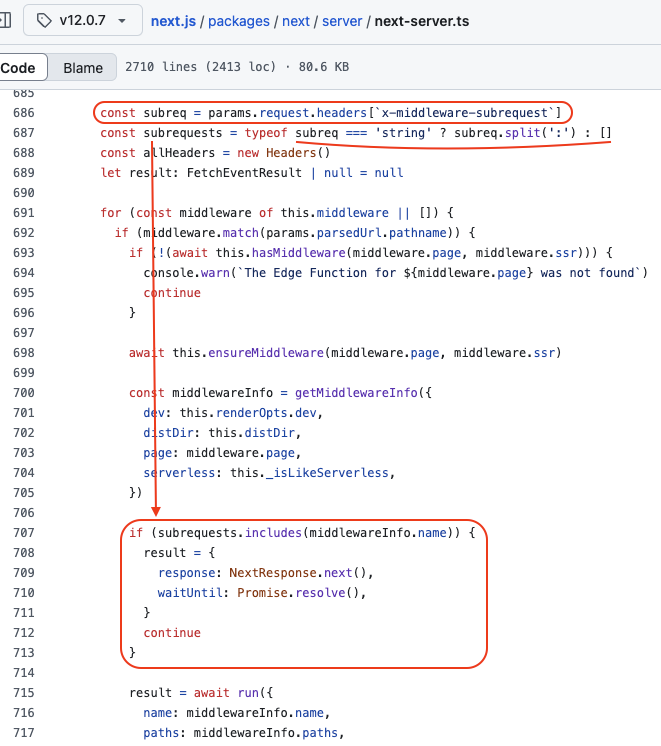
When a next.js application uses a middleware, the runMiddleware function is used, the latter - beyond its main utility - retrieves the value of the x-middleware-subrequest header and uses it to know if the middleware should be applied or not. The header value is split to create a list using the column character (:) as a separator and then checks if this list contains the middlewareInfo.name value.
This means that if we add the x-middleware-subrequest header with the correct value to our request, the middleware - whatever its purpose - will be completely ignored, and the request will be forwarded via NextResponse.next() and will complete its journey to its original destination without the middleware having any impact/influence on it. The header and its value act as a universal key allowing rules to be overridden. At this point we already know that we have just unearthed something crazy.
Make a note that we are using "next": "14.0.4" here.
