MCP safety warden is a proxy server that wraps any MCP server and adds behavioral profiling, security scanning, risk gating, and safe execution to its tools.











Contents
[!IMPORTANT]
MCP security is an active research area. Recent surveys catalog a lot of protocol-specific threat categories spanning tool poisoning, prompt injection, rug-pull attacks, supply chain compromise, credential exfiltration, and composition attacks across the full server lifecycle. See Securing the MCP (OpenReview), Landscape & Threats (arXiv), When MCP Servers Attack (arXiv), and MCP-38 Taxonomy (arXiv).
Overview
Use as a proxy to add safety gating to any MCP server, or point it at a server you don't own and run a full security audit without making a single tool call.
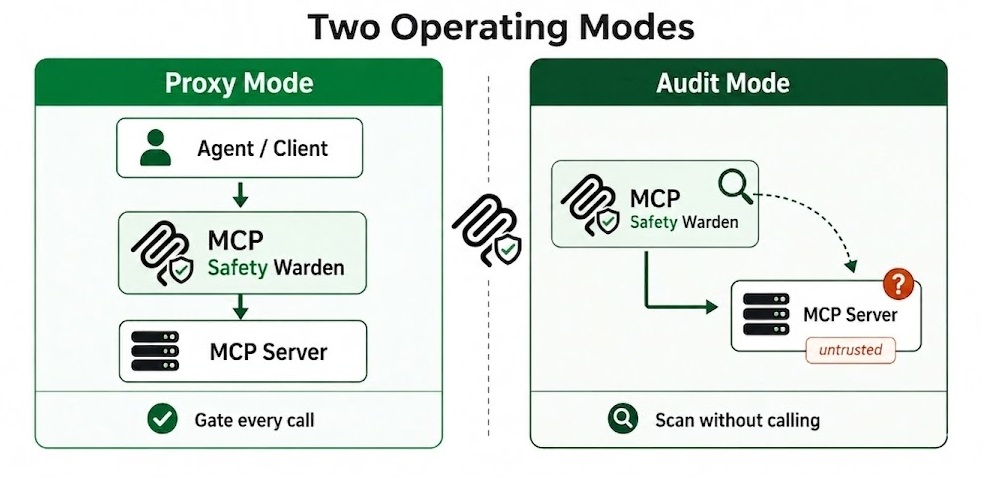
Fig 1. Two operating modes: proxy and audit
Behavioral profiling: Effect class, retry safety, destructiveness. LLM-assisted (Anthropic, OpenAI, Gemini, Ollama) with rule-based fallback. Observed stats (latency p50/p95, failure rate, output size) updated after every proxied call.
Security scanning: mcpsafety+ five-stage pipeline (Recon, Planner, Hacker, Auditor, Supervisor). Cisco AI Defense (AST/YARA). Snyk (metadata analysis). Kali and Burp Suite integrations enrich the pipeline with real network data and HTTP-layer probes. Source code scanning from GitHub with entropy, AST, taint flow, and rug-pull detection.
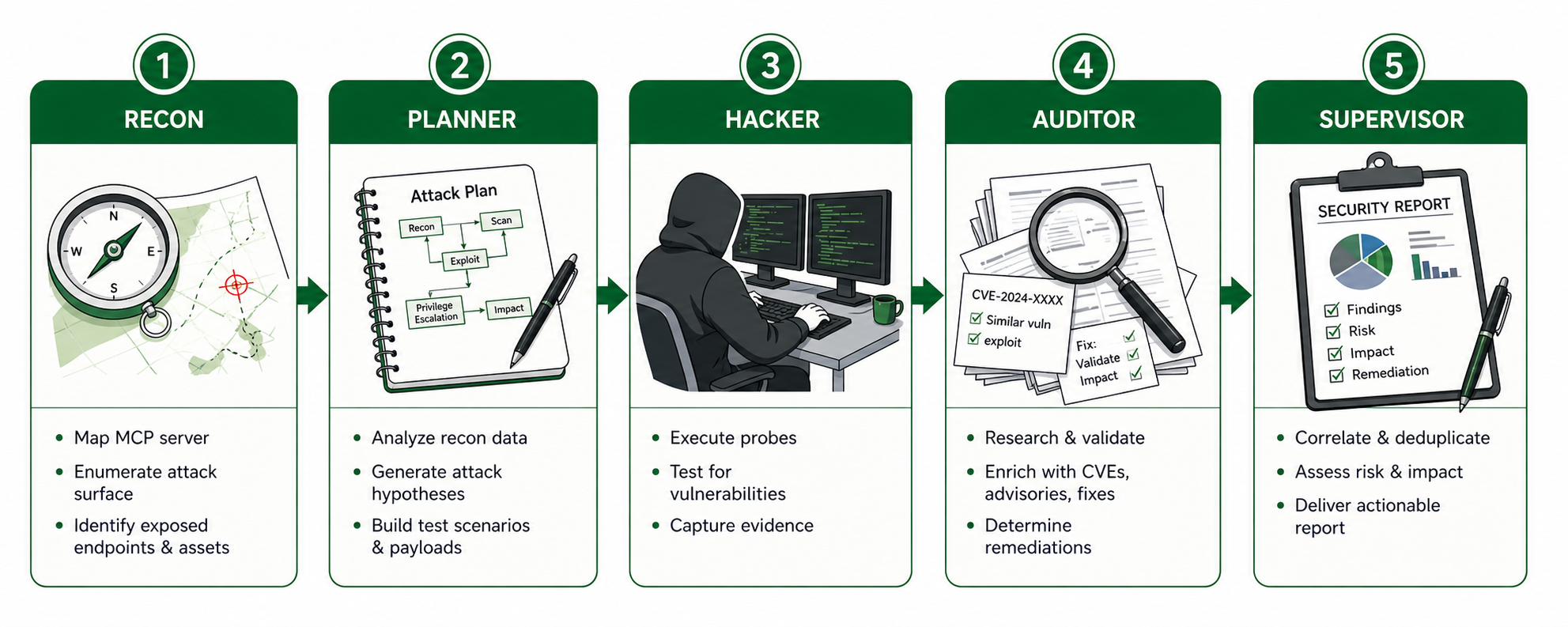
Fig 2. mcpsafety+ five-stage pipeline, triggered when you run a full security audit on any MCP server
Safe execution: Argument scanning (20+ attack categories, LLM second-pass). Two-layer output injection scanning. Risk gating with alternatives and per-tool policies. Drift detection on every call and standalone check.
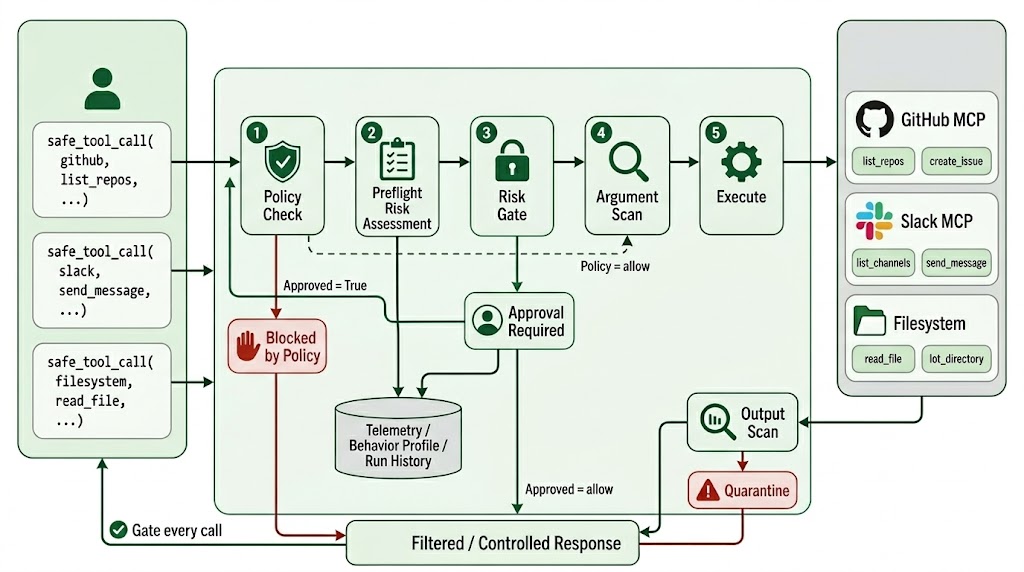
Fig 3. Safe execution pipeline: the five checks every proxied tool call passes through
CLI: 24 subcommands, interactive risk menu, --json flag on every command, --yes for CI.
What it detects
- Prompt injection: tool outputs trying to hijack the agent: role hijacking, jailbreaks, fake system prompts, instruction overrides. Detects 11 obfuscation techniques including Unicode lookalikes, zero-width characters, and base64-encoded payloads.
- Malicious tool metadata: descriptions containing injection strings, hardcoded secrets, suspicious download URLs, tool impersonation (shadowing), direct financial execution, system service modification, and untrusted external dependencies. Backed by 19 Snyk checks.
- Argument injection: 20+ attack categories checked on every tool call before the call is forwarded: SSRF to cloud metadata endpoints (AWS, GCP, Azure, Alibaba), path traversal, credential file access (.aws, .ssh, .kube, .env), command injection, SQL/NoSQL/LDAP/XPath injection, XXE, template injection (SSTI), CRLF, null byte, deserialization payloads (Java, Python pickle, PHP, .NET), Windows UNC/ADS attacks, and base64-obfuscated variants of all of the above.
- Source code risks: fetches the server's GitHub source and runs 6 analysis layers: entropy scanning for hardcoded secrets, AST taint flow tracking (parameter to dangerous sink), description-vs-implementation mismatch, Bandit and Semgrep SAST, and LLM cross-function reasoning. Supports Python and TypeScript/JavaScript.
- Rug-pull and drift: stores a SHA-256 hash of the server's source on first scan and alerts if it changes. Catches description swaps, schema changes, and tool removal live on every call via a per-call drift guard.
- Behavior anomalies: classifies every tool by effect class, destructiveness, and 7 risk tags: credential exposure, arbitrary execution, data exfiltration, filesystem access, lateral movement, privilege escalation, and prompt injection surface.
- Composition attacks: analyzes tool sets for chaining risks: IDOR chains, read-write pairs, auth flow exploitation, write-then-execute sequences, and data accumulation + exfiltration paths across multiple tools.
- Network and host risks: when Kali Linux MCP is registered: open ports, running services, OS fingerprint via nmap. When Burp Suite MCP is registered: HTTP-layer active probing and blind SSRF via out-of-band callbacks.
- Credential exposure in outputs: redacts secrets from tool responses before storage. Injection-flagged responses are quarantined and never returned to the calling agent - stored under a run ID for forensic review.
- CVE research and Arxiv findings: the mcpsafety+ Auditor stage cross-references discovered capabilities against known vulnerabilities and recent security research.
Prerequisites
- Python 3.10 or later
- At least one wrapped MCP server to proxy (stdio, SSE, or streamable_http)
- Recommended: an LLM API key (Anthropic, OpenAI, or Gemini)
 gautamvarmadatla/mcpsafetywarden
