 eslam3kl/meoweye
MeowEye is a real-time scanner for identifying multiple web vulnerabilities in live applications.

MeowEye is a real-life scanner for multiple web vulnerabilities. It uses a real browser to observe traffic and perform injection-based tests to detect reflective parameters, local file inclusion (LFI), and server-side template injection (SSTI) vulnerabilities for now. In the ToDo list it will include multiple vulnerabilities.
I have a cat called Koko — she's absolutely gorgeous, but let’s be honest… she does nothing all day except meow, hiss, eat, sleep, and, well… 💩.
But her eyes? They catch everything.
Her ears? Better than military-grade radar.
Her flexibility? Makes me feel like I’m 80 years old.
So I built MeowEye, hoping it could be just 1% as elegant, alert, and (let’s face it) smarter than her.
If it works… I’ll be happy. Don’t worry 😸
The idea is super simple:
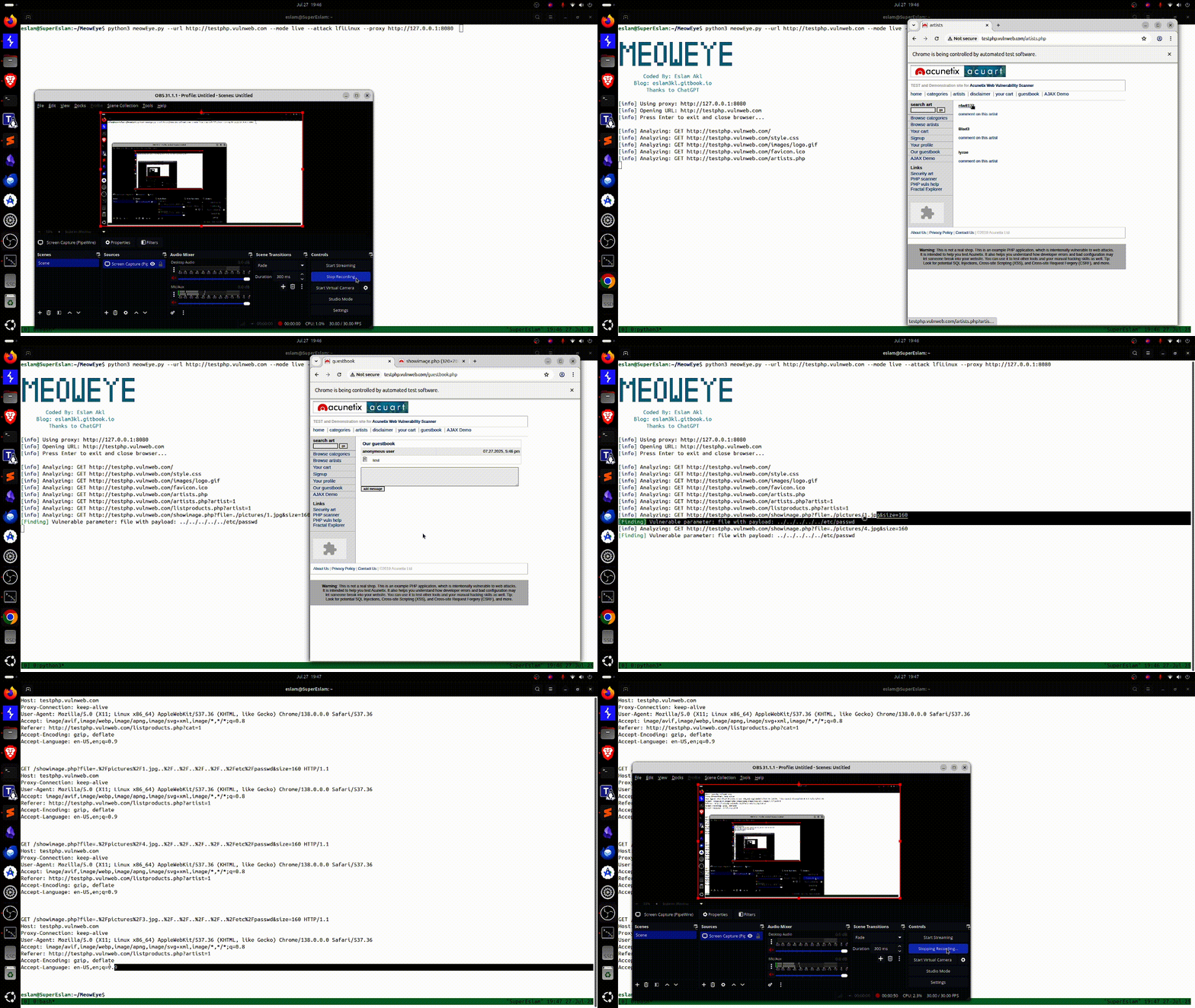
Meanwhile, the tool quietly captures every request and appends payloads to each parameter—but don’t worry, it appends rather than replaces, so nothing gets lost because of the app’s quirks.
At the end, if any vulnerabilities are found, the tool generates a file with all the juicy details in Burp Suite format. You can then copy, paste, and double-check at your leisure.
Easy peasy, bug-squeasy! 🐞
Clone the repo:
git clone https://github.com/eslam3kl/MeowEye.git
cd MeowEye
Install requirements:
pip install -r requirements.txt
Download and install ChromeDriver compatible with your Chrome version:
https://chromedriver.chromium.org/downloads
If you faced any error, please search for it. The tool depends on a lot of libraries and tools.
python meoweye.py --mode [live|delay] --attack [ref|lfiLinux|lfiWin|ssti] --url <target_url> [--proxy http://127.0.0.1:8080]
| Option | Description |
|---|---|
--mode | live or delay scanning |
--attack | ref, lfiLinux, lfiWin, or ssti |
--url | The initial URL to open in the browser |
--proxy | Optional HTTP proxy for traffic interception |
Payloads are stored in the payloads/ directory:
lfi-unix-payloads.txtlfi-windows-payloads.txtssti-payloads.txtEach line is injected into parameters to test for vulnerabilities.
DDMMYYYY-output.txtOutput sample:
GET /showimage.php?file=.%2Fpictures%2F3.jpg..%2F..%2F..%2F..%2F..%2Fetc%2Fpasswd&size=160 HTTP/1.1
Host: testphp.vulnweb.com
Proxy-Connection: keep-alive
User-Agent: Mozilla/5.0 (X11; Linux x86_64) AppleWebKit/537.36 (KHTML, like Gecko) Chrome/138.0.0.0 Safari/537.36
Accept: image/avif,image/webp,image/apng,image/svg+xml,image/*,*/*;q=0.8
Referer: http://testphp.vulnweb.com/listproducts.php?artist=1
Accept-Encoding: gzip, deflate
Accept-Language: en-US,en;q=0.9
This tool is for educational and authorized testing purposes only. The developer is not responsible for any misuse. You're swimming in your own responsibility :)
Pull requests, ideas, and feedback are welcome!
Made by Eslam Akl
Thanks to my cat Koko and ChatGPT.
