 derv82/wifit3
Wifite but USB-only & cross-platform.

A standalone USB Wi-Fi auditor for Linux, Windows, and macOS.
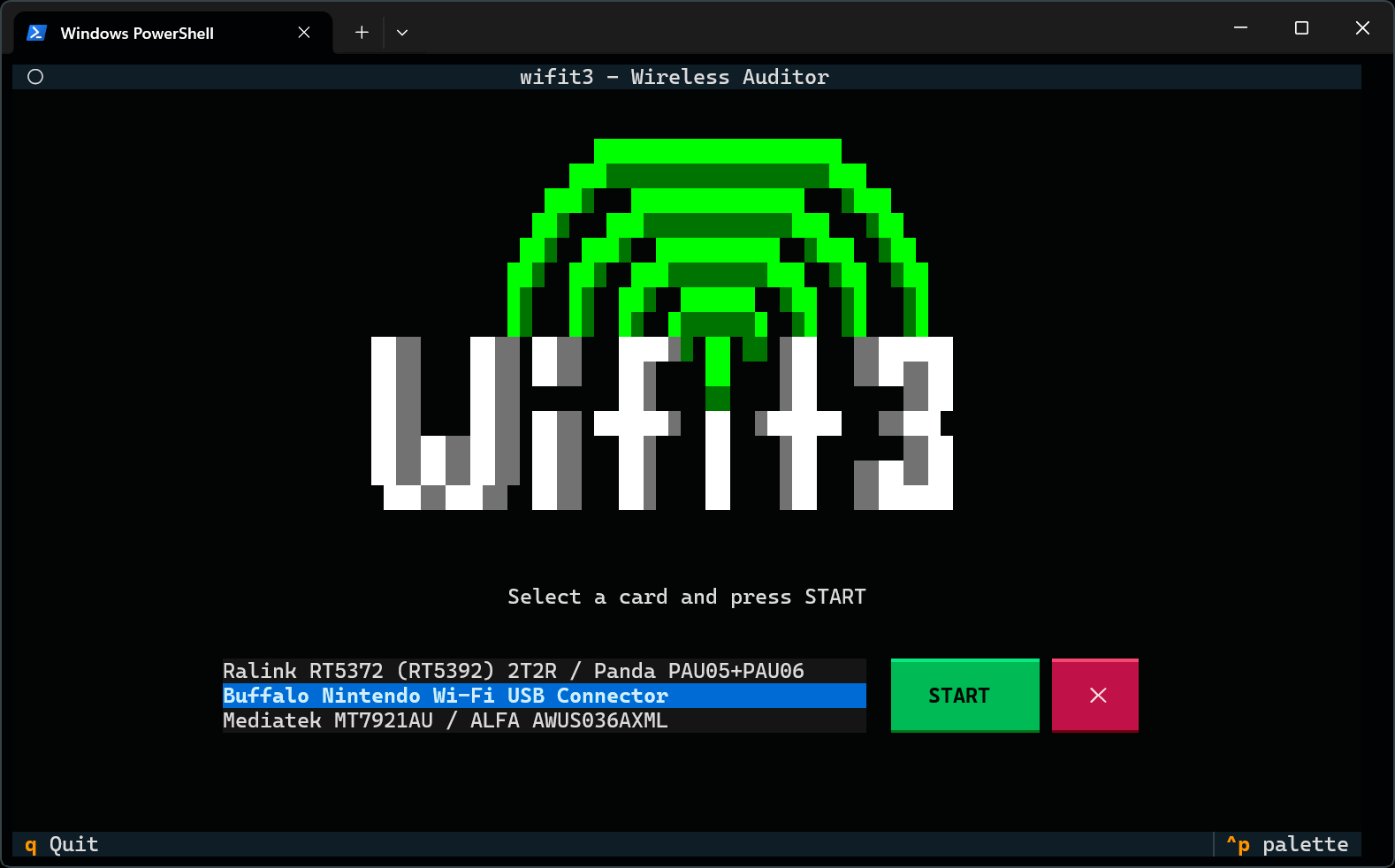
At least one of the supported USB adapters is required.
aircrack-ng or reaver, just pure Python with PyUSB & Textual libraries.
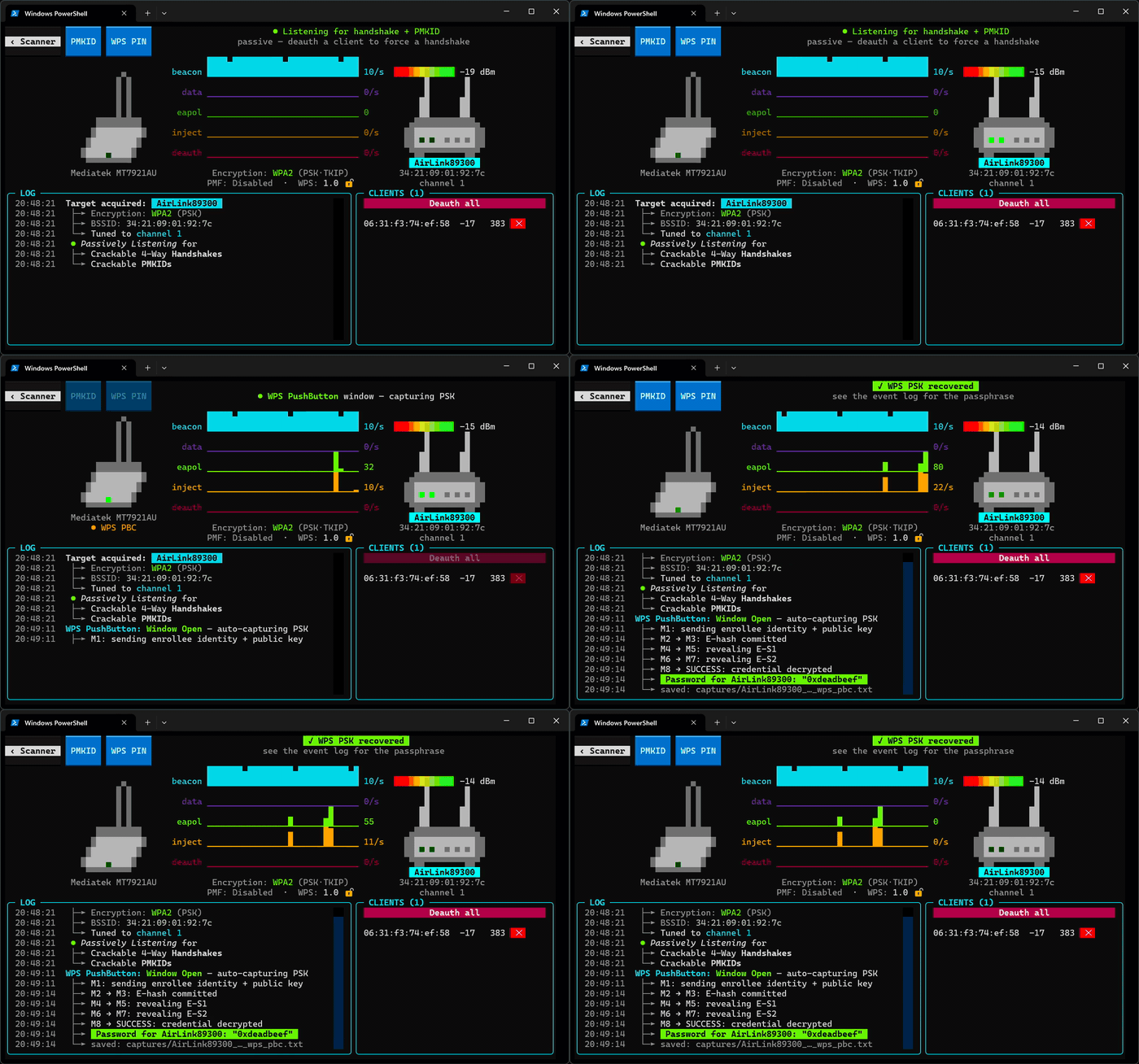
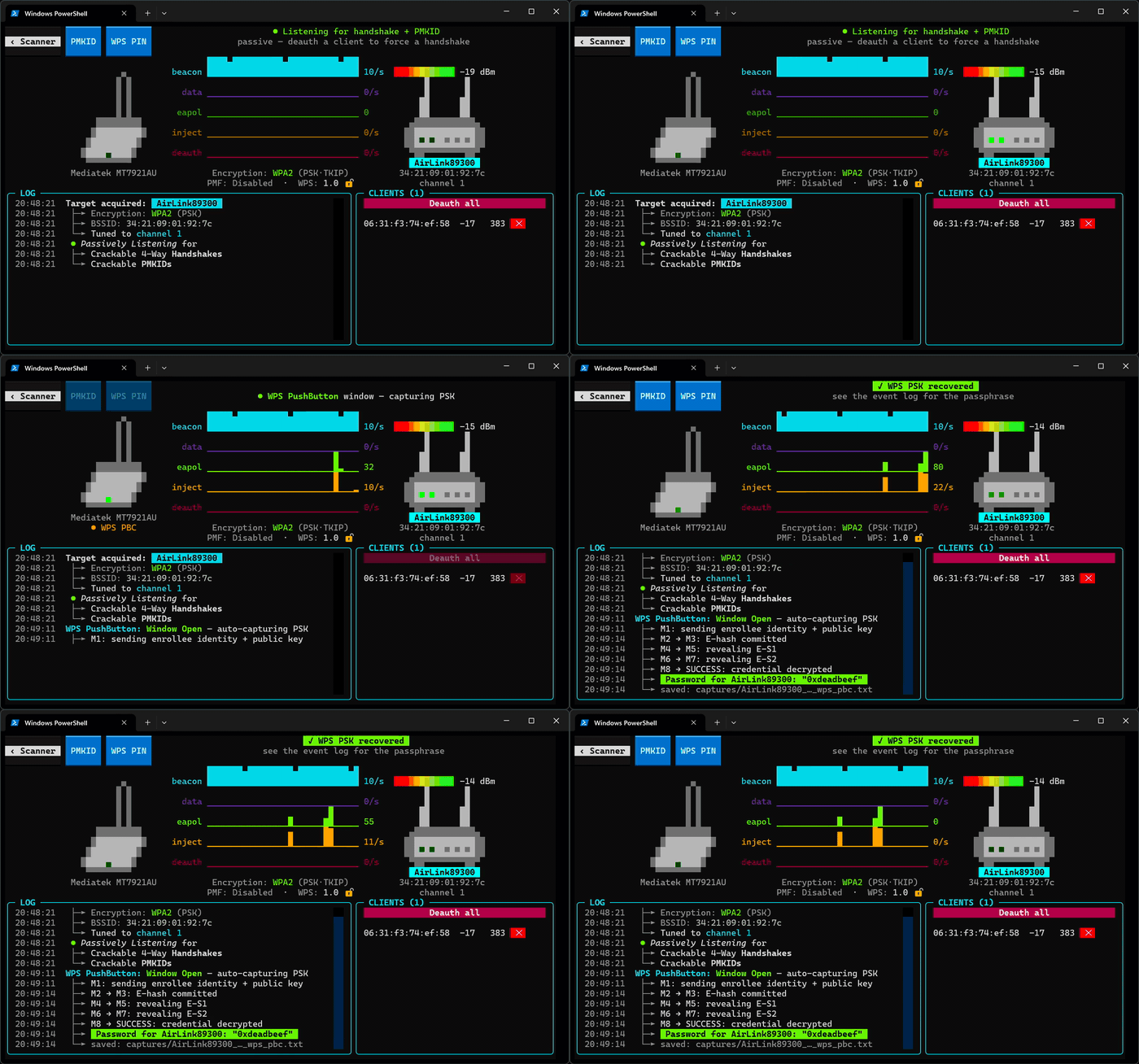
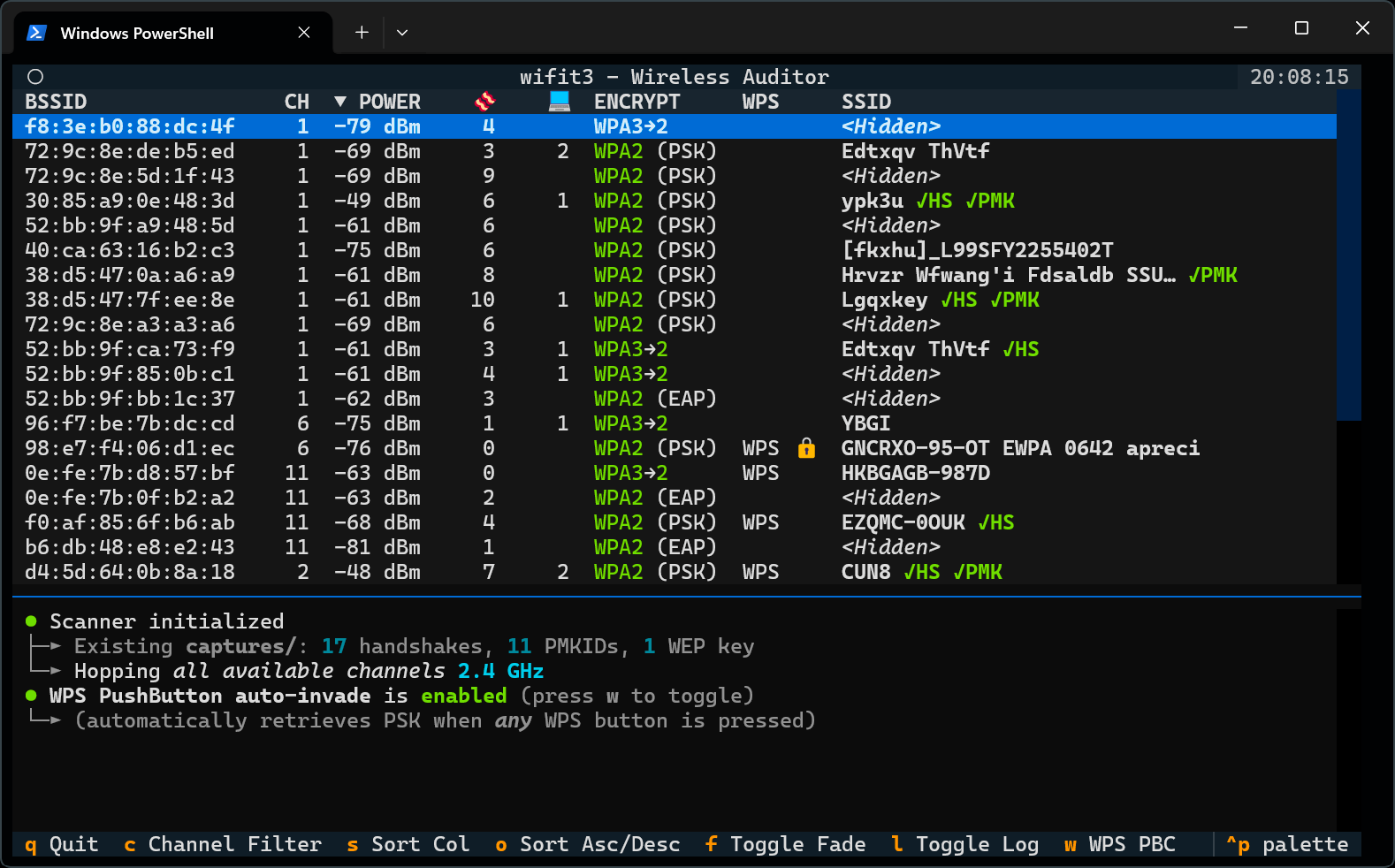
.pcap and .hc22000 files..hc22000).| Scanner | Focus (single target) |
|---|---|
 | 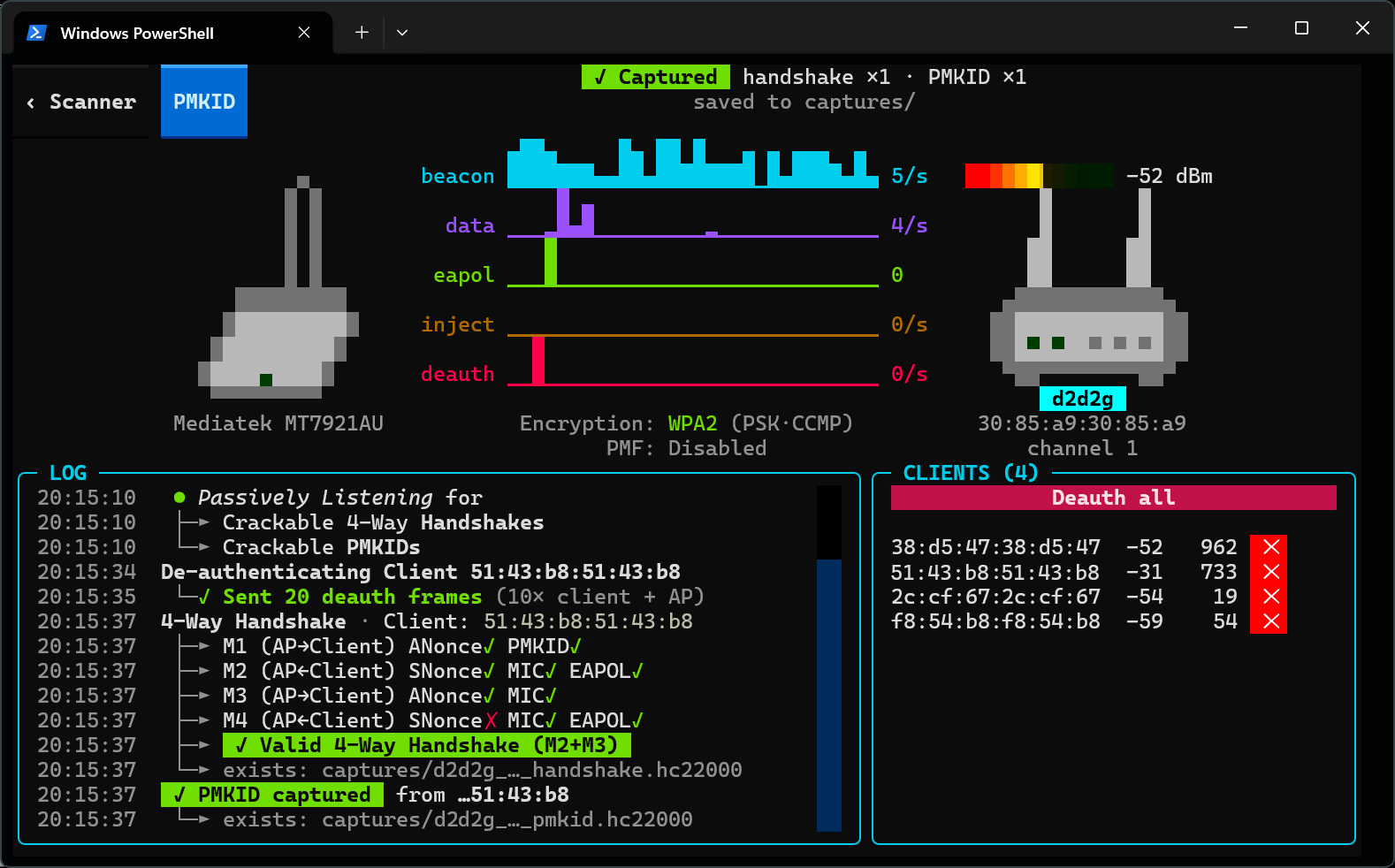 |
Important: At least one supported USB wireless adapter is required.
| Chipset | Bands | Cards (Make + Model) |
|---|---|---|
| Atheros AR9271 | 2.4 GHz | ALFA AWUS036NHA, TP-Link TL-WN722N V1 |
| MediaTek MT7601U | 2.4 GHz | Generic unbranded "nano" dongles |
| MediaTek MT7610U | 2.4 / 5 GHz | ALFA AWUS036ACHM, Panda PAU0B |
| MediaTek MT7612U | 2.4 / 5 GHz | ALFA AWUS036ACM |
| MediaTek MT7921AU | 2.4 / 5 GHz | ALFA AWUS036AXML, Panda PAU0F |
| MediaTek MT7925U | 2.4 / 5 GHz | Netgear A9000 |
| Realtek RTL8812AU | 2.4 / 5 GHz | ALFA AWUS036ACH |
| Realtek RTL8814AU | 2.4 / 5 GHz | ALFA AWUS1900 |
| Realtek RTL8821AU | 2.4 / 5 GHz | ALFA AWUS036ACS, TP-Link Archer T2U Plus/Nano |
| Realtek RTL8821CU | 2.4 / 5 GHz | Auscoumer 600 Mbps |
| Realtek RTL8922AU | 2.4 / 5 GHz | ASUS USB-BE93 |
| Realtek RTL8822BU | 2.4 / 5 GHz | TP-Link T3U Plus, Archer T4U v3 / T4U+ |
| Realtek RTL8822CU | 2.4 / 5 GHz | D-Link AC13U |
| Realtek RTL8187L | 2.4 GHz | ALFA AWUS036H |
| Realtek RTL8188EUS | 2.4 GHz | TP-Link TL-WN722N v2/v3 |
| Ralink RT2570 | 2.4 GHz | Buffalo Nintendo Wi-Fi USB Controller |
| Ralink RT3070 | 2.4 GHz | ALFA AWUS036NH |
| Ralink RT5370 | 2.4 GHz | LOTEKOO 150 Mbps |
| Ralink RT5372 | 2.4 GHz | Panda PAU05/PAU06 |
| Ralink RT5572 | 2.4 / 5 GHz | Panda PAU09 N600 |
Breakdown of each device's capabilities and limitations: Supported Hardware Doc.
Download the latest standalone executable from Releases:
wifit3-windows-x64.exe.chmod +x wifit3-linux-x64 && ./wifit3-linux-x64xattr -d com.apple.quarantine wifit3-macos-universal2
chmod +x wifit3-macos-universal2
./wifit3-macos-universal2
wifit3 uses Astral's uv. sync sets up dependencies:
uv sync
uv run wifit3
uv run pyinstaller wifit3.spec --noconfirm --clean
Binary executable is written to dist/ subdirectory.
wifit3 automatically handles hardware configuration within the app, after clicking the START button:
pkexec/sudo to write udev permissions and blocklists in /etc/modprobe.d/.USB Filters before plugging in.Return the previously-installed device to your operating system's Wi-Fi stack:
Uninstall button and confirm.pkexec on Linux).On Linux, this deletes wifit3's udev and modprobe rules.
On Windows, this uninstalls the WinUSB binding, and triggers a PnP device rescan (old driver reattaches).
wifit3 only exists because of the great people who reverse-engineered and maintained these Linux wireless drivers. It's usually a thankless job.
Special thanks to:
aircrack-ng's RTL8188EUS DKMS driver.The full list is in CREDITS.md.
wifit3 bypasses the operating system's native Wi-Fi stack entirely. It ships with lightweight Python ports of Linux kernel drivers (src/wifit3/chips/*) that directly control wireless devices over USB bulk and control transfers.
Because register-level frame injection and monitor mode are performed entirely in user space, Windows NDIS restrictions and Linux kernel driver locking do not apply.
For architecture details, driver porting methodology, and USB trace replay tooling, see the Porting Documentation.
Code: Licensed under GNU General Public License v2.0 (matching upstream Linux drivers).
Firmware: Vendor firmware blobs loaded onto adapters are redistributed verbatim under their respective manufacturers' licenses (details in FIRMWARE.md).
