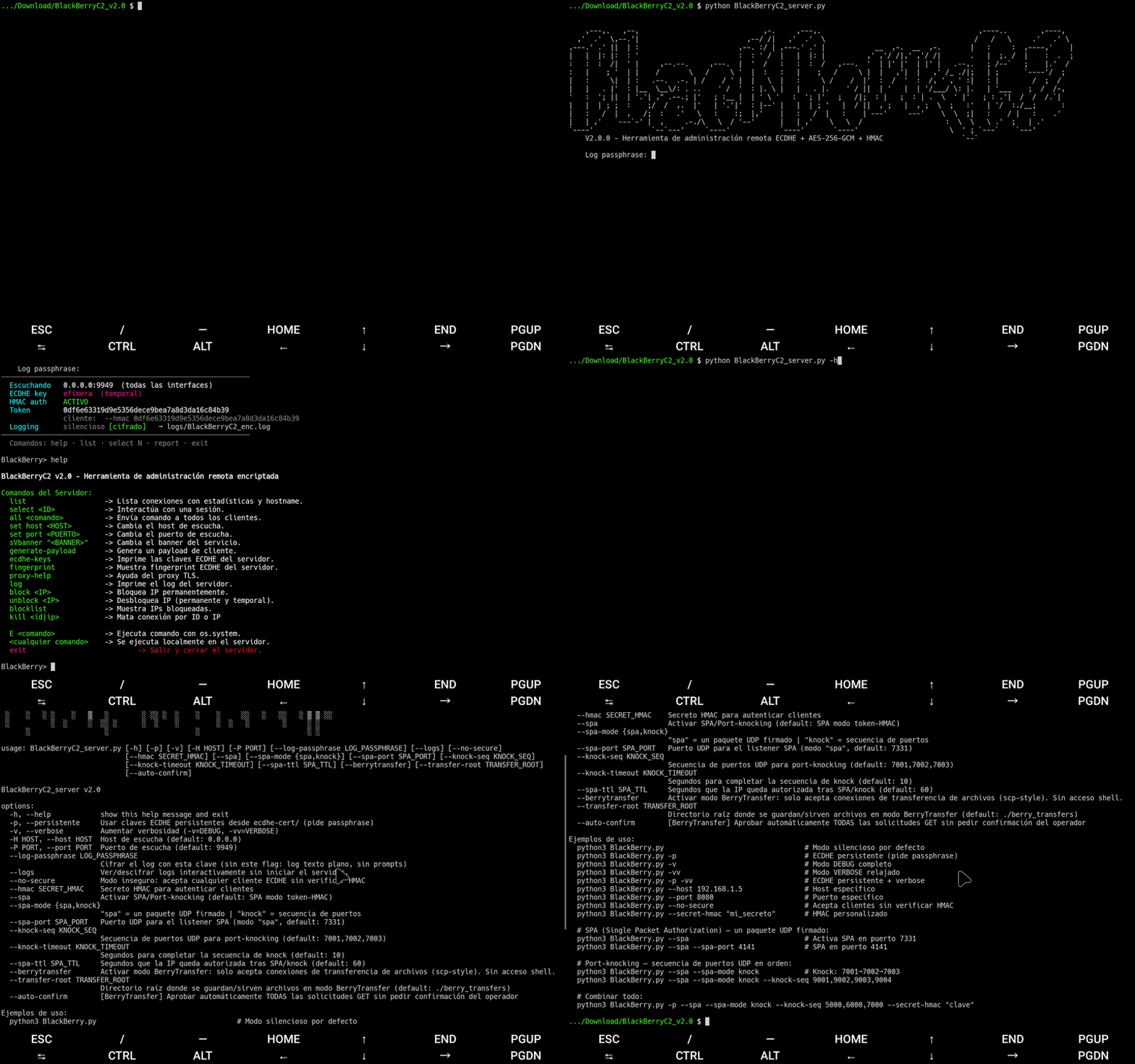

Encrypted command‑and‑control (C2) research framework for cybersecurity education, red team labs, and secure client‑server communication experiments.
BlackBerryC2 is an encrypted remote administration and C2 framework designed exclusively for educational use, security research, and controlled laboratory environments.
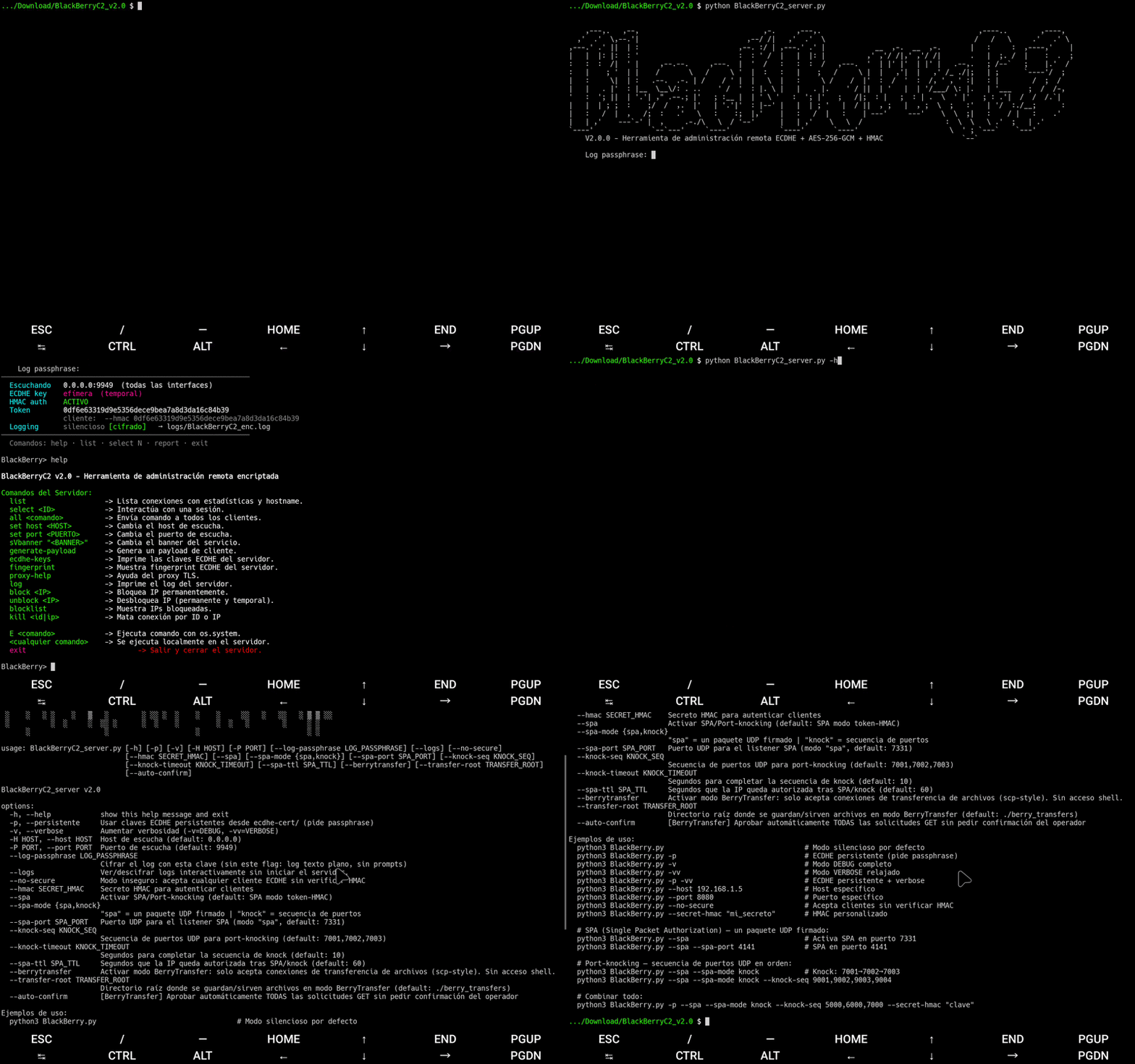
The project demonstrates how to build a custom command-and-control server with application-layer cryptography, session management, and secure client communication without relying on external TLS stacks.
This project is NOT malware and NOT intended for unauthorized access.
BlackBerryC2:
Use only on systems and networks you own or have explicit authorization to test.
Python dependencies:
pip install cryptography prompt_toolkit zstandard
zstandardis optional but recommended for transfers larger than 1 GB.
get -r, put -r)-b flag) — non-blocking, cancellable.partial + .resume files)generate-payload)BlackBerryHTTPs_TLSProxyGUI)log command)logs/last_start.jsonBlackBerryC2 v2.0 establishes secure communication as follows:
REQUEST_PUBKEY.secp256r1).HMAC_PRE_SHARED_SECRET).Each session maintains:
All cryptographic keys are generated at runtime and never reused across restarts (unless --persistente is set).
python3 BlackBerryC2_server.py
Default configuration:
0.0.0.09949| Flag | Description |
|---|---|
-p / --persistente | Use persistent ECDHE keys from ecdhe-cert/ (prompts for passphrase) |
-v | Debug logging |
-vv | Verbose (relaxed) logging |
-H <host> | Listening host (default: 0.0.0.0) |
-P <port> | Listening port (default: 9949) |
--no-secure | Accept any ECDHE client without HMAC verification |
--hmac <secret> | Custom HMAC pre-shared secret (hex or string) |
--log-passphrase <pass> | Encrypt server log with AES-256-GCM (PBKDF2 600k iter) |
--logs | Interactive log viewer — no server started |
--spa | Enable SPA/port-knocking pre-authentication |
--spa-mode <spa|knock> | spa = single UDP token, knock = port sequence |
--spa-port <port> | UDP port for SPA listener (default: 7331) |
--knock-seq <ports> | Port sequence for knock mode (default: 7001,7002,7003) |
--knock-timeout <sec> | Seconds to complete knock sequence (default: 10) |
--spa-ttl <sec> | Seconds an authorized IP remains valid (default: 60) |
--berrytransfer | BerryTransfer mode: file-transfer-only, no shell |
--transfer-root <dir> | Root directory for BerryTransfer (default: ./berry_transfers) |
--auto-confirm | Auto-approve all GET requests in BerryTransfer (no operator prompt) |
Examples:
# Basic startup (prompts for log passphrase)
python3 BlackBerryC2_server.py

# Persistent ECDHE keys + verbose
python3 BlackBerryC2_server.py -p -vv

# Custom port, no HMAC check
python3 BlackBerryC2_server.py -P 8080 --no-secure

# Port-knocking on custom ports
python3 BlackBerryC2_server.py --spa --spa-mode knock --knock-seq 9001,9002,9003

# BerryTransfer mode with auto-confirm
python3 BlackBerryC2_server.py --berrytransfer --auto-confirm

# View/decrypt logs without starting server
python3 BlackBerryC2_server.py --logs
| Command | Description |
|---|---|
list | List active sessions with stats and hostname |
select <ID> | Interact with a client session |
all <cmd> | Send a command to all connected clients |
report | Full server status report (uptime, sessions, transfers) |
set host <HOST> | Change listening host (rebinds server) |
set port <PORT> | Change listening port (rebinds server) |
sVbanner "<text>" | Change service banner |
generate-payload | Generate a client payload |
fingerprint | Show ECDHE server key fingerprint (SHA-256) |
ecdhe-keys | Print current ECDHE key pair (PEM) |
kill <id|ip> | Terminate a session by ID or IP |
block <IP> | Permanently block an IP |
unblock <IP> | Unblock an IP (persistent + temporary) |
blocklist | Show blocked IPs (persistent and temporary) |
log | Interactive log viewer (supports encrypted logs) |
report | Status summary: uptime, sessions, transfers |
banner | Redisplay startup banner |
clean | Delete server log files |
v | Toggle DEBUG logging |
vv | Toggle VERBOSE logging |
cd <dir> | Change server local working directory |
E <cmd> | Execute command via os.system locally |
<any command> | Execute locally on the server |
exit | Stop server and exit |
| Command | Description |
|---|---|
proxy | Start TLS/HTTP proxy daemon (auto mode) |
proxy --mode <mode> | Modes: auto, tls, http, https, both, all |
proxy --stats | Show proxy statistics |
proxy gui | Launch proxy GUI (separate process) |
stop-proxy | Stop proxy daemon |
stop-proxy-gui | Stop proxy GUI |
proxy-help | Full proxy help |
select <ID>)| Command | Description |
|---|---|
help | Show session help |
exit | Return to main shell |
!<cmd> | Execute command locally on the server |
<cmd> | Execute command on the remote client |
cmd1 && cmd2 | Chain: run cmd2 only if cmd1 succeeded |
cmd1 || cmd2 | Chain: run cmd2 only if cmd1 failed |
cmd1 ; cmd2 | Chain: always run cmd2 |

