
Skip to content
KitploitKITPLOIT
ToolsBlog
Submit
ToolsBlog
Submit

Hacking, PenTest, and Cybersecurity Tools for Your Security Arsenal!

Kitploit is a directory of hacking, cybersecurity, and pentesting tools. Discover the latest project updates to find vulnerabilities, analyze systems, automate testing, and strengthen your security.

··Feeds·Contact·Privacy·© 2026 Kitploit

Tool Directory

Categories

View all categories
Loading categories
PPLorer — IDA plugin that resolves PPL calls to the actual underlying PPL function. | Kitploit
Tools/GitHubGitHub/cellebrite-labs/pplorer
Static AnalysisiOS SecurityReverse EngineeringMobile SecurityBinary Analysis
GitHubcellebrite-labs/pplorer

PPLorer

IDA plugin that resolves PPL calls to the actual underlying PPL function.

View Repository
5563 years agoReviewed by Kitploit

Most Popular

View all →

Discover the most used tools by our community.

Explore all tools

Browse our collection of tools

View all tools →
Share

PPLorer

PPLorer is an IDA plugin that resolves PPL calls to the actual underlying PPL function.

Installation

  1. install ida-netnode somewhere IDA can import it
  2. clone the repository and symlink ~/.idapro/plugins/pplorer.py to pplorer.py in the cloned repo

Usage

Preliminary Analysis

  1. open an IDB and make sure autoanalysis has finished
  2. from the menu select Edit -> Plugins -> PPLorer -> Analyse IDB
  3. done!

Continuous Use

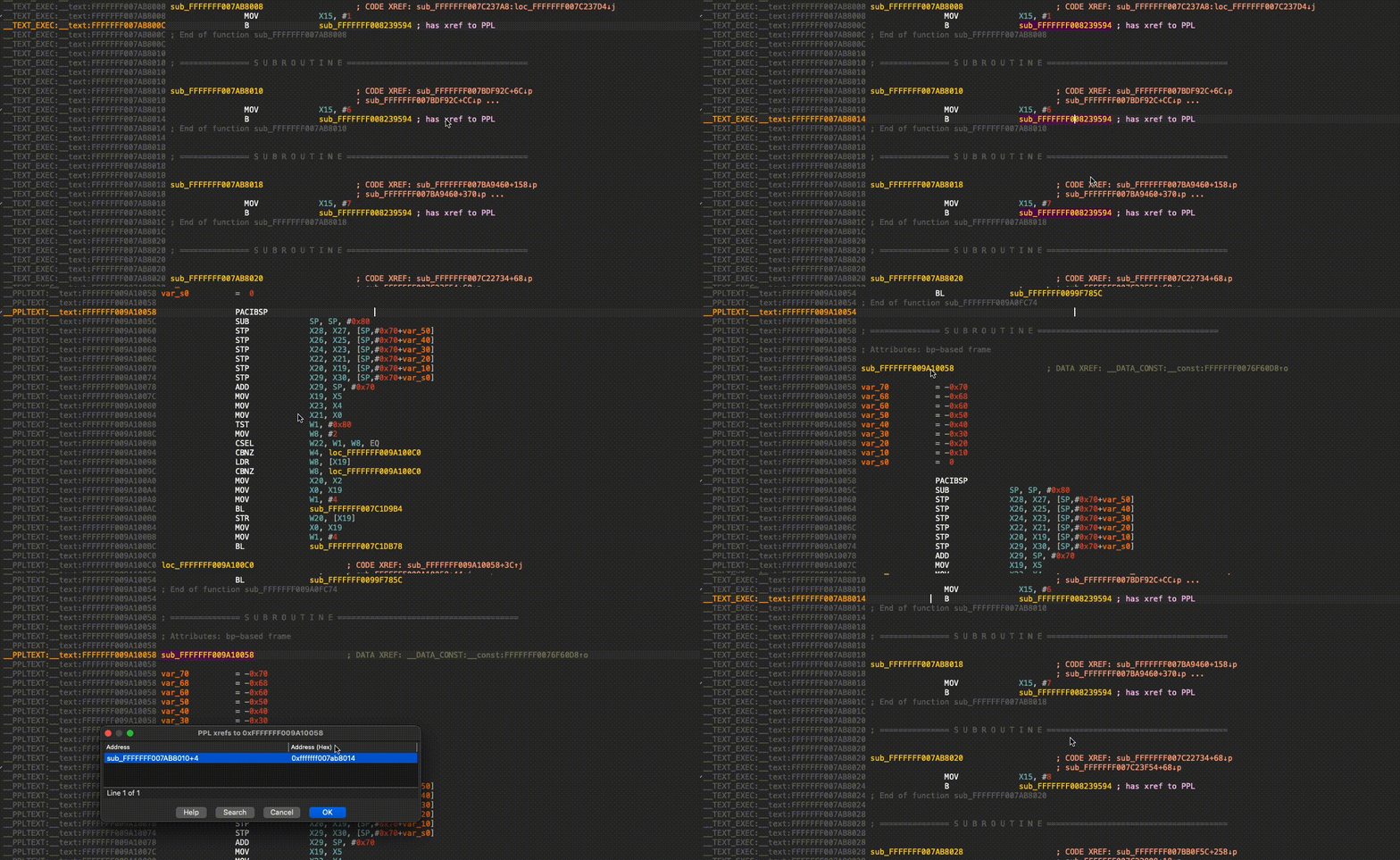
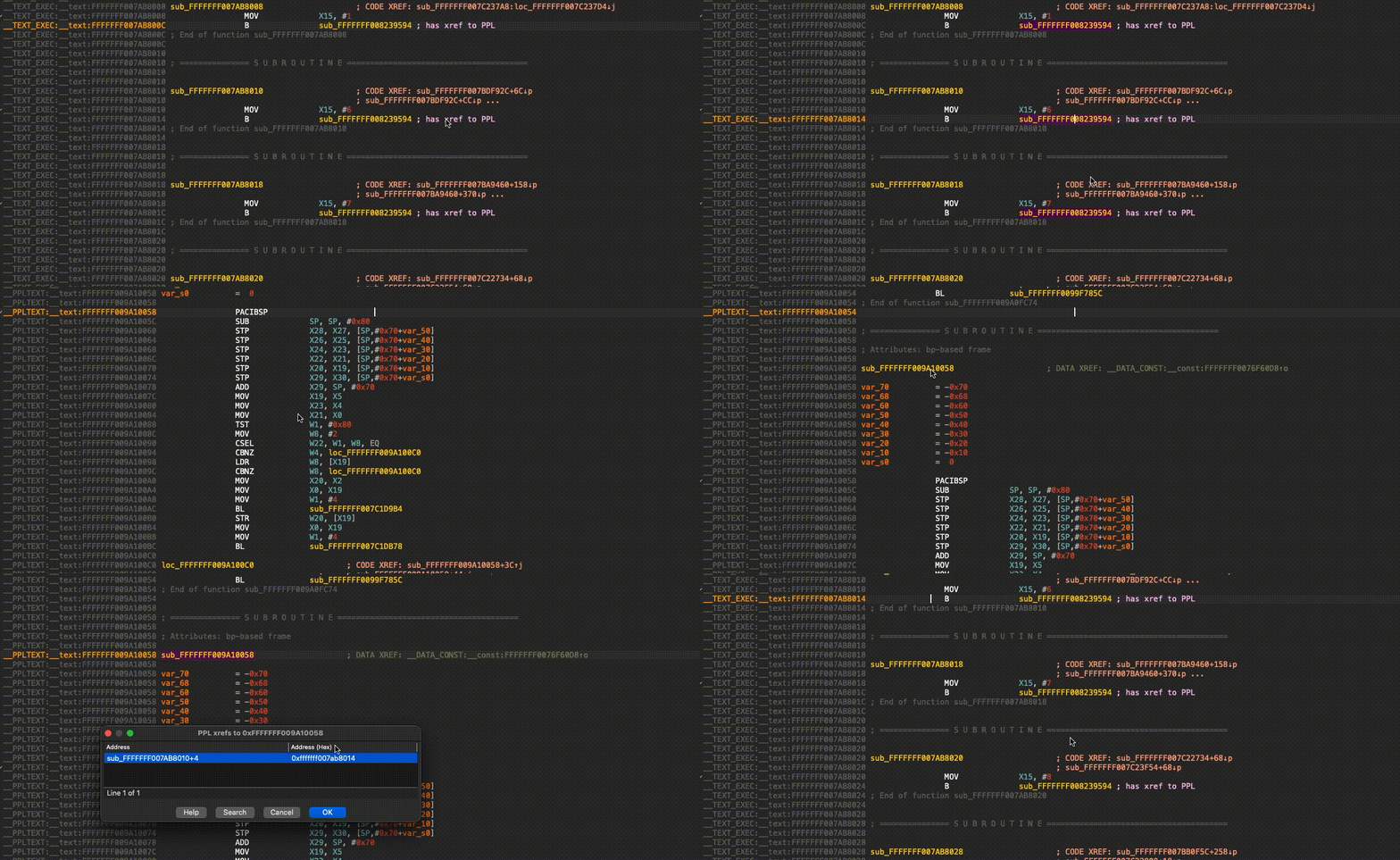
TL;DR CTRL-SHIFT-X or Right Click -> Jump to PAC XREFs at suitable locations will open a selection window

From call site to PPL function

  1. place the cursor on a branch instruction instruction to the PPL gate (marked with a comment- "has xref to PPL").
  2. press the hotkey or activate the menu entry
  3. the matching PPL function will pop.

From PPL function to call sites

  1. place the cursors either the start address of a PPL function
  2. press the hotkey or activate the menu entry
  3. a list of possible call sites will open

Principals of Operation

PPL has a gate that all the calls from the kernel get to. Before that gate each separate call puts in a pre-determined register (X15) the selector of the PPL function it wants to call. The control will be transferred to the PPL dispatch which will check that a valid function was selected and will then go to the PPL functions table and call it. We find the dispatch, extract the size of the PPL functions table and its address. Then we detect all the calls to the gate from the kernel side, and get the PPL selector that is put in X15. For each call we match a function from the PPL table and for each function on the PPL table we add all the matching kernel calls.

Meta

Authored by Omer Porzecanski of Cellebrite Labs.
Based on pacXplorer by Ouri Lipner while at Cellebrite Labs.
Developed and tested for IDA 8 on OS X, iOS 15.X+ for A12+

I want to work with you

click here (Remote talent welcome)

Download Tool