CVE-2024-28784 — Stored XSS in IBM QRadar SIEM Rule Wizard
- Vendor: IBM
- Product: IBM Security QRadar SIEM
- Affected Version: 7.5.0 UpdatePackage 7 (Build 20230822112654)
- Component: Rule Wizard (Regular Expression Logic Block)
- CVE ID: CVE-2024-28784
🐞 Vulnerability Summary
A stored cross-site scripting (XSS) vulnerability exists in the Rule Wizard component of QRadar SIEM. The issue lies in the improper sanitization of user-controlled input within the "regular expression" logic block. Malicious input containing unescaped HTML/JavaScript can be stored and later executed in the browser context of other authenticated users.
📋 Steps to Reproduce
- Log into QRadar SIEM with a user account that has rule creation/edit permissions.
- Navigate to:
Offense → Rules → Actions → New Event Rule
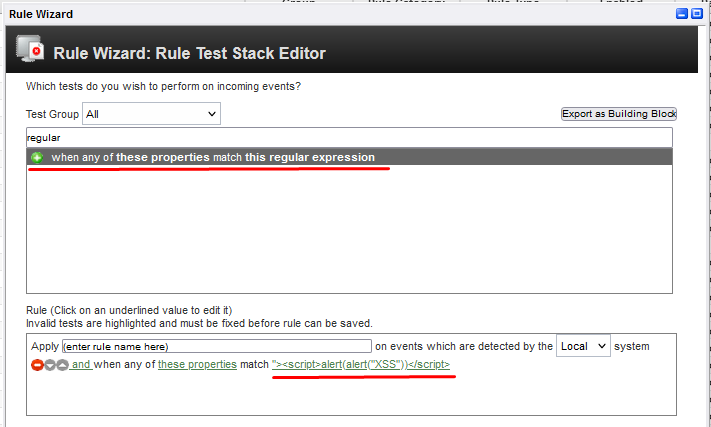
- Add a condition block:
"when any of these properties match this regular expression" .
- Choose any property.
- In the "this regular expression" input, enter the following payload:
"><script>alert(alert('XSS'))</script>
- Click Submit.
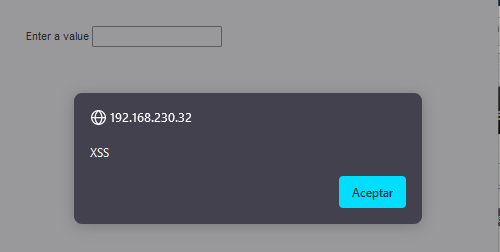
- Reopen the rule block; the malicious payload persists and triggers upon interaction or load.

🔐 Access Requirements
- Authentication: Yes
- Privileges: Any user with access to rule creation/editing
⚙️ Technical Details
- Vulnerability Type: Stored Cross-site Scripting (XSS)
- Vector: Web UI → Rule Wizard
- Injection Point: Regular Expression field
- Persistence: Stored in configuration and triggered on view
- Security Misstep: Improper input sanitization and reflection in HTML context
⚠️ Impact
This XSS vulnerability allows an attacker to:
- Execute arbitrary JavaScript in another user’s browser session
- Perform session hijacking or token theft
- Steal sensitive data from authenticated users
- Impersonate users or elevate privileges (if privileged users trigger the payload)
- Redirect victims to phishing or malicious domains
🧪 Exploitation Notes
- Exploitation is non-trivial, requiring an attacker to inject the payload and a victim to interact with the infected rule interface.
- The attack does not require social engineering if users frequently interact with saved rules.
🏁 Timeline
| Date | Event |
|---|
| 2024-03-18 | Vulnerability discovered |
| 2024-03-18 | Reported to IBM via HackerOne |
| 2024-04-02 | CVE-2024-28784 assigned |
📄 Disclaimer
This research was conducted under ethical guidelines and in a responsible disclosure process. No production systems were harmed. This publication is for educational and defensive purposes only.
👤 Author
Rodrigo Hormazábal
Security Researcher — SOAR & SIEM Automation
🔗 LinkedIn
🧑💻 GitHub
🐙 HackerOne
 cainsoulless/cve-2024-28784
