 blackhillsinfosec/skyhook
A round-trip obfuscated HTTP file transfer setup built to bypass IDS detections.

Skyhook is a REST-driven utility used to smuggle files into and out of networks defended by IDS implementations. It comes with a pre-packaged web client that uses a blend of React, vanilla JS, and web assembly to manage file transfers.
Note: See the user documentation for more thorough discussion of Skyhook and how it functions.
Skyhook's file transfer server seamlessly obfuscates file content with a user-configured series of obfuscation algorithms prior to writing the content to response bodies. Clients, which are configred with the same obfuscation algorithms, deobfuscate the file content prior to saving the file to disk. A file streaming technique is used to manage the HTTP transactions in a chunked manner, thus facilitating large file transfers.
flowchart

subgraph sg-cloudfront[Cloudfront CDN]
    cf-listener(443/tls)
end

subgraph sg-vps[VPS]
    subgraph sg-skyhook[Skyhook Servers]
        admin-listener(Admin Server<br>45000/tls)
        transfer-listener(Transfer Server<br>45001/tls)
    end

    config-file(Config File<br>/var/skyroot/config.yml)

    admin-listener -..->|Reads &<br>Manages| config-file

    webroot(Webroot<br>/var/skyhook/webroot)
    transfer-listener -..->|Serves From &<br>Writes Cleartext<br>Files To| webroot
end


    op-browser(Operator<br>Web Browser) -->|Administration<br>Traffic| admin-listener
    op-browser <-->|Obfuscated<br>Data| transfer-listener

subgraph sg-corp[Corporate Environment]
    subgraph sg-compromised[Beachhead Host]
        comp-browser(Web Browser) -->|Reads &<br>Writes| cleartext-file(Cleartext Files)
    end
end

comp-browser <-->|Obfuscated<br>Data| cf-listener <-->|Obfuscated<br>Data| transfer-listener
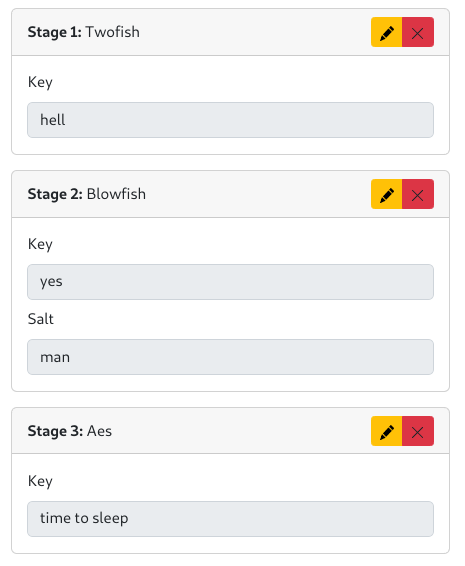
For example, here is a working obfuscation configuration:
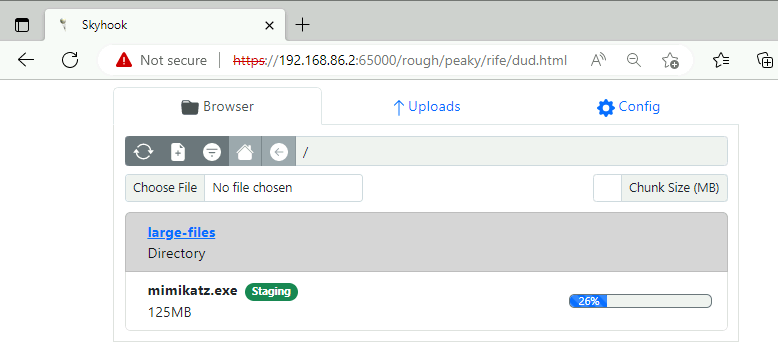
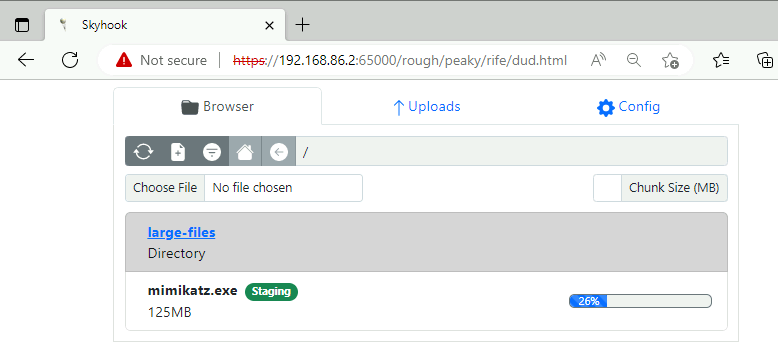
And here is the file transfer interface. Clicking "Download" results in the file being retrieved in chunks that are encrypted with the chain of obfuscation methods configured above.
JavaScript deobfuscates the file before prompting the user to save it to disk.
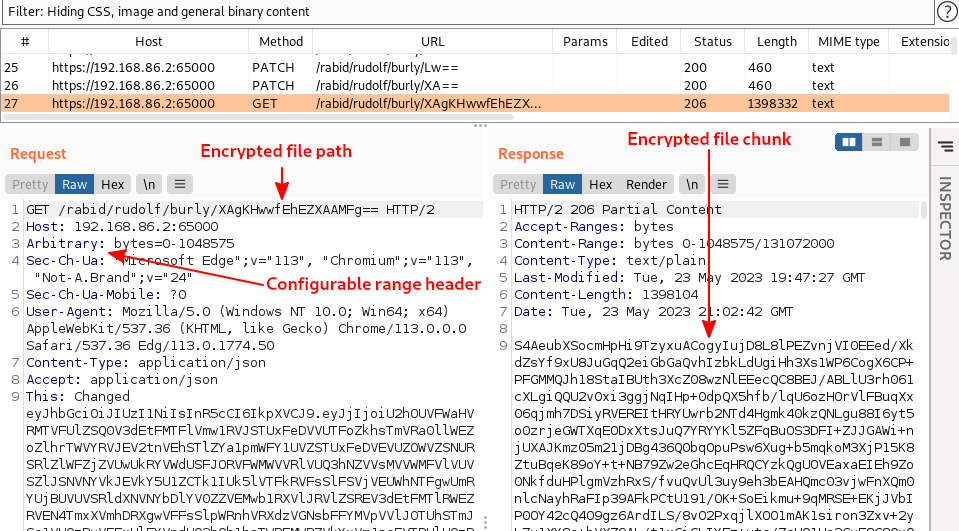
Below is a request stemming from a download being inspected with Burp. Key elements of the transaction are encrypted to evade detection.