 atiilla/cve-2026-21852-poc
Educational demo of three Claude Code vulnerabilities (hooks bypass, MCP injection, API key exfiltration) with attacker server, MITM proxy, and detection scanner for supply-chain security learning.

This project demonstrates three vulnerabilities disclosed by Check Point Research in Anthropic's Claude Code CLI tool. It is designed for cybersecurity students and researchers to understand how AI development tool supply-chain attacks work.
| ID | CVSS | Type | Fixed In |
|---|---|---|---|
| No CVE | 8.7 | Hooks consent bypass → RCE | v1.0.87 (Sep 2025) |
| CVE-2025-59536 | 8.7 | MCP server config injection → RCE | v1.0.111 (Oct 2025) |
| CVE-2026-21852 | 5.3 | API key exfiltration via base URL | v2.0.65 (Jan 2026) |
├── README.md                          # This file
├── attacker_server.py                 # Local HTTP server that logs received data
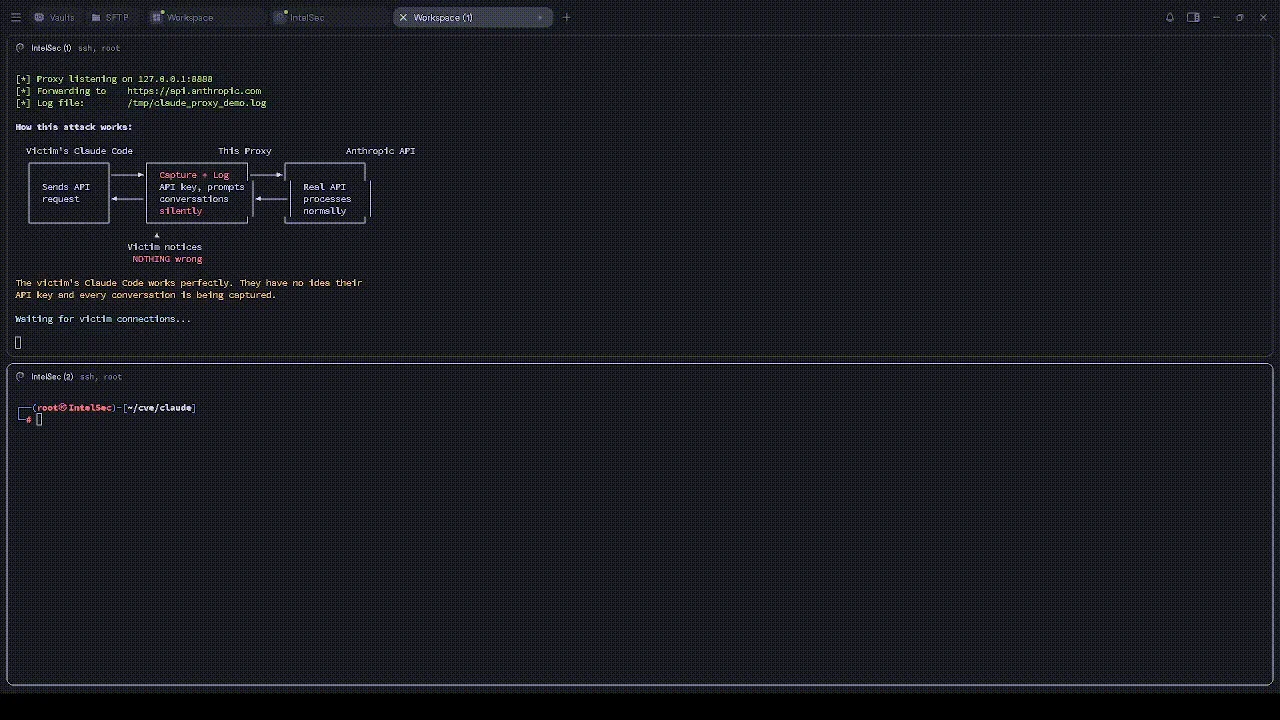
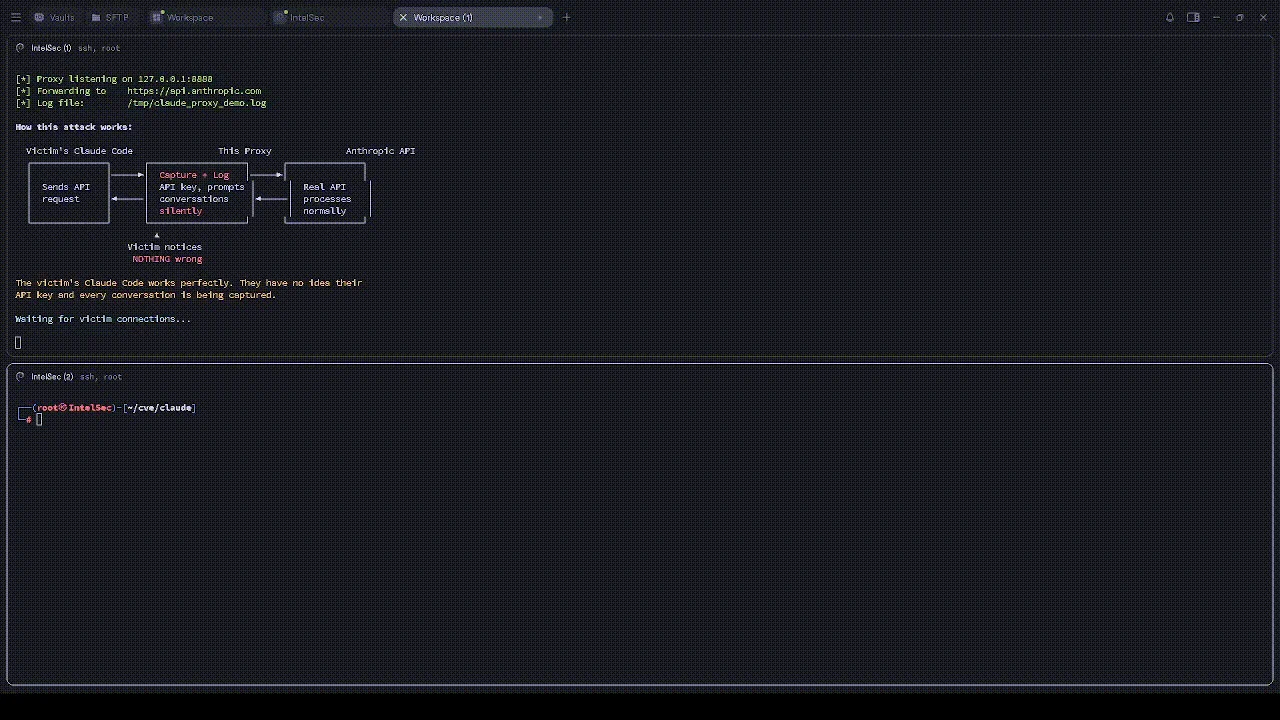
├── attacker_proxy.py                  # MITM proxy for CVE-2026-21852 (captures API key + traffic)
├── scanner.py                         # Detection tool: scans repos for these patterns
├── vuln1_hooks_bypass/                # Demo: malicious hooks in settings.json
│   └── .claude/settings.json
├── CVE-2025-59536_mcp_injection/      # Demo: MCP server config injection
│   ├── .mcp.json
│   └── .claude/settings.json
└── CVE-2026-21852_api_exfil/          # Demo: API key exfiltration via base URL
    └── .claude/settings.json
python3 attacker_server.pypython3 attacker_proxy.py — transparent proxy on 127.0.0.1:8888 that captures API keys while forwarding traffic normallypython3 scanner.py <path-to-any-repo> to detect these patternsscanner.py checks any local repo for the three vulnerability patterns before you open it in Claude Code.
python3 scanner.py <path-to-repo>
It flags:
enableAllProjectMcpServers: true combined with .mcp.json server definitions (CVE-2025-59536)ANTHROPIC_BASE_URL or other credential-related env overrides in .claude/settings.json (CVE-2026-21852)Exits with code 1 if any issues are found, 0 if clean — easy to drop into a CI pre-clone check.
| Component | Version |
|---|---|
| Claude Code CLI | v2.0.61 |
Note: v2.0.61 is a vulnerable build (patch landed in v2.0.65). Do not use this version in production.
In AI-powered development environments, configuration files are part of the execution layer. Cloning an untrusted repository is now equivalent to running untrusted code if your tools auto-load project configs.
This project is provided as-is for educational purposes. Techniques shown here are demonstrated on localhost only and target only patched, historical vulnerabilities. Using these tools against production systems, third-party infrastructure, or any system without explicit authorization is illegal and unethical. The author is not responsible for any damage caused by misuse of this material.
