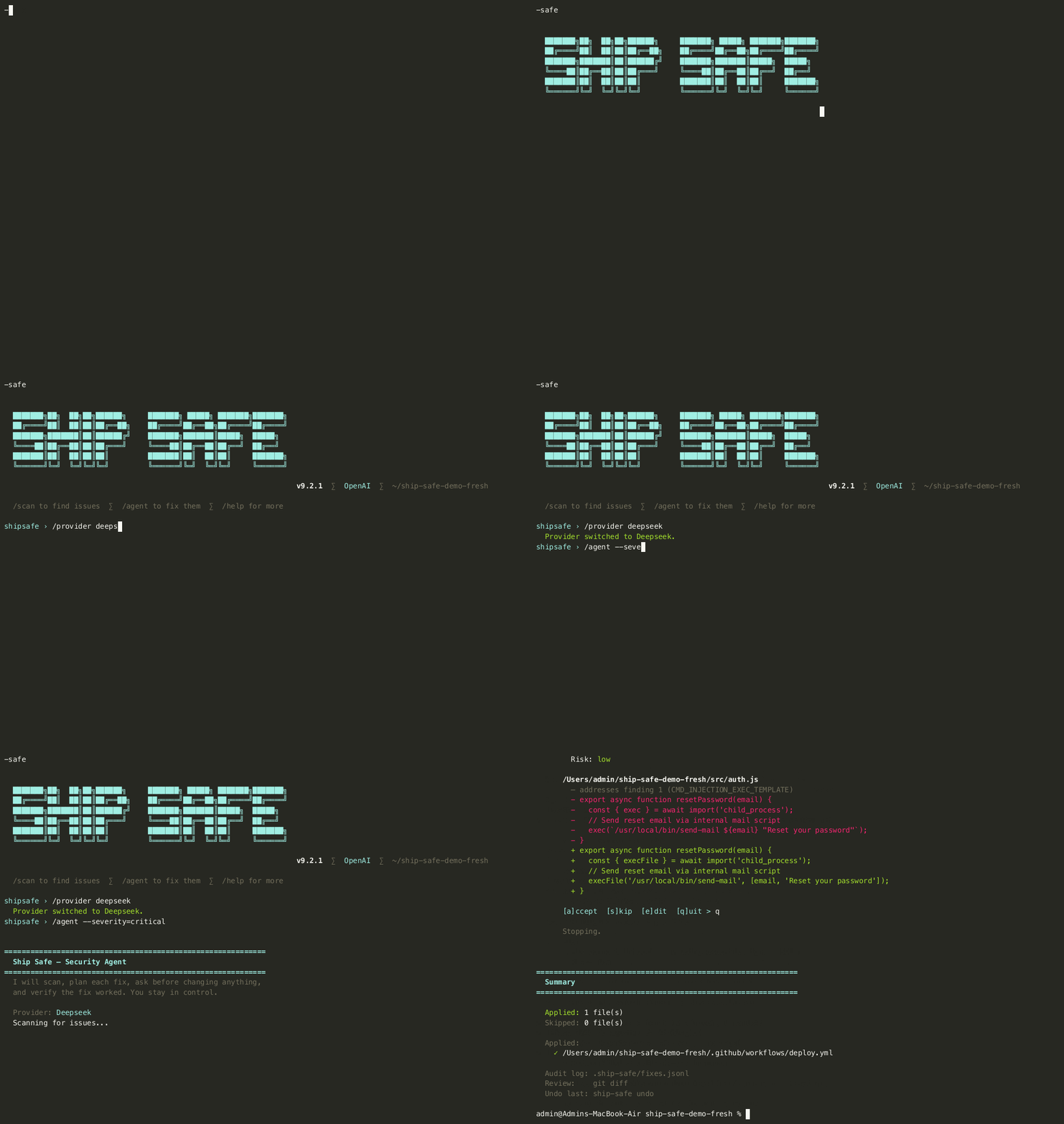
The independent security agent for AI-written software. Finds issues, investigates whether they are real, and shows you the evidence. Deterministic core, no API key needed, JSON and SARIF output.

The independent security agent for AI-written software. It finds issues, investigates whether they are real, and shows you the evidence.
Website · Docs · Security & Data Flow · Benchmark · Pricing · Blog · Contribute




Ship Safe runs locally in your repo and works in two layers.
A deterministic engine finds issues across application code, AI agents, MCP configs, prompts, dependencies, CI/CD, secrets, and cloud-adjacent configuration. Fast, repeatable, and benchmarked — this is the sensor layer.
An investigation layer then decides what the findings are worth. It traces the value that reaches a sink, searches the project for controls a rule says are missing, builds attack chains across configuration no single file contains, and — when you ask it to — probes a leaked key against its provider. Every conclusion carries the pass that reached it and the lines it read:
CONFIRMED — traced end to end (10)

    NoSQL Injection via $where [high]
    app/data/allocations-dao.js:78  NOSQL_INJECTION_WHERE
    why: threshold is assigned from the HTTP request and reaches the sink without validation on that path.
    decided by: dataflow
      1. value reaches NOSQL_INJECTION_WHERE here  app/data/allocations-dao.js:78
      2. getByUserIdAndThreshold is called here with threshold  app/routes/allocations.js:23
      3. threshold is assigned here  app/routes/allocations.js:20
    fix: Replace $where with standard MongoDB operators ($eq, $gt, $regex, etc.)
Real output from ship-safe investigate against OWASP NodeGoat. The tainted value is destructured in a route file and passed into a DAO three directories away.
Start with one command:
npx ship-safe
No signup. No API key required for scanning. Works offline for core checks. AI-backed red-team modes use your configured provider when available.
Use --no-ai to guarantee a fully local scan. Provider-backed classification, deep analysis, and GPT-Red send bounded context directly to your selected provider after best-effort credential masking. See Security & Data Flow for exact boundaries and context limits.
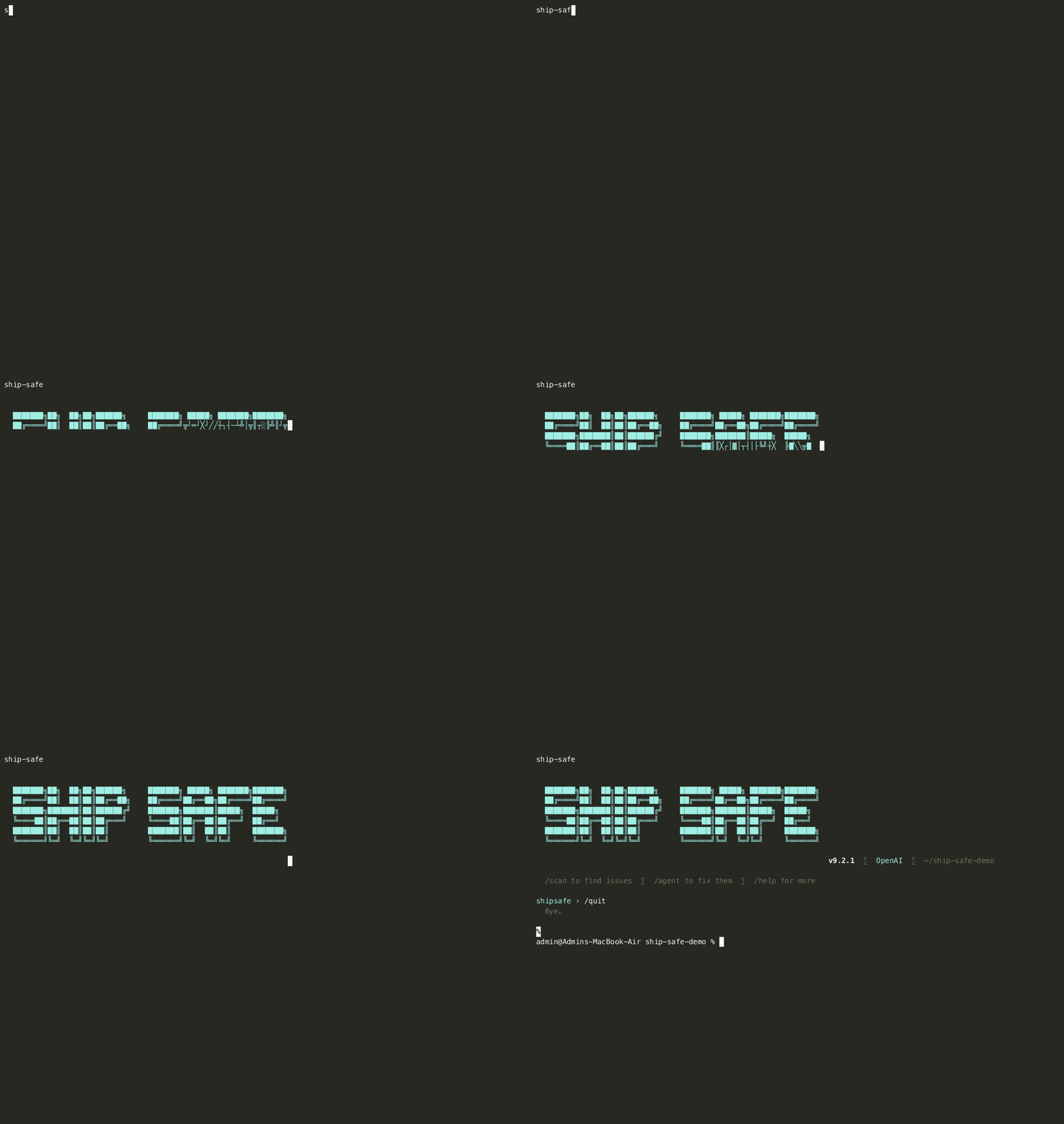
# Interactive REPL: scan, fix, and ask questions in one session
npx ship-safe

# Full audit: secrets + 30 agents + deps + remediation plan
npx ship-safe audit .

# Investigate: confirmed / likely / unresolved / refuted, with the evidence
npx ship-safe investigate .
npx ship-safe investigate . --all       # also detail unresolved and refuted
npx ship-safe investigate . --verify    # probe leaked keys against their providers

# Before you open an unfamiliar folder with an agent: what runs on open?
npx ship-safe trust ~/Downloads/take-home
npx ship-safe trust . --json

# What can an AI agent working in this repo actually reach?
npx ship-safe capabilities .

# AI agent red-team scenarios for agent-readable content
npx ship-safe red-team . --gpt-red

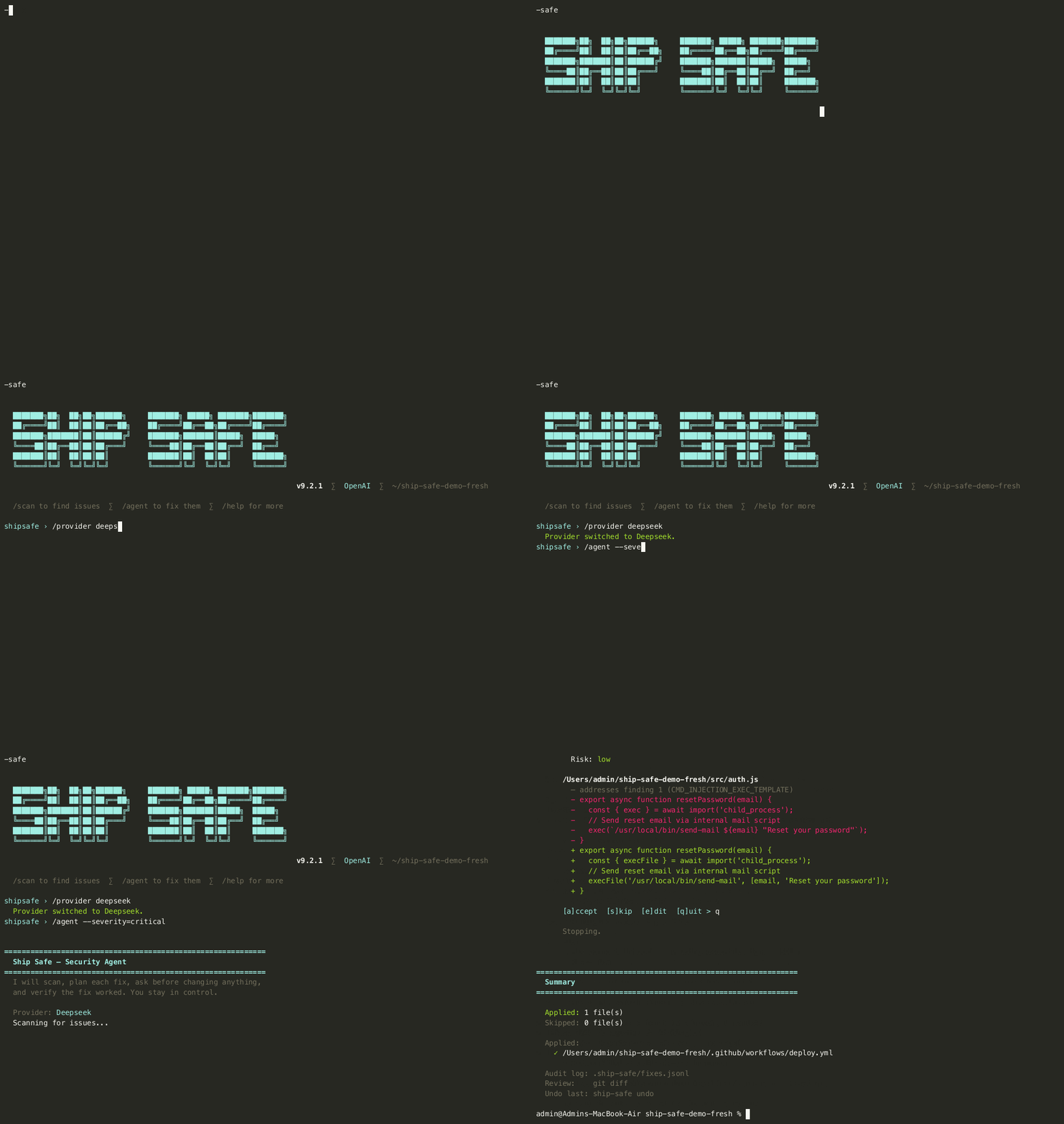
# Interactive fix agent: plan, diff, approve, verify the path closed
npx ship-safe agent .
npx ship-safe agent . --severity critical   # critical findings only
npx ship-safe agent . --branch --pr         # fix on a branch + open a PR

# Undo the last fix
npx ship-safe undo

# CI/CD mode — fails on any critical finding
npx ship-safe ci . --sarif results.sarif
npx ship-safe ci . --fail-on high              # stricter: critical or high

# Gate on evidence instead of severity: block only what was established
npx ship-safe ci . --fail-on-verdict confirmed
npx ship-safe ci . --ignore-refuted            # do not block on what was argued away
For pull requests, compare a trusted base scan with the head scan so existing repository debt remains visible without blocking unrelated changes:
# On the trusted base revision
npx ship-safe ci . --fail-on none --no-deps \
  --write-baseline-report /tmp/ship-safe-base.json

# On the pull request head
npx ship-safe ci . --base-report /tmp/ship-safe-base.json --fail-on high
The base artifact contains hashed finding identities, relative paths, and rule metadata. It does not store raw matched secrets. PR results classify findings as introduced, resolved, unchanged, or uncertain; ambiguous matches are shown but do not block the pull request.
| Area | Examples |
|---|---|
| AI and LLM security | Prompt injection, agent hijacking, excessive agency, memory poisoning, RAG poisoning, unsafe tool calls |
| MCP and agent configs | Over-broad tool permissions, poisoned registries, untrusted transports, dangerous allowlists |
| Application security | SQL/NoSQL injection, XSS, SSRF, auth bypass, path traversal, insecure API routes |
| Secrets and compliance | API keys, tokens, credentials, PII, leaked secrets in git history |
| Supply chain | Typosquatting, dependency confusion, risky install scripts, unpinned AI actions |
| CI/CD | Pipeline poisoning, unpinned GitHub Actions, secret logging, unsafe workflow triggers |
ship-safe ci to fail risky builds and upload SARIF into GitHub code scanning.
You can, and you should. It will find real things. But there are three questions it structurally cannot answer about its own work.