 apg-intel/ipv6tools
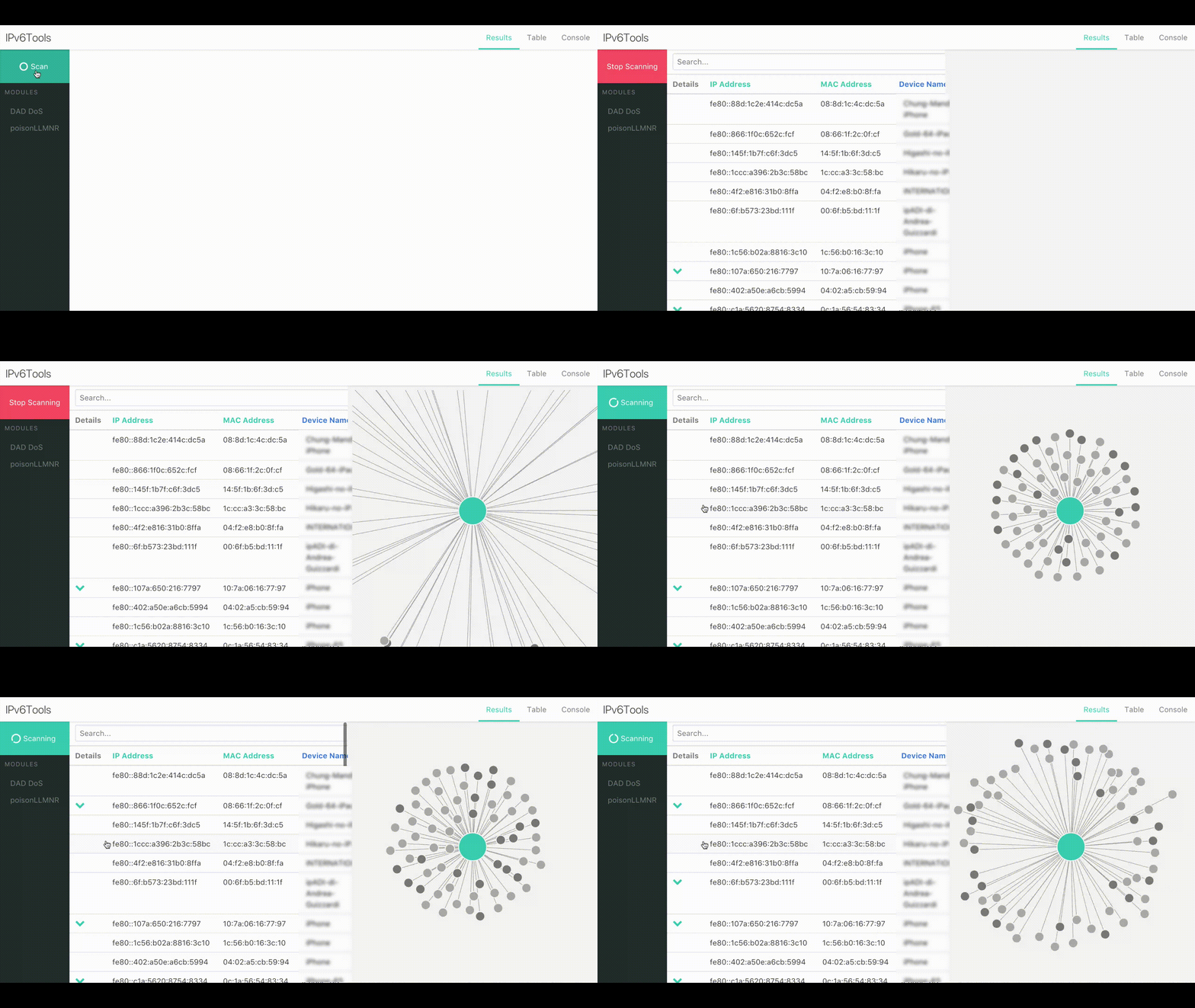
IPv6Tools is a robust modular framework that enables the ability to visually audit an IPv6 enabled network.

The IPv6Tools framework is a robust set of modules and plugins that allow a user to audit an IPv6 enabled network. The built-in modules support enumeration of IPv6 features such as ICMPv6 and Multicast Listener Discovery (MLD). In addition, the framework also supports enumeration of Upper Layer Protocols (ULP) such as multicast DNS (mDNS) and Link-Local Multicast Name Resolution (LLMNR). Users can easily expand the capability of the framework by creating plugins and modules in the Python language.
To read more about how this project came to fruition and how to build an app using the same technologies, follow the links below!

[Optional] Use a virtualenv for installation: virtualenv venv && source venv/bin/activate
git clone http://github.com/apg-intel/ipv6tools.gitsudo pip install -r requirements.txtgit clone http://github.com/apg-intel/ipv6tools.gitgit checkout devnpm run setupsudo python app.py$ npm run servenpm run devTODO
Modules are classes that allow interaction with individual nodes or all nodes. These show up as a right click option on each node, or as a button below the graph.
Included in the project are a couple of modules to help validate your network, as well as use as examples for your own modules.
All modules are located in /modules and are automatically loaded when starting the server. Included in /modules is a file called template.py. This file contains the class that all modules must extend in order to display correctly and communicate with the webpage.
Use this template to build a custom module
from template import Template

class IPv6Module(Template):

  def __init__(self, socketio, namespace):
    super(IPv6Module, self).__init__(socketio, namespace)
    self.modname = "CVE-2016-1879"
    self.menu_text = "FreeBSD IPv6 DoS"
    self.actions = [
      {
        "title": "FreeBSD IPv6 DoS", #name that's displayed on the buttons/menu
        "action": "action", #method name to call
        "target": True #set this to true to display it in the right-click menu
      }
    ]

  def action(self, target=None):
    # send a log msg
    self.socket_log('Running DoS on '+target['ip'])

    # do stuff, etc

    # merge results with main result set
    listOfDicts = [{ip: '::1', device_name: 'test'}]
    self.module_merge(listOfDicts)
dnet or dumbnet - follow the instructions below.git clone https://github.com/dugsong/libdnet.git
cd libdnet
./configure && make
sudo make install
cd python
python setup.py install
sudo apt install libpcap-dev
