 adityabhatt3010/cve-2025-10585-the-chrome-v8-zero-day
Google patched CVE-2025-10585, a Chrome V8 zero-day under active exploitation — here’s what it is, why it matters, and how to stay safe.

Google has released an out-of-band patch this week for CVE-2025-10585, a serious type-confusion vulnerability in Chrome’s V8 JavaScript / WebAssembly engine. The bug is not theoretical — Google’s Threat Analysis Group confirmed active exploitation in the wild, which makes this a high-urgency update for everyone using Chrome or other Chromium-based browsers. If your install is behind, update now. ⏳🔧

Browsers are the most exposed software on most endpoints. They parse untrusted content from every corner of the web — ads, iframes, scripts, user uploads — and V8 is the engine that executes that content in Chrome. A reliable remote code execution (RCE) in V8 lets an attacker turn a single crafted webpage, ad, or compromised third-party script into a delivery mechanism for malware. That’s why V8 bugs get immediate attention, fast patches, and — when exploited — rapid incident responses. 🚨
At a high level, CVE-2025-10585 is a type-confusion bug. Type-confusion means the JavaScript engine incorrectly treats one kind of internal object as another. In a strongly typed engine that tracks object shapes and types, mixing up those expectations can cause memory to be read or written incorrectly. The end result is heap corruption — which attackers can turn into powerful primitives like arbitrary read and arbitrary write. From there, the usual escalation ladder leads to code execution. ⚠️
Importantly: Google has confirmed this was seen in real-world attacks, which implies attackers had a working chain that went from a delivered webpage to reliable execution on victim machines. 🕵️♂️
I won’t publish PoC code or step-by-step exploit recipes. But for a technically literate audience, here’s the safe, conceptual breakdown of what a typical V8 type-confusion exploit looks like and why it’s so potent:
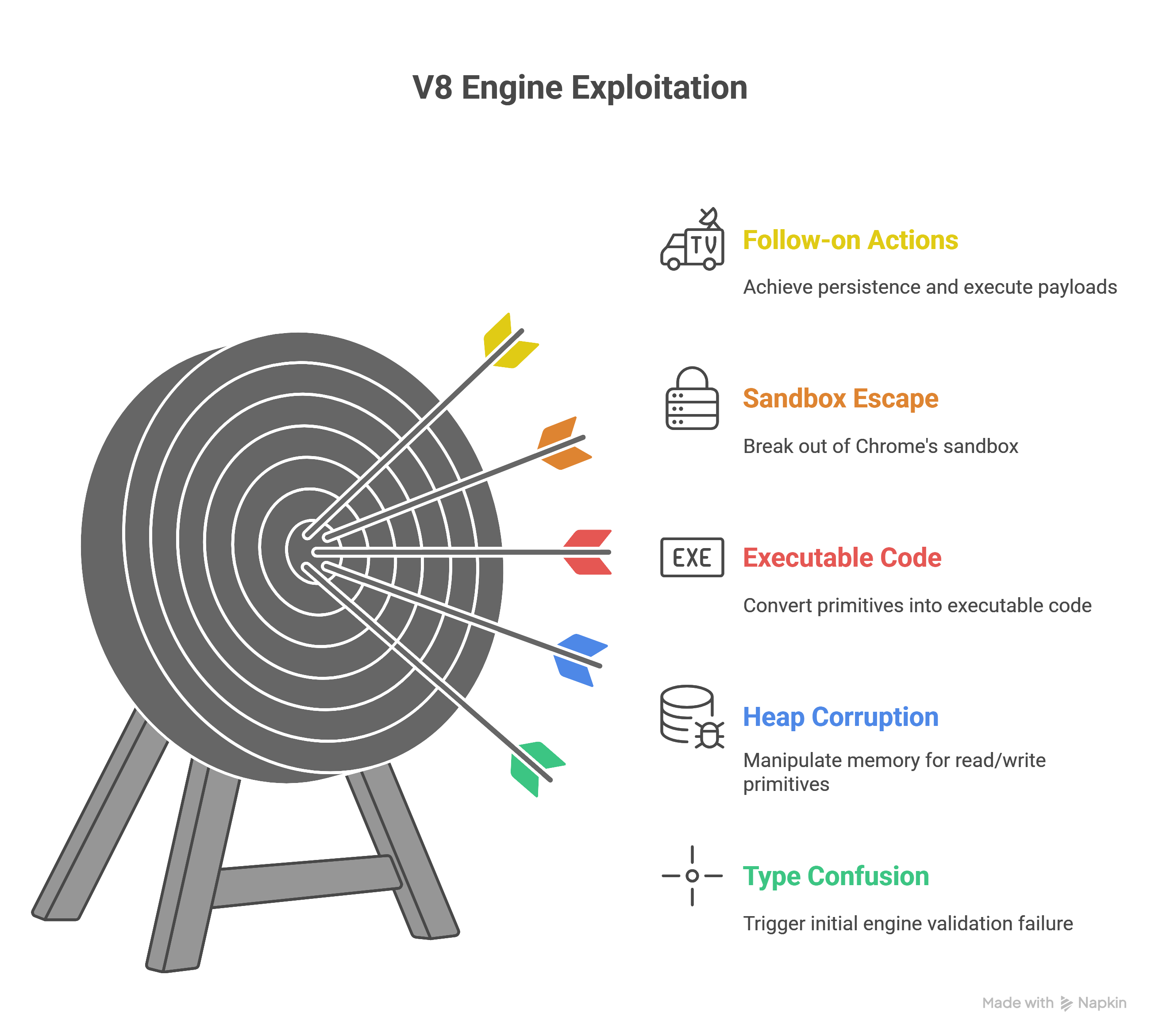
That sequence explains why a single V8 RCE is a very high-value exploit: it can convert everyday browsing into a full compromise.
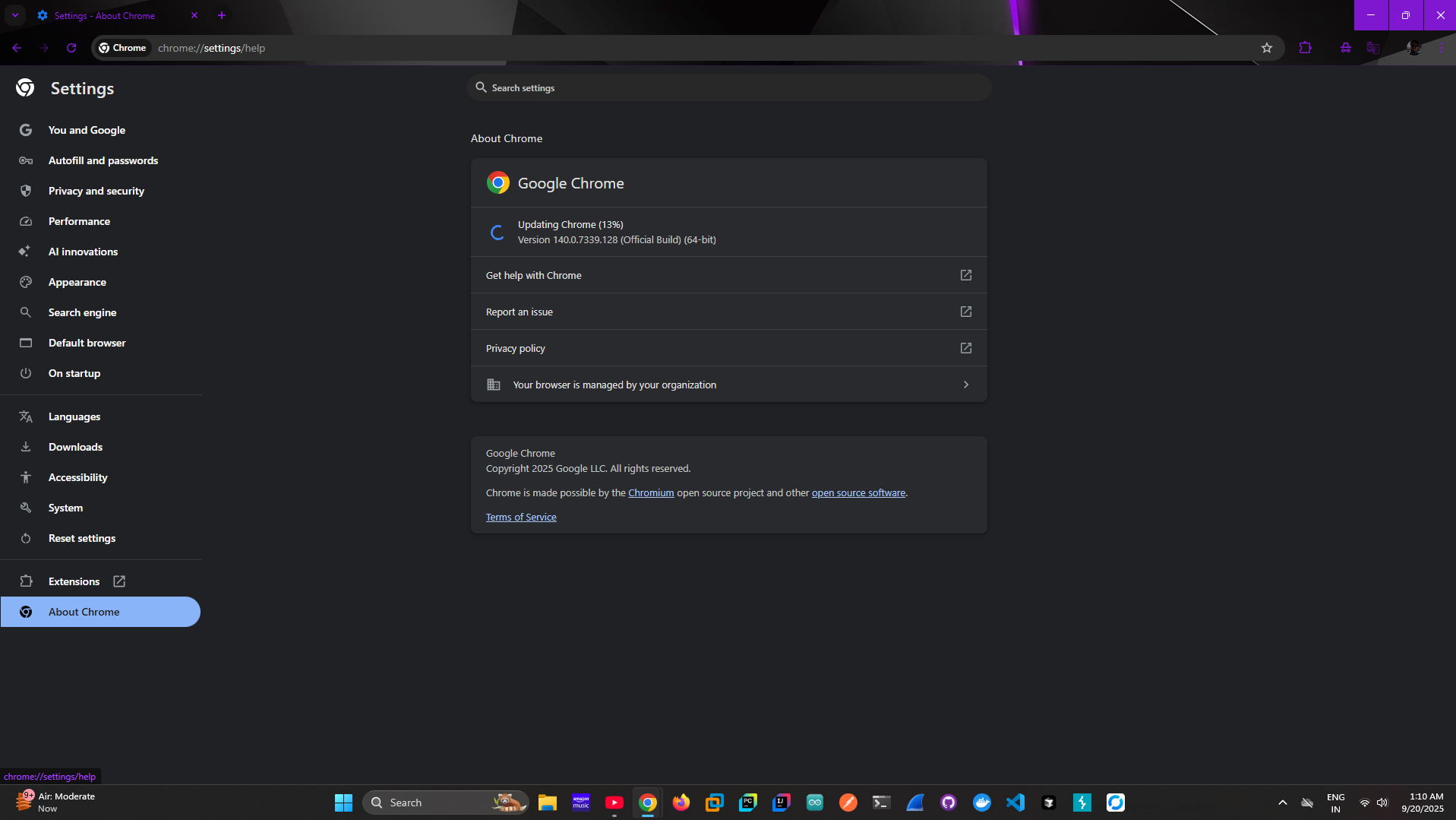
While drafting this, I checked my own Chrome — it was at 140.0.7339.128 (screenshot attached by me while writing). That build is older than the patched Stable releases; updating to the fixed build resolved it for me. If your version is lower than the patched builds, you’re exposed — update now. 🔁
Google rolled the fix into the Stable channel; patched builds include:
140.0.7339.185 / 140.0.7339.186140.0.7339.185If your Chrome shows a build number lower than those, update immediately. Note that other Chromium forks (Edge, Brave, Vivaldi, Opera) inherit V8 and will need their vendor patches — check each vendor’s advisory. 📣
Google and other vendors often limit technical details at first because public PoCs accelerate mass exploitation. The vendor wants a majority of users patched before giving researchers a full technical recipe. That balance is why you’ll often see a short advisory and a patch first, followed later by detailed write-ups or patch diffs researchers can responsibly analyze. ⚖️
CVE-2025-10585 is another reminder of two structural truths of modern security:
This zero-day is at least the sixth Chrome zero-day this year, showing both how critical the V8 attack surface is and how creative attackers continue to be. 📈
If you’re an independent researcher and you find a PoC or a potential exploit variant, prioritize coordinated disclosure. Report to Google TAG / Chromium security and avoid public release while active exploitation is happening. Publishing exploit code during active exploitation amplifies harm and undermines protective efforts. 🧾
CVE-2025-10585 isn’t just a line in a vulnerability tracker. It’s an example of how quickly a bug can move from discovery to weaponization when the stakes are high. The fix exists — the immediate task is simple: confirm your builds and update. Beyond that, adopt patch discipline, harden browsing for at-risk users, and keep your detection controls tuned. 🛡️
Stay patched, stay safe. 🗿
~ Aditya Bhatt
