 aashish-thapa/wlctl
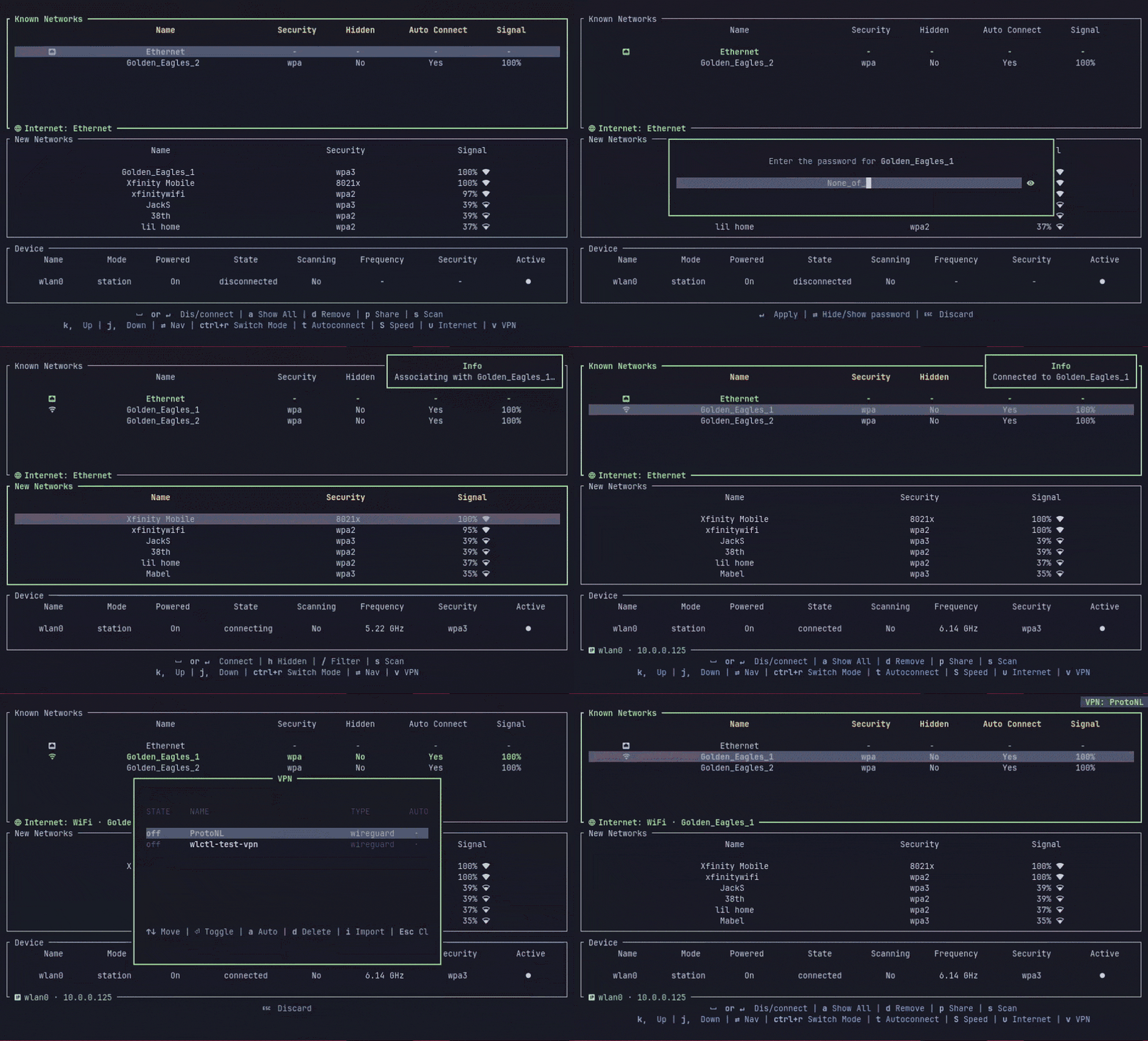
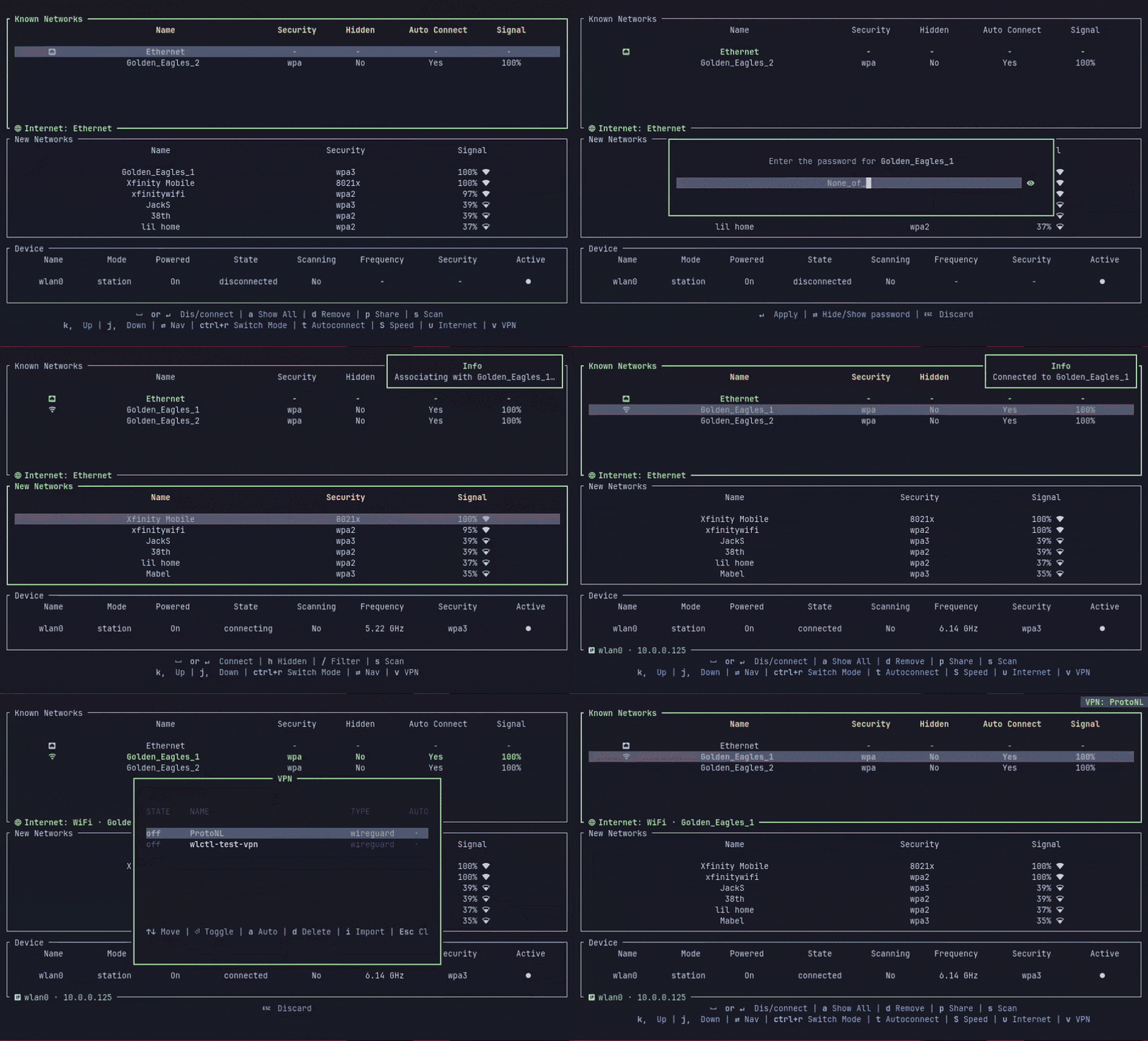
🛜 TUI for managing wifi/ethernet/vpn on Linux with Network Manager

WiFi TUI for NetworkManager.




impala is a great wifi TUI but it talks to iwd. If your distro already runs NetworkManager (most do — GNOME, KDE, Ubuntu, Fedora, Pop, …), you can't drop impala in without ripping the stack out. wlctl keeps the impala UX and points it at NetworkManager, so it just works alongside what your DE is already doing.
wlctl doctor — walks rfkill, driver, association, IP, DHCP, gateway, DNS, internet# crates.io
cargo install wlctl
# Arch (AUR)
yay -S wlctl-bin
# Nix (run without installing)
nix run github:aashish-thapa/wlctl
# from source
git clone https://github.com/aashish-thapa/wlctl && cd wlctl
cargo build --release
On NixOS, add the flake as an input and use wlctl.packages.${system}.default, or drop it into a shell with nix shell github:aashish-thapa/wlctl.
Needs NetworkManager running. Nerd Fonts optional, for icons.
wlctl to launch the TUI. wlctl doctor when something's broken and you want to know which layer.
| Action | Key |
|---|---|
| Switch panel | Tab / Shift+Tab |
| Move | j k / arrows |
| Switch adapter mode (Station ↔ AP) | Ctrl+R |
| VPN connections | v |
| Quit | q / Ctrl+C |
| Dismiss popup | Esc |
| Action | Key |
|---|---|
| Connect / disconnect | Space or Enter |
| Toggle auto-connect | t |
| Forget network | d |
| Make this the internet path | u |
| Show all | a |
| QR share | p |
Speed test (needs speedtest-cli) | Shift+S |
When both WiFi and Ethernet are up, the link NetworkManager is actually routing internet over is highlighted in green, and the box footer spells it out ( Internet: WiFi · <ssid>). Press u on the Ethernet row or the connected WiFi to switch the default route to it (the other link stays up).
The Device box footer shows the active adapter's LAN IP (e.g. wlan0 · 192.168.1.20) so you can SSH in without running ip addr.
| Action | Key |
|---|---|
| Connect / disconnect | Space or Enter |
| Connect to hidden | h |
| Filter by name | / |
| Show all | a |
Press / to filter the scan list by SSID as you type; Enter keeps the filter, Esc clears it.
v)| Action | Key |
|---|---|
| Toggle on / off | Space or Enter |
| Toggle autoconnect | a |
Delete profile (confirm y/n) | d |
| Import a WireGuard config | i |
| Close | Esc |
The selected tunnel's assigned IP and uptime show below the list while it's up.
Importing WireGuard configs: press i, then either paste the whole config (most providers — Proton, Mullvad — just hand you the text) or type a path to a .conf file, and press Enter. wlctl parses it and creates a NetworkManager profile — no nmcli needed. Pasted configs are named after the server endpoint; file imports after the file name. ~ is expanded in paths. The profile is added without auto-connecting; toggle it on with Enter. OpenVPN .ovpn files aren't supported here — import those with nmcli connection import type openvpn file <path> (requires the NetworkManager-openvpn plugin).
| Action | Key |
|---|---|
| Adapter info | i |
| Toggle power | o |
| Doctor | ? |
| Action | Key |
|---|---|
| Scan | s |
| Action | Key |
|---|---|
| Start AP | n |
| Stop AP | x |
~/.config/wlctl/config.toml. All keys rebindable.
switch = "r"
mode = "station"
esc_quit = false
vpn = "v"

[device]
infos = "i"
toggle_power = "o"
doctor = "?"

[station]
toggle_scanning = "s"

[station.known_network]
toggle_autoconnect = "t"
remove = "d"
show_all = "a"
share = "p"
speed_test = "S"
prefer = "u"

[station.new_network]
show_all = "a"
connect_hidden = "h"
filter = "/"

[access_point]
start = "n"
stop = "x"
| impala | wlctl | |
|---|---|---|
| Backend | iwd | NetworkManager |
| Coexists with default desktop network stack | no | yes |
| Multi-adapter selector | — | yes |
| VPN connection toggle | — | yes |
doctor subcommand | — | yes |
Forked from pythops/impala. UI and architecture are theirs.
GPLv3
