

Skip to content
KitploitKITPLOIT
ToolsBlog
Submit
ToolsBlog
Submit

Hacking, PenTest, and Cybersecurity Tools for Your Security Arsenal!

Kitploit is a directory of hacking, cybersecurity, and pentesting tools. Discover the latest project updates to find vulnerabilities, analyze systems, automate testing, and strengthen your security.

··Feeds·Contact·Privacy·© 2026 Kitploit

Tool Directory

Categories

View all categories
Loading categories
CVE-2024-34328 — Proof-of-concept for open redirection via Host header manipulation in Sielox AnyWare 2.1.2 (CVE-2024-34328), with exploit steps, impact, and mitigation guidance. | Kitploit
Tools/GitHubGitHub/0xsu3ks/cve-2024-34328
Vulnerability AnalysisPhishingWeb SecurityPapers & ResearchLearning & Education
GitHub0xsu3ks/cve-2024-34328

CVE-2024-34328

Proof-of-concept for open redirection via Host header manipulation in Sielox AnyWare 2.1.2 (CVE-2024-34328), with exploit steps, impact, and mitigation guidance.

View Repository
21 year agoNot yet reviewed

Most Popular

View all →

Discover the most used tools by our community.

Explore all tools

Browse our collection of tools

View all tools →
Share

CVE-2024-34328 Open Redirection via Host Header

📝 Overview

Vulnerability Title: Open Redirection via Host Header
Product: Sielox AnyWare
Version Affected: 2.1.2
CVE ID: CVE-2024-34328 Severity: Medium
Attack Vector: Remote
Impact: Open Redirection / Phishing


🧨 Description

An attacker can craft a URL with a modified Host header that points to a malicious domain under their control. When users click the malicious link, they are redirected to the attacker's domain — potentially leading to phishing, credential theft, or malware delivery.

This vulnerability arises due to the application’s improper validation of the Host header when generating absolute URLs during redirection.


🖼️ Proof of Concept (PoC)

🔗 Modified Host Header Attack

Below are two images demonstrating the exploit process:

Step 1: Malicious URL crafted using the Host header
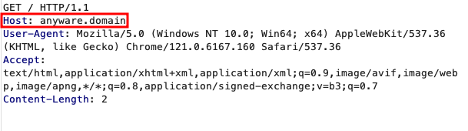
Modified Host Header Exploit

Step 2: Victim is redirected to an attacker-controlled domain
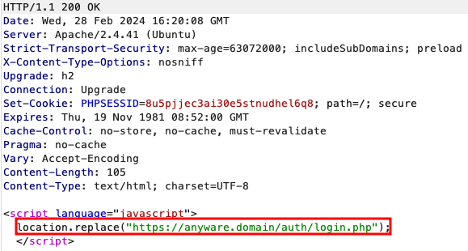
Redirected to Attacker Site


🛡️ Mitigation

  • Validate and sanitize the Host header server-side.
  • Use a fixed host value for redirection logic.
  • Implement allow-lists for trusted redirect domains.
  • Avoid dynamic redirects based on untrusted user input.

🔒 Impact

Successful exploitation may allow attackers to:

  • Redirect users to phishing sites
  • Bypass security filters that rely on host validation
  • Abuse trust relationships between users and the original application

👨‍💻 Author

Security Researcher – Kevin Suckiel // 0xsu3ks


⚠️ Legal Note

This research is for educational purposes and responsible disclosure. The author is not liable for any misuse of this information.

Download Tool